

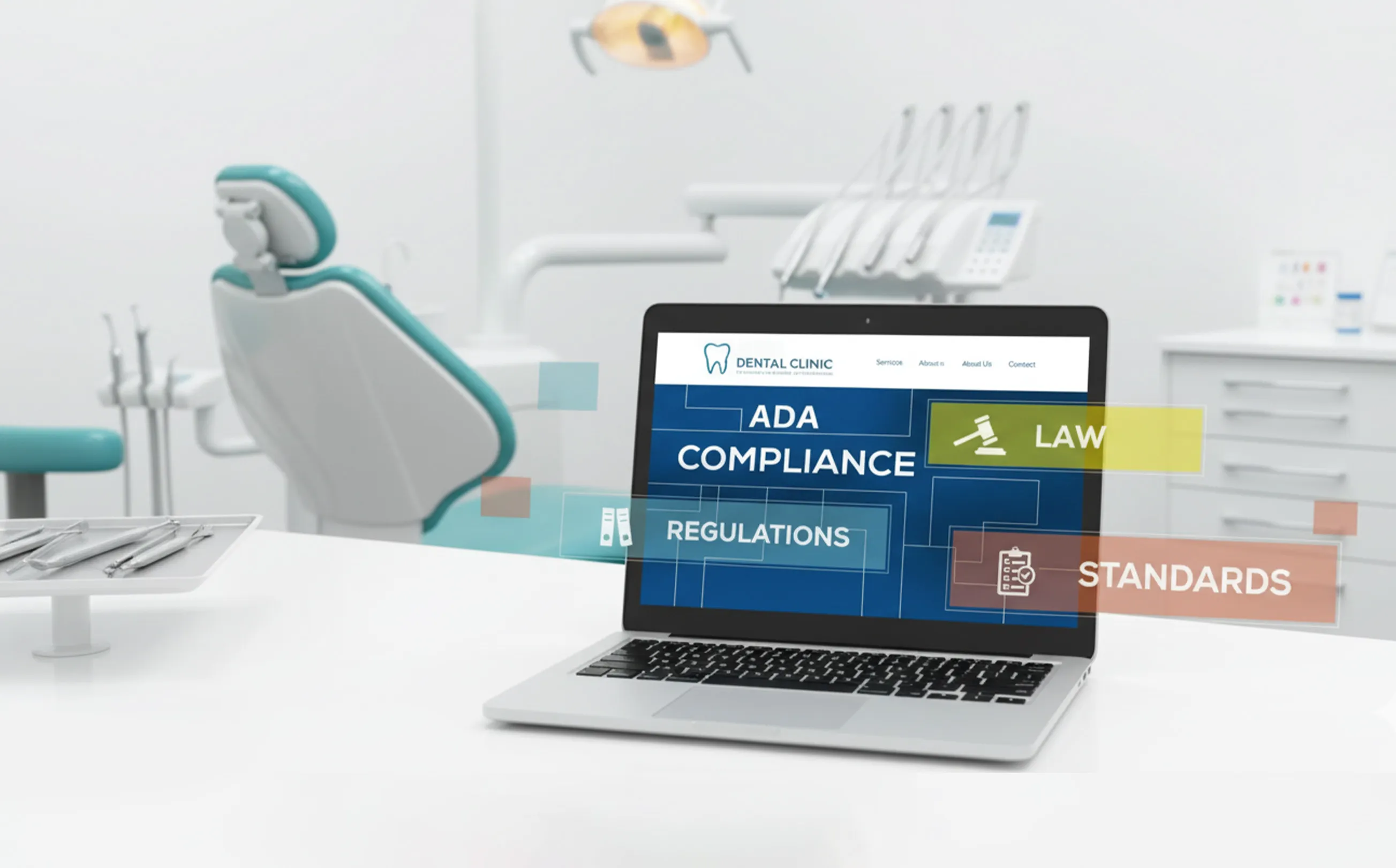
ADA Compliance for Dental Websites: What You Need to Know
Website accessibility has become a major priority for healthcare providers, including dental practices. Patients depend on your website for important information—such as services, office hours, forms, and contact details. If your website is not accessible to people with disabilities, it can create barriers that prevent visitors from getting the care they need.
At Dental Base, we help dental practices build websites that meet accessibility standards and offer a better online experience for all users. In this guide, you’ll learn what ADA compliance means, why it matters, and what steps you can take to ensure your website is accessible.
What Is ADA Compliance?
The Americans with Disabilities Act (ADA) is a federal law that prohibits discrimination against individuals with disabilities. While the original law focused on physical spaces, it now also applies to digital environments, including websites.
For dental practices, ADA compliance means ensuring your website is accessible to all users, including those who rely on assistive technologies such as:
-
Screen readers
-
Keyboard navigation
-
Voice control tools
-
Screen magnifiers
To support ADA compliance, most organizations follow the Web Content Accessibility Guidelines (WCAG), which outline the technical and design standards needed to make websites inclusive.
Why ADA Compliance Matters for Dental Practices
1. Provides Equal Access for All Patients
Accessibility ensures that every patient—regardless of ability—can access your services, information, and care. This includes individuals with:
-
Vision impairments
-
Hearing challenges
-
Mobility limitations
-
Cognitive disabilities
When your website is accessible, all patients can complete forms, read content, schedule appointments, and navigate your site with ease.
2. Builds Trust and Professional Credibility
Patients expect healthcare providers to be thoughtful, ethical, and inclusive. An accessible website sends a strong message: your practice cares about every patient’s experience.
Accessibility features also make your website look modern, organized, and well designed, which enhances overall professionalism.
3. Reduces Legal Risks
In recent years, there has been an increase in lawsuits involving websites that fail to meet ADA standards. Dental practices are not exempt. Ensuring your website is compliant helps reduce the risk of legal issues and protects your practice from unnecessary costs or reputation damage.
4. Improves User Experience for Everyone
Accessibility improvements benefit all visitors—not just those with disabilities. For example:
-
Clear navigation helps all users find information faster.
-
Proper color contrast improves readability for users on mobile devices.
-
Captions on videos help anyone watching without sound.
In short, accessible design leads to better usability and higher patient satisfaction.
5. Enhances SEO Performance
Search engines reward websites that are well structured and easy to navigate. Many ADA-friendly elements also support SEO, including:
-
Alt text for images
-
Header structure
-
Clear labeling
-
Mobile-friendly design
-
Fast load times
An accessible website helps search engines understand your content better—leading to improved visibility.
Key ADA Compliance Features Every Dental Website Should Have
Below are some of the most important features to consider when assessing or upgrading your dental website.
1. Text Alternatives for Images
Every image on your site should include alt text. This helps screen readers describe the image to users who cannot see it. Alt text should be simple, clear, and descriptive.
2. Clear and Logical Navigation
Menus, buttons, and page structures should be consistent and easy to understand. Users should not struggle to find:
-
Forms
-
Contact details
-
Appointment information
-
Service pages
A well-organized website benefits both accessibility and patient experience.
3. Keyboard-Friendly Functionality
Some users navigate the web without a mouse. Your website should allow visitors to move through links, forms, and menus using only a keyboard.
4. Proper Color Contrast
Text should stand out clearly from the background. Poor contrast makes it difficult for many users—especially those with visual impairments—to read your content.
5. Resizable Text
Users should be able to zoom in or increase text size without breaking the layout of your website. This is essential for individuals with low vision.
6. Captions and Transcripts
Any video content should include:
-
Captions for users who are deaf or hard of hearing
-
Transcripts for users who prefer reading or rely on assistive tools
7. Descriptive Headings and Labels
Headings should follow a clear hierarchy (H1, H2, H3), and form fields should have proper labels. This helps screen readers interpret the content correctly.
8. Mobile Accessibility
Many patients access your site from smartphones or tablets. Your website must be mobile-friendly to ensure accessibility across all devices.
How ADA Compliance Supports Patient Engagement
Makes Online Forms Easier to Use
When forms have clear labels, proper structure, and logical order, patients of all abilities can complete them without frustration. This improves:
-
Appointment requests
-
Health history submissions
-
Insurance uploads
Builds Confidence in Your Practice
A well-designed, accessible site shows patients that your practice is organized, modern, and patient-focused.
Encourages Returning Visitors
When people have a positive experience accessing your site, they are more likely to return, recommend your practice, and leave positive reviews.
Common Accessibility Issues Found on Dental Websites
Many dental websites fail ADA standards due to simple oversights such as:
-
Missing alt text
-
Images with text embedded inside them
-
Poor color contrast
-
Unlabeled form fields
-
Videos without captions
-
Navigation only optimized for mouse users
-
PDF forms that are not accessible
-
Unclear error messages during form submissions
These issues may seem small, but for patients relying on assistive tools, they can be major barriers.
How Dental Base Helps Practices Achieve ADA Compliance
At Dental Base, we specialize in designing and upgrading dental websites to meet ADA and WCAG guidelines. Our team focuses on:
-
Accessible website layouts
-
Clean, readable content
-
Screen-reader-friendly code
-
Mobile optimization
-
Accessible online forms
-
Testing for usability across various assistive technologies
We help dental practices create websites that are compliant, patient-friendly, and easy for all visitors to navigate.
Final Thoughts
ADA compliance is more than a legal requirement—it’s an essential part of delivering equal care to all patients. An accessible dental website ensures that everyone can use your online tools, read your content, and interact with your practice without barriers.
With support from Dental Base, your practice can build a website that meets ADA standards, improves patient experience, and reflects your commitment to inclusivity.
If your website needs an accessibility upgrade or a full redesign, Dental Base is ready to help.