

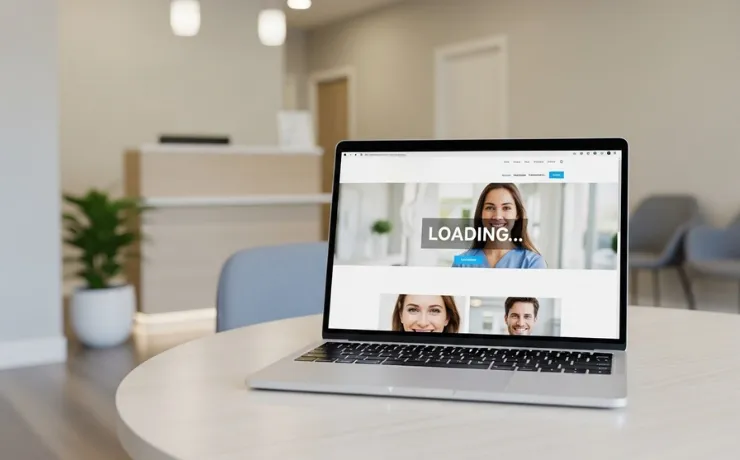
How Fast Does Your Dental Website Load? (And Why It Matters)
When was the last time you tested the loading speed of your dental website? If it takes longer than a few seconds to appear on screen, you could be losing patients without even knowing it.
In today’s digital-first world, speed matters. Patients expect instant access to information. If your site is slow, they’ll hit the back button and click on a competitor instead. Beyond user experience, Google also considers site speed a ranking factor, meaning a slow dental website can hurt both your reputation and your SEO.
In this article, we’ll break down why loading speed is critical, how it affects your practice, and what you can do to improve it.
Why Website Speed Matters for Dentists
A fast-loading dental website is not just a technical detail—it’s a business essential.
1. Patient First Impressions
Your website is often the first impression patients get of your practice. A slow site communicates frustration, inefficiency, and even lack of professionalism. Patients may wonder: “If the website is this outdated, will my dental care be the same?”
2. Conversion Rates
Studies show that if a page takes more than 3 seconds to load, most users leave. For dentists, this means fewer appointment bookings and lost revenue.
3. Google Rankings
Google uses speed as a ranking signal. Faster sites tend to rank higher in search results, while slower sites are pushed down. This can make the difference between being discovered and being overlooked.
The Impact of Slow Dental Websites
High Bounce Rates
A bounce happens when someone visits your site but leaves without taking action. Slow speed is one of the biggest causes of high bounce rates.
Lost Local Patients
Patients searching “dentist near me” are ready to book quickly. If your site doesn’t load instantly, they’ll move on to the next option.
Lower Trust and Credibility
Your website reflects your practice. A lagging site feels outdated and unprofessional, reducing patient confidence in your services.
What Slows Down Dental Websites?
Several factors can affect site speed:
-
Large, uncompressed images (e.g., staff or smile gallery photos).
-
Too many plugins or widgets that bog down performance.
-
Cheap, unreliable hosting with limited resources.
-
Unoptimized code or outdated site design.
-
Videos or animations that aren’t compressed properly.
How to Test Your Dental Website Speed
Fortunately, checking your site speed is easy. Use free tools like:
-
Google PageSpeed Insights
-
GTmetrix
-
Pingdom
These tools show how long your site takes to load and provide suggestions for improvement. Ideally, your site should load in under 3 seconds.
How to Improve Dental Website Speed
1. Optimize Images
High-quality images are great for showcasing your team and services—but they must be compressed. Tools like TinyPNG or built-in website plugins reduce file size without sacrificing quality.
2. Choose Better Hosting
Invest in reliable, fast hosting designed for business websites. Avoid the cheapest option—it can cost you patients in the long run.
3. Use Caching
Caching stores versions of your website so it loads faster for repeat visitors. Many platforms and plugins offer easy caching solutions.
4. Minimize Plugins
Only keep the plugins you truly need. Too many add-ons can slow down your website significantly.
5. Enable Content Delivery Networks (CDN)
A CDN delivers your site from servers closer to the user’s location, reducing loading times.
6. Streamline Your Design
Fancy animations and cluttered layouts can hurt speed. Stick to clean, modern, patient-focused designs that load quickly and look professional.
Mobile Speed: Even More Important
Most dental patients search on mobile devices. If your site isn’t mobile-optimized and fast on smartphones, you’ll lose a huge portion of potential patients.
Key mobile speed fixes:
-
Use a responsive design that adapts to smaller screens.
-
Make sure text and buttons are easy to read and click.
-
Test your mobile site separately using Google’s Mobile Speed Test.
Case Study: The Cost of a Slow Dental Website
A family dentist in a mid-sized city noticed their website traffic was steady but appointment requests were dropping. After testing, they found their site loaded in 7 seconds on mobile.
By compressing images, switching to a faster host, and simplifying the design, they reduced load time to 2.5 seconds. Within three months, their online bookings increased by 35%.
Why Work With Dental Base
At Dental Base, we specialize in building and optimizing dental websites that are fast, professional, and designed to convert visitors into patients.
We focus on:
-
Speed optimization to keep patients engaged.
-
SEO-friendly design to boost your Google rankings.
-
Mobile-first development so patients can book on the go.
-
Secure hosting and HIPAA compliance for peace of mind.
Your website shouldn’t just look good—it should work hard for your practice.
Final Thoughts
In today’s competitive dental market, a slow-loading site is more than an inconvenience—it’s a liability. Patients expect quick, seamless online experiences, and Google rewards practices that deliver them.
By improving your dental website speed, you’ll not only make a better first impression but also increase bookings, boost rankings, and build trust with patients.
If your site takes more than 3 seconds to load, it’s time to make a change.
📞 Want to know how fast your dental website really is?
Contact Dental Base today at +1 (858) 207 6386 or Book Your Free Website Audit →