

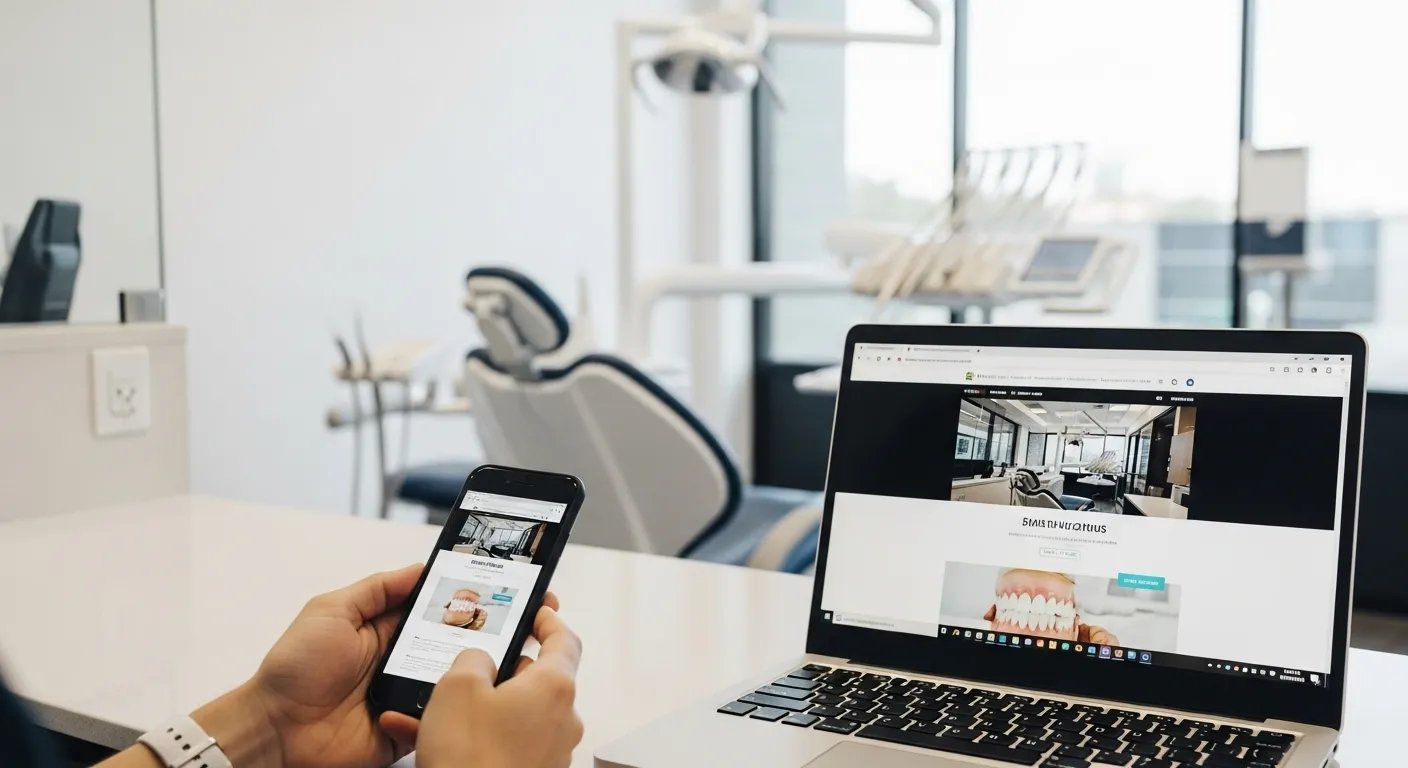
Why Mobile Optimization Matters for Dental Websites
When a potential patient looks for a dentist, chances are they’re doing it on their phone. Whether it’s searching “dentist near me” during a lunch break or booking a cleaning while commuting, smartphones have become the go-to tool for healthcare searches. For dentists, this means one thing: if your website isn’t optimized for mobile, you’re losing patients to competitors who are.
In this article, we’ll break down why mobile optimization matters for dental websites, how it impacts patient experience, and what you can do to make sure your practice stays competitive.
The Rise of Mobile-First Patients
Mobile usage isn’t just a trend—it’s the norm. Studies show that:
-
Over 60% of all Google searches now come from mobile devices.
-
Local searches like “dentist near me” are most often done on smartphones.
-
Patients expect websites to load quickly and function smoothly on smaller screens.
For dental practices, this shift means your website is often the first interaction patients have with your brand. If that experience is clunky, confusing, or slow, they’ll move on to the next dentist.
What Is Mobile Optimization?
Mobile optimization means designing your dental website to look and perform well on mobile devices. It’s more than just shrinking a desktop site to fit a smaller screen—it’s about creating an experience tailored to smartphone and tablet users.
Mobile-optimized websites include:
-
Responsive design that adapts to different screen sizes.
-
Fast loading times (under 3 seconds).
-
Click-to-call buttons for easy appointment booking.
-
Simplified navigation for smaller screens.
-
Readable fonts and properly sized images.
Why Mobile Optimization Matters for Dental Practices
1. First Impressions Count
Your website is your digital front door. If patients have trouble navigating it on their phone, they’ll assume the same about your office. A mobile-friendly site creates trust and professionalism right from the start.
2. Mobile Impacts Google Rankings
Google prioritizes mobile-friendly websites in search results. If your site isn’t optimized, your rankings will suffer, making it harder for patients to find you.
This means mobile optimization isn’t just about patient experience—it’s also a critical part of SEO for dental websites.
3. Patients Want Convenience
Today’s patients value convenience. A mobile-optimized site makes it easy to:
-
Call your office with one tap.
-
Book appointments online.
-
Get directions through Google Maps.
-
Learn about your services while on the go.
The easier you make it, the more likely patients are to choose your practice.
4. Reduced Bounce Rates
A non-mobile-friendly site can frustrate users, causing them to leave quickly. This is called a bounce rate, and high bounce rates hurt both your SEO and your ability to convert visitors into patients.
Mobile optimization keeps patients engaged and increases the chances they’ll book an appointment.
5. Competitive Advantage
If your competitor’s site is mobile-friendly and yours isn’t, guess where patients will go? Mobile optimization ensures you stay competitive in your local area.
Key Features of a Mobile-Optimized Dental Website
If you’re updating your site or building a new one, here are the must-have features for mobile optimization:
1. Responsive Design
Your site should automatically adjust to fit any screen size—desktop, tablet, or phone.
2. Speed Optimization
Patients won’t wait for a slow website. Compress images, enable caching, and use reliable hosting to keep load times under 3 seconds.
3. Clear Calls-to-Action (CTAs)
Buttons like “Book Appointment” or “Call Now” should be easy to see and tap.
4. Simple Navigation
Menus should be concise, with easy access to important pages like Services, Contact, and About Us.
5. Click-to-Call Functionality
Patients should be able to call your office directly from their phone with one tap.
6. Online Booking Integration
Mobile users expect to book appointments without switching devices.
How Mobile Optimization Improves Conversions
A mobile-friendly dental website doesn’t just attract visitors—it converts them into patients.
Example Scenario:
A patient searches “emergency dentist near me” at 8 p.m. on their phone.
-
Practice A: Has a non-mobile-optimized site. Text is tiny, pages take 10 seconds to load, and there’s no easy way to book. The patient leaves.
-
Practice B: Has a mobile-optimized site with a click-to-call button and online booking. The patient books instantly.
The difference? One practice lost a patient, while the other gained one—all because of mobile optimization.
Common Mistakes to Avoid
🚫 Shrinking a desktop site instead of building a responsive design.
🚫 Tiny fonts and buttons that frustrate mobile users.
🚫 Ignoring page speed, which causes high bounce rates.
🚫 Forgetting online booking, which patients now expect as standard.
Why Partner With Dental Base
At Dental Base, we specialize in designing and optimizing dental websites that are mobile-friendly, SEO-ready, and patient-focused.
Our websites include:
-
Responsive, modern design tailored to your brand.
-
Fast loading speeds to keep patients engaged.
-
Built-in click-to-call and online booking features.
-
SEO optimization for local search visibility.
We don’t just build websites—we create patient conversion tools that help your practice grow.
Final Thoughts
In today’s digital-first world, mobile optimization is no longer optional for dental websites—it’s essential. Patients expect fast, convenient, and user-friendly experiences on their phones. By making your site mobile-friendly, you improve your visibility, earn patient trust, and increase bookings.
If your website isn’t optimized for mobile, you’re not just missing clicks—you’re missing patients.
📞 Is your dental website ready for mobile?
Contact Dental Base today at +1 (858) 207 6386 or Book a Free Website Audit →