How Dental Support Organizations in Atlanta Build Patient Flow
Discover how dental support organizations in Atlanta generate reliable patient flow through strategic marketing, operations, and proven systems.
Share:
Table of contents
Introduction: How Dental Support Organizations in Atlanta Generate Reliable Patient Flow
Dental support organizations in Atlanta have transformed how s attract patients. They also help retain patients in one of the Southeast's most competitive healthcare markets. The metro Atlanta area has over 300 dental practices across the region. Maintaining new patient flow and retaining existing ones creates unique challenges requiring systematic solutions.
Patient flow is the lifeblood of any dental practice. Dental support organizations in Atlanta tackle this challenge with sophisticated strategies. Individual practices often struggle to implement these strategies independently. These organizations leverage economies of scale, advanced technology platforms, and specialized expertise. They create patient acquisition and retention systems that deliver predictable results.
This comprehensive analysis examines specific methods organizations use to build reliable patient flow. It covers tailored to Atlanta's diverse demographics. It also examines operational systems that maximize patient lifetime value. Practice owners considering DSO partnerships will gain insight into these approaches. They reveal how organizations create sustainable growth through proven patient flow methodologies.
Understanding these systems becomes crucial as Atlanta's dental market continues to evolve. Changing patient expectations and increased competition are reshaping dental services. New technologies are also reshaping how services are delivered and marketed. The strategies employed by successful DSOs offer a blueprint. This blueprint helps achieve consistent patient flow in this dynamic environment.
Strategic Marketing Systems That Drive Patient Acquisition
Dental support organizations in Atlanta implement comprehensive marketing systems. Individual practices rarely match their scope or sophistication. These systems operate across multiple channels simultaneously. They create a patient acquisition engine that generates consistent results. Results remain consistent regardless of seasonal fluctuations or market changes.
Digital marketing forms the foundation of most DSO patient acquisition strategies. Organizations invest heavily in search engine optimization targeting Atlanta-specific keywords. They also fund pay-per-click advertising campaigns responding to local search patterns. And they support social media marketing that resonates with diverse Atlanta communities. A typical DSO might allocate 3-5% of revenue to digital marketing efforts. This compares to the 1-2% that individual practices typically budget.
Real-World Example: One regional DSO operated 12 locations across metro Atlanta. It implemented a coordinated digital marketing campaign. The campaign increased new patient appointments by 40% within six months. The campaign included location-specific landing pages and targeted Google Ads for high-value procedures. It also used a social media strategy highlighting community involvement. The strategy featured patient testimonials from each neighborhood served.
Traditional marketing channels remain important components of DSO strategies. In Atlanta, community connections drive significant referral activity. Many dental support organizations in Atlanta maintain dedicated marketing staff. They develop relationships with physicians, specialists, and community organizations. These relationships generate consistent referral streams.
The integration of multiple creates a powerful multiplier effect. Individual practices often struggle to achieve this impact alone. When digital advertising, community outreach, patient referral programs, and professional networks operate cohesively. The resulting patient flow becomes more predictable and sustainable. It outperforms what any single marketing approach could deliver.
Patient Experience Systems That Maximize Retention
Acquiring new patients represents only half of the patient flow equation. Dental support organizations in Atlanta recognize that retaining patients is essential. They also focus on maximizing lifetime value to create sustainable growth. These organizations implement standardized patient experience systems to ensure consistency across locations. They also adapt those systems to local preferences and expectations.
Appointment scheduling systems represent a critical component of patient retention strategies. DSOs typically invest in advanced scheduling platforms. They offer online booking, automated reminders, and flexible rescheduling options. These options accommodate Atlanta's busy professional population. These systems reduce no-shows by an average of 25-30% compared to traditional phone-based scheduling.
Patient communication protocols follow structured frameworks across all patient touchpoints. They ensure every patient interaction reinforces the practice's value proposition. From initial contact through treatment completion and follow-up care, DSOs maintain detailed communication scripts. They also maintain protocols that staff follow consistently. This standardization eliminates the variability that often leads to patient dissatisfaction in independent practices.
Real-World Scenario: A multi-location DSO in North Atlanta implemented a comprehensive patient communication system. That system included pre-appointment educational materials. It also provided post-treatment care instructions and quarterly wellness check-ins. Patient retention rates increased from 68% to 84% within 18 months. Patients scheduled an average of 2.3 appointments per year. This compared to 1.8 appointments per year before implementation.
Technology integration enhances the patient experience through electronic health records enabling seamless care coordination. Patient portals provide access to treatment plans and payment options. Automated systems track patient satisfaction and identify opportunities for service improvement.
Staff training programs ensure that are maintained consistently across all locations. Dental support organizations in Atlanta typically invest 40-60 hours annually in staff training. The training focuses specifically on patient communication, service recovery, and relationship building techniques.
Operational Efficiency Systems That Support Higher Patient Volume
Dental support organizations in Atlanta design operational systems that enable practices to serve more patients efficiently without compromising care quality. These systems address the logistical challenges that often prevent individual practices from scaling patient volume effectively.
Scheduling optimization represents a core operational capability that DSOs develop through data analysis and systematic improvement. Organizations analyze appointment patterns, treatment durations, and provider productivity to create scheduling templates that maximize chair utilization while maintaining appropriate time allocations for different procedure types.
Staffing Models employed by DSOs typically include specialized roles that individual practices cannot justify financially. Patient coordinators focus exclusively on scheduling and patient communication, treatment coordinators handle case presentation and financial arrangements, and administrative coordinators manage insurance processing and follow-up care. This specialization enables higher patient throughput while improving service quality.
Equipment and Technology Systems scaled across multiple locations create operational advantages that individual practices cannot achieve. Standardized equipment configurations reduce training requirements and maintenance costs while ensuring consistent treatment capabilities across locations. Shared technology platforms enable centralized data management, reporting, and quality monitoring.
Supply Chain Management systems developed by dental support organizations in Atlanta reduce operational costs while ensuring consistent availability of materials and supplies. Centralized purchasing power enables negotiated pricing that can be 15-25% lower than individual practice costs, while standardized inventory management systems prevent stockouts that could disrupt patient care.
Real-World Example: A regional DSO optimized its operational systems by implementing standardized protocols across eight Atlanta locations. Average daily patient volume increased from 28 to 37 patients per location while maintaining patient satisfaction scores above 4.6/5.0. The improvements resulted from systematic scheduling optimization, specialized staffing roles, and streamlined administrative processes.
Quality assurance systems ensure that operational efficiency improvements do not compromise patient care standards. Regular audits, peer review processes, and patient feedback systems maintain clinical quality while supporting higher patient volume.
Technology Platforms That Enable Scalable Patient Management
Dental support organizations in Atlanta leverage sophisticated technology platforms that individual practices typically cannot afford or implement effectively. These platforms create scalable patient management capabilities that support reliable patient flow across multiple locations and service offerings.
Practice management software systems used by DSOs offer advanced functionality that extends beyond basic scheduling and billing. These platforms integrate patient communication tools, treatment planning modules, insurance processing systems, and reporting capabilities that provide comprehensive patient lifecycle management. The monthly software costs that might burden an individual practice become economically viable when distributed across multiple locations.
Customer Relationship Management (CRM) Systems enable DSOs to track patient interactions, preferences, and treatment history in ways that support personalized marketing and service delivery. These systems identify patients due for routine care, track treatment plan acceptance rates, and flag opportunities for additional services based on patient profiles and treatment history.
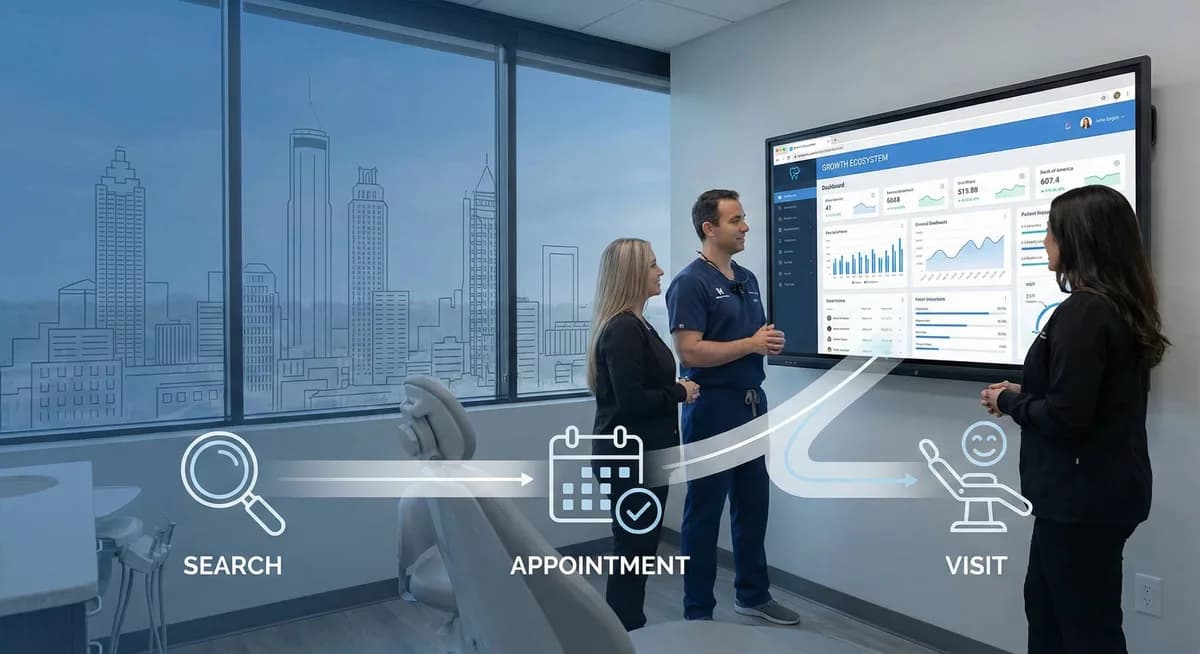
Digital Marketing Integration connects patient management systems with marketing platforms to create closed-loop attribution tracking. DSOs can measure which marketing channels generate the highest-value patients, optimize advertising spend based on actual patient lifetime value, and adjust marketing strategies based on detailed performance analytics.
Comparison Table: Technology Capabilities
| Technology Component | Individual Practice | DSO Implementation |
|---|---|---|
| Practice Management | Basic scheduling/billing | Advanced workflow automation |
| Patient Communication | Manual phone/email | Automated multi-channel messaging |
| Marketing Analytics | Limited tracking | Full attribution and ROI analysis |
| Treatment Planning | Provider-dependent | Standardized protocols and tools |
| Quality Monitoring | Informal review | Systematic audits and reporting |
| Insurance Processing | Manual verification | Automated eligibility and claims |
Artificial Intelligence Integrationrepresents an emerging capability that largerdental support organizations in Atlantaare implementing to enhance patient flow management. AI-powered scheduling optimization, predictive analytics for patient retention, and automated treatment recommendations based on patient data create competitive advantages that individual practices cannot replicate.
Data analytics platforms aggregate information across locations to identify trends, optimize operations, and predict patient behavior patterns. This data-driven approach enables continuous improvement in patient acquisition and retention strategies.
Financial Systems That Support Patient Access and Treatment Acceptance
Dental support organizations in Atlanta implement comprehensive financial systems that remove barriers to patient care while ensuring sustainable practice economics. These systems address the financial challenges that often prevent patients from accepting recommended treatment or maintaining regular dental care.
Insurance processing capabilities represent a significant operational advantage that DSOs provide. Dedicated insurance coordinators with specialized training process claims more efficiently than individual practice staff, resulting in faster reimbursements and fewer claim denials. Many dental support organizations in Atlanta maintain relationships with insurance networks that enable expanded coverage options for patients.
Payment Plan Programs offered by DSOs typically include more flexible terms and lower administrative costs than individual practices can provide. Third-party financing partnerships, in-house payment plans, and membership programs that reduce costs for uninsured patients create access options that increase treatment acceptance rates by 20-35%.
Real-World Scenario: A family-focused DSO in suburban Atlanta implemented a comprehensive financial access program that included flexible payment plans, discount programs for cash payments, and membership plans for patients without insurance. Treatment plan acceptance rates increased from 52% to 73%, while average case values increased by 28% as patients felt more comfortable proceeding with comprehensive treatment.
Pricing Strategy Developmentbenefits from DSO economies of scale and market analysis capabilities. Organizations can offer competitive pricing while maintaining healthy margins through reduced operational costs, negotiated supply pricing, and optimized operational efficiency. This pricing flexibility enables practices to compete effectively in Atlanta's diverse market segments.
Revenue Cycle Management systems implemented by DSOs ensure consistent cash flow that supports reliable operations and patient service. Automated billing systems, systematic collections processes, and detailed financial reporting create predictable revenue streams that enable practices to focus on patient care rather than administrative challenges.
Membership programs designed specifically for uninsured patients represent an innovative approach that many dental support organizations in Atlanta use to create recurring revenue while providing affordable access to dental care. These programs typically generate 15-25% higher lifetime value per patient compared to traditional fee-for-service relationships.
Quality Assurance and Clinical Excellence Systems
Dental support organizations in Atlanta implement systematic quality assurance programs that ensure consistent clinical excellence while supporting efficient patient flow. These programs address the quality concerns that sometimes arise when practices focus heavily on volume and operational efficiency.
Standardized treatment protocols developed by DSOs ensure consistent care quality across providers and locations. These protocols incorporate evidence-based practices, industry best practices, and organization-specific quality standards that maintain clinical excellence while enabling efficient treatment delivery. Regular protocol updates ensure that practices stay current with evolving clinical standards and technologies.
Provider Training and Development programs maintain clinical competency while supporting operational efficiency goals. Dental support organizations in Atlanta typically invest 2-3 times more in continuing education compared to individual practices, ensuring that providers maintain current skills while learning efficient treatment techniques that support higher patient volume.
Peer Review Systemscreate accountability mechanisms that maintain quality standards while identifying opportunities for improvement. Regular case reviews, clinical audits, and patient outcome tracking ensure that operational efficiency improvements do not compromise patient care quality.
Patient Satisfaction Monitoring provides continuous feedback on service quality and identifies areas where operational changes might impact patient experience. Systematic surveys, online review monitoring, and patient complaint tracking create data-driven insights that guide quality improvement efforts.
Real-World Example: A specialty-focused DSO operating six locations across metro Atlanta implemented comprehensive quality assurance systems that included monthly peer reviews, quarterly clinical audits, and continuous patient satisfaction monitoring. Despite increasing patient volume by 45% over two years, patient satisfaction scores increased from 4.2/5.0 to 4.7/5.0, demonstrating that systematic quality management can support both efficiency and excellence.
Clinical Technology Standards ensure that quality capabilities remain consistent across locations while supporting efficient treatment delivery. Standardized imaging systems, treatment planning software, and clinical equipment create consistent diagnostic and treatment capabilities that support both quality outcomes and operational efficiency.
Compliance monitoring systems ensure that quality assurance programs meet regulatory requirements while supporting business objectives. Regular compliance audits, staff training updates, and documentation reviews maintain adherence to healthcare regulations while enabling efficient operations.
Community Engagement and Referral Network Development
Dental support organizations in Atlanta develop systematic community engagement strategies that create sustainable referral networks and enhance practice reputation within local markets. These strategies leverage organizational resources and expertise that individual practices typically cannot match.
Professional referral networks represent a crucial component of sustainable patient flow that DSOs develop through dedicated relationship management efforts. Organizations typically assign staff members specifically to develop and maintain relationships with physicians, specialists, and other healthcare providers who generate patient referrals. These relationships create referral streams that are more predictable and valuable than general marketing efforts.
Community Partnership Programs enable DSOs to establish presence and credibility within specific Atlanta neighborhoods and communities. Partnerships with schools, community centers, senior living facilities, and local businesses create opportunities for education, screening, and relationship building that generate long-term patient relationships.
Professional Development Networks that dental support organizations in Atlanta participate in create visibility and credibility within the broader healthcare community. Active participation in dental societies, healthcare organizations, and professional development activities establishes organizational reputation and generates referral opportunities.
Real-World Scenario: A pediatric-focused DSO in East Atlanta developed partnerships with 15 elementary schools, 8 pediatric medical practices, and 3 community health centers. These partnerships generated an average of 125 new patient referrals monthly while positioning the organization as the pediatric dental resource for the community. The referral network produced patients with 40% higher lifetime value compared to patients acquired through general marketing efforts.
Specialist Integration Programs create referral relationships that benefit both general dentistry and specialty practices within DSO networks. Coordinated care programs, shared patient management systems, and streamlined referral processes create patient experiences that encourage continued relationship with the DSO network.
Public Health Initiatives developed by DSOs often include community screening events, educational programs, and preventive care initiatives that create positive community impact while generating patient awareness and referrals. These programs demonstrate organizational commitment to community health while creating marketing value.
Digital community engagement through local social media presence, community event participation, and online reputation management creates consistent visibility that supports other community engagement efforts. Dental support organizations in Atlanta typically maintain more active and sophisticated digital community presence than individual practices can sustain.
Conclusion: Building Sustainable Patient Flow Through Systematic Approaches
Dental support organizations in Atlanta succeed in building reliable patient flow by implementing comprehensive systems that address every aspect of patient acquisition, retention, and value maximization. These organizations recognize that sustainable patient flow requires more than marketing efforts – it demands systematic approaches to operations, technology, quality, and community engagement that work together cohesively.
The systematic approach employed by successful DSOs creates competitive advantages that individual practices struggle to replicate. By investing in sophisticated technology platforms, developing standardized operational procedures, implementing comprehensive quality assurance programs, and building strategic community relationships, these organizations create patient flow engines that deliver predictable results regardless of market fluctuations.
Practice owners evaluating dental support organizations in Atlanta should focus on understanding how these systems work together to support their specific practice goals. The most successful DSO partnerships occur when organizations align their systematic approaches with practice owner objectives, creating mutual benefit through improved patient flow and practice performance.
The evolution of dental support organizations continues to advance the sophistication of patient flow management systems. Artificial intelligence integration, advanced analytics platforms, and innovative patient financing options represent emerging capabilities that will further enhance the ability of these organizations to build reliable patient flow in increasingly competitive markets.
For dental practices seeking sustainable growth in Atlanta's dynamic market environment, understanding and leveraging the systematic approaches that DSOs use to build reliable patient flow provides a roadmap for achieving long-term success. Whether through DSO partnership or independent implementation of similar systems, these proven methodologies offer practical solutions for the patient flow challenges that dental practices face in today's healthcare landscape.
Frequently Asked Questions
A dental support organization (DSO) is a business entity that provides comprehensive non-clinical support services to dental practices. DSOs handle administrative functions like marketing, human resources, accounting, technology management, and operational systems, allowing dentists to focus primarily on patient care. They typically support multiple dental practices through centralized services, economies of scale, and standardized operational procedures that improve efficiency and patient experience.
DSO ownership structures vary by state regulations. In some states, DSOs can own dental practices directly, while in others they operate through management service agreements with dentist-owned practices. Regardless of ownership structure, DSOs provide back-office support, marketing, and operational systems while dentists maintain clinical autonomy. The specific arrangement depends on state dental practice laws and the individual agreement between the DSO and dental practice.
Dentists should evaluate DSOs based on their support systems, technology platforms, marketing capabilities, and cultural alignment. Key factors include the DSO's patient acquisition strategies, operational efficiency systems, financial support for practice growth, and commitment to clinical excellence. Dentists should also consider the DSO's reputation in their local market, the quality of their patient management systems, and whether the partnership allows them to maintain their desired level of clinical autonomy and patient care standards.
Was this article helpful?
Written by
DentalBase Team
The DentalBase Team is a collective of dental marketing experts, AI developers, and practice management consultants dedicated to helping dental practices thrive in the digital age.