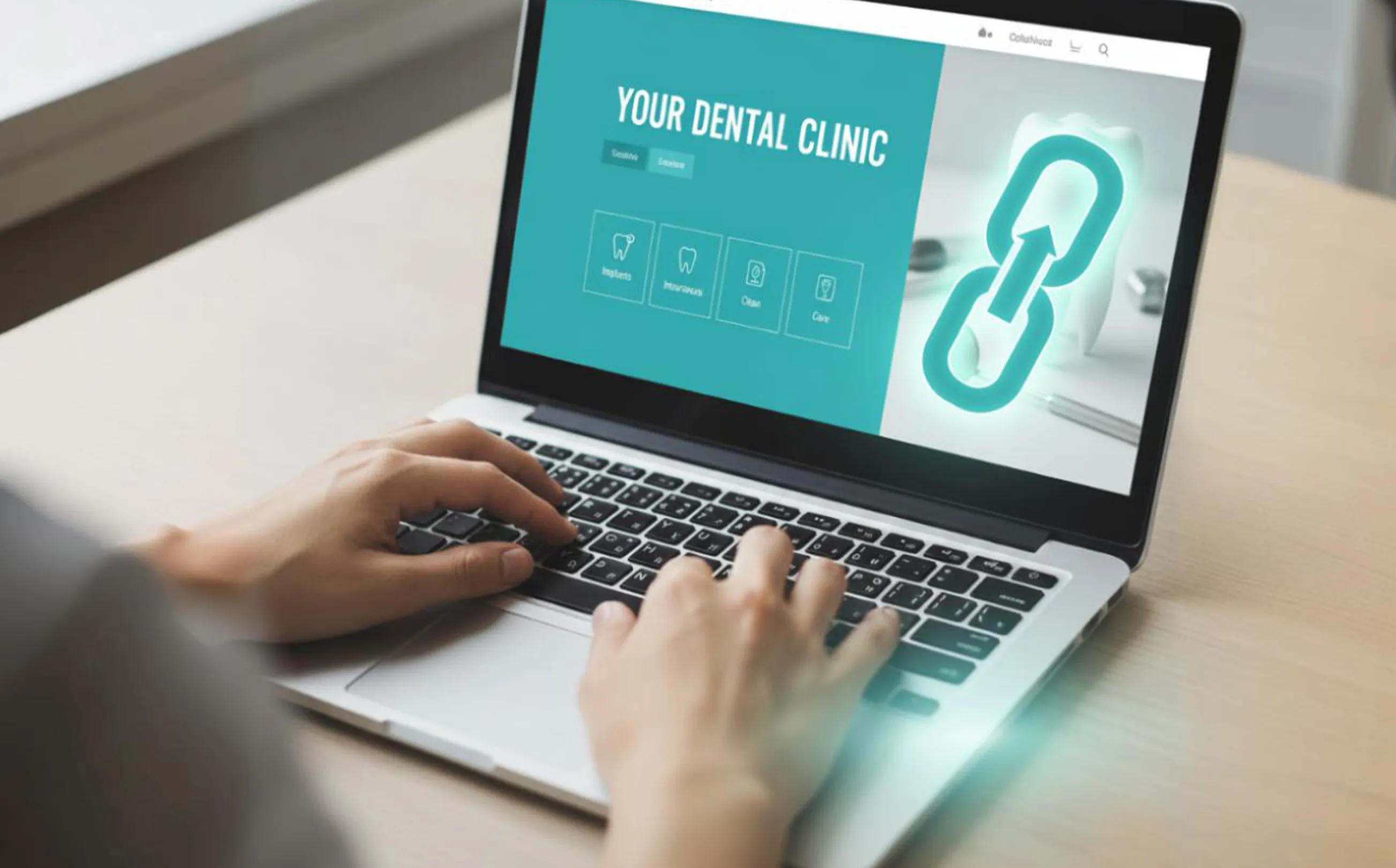
How to Build Quality Backlinks to Your Dental Website
Learn effective, safe, and proven strategies to build high-quality backlinks to your dental website. Dental Base explains the best methods to improve your website authority, boost rankings, and attract more patients—without spammy tactics
Share:
Table of contents
Why Backlinks Still Drive Dental Website Rankings
Every time another website links to yours, Google treats it as a signal that your content is worth referencing. For dental practices competing in local search, building quality backlinks to your dental website is one of the few things that separates page one from page three.
According to a Backlinko study of 11.8 million Google search results, the #1 ranking result has an average of 3.8x more backlinks than positions 2 through 10. That gap is even more significant for dental practices, where most competitors have weak or nonexistent link profiles. Ahrefs data shows that 95% of all web pages have zero backlinks, which means the bar is low if you are willing to put in the work.
This guide covers 10 proven strategies for dental link building, ranked by effort and impact. Each tactic includes the reasoning behind why it works, where to start, and how it connects to your broader dental SEO strategy.
Why This Matters for Your Practice
According to BrightLocal, the top 3 positions in Google's Local Map Pack capture over 70% of clicks. Backlinks are one of the key factors that determine whether your practice appears in those top spots or gets buried below the fold.
What Makes a Dental SEO Backlink Worth Having
Not every link helps your rankings. A backlink from a random tech blog in another country does nothing for a dental practice in Austin. Google evaluates links based on relevance, authority, and context. For dental websites specifically, the strongest links come from health-related sites, local organizations, and professional dental associations.
Five Markers of a Quality Dental Backlink
- Relevant: the linking site relates to health, dentistry, wellness, or your local area
- Authoritative: the site has real traffic, a history of quality content, and is recognized in its space
- Contextual: the link sits within a meaningful paragraph, not buried in a footer or sidebar
- Natural: the link exists because your content genuinely adds value, not because you paid for it
- Local: the site serves your city or region, which strengthens your local search relevance
Google's guidelines for YMYL (Your Money or Your Life) sites hold health content to a higher standard. Dental websites fall into this category. That means links from authoritative health sources carry more weight than links from general blogs, and spammy links carry more risk than they would for a non-health site.
Related: Before building links, make sure your site targets the right search terms. → Top 10 Dental Keywords You Should Be Ranking For
10 Proven Ways to Build Local Backlinks for Dentists
These strategies are ordered by a combination of ease and impact. The first few are things any practice can do this week. The later ones require more effort but produce stronger results over time.
1. Claim Every Relevant Dental Directory Listing
Dental directories are the lowest-effort, highest-return backlink source for any practice. Each listing creates a backlink and a local citation, which tells Google your practice is real, located where you say it is, and connected to the dental industry.
Start with these directories, then expand to smaller regional ones:
- Google Business Profile (foundational, not optional)
- Healthgrades, Zocdoc, and WebMD
- Your state dental association directory
- ADA Find-a-Dentist
- Yelp, Bing Places, and Apple Maps
- Local chamber of commerce website
Make sure your name, address, and phone number (NAP) are identical across every listing. Inconsistencies confuse Google and weaken the citation value.
2. Join Professional Dental Associations
Membership in professional organizations provides backlinks from some of the highest-authority sites in dentistry. The ADA, your state dental association, and specialty organizations (AAO, AAE, AACD) all maintain member directories that link to your website.
These links carry significant weight because Google recognizes these organizations as authoritative in the dental space. A single link from your state dental association is worth more than dozens of links from generic directories. Most associations also offer member badge programs, giving you a trust signal to display on your site.
3. Sponsor Local Events and Organizations
When you sponsor a local 5K, school fundraiser, or youth sports team, the organizing website almost always lists sponsors with a link. These are high-quality local backlinks that also build goodwill in your community.
The reason local links are so valuable for dental practices is geographic relevance. Google uses local signals to determine which businesses to show in the Map Pack. A link from your city's Little League website tells Google that your practice is an active, recognized part of that community. That kind of signal is difficult for competitors to replicate unless they do the same work.
Want a dental SEO strategy that includes link building?
DentalBase builds backlink profiles as part of a full SEO program designed specifically for dental practices.
Learn About Dental SEO →4. Get Featured in Local News and Publications
Local journalists and online publications regularly need expert sources for health stories. Dental topics like fluoride safety, kids' oral health, or the connection between gum disease and overall health are reliable angles that generate coverage.
Reach out to your local newspaper, TV station website, or community blog when you have something newsworthy: a new office opening, a free dental day, new technology like digital scanners, or a take on a trending health topic. Each mention with a link to your site is a backlink from a trusted local source.
You can also register on platforms like HARO (Help a Reporter Out) or Connectively, where journalists post source requests. Responding to dental or health-related queries positions you as a quoted expert, which typically earns a backlink from the publication.
5. Create Content That Earns Links Naturally
The most sustainable link building strategy is creating content that other websites want to reference. For dental practices, this means going beyond basic blog posts and producing something with genuine reference value.
Content types that attract backlinks for dental websites:
- Original survey data (e.g., "We surveyed 500 patients about dental anxiety. Here is what we found.")
- Detailed procedure guides that other health sites reference
- Local dental health statistics or community health reports
- Infographics that simplify complex topics like orthodontic timelines or implant candidacy
- Cost comparison guides (e.g., "What dental implants cost in [your city]")
Original data is the strongest link magnet. If you run a patient survey or compile data from your practice (anonymized), bloggers, journalists, and other dental sites will cite your findings. This is why SE Ranking reports that SEO agencies allocate an average of 32% of their total SEO budget to link building. Content-driven links compound over time.
Related: AI search is changing how patients find dental content. Make sure yours is optimized. → AI Search Optimization for Dentists 2026 Guide
6. Guest Post on Health and Wellness Websites
Guest posting means writing an article for another website that includes a link back to your dental site. It works because the host site gets free quality content, and you get a contextual backlink from a relevant source.
Target sites that publish oral health, wellness, parenting, or senior care content. Avoid writing promotional pieces about your practice. Instead, provide genuinely useful information like "5 Signs Your Child Needs to See an Orthodontist" or "How Oral Health Affects Heart Disease Risk." The link to your site appears naturally in your author bio or within the article itself.
One important filter: check the site's domain authority and traffic before pitching. A guest post on a site with no traffic and no existing content provides minimal value. Look for sites that rank for health-related keywords and have an active readership.
7. Build Relationships with Complementary Health Providers
Orthodontists, pediatricians, physical therapists, optometrists, and other health providers in your area are natural link partners. Many maintain a "resources" or "recommended providers" page on their website where they link to trusted referral partners.
Start by identifying providers you already refer patients to (or who refer patients to you). A simple email offering to add them to your referral list in exchange for being added to theirs creates mutual value. These links are contextual, local, and health-related, which checks three of the five quality markers at once.
8. Provide Testimonials to Vendors You Work With
Dental labs, equipment suppliers, software companies, and marketing partners regularly feature client testimonials on their websites. When you provide a testimonial, they typically include your practice name and a link back to your site.
Think about the vendors you use: your PMS provider (Dentrix, Open Dental, Eaglesoft), your dental supply company, your lab, your marketing agency. Each testimonial is a potential backlink from a site with high domain authority in the dental industry. This takes 10 minutes to write and can yield a link that persists for years.
9. Create Shareable Visual Content
Infographics, dental emergency flowcharts, and child-friendly brushing guides get shared and embedded by other websites more often than plain text articles. When another site embeds your graphic, they link back to you as the source.
A dental emergency decision tree ("Is this a dental emergency? Follow this flowchart.") is the kind of content that school nurses, parenting blogs, and community health sites would embed. The production cost is low (a designer or AI tool can create it), but the link value compounds as more sites discover and reference it.
10. Conduct and Publish Original Research
Original data is the most powerful backlink magnet in SEO. If you survey your patients about dental anxiety, treatment preferences, or insurance confusion and publish the results as a blog post with clear data visualizations, other dental sites, journalists, and bloggers will cite your findings.
You do not need a massive sample size. A survey of 100-200 patients with clear methodology and honest reporting is more valuable than most of the recycled statistics circulating in dental marketing content. The key is being the original source, which makes your page the one everyone else links to.
Related: Your website design affects whether visitors stay or bounce after clicking through from search. → Best Dental Website Designs for 2026
Link Building Strategies That Will Hurt Your Dental Website Authority
Avoid These Tactics
- Buying backlinks from link farms or freelance marketplaces. Google's spam detection has improved significantly, and purchased links from irrelevant sites can trigger manual penalties.
- Participating in link exchange schemes ("I'll link to you if you link to me"). Google recognizes reciprocal link patterns and discounts them.
- Submitting to hundreds of low-quality directories. A handful of relevant, authoritative directories is worth more than 500 spam directories.
- Using automated link-building tools or services that promise thousands of links. These almost always produce spammy, penalizable links.
- Placing links in blog comments, forum signatures, or widget footers. These are nofollow at best and spammy at worst.
Because dental websites fall under Google's YMYL classification, the consequences of bad backlinks are more severe than they would be for a non-health site. A penalty can take months to recover from and erase the organic rankings you have built. If you discover toxic backlinks pointing to your site, use Google Search Console to identify them and the disavow tool to neutralize them.
Dental Link Building: Effort vs. Impact
Use this table to prioritize your link building strategy based on your team's capacity. Start with the low-effort tactics and add higher-effort strategies as your SEO program matures.
| Strategy | Effort | Link Quality | Best For |
|---|---|---|---|
| Directory listings | Low | Medium-High | Every practice (start here) |
| Association memberships | Low | High | Authority building |
| Vendor testimonials | Low | Medium | Quick wins from existing relationships |
| Local sponsorships | Medium | High | Local Map Pack rankings |
| Referral partner links | Medium | High | Health-relevant authority |
| Local press coverage | Medium | High | Trust + local relevance |
| Guest posting | High | High | Topical authority |
| Linkable content creation | High | Very High | Long-term compounding links |
| Original research | High | Very High | Strongest link magnet |
Your Link Building for Dental Practices Action Plan
Start with the first three items this week. Add one new tactic per month as you build momentum.
Dental Backlink Checklist
- Audit your current backlink profile using Google Search Console or a free tool like Ahrefs Webmaster Tools
- Claim and verify listings on Google Business Profile, Healthgrades, Zocdoc, and your state dental association
- Ensure NAP (name, address, phone) consistency across all listings
- Identify 3-5 local organizations or events to sponsor this quarter
- Reach out to 2-3 complementary health providers about mutual referral page links
- Write one piece of linkable content per month (guide, infographic, or survey)
- Pitch one guest post per quarter to a health or wellness publication
- Provide testimonials to 2-3 vendors you currently use
- Monitor new backlinks monthly and disavow any toxic links
How DentalBase Builds Dental Website Authority
Link building is one piece of a larger SEO strategy. Without strong on-page optimization, a fast website, and content that targets the right keywords, even good backlinks will not move the needle.
DentalBase provides full-service dental SEO that includes backlink strategy, content creation, technical optimization, and local search management.
Ready to Build Authority for Your Dental Website?
See how DentalBase combines SEO, content, and AI-powered call handling to turn search visibility into booked patients.
Book a Free DemoExplore more guides and tools for dental practice growth.
Browse ResourcesFrequently Asked Questions
Backlinks help search engines decide which dental websites are trustworthy. When your dentist has quality backlinks, their site is more likely to appear at the top of Google results, making it easier for you to find a credible and established practice.
Look for mentions or links from well-known sites such as dental associations, local news outlets, or healthcare directories. These backlinks signal that the practice is recognized and trusted by other credible organizations.
Yes. Links from spammy or unrelated websites can hurt a dental site’s rankings and credibility. Ethical practices avoid paid or automated links and focus on community, education, and professional recognition instead.
Absolutely. When dentists participate in school programs, charity events, or free dental days, local websites often link to them. These local backlinks improve visibility and help patients find nearby, community-focused care.
Was this article helpful?
Written by
DentalBase Team
The DentalBase Team is a collective of dental marketing experts, AI developers, and practice management consultants dedicated to helping dental practices thrive in the digital age.


