How Illinois Dental Practices Are Using AI to Increase New Patient Bookings
Learn how to increase dental bookings with AI Illinois practices use—AI reception, fast follow-up, scheduling automation, and fewer missed-call losses.
Share:
Table of contents
Ask most dental owners what they want and they’ll say “more new patients.” But in Illinois, many practices already have demand—especially in competitive pockets, growing suburbs, and busy metro corridors.
The real issue isn’t always lead volume. It’s what happens after the lead shows up.
Did someone answer the call?
Did the office respond fast enough?
Did the patient get a clear path to schedule?
Did follow-up happen consistently?
Did the appointment actually get confirmed and show up on time?
That’s why the most practical 2026 growth conversation in dentistry is shifting to:
How do we increase bookings with the demand we already have?
And that’s where increase dental bookings with AI Illinois practices are implementing comes in. AI isn’t “marketing magic.” It’s a conversion system—built to stop leaks in the patient journey.
The booking bottleneck Illinois practices see every week
If your front desk is overwhelmed, it’s not because they’re doing poorly. It’s because the modern dental front desk is asked to do everything at once:
answer calls (new + existing patients)
schedule and reschedule
handle insurance questions
collect payments and discuss financing
coordinate referrals and records
confirm appointments
manage a packed lobby
respond to texts, emails, and online requests
Even a great team can’t do all of that while also responding instantly to every inbound lead.
And in 2026, speed matters. A prospective patient who calls three offices will often book with the one that:
answers first
replies fastest
makes scheduling easiest
feels organized and confident
So the first lesson in the Illinois AI booking playbook is simple:
Don’t just generate leads—convert them.
AI improves conversion by reducing response delays, recovering missed calls, and automating follow-up that otherwise slips through the cracks.
The “3 booking leaks” AI fixes first
If you want a predictable increase in bookings, you don’t start by adding more tools. You start by fixing the most common leaks.
Leak #1: Missed calls (the silent killer)
Most practices miss calls during predictable peak times:
first hour of the morning
lunch
late afternoon
during check-in/check-out rush
during staff shortages or sudden emergencies
Every missed call is a fork in the road:
patient books elsewhere or patient gets recovered quickly.
AI’s job is to increase the number of times you choose the second outcome.
Leak #2: Slow follow-up to web forms and chat
Many “Request an Appointment” forms are basically a waiting room. If the patient doesn’t hear back quickly, they keep searching.
AI closes that gap by responding instantly and capturing everything needed to schedule.
Leak #3: Inconsistent follow-up
Some patients won’t book in the first conversation. They hesitate. They compare. They need a nudge. Most practices intend to follow up—but the day gets busy, and the follow-up doesn’t happen consistently.
AI makes follow-up consistent. Consistency increases bookings.
The highest ROI workflow: missed-call text-back
If you implement only one AI workflow first, this is often the winner.
How it works
Patient calls
Office misses call (busy / no answer)
Within 30–90 seconds, AI texts:
“Sorry we missed you—are you looking to schedule an appointment?”Patient replies with intent
AI gathers basics and either schedules (if enabled) or hands off to staff with a summary
Why it increases bookings
Because it preserves momentum. It turns a “dead end” (voicemail) into a live conversation.
What to capture in the text flow
Keep it short and booking-focused:
appointment need (cleaning, pain, consult)
urgency (today / this week / flexible)
preferred time windows
contact details
insurance note (optional)
This workflow alone can produce a noticeable lift, because it recovers opportunities you were already losing.
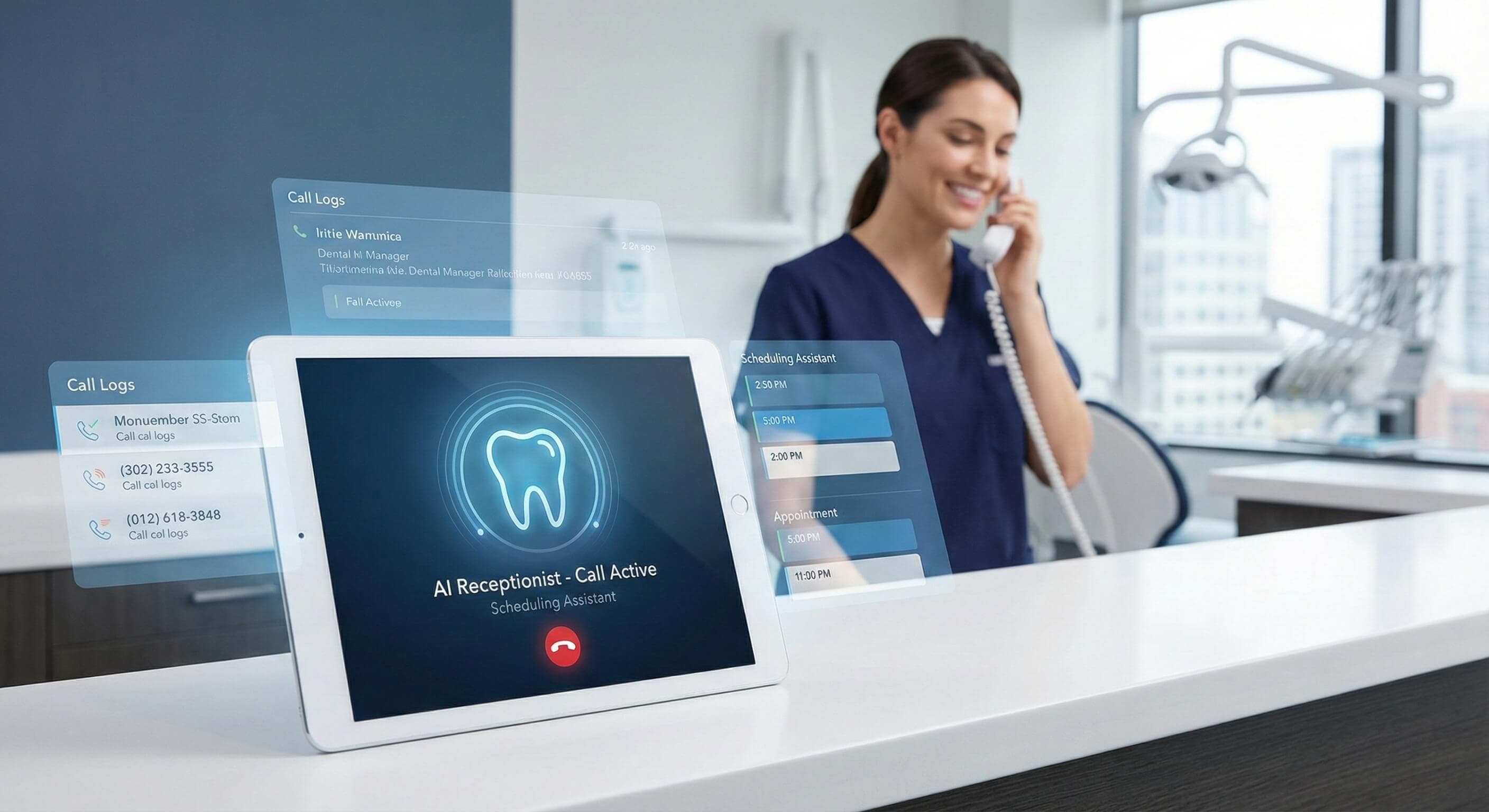
AI call answering service: overflow coverage that protects the front desk
Illinois practices are increasingly using AI as a backup receptionist, not a replacement.
What AI handles well on calls
FAQs (hours, address, parking, services offered)
intent capture (new patient vs existing)
urgency triage (“pain now” vs routine)
capturing contact information
collecting scheduling preferences
routing calls to the right place
What should still be human-led
complex insurance disputes
billing conflicts
sensitive clinical discussions
anything that requires nuance or empathy beyond the script
unusual scheduling situations with multiple providers/constraints
The goal is simple:
Make sure every caller gets an answer and a next step.
Even if the AI doesn’t finalize the appointment, capturing intent and details dramatically increases the chance your team closes the booking.
AI appointment scheduling: reduce phone tag, speed up booking
A lot of booking friction comes from this pattern:
Patient: “I want an appointment.”
Office: “What days work?”
Patient: “Not sure—maybe next week.”
Office: “We have Tuesday at 10 or Thursday at 3.”
Patient: “I’ll call back.”
That’s not a scheduling process. That’s a conversion leak.
Two practical approaches Illinois practices use
Option A: AI-assisted scheduling (safe and simple)
AI collects all details to make it easy for staff to finalize:
visit type
urgency
time preferences
any relevant notes
Staff reaches out with two clear options and closes quickly.
Option B: limited self-scheduling
AI offers booking for defined visit types:
new patient exam
hygiene visits
consult windows
This reduces back-and-forth and increases the likelihood the patient commits immediately.
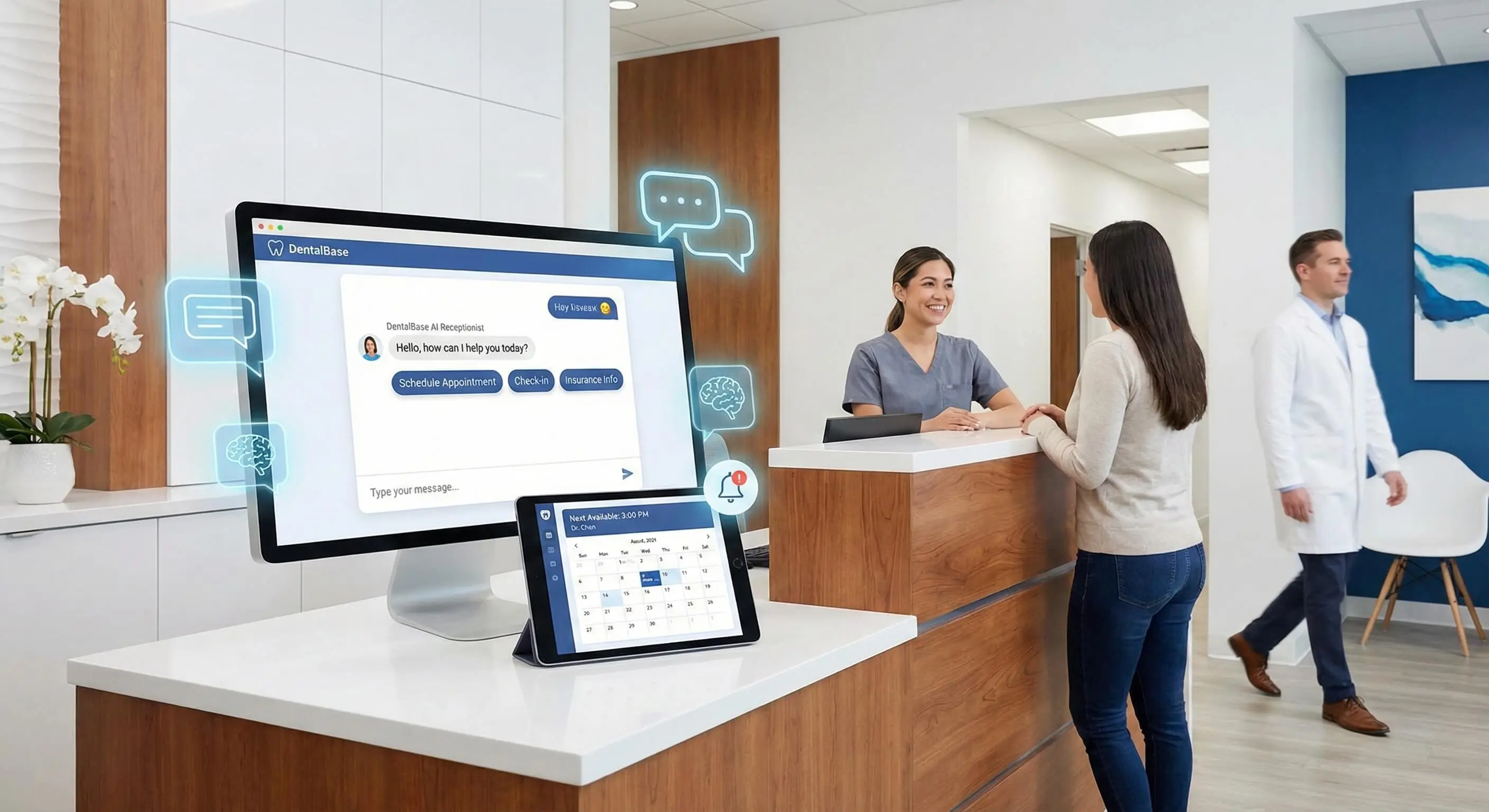
AI website chat for dental offices: convert “browsers” into bookings
A significant share of patients don’t want to call first—especially if they’re shopping around. They’ll:
click “Request Appointment”
ask a question in chat
browse pricing language
check insurance signals
If chat is “offline” or replies are slow, you lose them.
What AI chat should do (booking-first)
greet and ask what they need
offer quick answers
capture contact info early (without being pushy)
guide toward scheduling
offer a booking link or “best times” question
create a summary for staff if needed
The key: response time
Most offices lose website leads not because the lead is bad—but because the lead is impatient. AI gives you instant response without adding workload.
Dental lead follow-up automation: where bookings get “unstuck”
Not every lead books immediately. That’s normal. What’s not normal is letting those leads vanish.
AI follow-up sequences keep the conversation moving.
Example follow-up sequence (simple and effective)
Day 0 (same day):
“Would you like the soonest appointment or a specific day/time?”
Day 1:
“We have an opening tomorrow afternoon—should I reserve it?”
Day 3:
“Just checking—do you still want to schedule your new patient visit?”
Day 7:
“If you’d like, I can send availability for next week too.”
This isn’t spam. It’s structured helpfulness.
What makes follow-up convert better
short messages
clear choices
easy reply options
respectful frequency
immediate scheduling path
In Illinois practices, automation wins because it does what humans can’t do consistently when the day gets hectic.
Dental conversion optimization: turn “interest” into “scheduled”
If you want to increase new patient bookings, you need to optimize conversion—not just communication.
Here are high-impact conversion optimizations AI supports:
1) Standardize your new patient call flow
The best call flows do 3 things:
identify intent
reduce friction
drive to a next step
A simple framework:
“Routine or urgent?”
“How soon do you want to be seen?”
“Mornings or afternoons?”
“Here are two options…”
2) Add “next step certainty”
Patients book when they feel guided. AI scripts should always end with:
a booking link
two clear appointment options
a clear callback window
a confirmation of what happens next
3) Reduce scheduling complexity
Patients don’t want to explain their story multiple times. AI summaries help your staff close faster.
4) Make rescheduling easy
When rescheduling is painful, patients ghost. AI can simplify reschedules by collecting preferences via text.
The “Illinois Booking Engine” playbook (step-by-step)
If you want to implement this without chaos, do it in order.
Step 1: Baseline your numbers (so you can prove ROI)
Track for 7–14 days:
inbound calls/week
missed calls/week
form/chat inquiries/week
average response time
new patient appointments booked/week
show rate
Step 2: Launch missed-call text-back
This is usually the fastest ROI step.
Step 3: Add AI chat + instant form response
Capture web demand immediately.
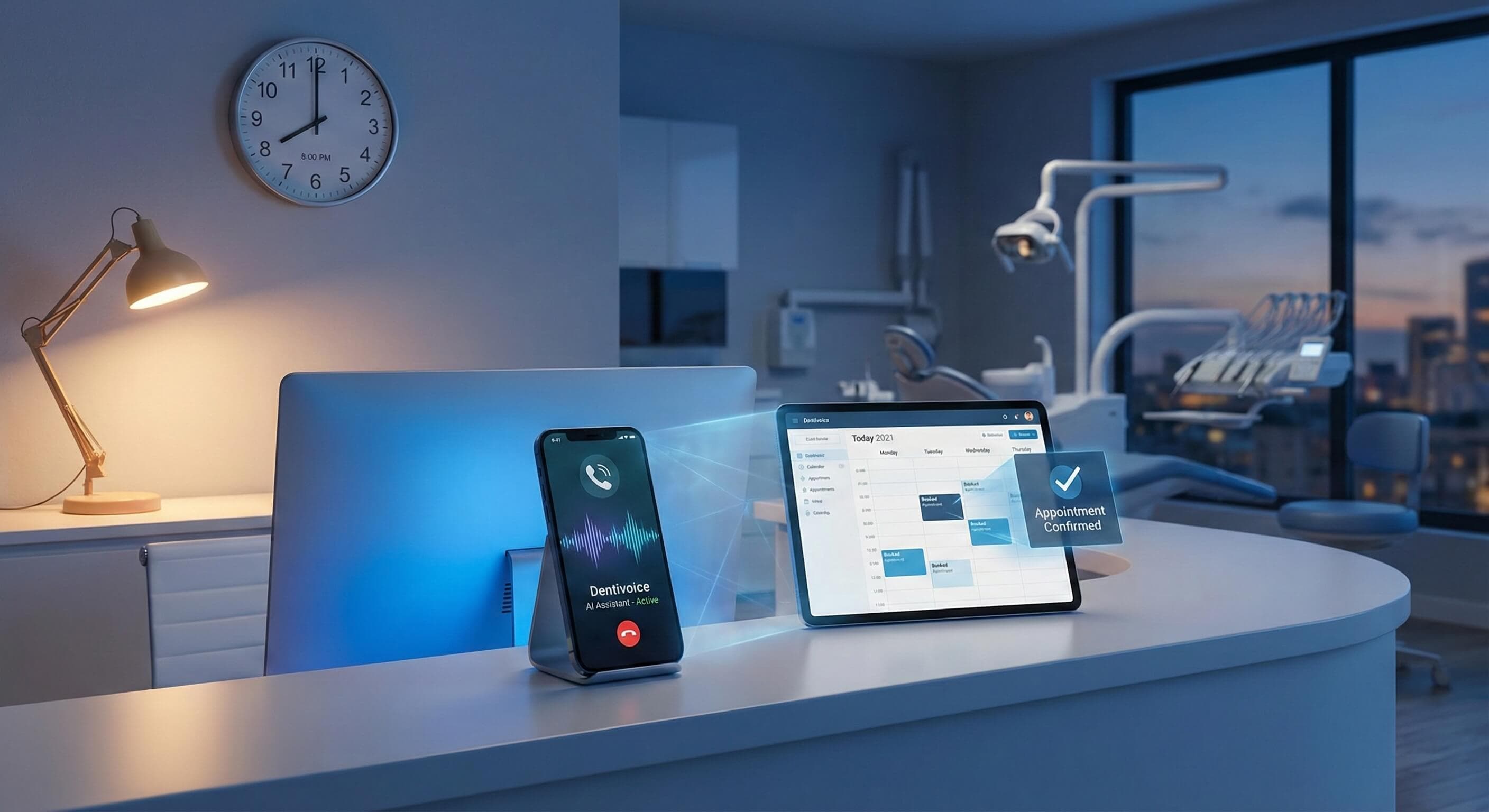
Step 4: Add AI call answering overflow
Cover peaks and after-hours.
Step 5: Add follow-up automation for unbooked leads
Close the gap between “interested” and “scheduled.”
Step 6: Optimize confirmation + reminders
Protect your bookings with better show rates.
The 5 KPIs that show booking growth (track weekly)
AI becomes a booking engine when you measure outcomes.
Answer rate
Missed-call recovery rate
Lead response time (calls + web + chat)
Lead-to-appointment conversion rate
Show rate (no-shows / late cancels)
If these improve, new patient bookings will usually rise—even without increasing ad spend.
Common mistakes Illinois practices should avoid
Mistake 1: Implementing AI without scripts
Fix: write your tone, FAQs, and escalation rules first.
Mistake 2: Trying to automate every scenario
Fix: start with new patient capture + follow-up workflows.
Mistake 3: No human handoff plan
Fix: AI should generate clean summaries and clear next steps for staff.
Mistake 4: Not reviewing performance
Fix: weekly transcript reviews and script refinement.
Mistake 5: Tracking “activity” instead of bookings
Fix: focus on conversion and show rate, not just “messages sent.”
A realistic example of how bookings increase (hypothetical)
Let’s say an Illinois practice gets:
120 inbound calls/week
misses 15% during peak times (18 calls)
only recovers 30% via voicemail callbacks (about 5)
loses ~13 call opportunities weekly
Add missed-call text-back + AI capture:
recover even half of those 13 lost opportunities (6–7)
convert a portion into booked appointments
That’s meaningful growth without spending more on marketing—because you’re converting demand you already had.
Bottom line
Illinois dental practices in 2026 are increasing new patient bookings by focusing on what actually moves the needle:
faster response
fewer missed calls
easier scheduling
consistent follow-up
better show rates
AI makes those improvements scalable and measurable. If your goal is more bookings, start where the leaks are—then build your booking engine step by step.
Frequently Asked Questions
Missed-call text-back plus instant response to website forms/chat typically creates the quickest improvement in booked appointments.
Often yes for defined appointment types (new patient exam, hygiene, consult windows). If not, AI still increases bookings by collecting details and creating clean handoffs for staff.
Not if it’s scripted in your practice voice, clearly explains next steps, and escalates complex situations to a human quickly.
Was this article helpful?
Written by
DentalBase Team
The DentalBase Team is a collective of dental marketing experts, AI developers, and practice management consultants dedicated to helping dental practices thrive in the digital age.