Dental Practice Peak Call Hours: When Calls Spike (2026)
Dental practice peak call hours hit Monday mornings, lunch, and late afternoon. See when calls spike and how to cover those windows without overstaffing.
Share:
Table of contents
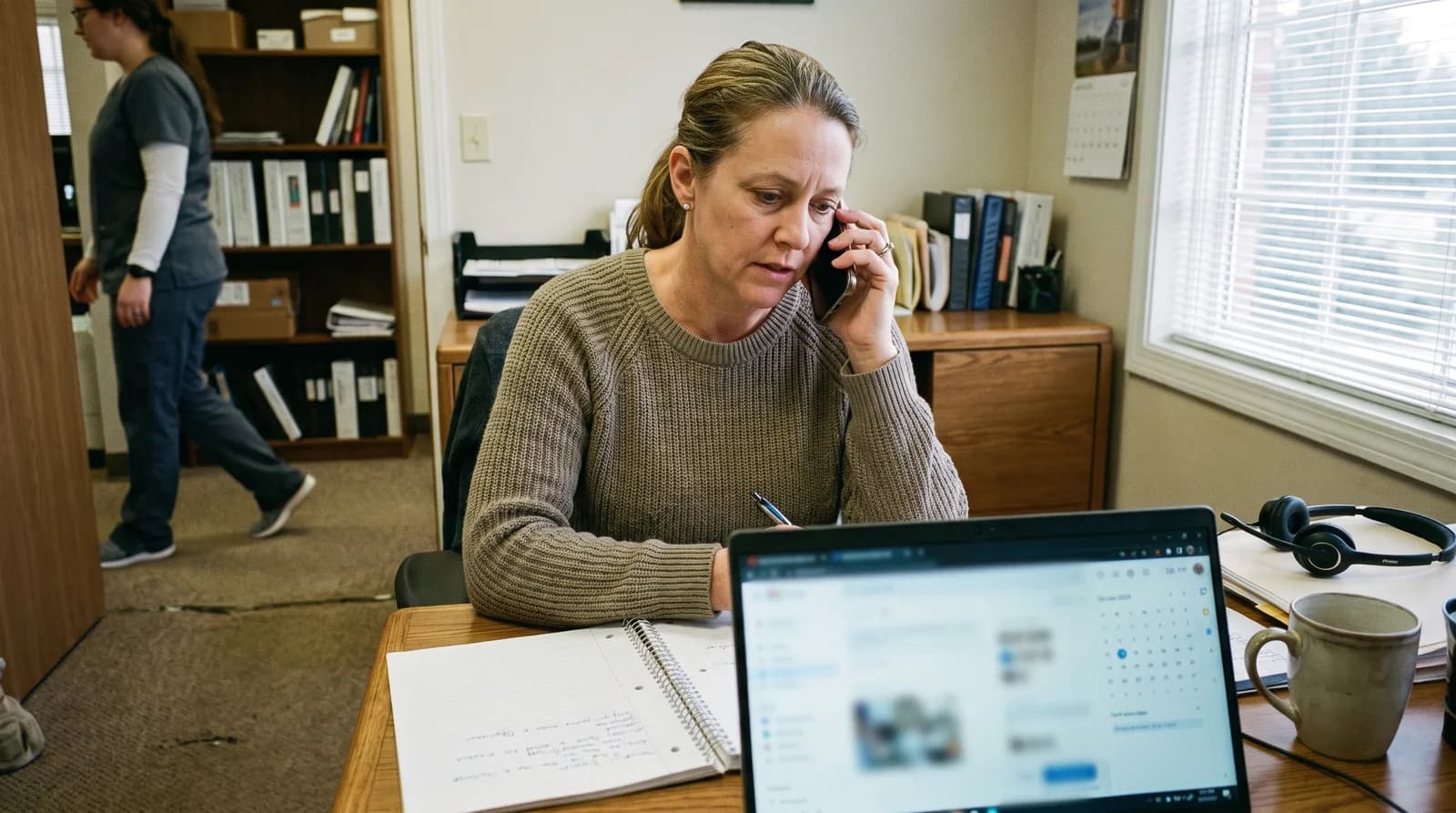
Every dental practice peak call hours problem looks the same on a call report: a cluster of inbound calls hits at the same time, your front desk is mid-checkout, and three callers roll to voicemail. Those missed windows are not random. They repeat on a schedule you can predict.
Industry call-tracking data reported by Dental Economics puts the average practice at 15 to 20 missed calls a week, and a large share of those land inside a handful of predictable spikes. Miss the spike, and you miss new patients who simply dial the next office. Patient-choice research from the ADA Health Policy Institute reinforces why that hurts: convenience consistently ranks among the top reasons people pick one dentist over another.
This guide maps when calls surge, why those windows form, and how to cover them without adding a full-time hire. You will get a peak-hour surge map, the seasonal patterns that drive volume up 40 to 60 percent, a coverage plan, and the two metrics that tell you whether any of it is working.
When are dental practice peak call hours?
Dental practice peak call hours cluster around Monday mid-morning, the lunch window, and late afternoon. Monday 10 AM is the single heaviest hour for most general practices, driven by weekend pain that waited for the office to reopen.
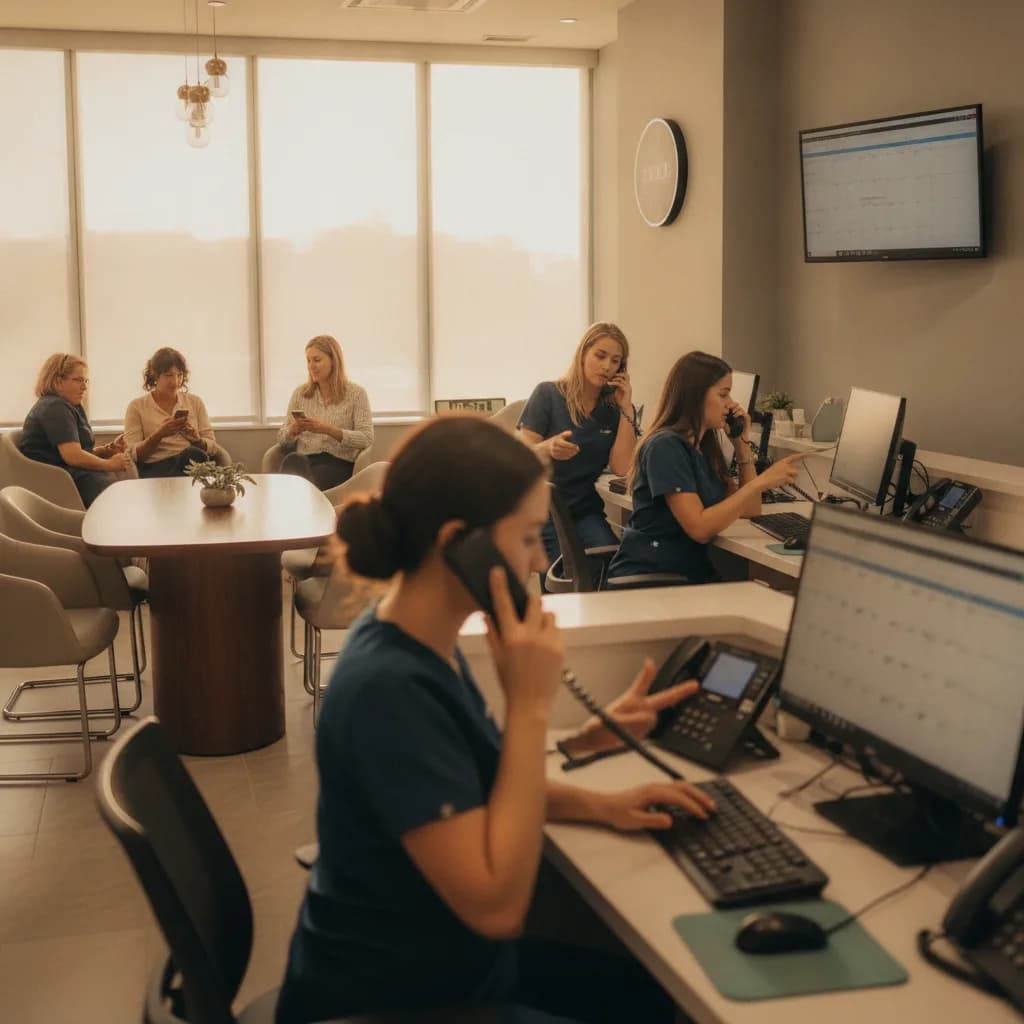
The pattern holds across practice types. Monday carries the weekend backlog. The 9 to 11 AM shoulders fill with people calling before work meetings start. Then comes the lunch gap, 12 to 1 PM, when patients are free to call but your front desk is also away. The 3 to 5 PM rush picks up again as the workday winds down and parents juggle pickups.
Map your own peaks before you fix anything. Pull 90 days of call logs from your phone system or VoIP provider, then bucket calls by hour and weekday. Most owners are surprised: the spikes are sharper and more concentrated than they assumed. While the logs are open, flag calls under 10 seconds during peak windows, since those can point to dropped calls from an unreliable VoIP connection rather than callers hanging up.
The weekly surge map
| Window | Why it spikes | Risk level |
|---|---|---|
| Monday 8-11 AM | Weekend pain and backlog hit at open | Highest |
| Daily 12-1 PM | Patients free to call, staff at lunch | High |
| Daily 3-5 PM | End-of-day calls, parent schedules | High |
| Daily 8-9 AM | Pre-work calls before meetings | Moderate |
Related: A surge map only helps if your phone system can report call volume by hour. See what to ask about dental office phone systems →
Why do calls spike at the same times every week?
Calls spike on a schedule because patient behavior follows work and family routines, not your staffing plan. People call when they have a free moment, which is exactly when your team is busiest with in-office patients. The two curves collide.
Monday is the clearest example. A toothache that started Saturday gets ignored through the weekend, then everyone dials at once when the office reopens. The lunch gap is the second collision: callers step away from their own jobs to handle personal tasks at the same hour your front desk takes its break. When that call rolls to voicemail, the practice reads as hard to reach, and reachability is one of the first things a new patient judges.
The reality is that staffing to the average hides the problem. A practice averaging 8 calls an hour might see 20 in the Monday spike and 2 at 4:30 on a Thursday. Average coverage leaves the peak under water. Look at the peaks, not the mean. Weave Communications reporting also notes that when a call goes unanswered, most patients simply contact another practice, so a single under-covered hour leaks new patients straight to a competitor.
Calls that hit during a spike still need a real answer
DentiVoice answers inbound calls during your busiest windows, books appointments, and routes anything urgent to your team. No voicemail, no lost new patient.
See the AI receptionist →How much do seasonal surges raise call volume?
Seasonal surges can lift call volume 40 to 60 percent above baseline for days or weeks at a time. The biggest drivers are the January insurance reset, back-to-school checkups, and post-holiday demand, each of which stacks extra calls onto your normal daily peaks.
January is the heaviest. Benefits reset, deductibles start fresh, and patients who deferred treatment in December call to book. Back-to-school season pushes pediatric and family practices hard in August, when CDC oral health guidance on routine checkups prompts parents to schedule before the year starts. And any marketing push, a postcard drop, a new Google Ads campaign, a community event, creates its own spike that lands on top of the weekly pattern.
- January insurance reset: new benefit years drive a multi-week booking rush, often the highest-volume stretch of the year.
- Back-to-school (August): parents schedule checkups before the school year, concentrated in family and pediatric offices.
- Post-holiday (early January): deferred December treatment plus weekend backlog.
- Campaign spikes: ad flights and mailers can add a 40 to 60 percent lift for the days they run.
Plan campaigns and coverage together. Launching a paid campaign without extra phone capacity spends ad budget to generate calls you then miss. That is the most expensive kind of missed call.
Related: Marketing-driven surges and after-hours overflow are related coverage problems. Read the after-hours phone coverage guide →
How do you cover peak call windows without overstaffing?
You cover peak windows by matching capacity to the wave instead of staffing to the average. The practical options are staggered staff breaks, a part-time peak-hour role, an overflow answering service, or an AI receptionist that handles the spike and hands off to your team.
Staffing to the wave starts with the schedule. Move staff lunches out of the 12 to 1 collision, so someone always covers the phone. For Monday mornings, a second person on phones for two hours often pays for itself in booked new patients. The cost side matters here: front-desk wages are a real line item, and Bureau of Labor Statistics data tracks steady demand for dental support staff, so a dedicated peak-hour hire competes with a tight labor market. Beyond scheduling, three coverage models compete.
Related: Ready to compare every coverage option side by side? Our 2026 dental virtual receptionist buyer’s guide walks through pricing, vendors, and what to ask before you sign.
Comparing peak-hour coverage options
| Option | Fits | Trade-off |
|---|---|---|
| Staggered breaks | Lunch-gap misses | Free, but caps at current headcount |
| Part-time peak role | Predictable daily peaks | Hiring and training cost |
| Overflow service | Spillover only | Per-call fees, limited booking access |
| AI receptionist | Spikes plus after-hours | Setup and PMS integration time |
A virtual layer for peak windows only is the lowest-risk start. You keep your team answering when they can, and route the overflow during known spikes instead of paying for full-time capacity that sits idle by mid-afternoon. Whether you hire or automate depends on your call volume and budget.
Related: The hire-versus-automate decision comes down to your call math. Compare hiring a front desk vs automating →
What metrics tell you peak coverage is working?
Two metrics tell you whether peak coverage is working: call abandonment rate (CAR) and peak-window miss rate. Track them by hour, not as daily averages, because the average hides the exact windows where you lose patients.
Call abandonment rate is the share of inbound calls that hang up before reaching a person. Industry call data from Marchex puts the average hold time before a hang-up at about 90 seconds, and Forbes reporting notes that roughly 80 percent of callers who hit voicemail never leave a message. A high CAR in your Monday 10 AM bucket is a direct read on lost new patients.
Peak-window miss rate isolates the spikes. Calculate missed calls divided by total calls for each peak window separately. If your overall miss rate is 12 percent but your Monday-morning miss rate is 30 percent, the fix belongs in that window, not across the whole week. Make that peak-window number part of your weekly dental practice KPIs dashboard, since answer-rate dips tend to show up in new patient counts two to three weeks later.
- Call abandonment rate: abandoned calls divided by total inbound, tracked hourly.
- Peak-window miss rate: missed calls divided by total, calculated per spike window.
- Speed to answer: seconds before a live answer during peaks; aim under your 90-second hang-up threshold.
Set a 30-day baseline before you change anything. Then re-measure the same windows after the fix. You want CAR and peak-window miss rate to fall in the exact spikes you targeted, with new-patient bookings holding or rising. If your tracking starts at the website, Google's local business structured data can make your phone number and hours easier for search engines to surface, which shifts some peak demand to click-to-call.
A worked example: the Monday 10 AM bucket
Say a three-provider practice logs 22 calls in the Monday 10 to 11 AM hour. Six roll to voicemail and four of those never call back. At an average new-patient value most owners put in the hundreds to low thousands of dollars over the relationship, that one hour quietly leaks revenue every single week.
Now run the math on a fix. If a peak-hour coverage layer recovers even three of those six calls and converts two into booked new patients, the weekly return usually clears the cost of the coverage by a wide margin. The point is not the exact figure. The point is that you can only see the leak when you measure the bucket, not the daily average.
Measure your peak-hour miss rate first
DentalBase resources include call-tracking templates and benchmarks to find your worst windows before you spend on coverage. See the data, then decide.
Browse the resources →Do peak call patterns differ for multi-location practices?
Yes. Multi-location groups face overlapping peaks across sites, which makes a shared coverage layer far more efficient than staffing each front desk for its own spike. One pooled answer point can absorb the Monday surge across every location at once.
Single-site offices can often fix peaks with scheduling alone. Groups and DSOs cannot, because the same 10 AM Monday spike hits four front desks simultaneously, and four separate part-time hires is expensive and hard to manage. A centralized or AI-driven layer routes overflow from whichever site is slammed in that minute.
The math changes with scale. A four-location group missing even 10 calls per site during the Monday peak loses 40 potential new-patient conversations a week, every week. Pooling coverage turns four staffing problems into one capacity decision. It also catches the off-hours tail: Dental Economics data attributes about 27 percent of total patient call volume to after-hours calls, which a shared layer can absorb instead of leaving each site to its own voicemail. Solo practices have a simpler version of the same virtual receptionist question.
Related: Group practices and DSOs handle peak overflow differently from single sites. See how DSOs cut missed calls group-wide →
Related: Comparing phone systems across several offices? See our full breakdown of the best AI phone systems for multi-location dental groups.
Cover the spike, keep the patient
The single insight worth keeping: peak call hours are predictable, so the missed calls inside them are preventable. You are not fighting random volume. You are covering four or five windows you can name and measure.
Start this week. Pull 90 days of call logs, find your two worst windows, and calculate the peak-window miss rate for each. That one number tells you where a part-time hire, a schedule change, or an AI receptionist earns its keep, and where it would just sit idle.
Stop losing new patients to your busiest hour
See how DentalBase and DentiVoice cover your peak call windows, book appointments during the surge, and hand urgent calls to your team. Book a free demo.
Book a free demo →Sources & References
Frequently Asked Questions
Monday 10 to 11 AM is typically the heaviest hour, followed by the 12 to 1 PM lunch gap and the 3 to 5 PM end-of-day rush. Weekend pain and pre-work calls drive the Monday spike.
Calls follow patient work and family routines, not your staffing plan. People call during their own free moments, like lunch, which is exactly when your front desk is busiest with in-office patients.
Seasonal events can lift call volume 40 to 60 percent above baseline. The January insurance reset is usually the heaviest stretch, followed by August back-to-school checkups and any active marketing campaign.
Stagger staff lunches out of the noon collision, add a part-time peak-hour role, or route overflow to an answering service or AI receptionist during known spikes. Match capacity to the wave, not the daily average.
Track call abandonment rate and peak-window miss rate by hour. Set a 30-day baseline, apply your fix, then re-measure the same windows. You want both numbers falling in the spikes you targeted.
The peaks fall at the same times, but they hit every site at once. A shared or AI-driven coverage layer absorbs the simultaneous surge far more efficiently than staffing each front desk for its own spike.
Was this article helpful?
Written by
DentalBase Team
Expert dental industry content from the DentalBase team. We provide insights on practice management, marketing, compliance, and growth strategies for dental professionals.