Guide to the Best HIPAA-Compliant AI Dental Receptionist
Discover how to evaluate the best HIPAA-compliant AI dental receptionist solutions. Compare features, pricing, and compliance requirements.
Share:
Table of contents
Introduction
Dental practices across the United States are facing mounting administrative challenges as patient volumes increase and staffing shortages persist. With the average office spending over 40% of its operational time on administrative tasks, dental practices are seeking innovative ways to streamline front desk operations without sacrificing patient care. To address this growing burden, many are exploring the best HIPAA-compliant AI dental receptionist as a strategic solution.
The shift toward AI-powered front-desk automation represents much more than simple call answering. These advanced systems address critical pain points, such as capturing after-hours patient communications, maximizing appointment scheduling efficiency, and ensuring a consistent patient experience. However, because dental practices operate within the healthcare sector, they face complex regulatory requirements that standard, off-the-shelf AI tools simply cannot meet.
When handling sensitive patient information, HIPAA compliance is the non-negotiable foundation for any AI system. The consequences of using non-compliant technology extend far beyond regulatory fines; a data breach can cause devastating reputation damage, erode patient trust, and severely disrupt long-term practice sustainability. Identifying and implementing the right platform requires a systematic approach; one that prioritizes robust security, core functionality, and seamless integration with your existing daily workflows.
What Is a HIPAA-compliant AI Dental Receptionist?
A HIPAA-compliant AI dental receptionist is a sophisticated software solution. It automates front desk operations while adhering to strict healthcare privacy regulations. These systems use natural language processing and machine learning technologies. They handle patient communications, appointment scheduling, and routine inquiries without human intervention. For many practices, finding the best HIPAA-compliant AI dental receptionist is key to securely modernizing their operations.
How AI Receptionists Work in Dental Offices
AI dental receptionists operate through multiple communication channels. These include phone calls, text messages, and web-based chat systems. The technology processes incoming patient requests and accesses practice management systems. These systems check appointment availability and provide real-time responses. Responses are based on pre-configured parameters. Advanced systems can handle complex scenarios. These include insurance verification inquiries, treatment follow-up scheduling, and emergency triage protocols.
The AI processes patient information through encrypted pathways. It maintains conversation logs and automatically updates patient records. These updates occur within the practice management system. Integration capabilities enable seamless data flow between the AI and dental software. This ensures continuity in patient care documentation and treatment tracking.
Difference Between Standard AI Tools and HIPAA-Compliant Systems
Standard AI chatbots and virtual assistants lack the security infrastructure required for healthcare applications. HIPAA-compliant systems incorporate end-to-end encryption and strict access controls. A comprehensive audit logging framework supports accountability and traceability across systems. Defined data retention policies meet federal healthcare privacy requirements standards.
The fundamental difference lies in data handling protocols. While standard AI tools often store conversations on general cloud servers without adequate encryption, HIPAA-compliant systems utilize dedicated, secure healthcare infrastructure. These specialized platforms feature granular access controls and comprehensive audit trails to track every interaction.Furthermore, compliant vendors will sign a Business Associate Agreement (BAA), legally binding them to protect Protected Health Information (PHI) in strict accordance with federal standards
HIPAA Requirements for AI Receptionists in Dental Practices
HIPAA establishes comprehensive requirements for protecting patient health information. These requirements have specific implications for AI systems handling dental practice communications. Understanding these requirements enables practices to make informed decisions. When selecting the best HIPAA-compliant AI dental receptionist solution for their operational needs.
Administrative, Physical, and Technical Safeguards
Administrative safeguards require dental practices to designate security officers. Practices must implement workforce training programs. And establish policies governing AI system access and usage. Practices must maintain documentation demonstrating how AI receptionists access patient information. Documentation must show who can modify system configurations and how security incidents are reported and resolved.
Physical safeguards address the hardware and infrastructure supporting AI operations. AI systems typically operate through cloud-based platforms. Practices must ensure data centers meet HIPAA physical security requirements. These include restricted access controls, environmental monitoring, and backup power systems. The AI vendor must provide documentation confirming their infrastructure complies with HIPAA physical safeguard standards.
Technical safeguards encompass the most complex compliance requirements. These include access controls, audit logging, data encryption, and secure transmission protocols. AI receptionists must implement role-based access controls. Only authorized personnel can access specific patient information levels. Comprehensive audit logging captures every interaction between the AI system and patient data. It creates permanent records for compliance monitoring and potential investigations.
Business Associate Agreements and Vendor Responsibilities
Any AI vendor accessing patient health information must sign a Business Associate Agreement (BAA). By doing so, the vendor accepts legal responsibility for HIPAA compliance. The BAA outlines specific vendor obligations in detail. These obligations include security measures implementation and breach notification procedures. It also requires data return or destruction upon contract termination.
Vendor responsibilities extend beyond basic security measures and include additional obligations. These include ongoing compliance monitoring, security training for support personnel, and regular security assessments. Practices should verify that AI vendors maintain cybersecurity insurance and conduct penetration testing. They should also provide compliance certifications from independent auditing firms.
Audit and Documentation Readiness
HIPAA compliance requires extensive documentation demonstrating ongoing adherence to privacy and security requirements. AI receptionist systems must generate detailed audit logs capturing user access patterns. They must also record data modifications and system configuration changes. These logs must remain tamper-proof and readily accessible for compliance reviews or breach investigations.
Practices must maintain policies documenting AI system usage, staff training records, and incident response procedures. Regular risk assessments should evaluate AI system vulnerabilities, with documented remediation plans for identified security gaps. This documentation serves as evidence of good faith compliance efforts during regulatory reviews or legal proceedings.
Want to make sure you’re truly HIPAA-ready before choosing a platform?
Schedule a free consultation to review BAAs, encryption, audit logs, access controls, and data retention, so you can evaluate vendors safely and confidently.
Core Features to Expect From an AI Dental Receptionist
Modern AI dental receptionist systems offer comprehensive functionality designed to replace or augment human front desk operations while maintaining the security standards required for healthcare environments.
Patient Communication and Scheduling Capabilities
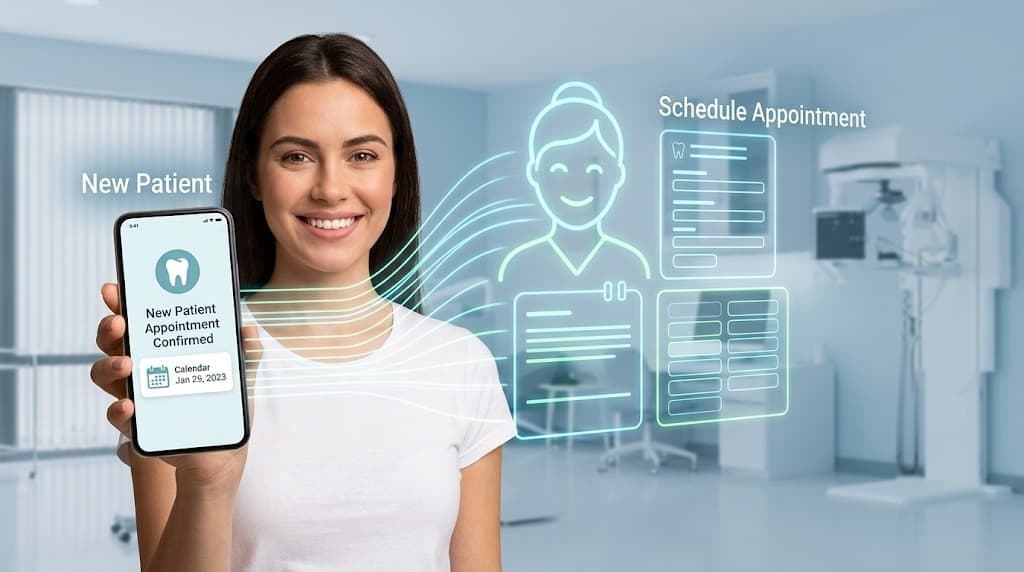
Advanced natural language processing enables AI receptionists to handle complex patient conversations across multiple communication channels. These systems can process appointment requests, reschedule existing appointments, and manage cancellation protocols while accessing real-time calendar availability from practice management systems.
Intelligent conversation flows guide patients through common scenarios such as new patient registration, insurance verification, and treatment follow-up scheduling. The AI can collect necessary information, including contact details, insurance information, and medical history updates, automatically populating patient records within the practice management system.
Multi-language support addresses diverse patient populations, with advanced systems offering real-time translation capabilities for non-English speaking patients. Sentiment analysis features can identify urgent requests or patient concerns, escalating appropriate conversations to human staff members for immediate attention.
Security and Compliance Features
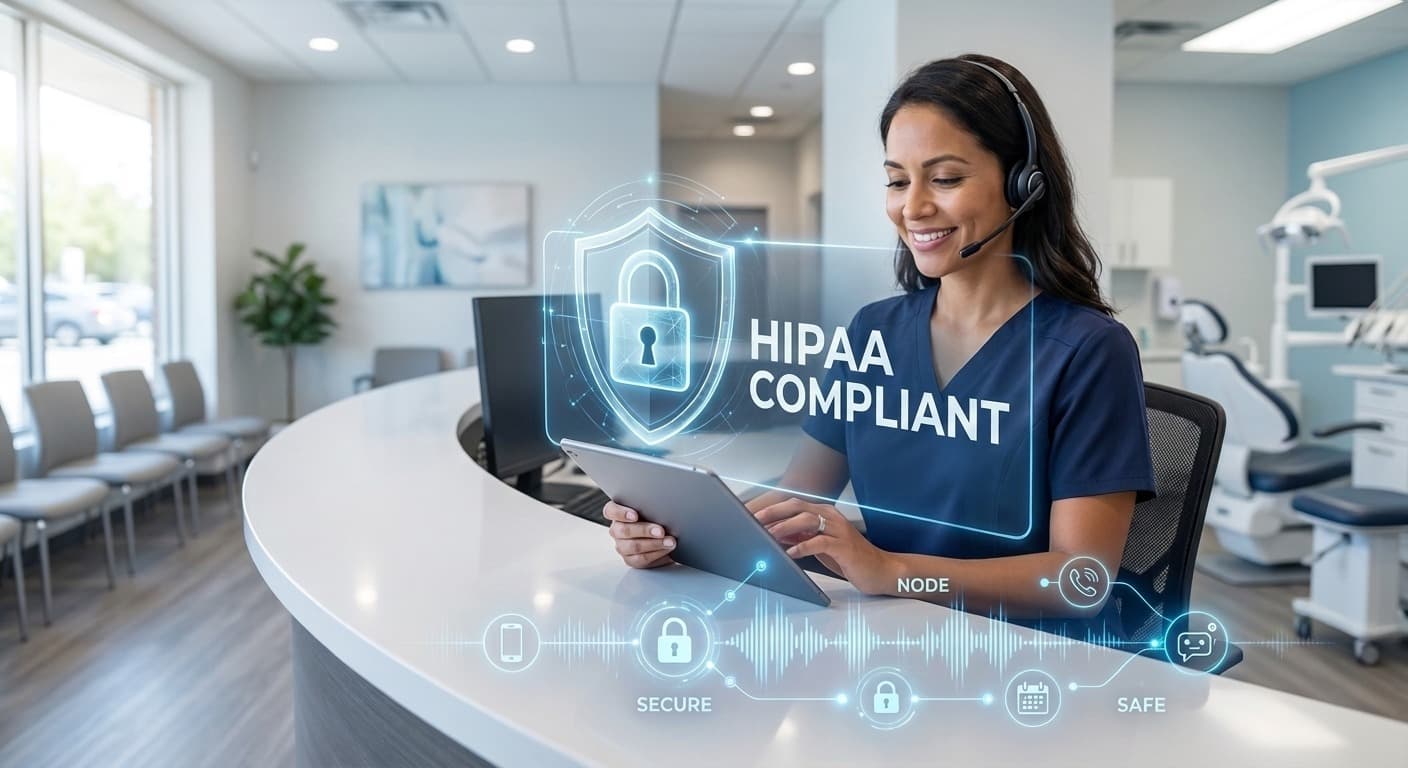
The best HIPAA-compliant AI dental receptionist systems incorporate security controls that protect patient information throughout all interactions. End-to-end encryption secures data transmission between patients and the AI system, while advanced authentication protocols verify user identities before accessing patient information.
Real-time security monitoring detects unusual access patterns or potential security threats, automatically implementing protective measures and notifying practice administrators. Backup and disaster recovery systems ensure operational continuity while maintaining data integrity and security standards.
| Security Feature | Implementation | Compliance Benefit |
|---|---|---|
| Data Encryption | AES-256 encryption at rest and in transit | Protects patient information from unauthorized access |
| Access Controls | Role-based permissions with multi-factor authentication | Ensures only authorized personnel have access to sensitive data |
| Audit Logging | Comprehensive activity tracking with tamper-proof logs | Provides compliance documentation for regulatory reviews |
| Data Retention | Automated retention policies with secure deletion | Meets HIPAA requirements for information lifecycle management |
Pricing Models and Cost Considerations
Understanding the financial implications of implementing an AI dental receptionist requires analysis of various pricing structures and total cost of ownership factors that extend beyond monthly subscription fees. These financial considerations are crucial when selecting the best HIPAA-compliant AI dental receptionist for your practice's budget.
Common Pricing Structures
Per-user monthly subscriptions represent the most common pricing model, with costs typically ranging from $150 to $500 per month depending on feature sets and interaction volumes. Some providers offer tiered pricing based on practice size, with additional costs for advanced features such as multi-language support or custom integration development.
Usage-based pricing charges practices based on conversation volume or appointment bookings processed by the AI system. This model benefits smaller practices with lower patient interaction volumes but can result in unpredictable monthly costs during busy periods. Transaction-based fees typically range from $2 to $10 per completed appointment booking or patient interaction.
Enterprise licensing options cater to multi-location dental groups, offering volume discounts and centralized management capabilities. These arrangements often include custom development work, dedicated support resources, and enhanced security features required for larger healthcare organizations.
Total Cost of Ownership Factors
Implementation costs include system setup, staff training, and integration with existing practice management software. Many providers charge one-time setup fees ranging from $1,000 to $5,000, covering initial configuration and staff onboarding. Integration complexity can significantly impact implementation costs, particularly for practices using multiple software systems or custom workflows.
Ongoing operational expenses encompass monthly subscription fees, potential usage overages, and periodic system updates or feature additions. Practices should budget for staff training as AI capabilities expand and workflow optimization as teams adapt to automated front desk operations. Compliance maintenance costs include regular security assessments, audit preparation, and potential legal consultation for BAA review and HIPAA policy updates.
How to Evaluate the Best HIPAA-compliant AI Dental Receptionist
Selecting the best HIPAA-compliant AI dental receptionist requires a systematic evaluation of vendor capabilities, compliance standards, and integration requirements specific to dental practice operations.
Vendor Evaluation Checklist
Compliance documentation review should be the first step in vendor evaluation, requiring a comprehensive analysis of HIPAA compliance certifications, security audit reports, and BAA terms. Vendors should provide evidence of regular penetration testing, security assessments, and ongoing compliance monitoring programs.
Technical integration capabilities must align with existing practice management systems and communication infrastructure. Request detailed information about API capabilities, data synchronization protocols, and custom integration development options. Evaluate the vendor's healthcare industry experienceby reviewing case studies, client testimonials, and implementation timelines for similar dental practices.
Support and training resources significantly impact implementation success and ongoing operational efficiency. Assess vendor support availability, response time commitments, and training program comprehensiveness. Request references from current clients to understand real-world support experiences and vendor responsiveness during technical issues.
DentiVoice: HIPAA-Compliant AI Receptionist for Dental Practices
DentiVoice represents a leading solution specifically designed for dental practice front desk automation, offering highly secure, HIPAA-compliant patient communication and scheduling capabilities.
To meet strict federal healthcare regulations, DentalBase signs comprehensive Business Associate Agreements (BAAs) with practices and utilizes industry-standard encryption for all patient data, both in transit and at rest. The platform also employs strict access controls, secure data centers, and regular security audits to protect Protected Health Information (PHI) while maintaining seamless, real-time integration with major practice management systems like Dentrix, Eaglesoft, Open Dental, and Curve.
Key differentiating features include advanced conversation intelligence that can handle complex dental terminology and treatment-specific scheduling requirements. The system offers multilingual support for diverse patient populations and includes specialized workflows for emergency dental situations, insurance verification, and post-treatment follow-up communications.
Implementation typically requires 2-3 weeks, including system configuration, staff training, and practice management integration testing. DentiVoice provides ongoing support through dedicated account management and regular system optimization reviews to ensure optimal performance for each practice's unique operational requirements.
Ready to see compliant automation in action?
Book a free demo to watch secure scheduling, patient messaging and PMS syncing end-to-end.
Conclusion
Identifying the best HIPAA-compliant AI dental receptionist requires balancing operational efficiency with strict healthcare compliance. The evaluation process must prioritize security infrastructure, vendor accountability, and seamless integration with existing practice workflows.
Key evaluation factors include comprehensive HIPAA compliance documentation, proven experience in the healthcare industry, and robust technical integration capabilities. Practices should prioritize vendors offering signed Business Associate Agreements, regular security assessments, and dedicated healthcare support resources.
Successful implementation depends on thorough planning that addresses staff training, patient communication protocols, and ongoing compliance monitoring procedures. The investment in AI receptionist technology extends beyond immediate operational benefits to include improved patient satisfaction, enhanced staff productivity, and reduced administrative overhead.
The decision to implement the best HIPAA-compliant AI dental receptionist should align with practice growth objectives and operational improvement goals. Start the evaluation process by requesting vendor demonstrations, reviewing compliance documentation, and contacting current clients for implementation insights.
Frequently Asked Questions
Yes, AI dental receptionists can be HIPAA compliant when they implement proper safeguards including data encryption, secure transmission protocols, access controls, and audit logging. The AI system must be designed with privacy by design principles and undergo regular security assessments. However, compliance depends on the specific vendor's implementation of technical, administrative, and physical safeguards required by HIPAA regulations.
Yes, AI receptionist vendors must sign a Business Associate Agreement (BAA) with dental practices. Since AI receptionists handle protected health information (PHI) including patient names, appointment details, and medical information, they qualify as business associates under HIPAA. The BAA legally binds the vendor to protect PHI and outlines their responsibilities for data security, breach notification, and compliance measures.
Yes, HIPAA-compliant AI receptionists can securely answer patient calls using encrypted voice transmission, secure cloud infrastructure, and authentication protocols. They employ natural language processing to understand patient requests while maintaining data privacy through tokenization and anonymization techniques. The AI systems log all interactions for audit purposes and can verify patient identity before discussing sensitive information.
The cost varies based on the pricing model. Monthly subscriptions typically range from $150 to $500 per user. Some vendors use usage-based pricing, charging per interaction. Practices should also account for one-time implementation fees, which can range from $1,000 to $5,000, and other ongoing operational expenses.
Most AI receptionists are designed to integrate with major practice management systems like Dentrix, Eaglesoft, and Open Dental. This is typically done through APIs that allow the AI to access real-time calendar availability, update patient records, and synchronize data securely. This integration ensures seamless data flow and automates workflows without manual data entry.
Was this article helpful?
Written by
DentalBase Team
The DentalBase Team is a collective of dental marketing experts, AI developers, and practice management consultants dedicated to helping dental practices thrive in the digital age.