Dental Recall System: How to Get Patients to Come Back
Build a dental recall system that fills your hygiene schedule in 2026: timing, channels, scripts, and benchmarks for getting overdue patients back.
Share:
Table of contents
A dental recall system is the difference between a schedule that fills itself and one that requires constant scrambling. Every practice has patients who are overdue for hygiene, patients who completed treatment but never booked their next visit, and patients who simply drifted away without explanation. The system you build to bring them back determines whether those patients return or become someone else's production. According to Dental Economics, automated recall systems increase patient return rates by 25-40%.
This article covers how to build a dental recall system that works, from the timing and channels of your outreach to the scripts that actually get patients to schedule. You'll get benchmarks for what "good" recall performance looks like, the common mistakes that kill recall effectiveness, and the dental patient retention strategies that connect recall to your broader practice growth. If you've been relying on postcards and hope, it's time to upgrade.
What Is a Dental Recall System and Why Does It Matter?
A dental recall system is the structured process your practice uses to contact patients when they're due for preventive care, overdue for scheduled treatment, or at risk of becoming inactive. It includes the timing of outreach, the communication channels you use, the messages you send, and the tracking that tells you whether it's working.

Here's why it matters more than most owners realize. The average general practice has 1,500-2,500 active patients. If 20-30% of those patients become inactive within 18 months without follow-up (a figure the ADA consistently references), that's 300-750 patients quietly walking away every year and a half. At an average patient lifetime value of $12,000-$15,000 according to Dental Economics, even recovering 10% of those lapsed patients represents a significant revenue recovery.
Most practices have some version of recall. A postcard here, a phone call there, maybe an automated text from the PMS. But a system requires consistency, measurement, and escalation. That's where the gap lives. The practices that maintain retention rates above 90% aren't doing anything exotic. They're running a structured recall process every single day.
Connect Your Recall System to the Full Picture
DentalBase ties your recall data to phone performance, scheduling, and marketing attribution so you can see which patients are slipping and why.
See the Full Platform →What Does an Effective Recall Sequence Look Like?
An effective recall sequence uses multiple touchpoints across different channels, spaced over a defined timeline. The goal isn't to annoy patients into scheduling. It's to make booking so easy and so timely that the path of least resistance is saying yes.
A recall sequence that works for most general practices follows this pattern. Four to six weeks before the appointment is due, send an automated text and email with a direct booking link. Two weeks before, send a second reminder with specific available times. On the due date, if the patient hasn't booked, trigger a phone call from your scheduling coordinator or an automated outbound call. Two weeks after the due date, escalate to a personal outreach with a slightly different message. Six weeks overdue, one final attempt before the patient enters your reactivation list.
The channel mix matters. SMS appointment reminders reduce no-show rates by 38%, according to the Journal of Dental Hygiene, but text alone isn't enough for patients who are already overdue. Phone calls outperform text and email for overdue recall because they create a real-time conversation. The patient can voice their hesitation, and your team (or your automated follow-up system) can address it on the spot.
Recall Sequence Timeline
| Timing | Channel | Message Focus |
|---|---|---|
| 4-6 weeks before due date | Text + Email | Friendly reminder with online booking link and suggested times |
| 2 weeks before due date | Text | Second reminder with 2-3 specific appointment slots to choose from |
| Due date (no booking) | Phone call | Live or AI-assisted call to schedule, address concerns in real time |
| 2 weeks overdue | Phone call + Text | Personal outreach mentioning time since last visit, new availability |
| 6 weeks overdue | Phone call or letter | Final attempt before moving to reactivation list |
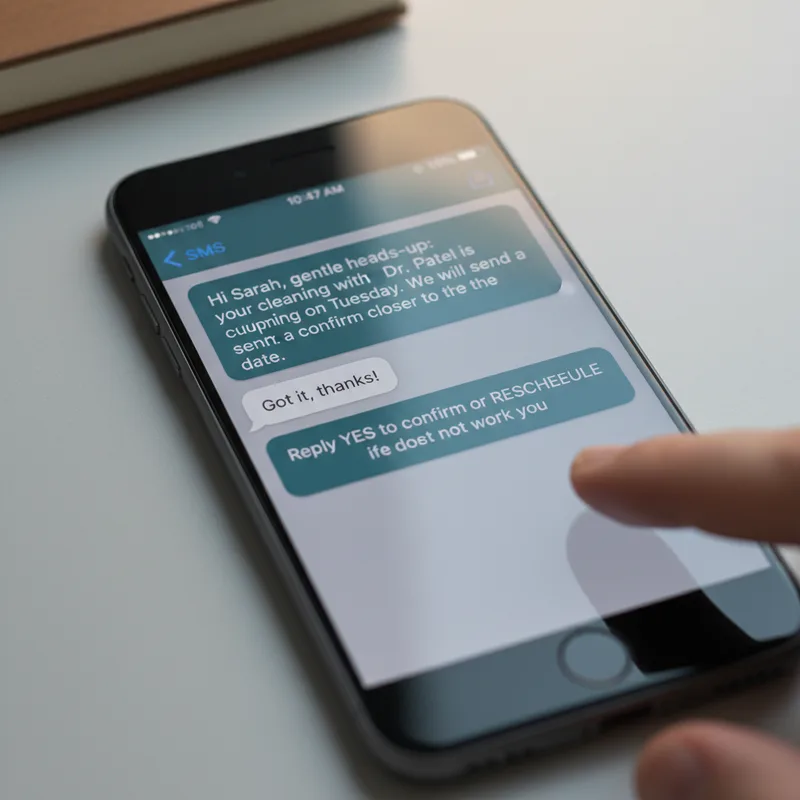
Personalization at every step makes a measurable difference. "Hi Sarah, your 6-month cleaning with Dr. Martinez is due. We have openings Tuesday at 10am or Thursday at 2pm" converts at a significantly higher rate than "You're due for a dental cleaning. Call to schedule." Patients respond to specificity. Use their name, their provider, and real appointment options.
Related: Your recall system is one piece of a larger practice management framework. For the full picture covering finance, team, operations, and growth → Dental Practice Business Management: Complete Owner Guide
What Recall Mistakes Are Costing You Patients?
The most expensive recall mistakes aren't dramatic failures. They're small gaps in execution that compound over months. Sending generic messages, relying on a single channel, waiting too long to follow up on overdue patients, and failing to track recall effectiveness are the four that silently erode your patient base.
Generic messaging is the first one to fix. Practices that use AI to write and personalize patient emails see better open rates because the recall message reads like it came from the hygienist, not a template. A recall text that reads "Time for your checkup! Call us at 555-1234" gives the patient work to do. They have to call, wait on hold, and find a time that works. 80% of callers who reach voicemail don't leave a message and won't call back, according to Forbes. If your recall message sends patients to a phone line that might go to voicemail, you've lost a significant chunk of them before they even try. Include online booking links in every message. Make scheduling a two-tap process, not a phone call.
The second mistake is single-channel recall. Some patients respond to texts. Others check email. Some won't schedule until they talk to a person. If your entire recall system is a text message, you're missing the patients who need a different nudge. The sequence we covered above works because it escalates across channels. Text first, then phone. That escalation catches patients at different stages of readiness.
The Timing Gap Most Practices Miss
Waiting until a patient is 30+ days overdue to make first contact is too late for a large portion of your recall list. By that point, the patient has adjusted to not having an appointment. Inertia has set in. The practices that run recall most effectively start outreach before the due date, not after it. Think of it like this: a reminder to book an upcoming appointment feels helpful. A call about a missed appointment feels like a guilt trip. Same patient, different psychology, very different response rate.
Your phone scripts for recall calls need to sound different from new patient scripts too. A returning patient doesn't need your office address or a list of services. They need a reason to come back now and an easy way to book. Keep the call focused: "We haven't seen you in seven months, and we'd love to get you back on schedule. I have a Tuesday morning or a Wednesday afternoon open next week. Which works better?"
Let AI Handle Your Recall Calls
DentiVoice makes outbound recall calls that sound like a real conversation. It checks availability, books directly into your PMS, and follows up on patients your front desk doesn't have time to reach.
See How DentiVoice Works →How Do You Measure Whether Your Recall System Is Working?
A working dental recall system should hit three benchmarks: a recall completion rate above 80% (the percentage of due patients who actually schedule and show), a shrinking overdue list month over month, and an average time-to-schedule under 14 days from the first outreach. If your numbers fall short of those targets, the system needs adjustment, not just more volume.
Pull your recall data monthly. Your PMS should show you how many patients were due for recall this month, how many scheduled, how many showed, and how many are now overdue. In Open Dental, the Recall List report gives you this view. In Dentrix, the Continuing Care module tracks it. If you can't pull these numbers, your recall system is invisible and invisible systems don't improve. The same upstream-versus-downstream principle drives our breakdown of dental call-to-booking conversion rate: you have to watch the leading indicator, not the lagging one.
Cross-reference recall performance with your monthly KPI dashboard. When recall completion drops, your active patient count follows within two to three months. When recall completion climbs, hygiene production stabilizes and you'll see a downstream lift in restorative case acceptance because patients who show up for cleanings are more likely to accept treatment identified during the exam.
Recall Metrics to Track Monthly
| Metric | Target | Red Flag |
|---|---|---|
| Recall completion rate | 80%+ of due patients schedule and attend | Below 65% |
| Overdue patient count | Shrinking or stable month over month | Growing by 5%+ per month |
| Avg time from first outreach to scheduled visit | Under 14 days | Over 30 days |
| Recall-to-reactivation conversion | Under 10% of recall patients move to reactivation | Over 20% end up on reactivation list |
Related: Recall is a daily operational task. Build it into your front desk workflow → Dental Front Office Workflow: Daily Checklist for 2026
How Does Recall Connect to Case Acceptance and Retention?
Recall is the engine that drives both case acceptance and patient retention. A patient who shows up for a scheduled cleaning is in your chair, in your system, and in a receptive mindset. That's when treatment gets identified, presented, and accepted. A patient who skips recall stops thinking of your practice as their provider.
The connection to case acceptance is direct. Hygiene visits are the top-of-funnel for restorative and elective treatment. When your recall completion rate drops, your treatment plan volume drops, your case acceptance volume drops, and your production follows. It's a chain reaction that starts with a missed cleaning appointment and ends with a smaller P&L.
For dental patient retention strategies, recall is the most frequent touchpoint you have with your patient base. Most patients visit twice a year for hygiene. Those two visits are your opportunity to reinforce the relationship, identify new treatment needs, and demonstrate that your practice is organized, communicative, and worth staying with. When a practice loses a patient, it's rarely because of a single bad experience. It's because the practice stopped reaching out, and the patient found somewhere else that didn't. A structured patient satisfaction survey after each visit gives you early warning signs of dissatisfaction so you can address problems before patients stop responding to recall entirely.
What Happens When Recall Patients Don't Come Back
According to the ADA, 72% of patients say convenience is a top factor when choosing a dental provider. A recall system that makes rebooking easy, through online scheduling, text replies, or a single-tap booking link, meets patients where that convenience expectation lives. A recall system that requires patients to call during business hours, wait on hold, and find a time manually is fighting against the very behavior your patients prefer.
77% of patients want online booking capability, according to HubSpot's consumer behavior research. But only 26% of practices currently offer it, per Dental Economics. That gap is a direct recall opportunity. If you add online scheduling to your recall messages, you're removing the single biggest friction point between "I should schedule" and "I'm scheduled."
Turn Missed Recall Into Scheduled Appointments
DentiVoice calls overdue patients, has a real conversation about scheduling, and books them directly into your PMS. Your front desk stays focused on the patients already in the office.
See How DentiVoice Works →How Do You Build a Dental Recall System From Scratch?
Building a dental recall system from scratch starts with three things: a clean patient list in your PMS, a defined recall interval for each procedure type, and a communication workflow with assigned ownership. You don't need expensive software to start. You need a process that someone on your team runs every day.
First, clean your data. Run your PMS recall report and categorize patients into three buckets: due within 30 days, overdue by 1-3 months, and overdue by 3+ months. The first group gets standard pre-appointment reminders. The second group gets the escalated recall sequence we covered earlier. The third group moves to your patient reactivation protocol, which uses a different message and a different level of personal outreach.
Second, assign ownership. Someone on your team, usually your scheduling coordinator, should review the recall list every morning as part of the daily front office workflow. This isn't a monthly task. It's a daily habit. The coordinator should know exactly how many patients are overdue, which ones were contacted yesterday, and which ones need outreach today. If recall lives in a monthly report that nobody checks until the practice meeting, you've already lost weeks of potential recoveries.
When to Automate vs. When to Call Personally
Automate the first two touchpoints (pre-due-date text and email reminders). These are volume tasks that don't require a personal conversation. But when a patient is overdue and hasn't responded to automated outreach, switch to a live call. The human element matters for overdue patients because they often have a specific reason for not scheduling, whether it's cost, schedule conflicts, anxiety, or dissatisfaction. You won't uncover that reason in a text message.
That said, most front desk teams don't have the capacity to make 30-50 recall calls a day on top of handling check-ins, insurance verifications, and incoming patient calls. The average dental practice already misses 15-20 calls per week, according to Dental Economics. Adding outbound recall calls to an overwhelmed front desk doesn't fix the problem. It moves it. This is where AI-assisted outbound calling fills the gap: the system handles the volume, your team handles the exceptions. The same capacity dynamic shapes how practices fill cancellations: the slot only gets filled if someone has time to fill it.
Recall System Setup Checklist
Check each item you've completed or have in place.
Your score: count your checks out of 8. Six or more means your recall system is structured. Under four means patients are falling through the cracks.
Your dental recall system isn't a project with a finish line. It's a daily operational rhythm that compounds over time. Every patient you bring back to the chair is revenue you didn't have to spend marketing dollars to earn. That's the most efficient growth your practice can produce, and the complete practice management framework starts with keeping the patients you already have.
Stop Losing Patients Between Visits
DentalBase automates recall outreach, tracks overdue patients, and books appointments through AI-powered calls and texts. See how it fills your hygiene schedule.
Book a Free Demo →More guides on patient retention and practice operations
Browse Resources →Sources & References
Frequently Asked Questions
Start with automated text and email 4-6 weeks before the due date. Send a second reminder at 2 weeks. If unbooked by the due date, make a phone call. Follow up at 2 weeks overdue and 6 weeks overdue before moving the patient to reactivation.
A strong recall completion rate is 80% or higher, meaning 80% of patients due for recall actually schedule and attend. Below 65% indicates a system gap. Track this monthly alongside your overdue patient count and time-to-schedule.
Use all three in sequence. Text and email work for early, pre-due-date reminders. Phone calls are more effective for overdue patients who haven't responded to automated messages. The escalation across channels catches patients at different stages of readiness.
Recall is your most frequent patient touchpoint, typically twice per year for hygiene. Consistent recall outreach keeps patients engaged, prevents them from drifting to other providers, and creates opportunities to identify and present new treatment during visits.
Recall targets patients who are due or recently overdue for scheduled preventive care. Reactivation targets patients who have been inactive for 3 or more months and have stopped responding to recall outreach. Reactivation uses different messaging and more personal outreach.
Yes. AI-powered outbound calling systems can contact overdue patients, have a conversational exchange about scheduling, and book appointments directly into your PMS. This frees your front desk to focus on in-office patients while recall volume gets handled consistently.
Set recall intervals for each procedure type in your PMS (hygiene, perio maintenance, restorative follow-up). Assign a team member to review the overdue recall list daily. Configure automated reminders if your PMS supports them, or use a connected communication platform.
Was this article helpful?
Written by
DentalBase Team
Expert dental industry content from the DentalBase team. We provide insights on practice management, marketing, compliance, and growth strategies for dental professionals.