How to Hire Dental Staff That Actually Stays (2026 Guide)
Learn how to hire dental staff who stay long term. Covers job posts, interview questions, compensation benchmarks, onboarding, and 90-day retention.
Share:
Table of contents
Figuring out how to hire dental staff is one thing. Figuring out how to hire people who don't leave after four months is something else entirely. The dental labor market in 2026 is tight, especially for hygienists and experienced front desk coordinators, and most practice owners are competing for the same small pool of candidates. According to the Bureau of Labor Statistics, dental employment is projected to grow 4% through 2032. That growth means more open positions chasing fewer qualified applicants.
Here's the thing. The practices that know how to hire dental staff and keep them aren't doing anything exotic. They're running a repeatable hiring process: clear job posts, scored interviews, competitive pay, and structured onboarding. This guide walks you through each step, from writing the ad to surviving the first 90 days, so you can stop cycling through new hires every quarter.
Why Does Dental Staff Turnover Cost More Than Most Owners Realize?
Replacing a single dental team member costs between $3,500 and $7,000 when you add up recruiting, training, and lost chair time. That number climbs higher for hygienists and office managers because the vacancy period is longer and the production impact is bigger.
Most owners see the job board fee and the recruiter invoice. They don't see the rest. There's the 15-20 hours the office manager spends reviewing resumes and scheduling interviews. There's the two to three weeks of reduced production while the new hire shadows and learns your systems. And there's the patient experience problem: when your front desk turns over every six months, returning patients notice. They start wondering whether something is wrong with your practice.
The ADA Health Policy Institute has documented persistent workforce shortages across dental roles since 2021. That shortage drives up the cost of every bad hire because it takes longer to find a replacement. If you don't have a repeatable system for hiring, each vacancy gets more expensive. A three-provider practice losing two team members per year could be spending $10,000-$14,000 annually just on turnover, and that's before you account for the production dip.
Related: Turnover costs flow directly into your overhead percentage. See where yours stands → How to Calculate and Control Dental Office Overhead (2026 Benchmarks)
That said, turnover isn't always avoidable. People move, change careers, or retire. The goal of strong dental staff management isn't zero turnover. It's making sure the turnover you do have is planned, not a surprise every quarter.
How to Hire Dental Staff With Job Postings That Attract the Right Candidates?
A strong dental job posting tells candidates exactly what they'll do, what they'll earn, and what growth looks like. Vague listings with phrases like "competitive pay" and "great culture" get skipped by experienced candidates who have seen that language a hundred times before.
Salary transparency matters more than most owners want to admit. Listings that include a pay range attract significantly more qualified applicants. Hygienists and experienced assistants know their market value. If your listing doesn't show a number, they assume you're lowballing and move on. According to Dental Economics, practices that include compensation details in job ads fill roles faster and report better candidate quality.
What separates a weak job post from one that actually works?
| Element | Weak Posting | Strong Posting |
|---|---|---|
| Compensation | "Competitive pay" | "$38-$48/hour based on experience, plus quarterly bonuses" |
| Schedule | "Full-time" | "Mon-Thu 7:30am-5pm, no weekends, 36 clinical hours" |
| Benefits | "Great benefits" | "Health insurance, 401k match, CE stipend ($1,500/year), PTO 15 days" |
| Growth | "Room to grow" | "Annual pay review, leadership track after 12 months, mentorship program" |
| Culture | "Fun team!" | "Team of 8, average tenure 4 years, monthly team lunches, no micromanagement" |
One more thing worth noting: where you post matters almost as much as what you post. Dental-specific job boards (DentalPost, iHireDental) outperform generic platforms like Indeed for clinical roles. For front desk and admin positions, Indeed and local Facebook groups still work well. Posting in two to three channels simultaneously gives you the widest qualified reach without overspending.
Your Practice Operations, Simplified
From hiring workflows to patient communication, DentalBase helps dental practices run smoother with fewer manual tasks.
See All Services →Which Interview Questions Actually Predict Dental Staff Retention?
Behavioral interview questions, the kind that ask candidates to describe how they handled real past situations, predict retention and job performance far better than resume screening or casual conversation. Structured interviews with a scoring rubric remove gut-feeling bias and give you something concrete to compare across candidates.
Most dental hiring interviews are too informal. The owner chats with the candidate for 20 minutes, asks a few surface-level questions ("Why dentistry?"), and goes with whoever felt the friendliest. That approach works sometimes. But it fails often enough to explain why so many practices cycle through the same role every year.
Front desk and admin candidates
For front desk roles, you're testing for multitasking under pressure, patient empathy, and phone skills. Good questions include:
- "Tell me about a time you had three things happening at once and had to prioritize." You're listening for how they triaged, not just that they "stayed calm."
- "Describe a situation where a patient or customer was upset and you turned it around." Specifics matter. Vague answers ("I just listened") are a yellow flag.
- "Walk me through how you'd handle a patient calling to cancel a same-day appointment." This tests whether they know how to retain the appointment without being pushy.
Clinical team candidates
For dental assistants and hygienists, you're testing clinical judgment, communication with providers, and adaptability. Try these:
- "Tell me about a time you noticed something during a procedure that the provider hadn't caught yet. What did you do?" You want someone who speaks up respectfully.
- "How do you handle a day when the schedule is running 45 minutes behind?" This reveals whether they adapt or shut down under pressure.
Red flags to watch for
Candidates who speak negatively about every previous employer are a risk. So are candidates who can't give specific examples for behavioral questions. And if someone asks zero questions about your practice during the interview? That's a sign they're applying everywhere and just need a paycheck, not a team to invest in.
Related: Once you've hired the right person, structured reviews keep them growing → Dental Office Staff Performance Review Checklist (2026)
How Should You Structure Dental Staff Compensation to Stay Competitive?
Pay your team at or above the local market median, tie bonuses to metrics you actually track, and review compensation annually. Practices that skip annual pay reviews lose experienced staff to competitors who don't.
Compensation in dentistry varies widely by role, market, and practice type. But here are the general ranges for 2026 based on BLS wage data and industry reporting:
| Role | Hourly Range | Annual Estimate (Full-Time) | Key Bonus Triggers |
|---|---|---|---|
| Dental Hygienist | $35-$55/hour | $72,000-$114,000 | Production above daily target, perio acceptance rate |
| Dental Assistant | $18-$28/hour | $37,000-$58,000 | Certification milestones, cross-training completion |
| Front Desk Coordinator | $15-$22/hour | $31,000-$46,000 | Collection rate, schedule fill rate, patient reviews |
| Office Manager | $24-$38/hour | $50,000-$79,000 | Practice profitability, overhead reduction, team retention |
These ranges shift based on geography. A hygienist in Manhattan earns differently than one in rural Tennessee. Check your state's BLS data for local benchmarks, and talk to colleagues in your market. Dental society meetings are one of the few places owners will share real numbers.
Beyond base pay, benefits drive retention more than most owners realize. A $1,500 annual CE stipend costs you less than one week of lost production from turnover. Health insurance, even a partial contribution, separates you from the practices offering nothing. And retirement matching, even at 3%, signals that you're investing in people for the long term.
The compensation conversation connects directly to your overhead. Staff costs typically represent 25-30% of collections in a healthy practice. If you're well below that, you might be underpaying and fueling turnover. If you're well above, your team size or pay structure might need adjustment.
Related: Staff costs are the largest controllable line on your P&L. Learn how to read yours → How to Read a Dental Practice P&L Statement (Without a CPA)
What Does a 90-Day Dental Onboarding Plan Look Like?
A structured 90-day onboarding plan gives new hires clear expectations, regular feedback, and a realistic ramp-up timeline. This is where knowing how to hire dental staff extends beyond the offer letter. Practices that follow a written onboarding framework cut first-year turnover dramatically compared to the "shadow someone for a week and figure it out" approach.
Week 1: Orientation and systems access
The first week isn't about productivity. It's about making the new hire feel prepared, not overwhelmed. Cover these basics:
- Practice management software login and navigation (whether that's Dentrix, Open Dental, or another system)
- Phone scripts and greeting protocols
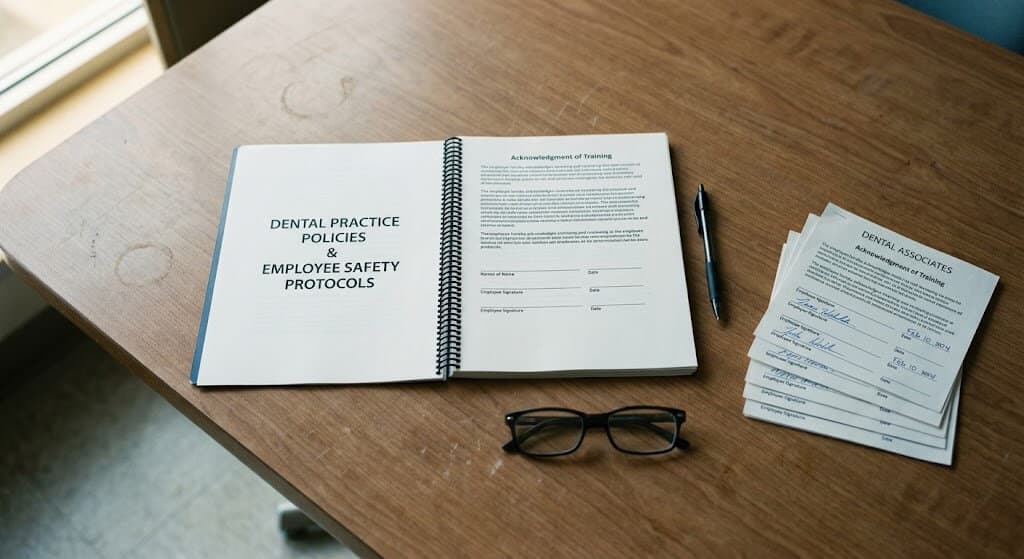
- HIPAA training and compliance acknowledgment
- Team introductions, not just names but roles and how they'll interact daily
- Tour of every system they'll touch: scheduling, billing, imaging, sterilization
Assign a specific team member as their go-to person for questions. Not the owner. Not the busiest person in the office. Someone patient who actually has bandwidth.
Weeks 2-4: Supervised workflows with daily check-ins
By week two, the new hire should be handling tasks with supervision. For a front desk hire, that means answering phones with someone nearby to help, processing a few insurance verifications with a checklist, and scheduling under guidance. For clinical staff, it means assisting on procedures with the provider reviewing their setup and breakdown.
Daily five-minute check-ins during this phase catch small problems before they become reasons to quit. Ask two questions: "What's going well?" and "What's confusing?" That's it. Keep it short.
Months 2-3: Gradual independence with formal feedback
By month two, reduce oversight and increase ownership. The new hire should be handling their core responsibilities without constant supervision. At the 60-day mark, sit down for a formal 15-minute review. Cover what's working, what needs improvement, and whether the role matches what was discussed during the interview.
At 90 days, do a full review. This is where you reference the performance review checklist and set goals for the next quarter. If things aren't working by day 90, it's better to part ways early than to drag it out for another six months.
90-Day Onboarding Checklist
Check each item as you complete it for your new hire.
Your score: count your checks out of 8
Reduce the Admin Load on Your New Hires
DentiVoice handles patient calls, scheduling, and follow-ups so your team can focus on in-office work from day one.
Learn About DentiVoice →How Do You Measure Whether Your Dental Staff Management Is Working?
Track three numbers monthly to measure whether you've figured out how to hire dental staff effectively: retention rate, time-to-fill for open positions, and 90-day survival rate. Together, these tell you whether your hiring and onboarding process is actually producing stable teams or just filling seats temporarily.
Retention rate is straightforward. Take the number of employees at the end of a 12-month period, divide by the number at the start, and multiply by 100. A healthy dental practice should target 85% or higher annual retention. Below 75%, and you're spending more time replacing people than developing them.
Time-to-fill measures how many days pass from posting a position to a signed offer letter. For dental practices, 30-45 days is good for most roles. If you're consistently above 60 days, your job postings, compensation, or interview process needs work.
90-day survival rate tells you whether your onboarding is working. If new hires keep leaving in the first three months, the problem isn't recruiting. It's what happens after they start. Track this separately from overall retention because it isolates onboarding quality from longer-term culture or compensation issues.
These metrics belong on your monthly KPI dashboard alongside production and collections. When you review them regularly, you catch trends early. A spike in time-to-fill might mean your pay is falling behind the market. A drop in 90-day survival could signal a toxic team dynamic that new hires are escaping.
Related: Staff metrics are part of a bigger picture. See all 12 numbers you should track → Dental Practice KPIs: 12 Numbers Every Owner Should Track Monthly
The reality is that good dental staff management isn't a one-time project. It's a system you run continuously. The practices with the lowest turnover aren't lucky. They've built a process that starts before the job post goes live and continues long after the new hire's first day. Your team is the single largest expense on your P&L and the single biggest driver of patient experience. Investing in how you manage your practice at the team level pays back in lower overhead, higher production, and patients who don't have to re-explain their history to a new face every visit.
Your next step: pick one section of this guide that's weakest in your current process. If you don't have a written onboarding checklist, build one this week. If your job posts haven't been updated in two years, rewrite them with the table above as a template. Small fixes to your hiring process compound faster than you'd expect.
Build a Team That Stays
See how DentalBase helps practices reduce admin burden, improve team workflows, and keep staff focused on patients.
Book a Free Demo →More guides for dental practice owners
Browse Resources →Sources & References
- Bureau of Labor Statistics - Dental Hygienists Occupational Outlook
- Bureau of Labor Statistics - Dental Assistants Occupational Outlook
- ADA Health Policy Institute - Dental Workforce Studies
- Dental Economics - Staff Retention and Compensation Trends
- HubSpot - Employee Onboarding Best Practices
- BLS - Occupational Employment and Wage Statistics for Dental Workers
Frequently Asked Questions
Most practices report 4-8 weeks to fill a hygienist position, though rural areas and competitive metro markets can stretch to 12 weeks. Starting your search before the current employee leaves and using multiple channels (dental-specific job boards, local hygiene programs, referrals) speeds the process.
Rushing to fill the seat. Owners under pressure from a short-staffed schedule often skip structured interviews and reference checks. That urgency leads to poor-fit hires who leave within 6 months, restarting the cycle and costing the practice thousands in replacement expenses.
Yes. Job posts with transparent salary ranges attract significantly more qualified applicants. Candidates skip vague listings, especially hygienists and experienced assistants who know their market value. Including a range also filters out candidates whose expectations don't match your budget.
Replacing one team member typically costs $3,500 to $7,000 or more. That includes recruiting fees, job board costs, interview time, training hours, and the production lost during the vacancy and ramp-up period. High turnover can quietly consume 5-10% of annual revenue.
A strong onboarding plan covers Week 1 orientation (systems, protocols, introductions), Weeks 2-4 supervised workflows with daily check-ins, and Months 2-3 gradual independence with formal feedback sessions. Written checklists for each phase keep both the new hire and their manager accountable.
Retention starts before Day 1 with honest job previews. After that, competitive pay reviewed annually, structured performance reviews, clear growth paths, and a positive daily work culture matter most. Practices with formal retention programs keep 15% more staff year over year, according to industry data.
Most single-location practices don't have HR. The owner or office manager handles hiring. Create a repeatable process: a standard job post template, a set of scored interview questions, a reference check script, and a written onboarding checklist. That structure replaces the need for a dedicated HR person.
Was this article helpful?
Written by
DentalBase Team
The DentalBase Team is a collective of dental marketing experts, AI developers, and practice management consultants dedicated to helping dental practices thrive in the digital age.