How Many Patient Calls Does Your Practice Miss?
Discover the number and impact of missed calls in dental practices. Learn practical strategies to cut call leakage and capture more patients.
Share:
Table of contents
Introduction: The Call Leakage Problem Most Practices Don't Measure
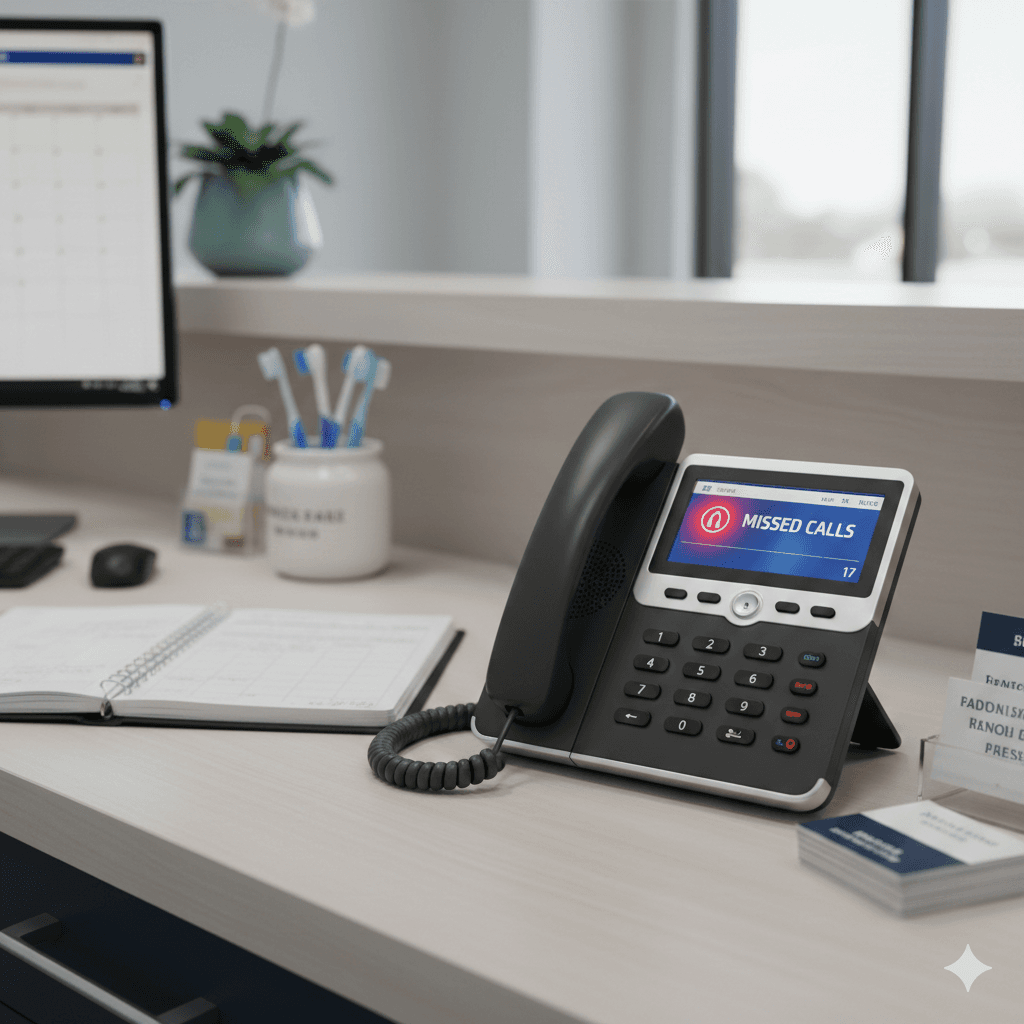
Every dental office experiences call leakage that most owners never quantify. Industry call data suggests the average dental office misses 27% of incoming patient calls. That leads to lost appointments, frustrated patients, and thousands of dollars in missed revenue each month.
Phone calls remain the primary way patients schedule appointments. Patients also call to request emergency care and ask treatment questions. Yet many practices operate without understanding their call performance.
The impact goes beyond scheduling. When patients can’t reach your practice, they typically don’t wait; they call the next dentist on their list. That’s why understanding and addressing missed calls in dental practices is essential for competitive patient acquisition and retention.
What Counts as Missed Calls in Dental Practices
A missed call in a dental practice is any incoming call that does not receive a live human response within a reasonable timeframe. This includes:
Calls that ring without being answered
Calls that go directly to voicemail
Calls where patients hang up before reaching a team member
Understanding these nuances is key to solving the missed-call problem.
The definition extends beyond “ring-no-answer.” Calls transferred multiple times without resolution can contribute to your missed-call rate. Calls placed on hold for extended periods often end in hang-ups. After-hours calls that aren’t captured through an answering service or structured workflow also count toward missed calls in a dental practice.
Common Scenarios That Lead to Missed Calls
Peak appointment windows 8–10 AM and 2–4 PM typically generate the most missed calls. During these periods, staff juggle patient check-ins, checkout, and clinical coordination alongside phone duties.
Other frequent contributors include:
Emergency calls during lunch hours, when coverage is often thin
New patient inquiries during staff meetings
Calls missed when key personnel step away from the phones
These predictable situations commonly drive a high rate ofmissed calls.
Missed Calls vs. Abandoned Calls
Abandoned calls occur when patients hang up while waiting on hold or during transfers. These represent a subset of missed calls but indicate system inefficiencies in the dental practice. Practices with high abandoned call rates often have adequate staffing but poor call routing procedures.
Why Dental Practices Miss Calls (Most Common Root Causes)
Understanding why missed-call problems persist requires examining both operational and technological factors.
Operational causes are often the biggest driver. Understaffing during peak hours forces front desk personnel to prioritize in-person patients over phone calls. Many dental practices operate with minimal administrative staffing, which creates bottlenecks when multiple demands compete for attention.
Training gaps can also contribute; team members may not have clear call-handling protocols, unintentionally creating the conditions that increase missed calls.
Peak-hour Call Overload
Monday mornings and post-weekend periods generate 40% more call volume than average weekday periods. Patients call to schedule after putting off weekend dental pain. Routine appointment requests combine to overwhelm standard staffing levels. Practices without surge capacity planning consistently miss calls during these predictable volume spikes.
Lunch and Shift-change Gaps
Staff rotation schedules can create coverage gaps that patients experience as “unreachable” time. The typical 12–1 p.m. lunch window often overlaps with patient break times, driving call volume precisely when staff availability drops. Similarly, shift changes between morning and afternoon teams can create 15–20 minute windows where missed calls increase.
After-hours Demand
Dental emergencies don’t follow business hours. Practices without a 24/7 answering service may miss approximately 15–20% of total call volume during evenings, weekends, and holidays. These missed after-hours calls are especially costly because emergency calls often convert to immediate appointments and longer-term treatment relationships.
How Many Calls Do Dental Offices Miss?
Industry data reveals consistent trends across practice sizes and types. A comprehensive analysis by CallRail found the average office misses 27% of incoming patient calls.
Solo practices tend to have the highest missed-call rates at 32%. Group practices with dedicated administrative staff perform better, with missed calls around 23%. Specialty practices, including orthodontics and oral surgery, often perform best at roughly 19%, likely because higher appointment values justify additional staffing investment.
Seasonal patterns significantly affect these baselines. Back-to-school periods in August and September can spike missed calls to 35–40% as parents schedule cleanings and orthodontic consultations. End-of-year insurance deadlines can also drive call volume beyond what most practices can handle without temporary coverage increases.
Key Metrics to Track for Missed Calls In Dental Practices
Measuring performance requires tracking multiple interconnected metrics that reveal different aspects of communication effectiveness. Most practice management systems capture basic call data, but comprehensive analysis requires additional tracking tools.
Dental Office Call Answer Rate
Call answer rate measures the percentage of calls answered by live staff within four rings (about 20 seconds). Industry benchmarks often target a minimum of 85%, with top-performing practices reaching 95%. Practices below 80% typically see significant patient experience and revenue impact.
Missed Call Rate Dental Office
This primary metric is calculated as unanswered calls ÷ total incoming calls. It includes calls that go to voicemail, calls where patients hang up before connecting, and calls that receive busy signals. Tracking it daily helps identify patterns so you can address the root causes of missed calls in dental practices.
| Practice Size | Average Missed Call Rate | Target Rate | Revenue Impact |
|---|---|---|---|
| Solo Practice | 32% | <20% | $3,200/month |
| Small Group (2-4 docs) | 25% | <15% | $4,800/month |
| Large Group (5+ docs) | 19% | <10% | $7,500/month |
Call Abandonment Rate
This measures calls where patients hang up while on hold or during transfers. Abandonment rates above 10% often indicate workflow or routing issues. Practices with strong routing and short holds typically keep abandonment under 5%.
Speed to Answer and Transfers
Average speed to answer should stay under 20 seconds during business hours. Transfer rates above 15% may indicate staff need clearer scripts, better training, or improved routing to handle common requests without bouncing callers internally.
The Cost of Missed Calls in Dental Practices
The financial impact of missed calls in dental practices extends beyond immediate appointment losses to long-term relationship damage and competitive positioning.
Direct revenue loss starts with conversion rates. Answered calls may convert to scheduled appointments at much higher rates than missed calls that land in voicemail. For a practice receiving 100 calls weekly, missing 27 calls can translate into a meaningful number of lost appointments.
Using typical appointment values (e.g., routine cleanings vs. treatment visits), those missed appointments can represent substantial lost revenue annually. This assumes missed callers don’t reschedule, a common outcome when patients experience access friction.
Indirect costs amplify direct losses:
Missed emergency calls can lead patients to seek care elsewhere, losing high-value relationships.
New patient acquisition costs (often hundreds of dollars per patient through marketing) make missed inquiries especially expensive.
Reputation damage can follow when patients cite poor accessibility in reviews, affecting local SEO and future bookings.
How to Reduce Missed Calls in a Dental Practice
Reducing missed calls requires operational improvements, not just new technology. The most effective approaches address root causes through staffing strategy, call handling standards, and consistent follow-up.
Fix 1: Align Staffing to Call Volume
Track call volume by hour and day for four weeks to identify peak periods and the patterns behind your missed calls. Then adjust schedules to match demand, often through overlapping shifts, part-time support, or targeted coverage during known spikes.
Stagger lunches to maintain phone coverage during peak windows, and cross-train additional team members to handle basic call triage during high-demand periods.
Fix 2: Reduce Hold Time with Smarter Routing
Create routing rules that direct calls based on need:
Insurance and billing questions → trained admin or billing support
Treatment questions → clinical team member
Scheduling → front desk (with standardized scripts)
Establish maximum hold times (30 seconds) before calls get transferred to alternative staff or voicemail with callback promises. Train staff to take messages efficiently rather than keeping patients on extended holds that result in hang-ups.
Fix 3: Add Missed-call Capture Workflows
Implement a consistent callback process for all missed calls, ideally within 15 minutes during business hours. Use voicemail prompts that collect essential information (name, number, urgency) and set expectations clearly.
For after-hours missed calls, establish next-business-day callback guarantees and document follow-ups to create accountability.
Fix 4: Standardize Call Scripts for Bookings
Create scripts for scheduling, emergency triage, and common questions. Consistent scripting reduces call duration, improves accuracy, and increases call-handling capacity, helping lower missed calls in dental practices while improving patient experience.
AI Stops Call Leakage (Without Replacing Your Team)
AI technology offers strategic solutions for missed calls in dental practices without replacing essential human interactions that patients value in healthcare settings. Modern AI systems excel at specific tasks while seamlessly integrating with existing workflows.
Overflow and After-Hours Coverage
AI receptionists provide 24/7 availability for basic patient inquiries, emergency triage, and appointment scheduling. During business hours, AI handles overflow calls when staff reach capacity, ensuring no calls go completely unanswered.
After hours, AI captures emergency calls, collects patient information, and routes urgent cases to on-call providers while scheduling routine requests for next-business-day follow-up.
Capture, Qualify, and Route Calls
AI can identify caller intent and route calls more accurately:
Emergencies → immediate escalation
Insurance questions → billing support
Scheduling → front desk
AI conversation analysis also identifies missed sales opportunities. When patients call asking about cosmetic treatments but get routed only for basic cleanings, AI can flag these interactions for follow-up consultation scheduling.
Support Scheduling Requests
AI scheduling assistants access practice management systems to provide real-time appointment availability, confirm patient information, and complete basic bookings. For complex scheduling requiring clinical input, AI collects preliminary information and transfers qualified calls to human schedulers with context already established.
This hybrid approach reduces average call handling time by 35% while improving patient satisfaction through reduced hold times and more efficient interactions.
AI + Analytics
AI systems generate detailed call analytics that reveal patterns invisible in traditional tracking. Sentiment analysis identifies caller frustration levels, conversation topic analysis reveals common patient concerns, and peak detection algorithms predict staffing needs based on external factors like weather, local events, and seasonal patterns.
These insights enable proactive adjustments to staffing, training priorities, and operational procedures. Practices using AI-driven call analytics often see lower missed-call rates and faster answer times than those using basic call logs alone.
DentalBase’s AI Receptionist helps reduce call leakage by answering overflow and after-hours calls, capturing caller details, booking appointments, and routing requests to the right team member. The result is fewer missed calls, faster response times, and more appointments converted from inbound inquiries.
“Our front desk couldn’t keep up with call volume, and we knew we were leaking appointments, but we didn’t have a reliable way to cover overflow and after-hours. DentalBase’s AI Receptionist helped us get to a 98% answer rate and book 40% more appointments within 8 weeks.”
— Dr. Rahim, Practice Owner Peterborough Family Dental & Implant Center
Conclusion
The data clearly demonstrates that missed calls in dental practices represent significant revenue opportunities disguised as operational challenges. With average practices missing 27% of patient calls and losing over $150,000 annually in potential revenue, addressing communication gaps delivers immediate financial returns.
Successful solutions combine operational improvements with strategic technology deployment. Practices that align staffing to call patterns, implement systematic callback procedures, and leverage AI for overflow coverage consistently achieve missed call rates below 15%. These improvements translate to captured appointments, improved patient satisfaction, and enhanced competitive positioning.
The key lies in measurement and systematic improvement rather than assumptions about phone performance. Practices that track call metrics, analyze patterns, and adjust operations accordingly see dramatic improvements within 30-60 days of implementation.
Start by measuring your current performance for two weeks, then implement the highest-impact fixes based on your patterns. Reducing missed calls is one of the fastest paths to practice growth and patient satisfaction.
The question isn't whether your practice can afford to address missed calls; it's whether you can afford not to. Every missed call represents a patient who needed your help and a revenue opportunity that went to a competitor who answered their phone.
Ready to stop losing patients to missed calls? Request a DentalBase demo to see how AI receptionist coverage can help you increase answer rates, book more appointments, and enhance patient experience, without replacing your team.
Frequently Asked Questions
A missed call in a dental office is any incoming call that doesn't result in meaningful patient interaction or appropriate resolution. This includes calls that go to voicemail, are abandoned while on hold, receive busy signals, or are answered but handled poorly without scheduling or addressing patient needs. Even calls answered after multiple rings can be considered missed opportunities if patients hang up before connecting.
Dental practices miss calls due to several common factors: staff being occupied with in-office patients during peak hours, inadequate staffing levels during busy periods, outdated phone systems that can't handle call volume, lack of proper call handling protocols, and staff multitasking between administrative duties and patient care. Many practices also lack call tracking systems to identify when and why calls are being missed.
Dental offices can reduce missed calls by implementing proper staffing schedules during peak call times, establishing clear call handling protocols, using modern phone systems with call forwarding and queue management, training staff on efficient call management techniques, and utilizing call tracking software to identify patterns. Some practices also benefit from AI-powered answering services or dedicated call management staff to ensure every call is handled promptly and professionally.
The financial impact is significant and extends beyond a single appointment. While the value of an initial appointment can be several hundred dollars, the lifetime value of a new dental patient can be thousands of dollars. Missing a call from a potential new patient means losing not just the initial revenue but all future revenue from that patient and their family, as well as potential referrals.
Yes. An AI receptionist can reduce missed calls in dental practices by answering overflow and after-hours calls when your team is unavailable. It can handle common questions, capture patient details, collect appointment requests, and route urgent calls to the right person. This reduces call leakage, improves response times, and helps convert more inquiries into booked appointments without replacing your front-desk team.
Was this article helpful?
Written by
DentalBase Team
The DentalBase Team is a collective of dental marketing experts, AI developers, and practice management consultants dedicated to helping dental practices thrive in the digital age.