
Dental Marketing Checklist: What Every Practice Needs to Grow
The 2026 dental marketing checklist: 6 pillars, audit cadence, Google Ads budgets, AI-search content, and HIPAA rules every US practice needs to grow.
Share:
Table of contents
Introduction: Why a Dental Marketing Checklist Matters
A dental marketing checklist serves as your practice's strategic roadmap. It supports sustainable patient acquisition and long-term practice growth objectives. Unlike general marketing approaches, dental practices face unique challenges today. These include strict HIPAA compliance requirements and intense local competition. They must also build trust with patients who often experience anxiety about dental procedures.
This comprehensive dental marketing checklist addresses the specific needs of US dental practices. It provides actionable steps that comply with healthcare regulations and maximize marketing effectiveness. Whether you're a solo practitioner or managing a multi-location practice, this guidance applies. Following the dental marketing checklist ensures no critical marketing element gets overlooked.
The checklist covers 6 essential areas, including foundational setup and local SEO optimization. It also includes content and social media marketing, paid advertising strategies, and compliance requirements. The final area focuses on practical implementation tactics for everyday execution. Each section includes specific action items you can implement immediately. It also provides real-world examples from successful dental practices across the United States.
Marketing for dental practices has shifted significantly heading into mid-2026. Google's local search algorithm now weighs engagement signals and review velocity more heavily than static profile completeness alone. AI-generated search summaries are appearing in over 60 percent of queries, which means practices need structured, verifiable content to earn citation placement. Practices still relying on a 2023 or 2024 marketing playbook are likely losing ground to competitors who have adapted.
One shift worth calling out: the gap between practices that publish structured, fact-based content and those that don't is widening fast. BrightLocal's 2024 Local Consumer Review Survey found that 76 percent of consumers regularly read reviews before choosing a local business, and 88 percent would use a business that responds to all reviews. Combined with the rise of AI Overviews, this means review velocity, response rate, and structured content are now the three signals that separate practices that show up from practices that don't. The checklist below treats them as foundational rather than optional.
The checklist below reflects these changes. It accounts for current local SEO ranking factors, updated Google Ads cost benchmarks, and the growing role of automation in patient follow-up. Use it as a living document, not a one-time audit.
The Six Pillars of the Dental Marketing Checklist
Each pillar maps to a section below. Skip to whichever area has the biggest gap in your current setup.
PILLAR 1
Brand identity, mobile-fast site, online booking, and conversion essentials.
PILLAR 5
Front-desk call handling, CRM integration, and reactivation campaigns.
Foundational Marketing Setup for Dental Practices
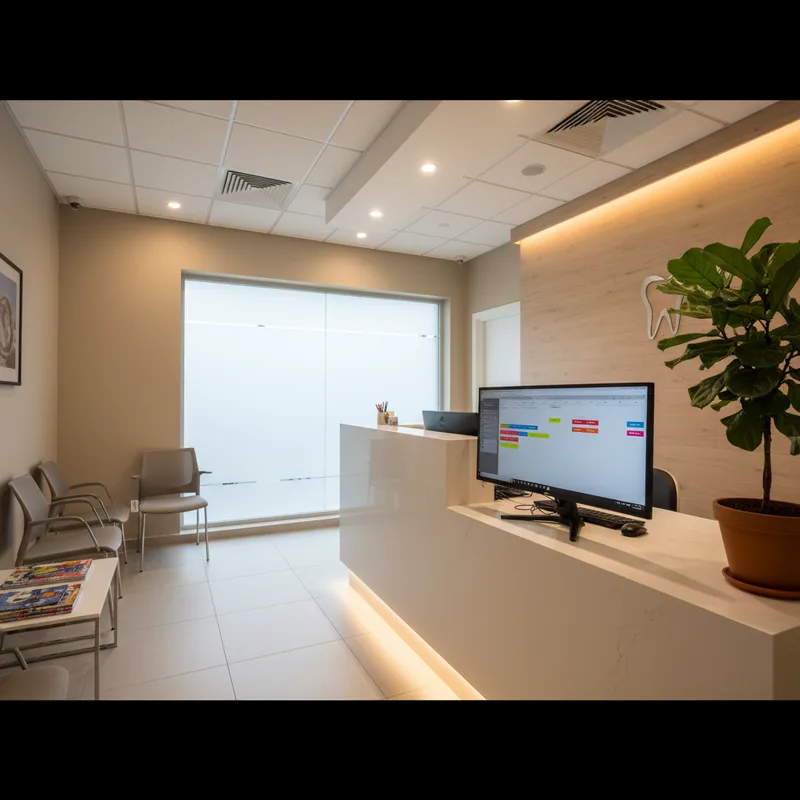
Foundational marketing setup starts with two things: a clear brand identity and a website that converts visitors into patients. Get these right first. Everything else in this checklist builds on them.
Branding and Messaging Basics
Your practice's brand identity is the foundation of all marketing efforts.
Begin by defining your unique value proposition. This explains what sets your practice apart from the 15+ nearby dental offices most patients have within a five mile radius.
Document your mission statement, core values, and target patient demographics.
Examples:
A family practice in suburban Dallas may emphasize gentle, comprehensive care for patients of all ages.
A Manhattan cosmetic dentistry practice may highlight advanced aesthetic solutions that appeal to busy professionals.
Brand development:
Develop consistent visual branding, including a logo, color palette, and typography that reflect your practice's personality.
Ensure all materials, from business cards to website headers, maintain visual consistency.
Create a brand voice guide that defines how your practice communicates.
Keep the tone professional yet approachable, and educational without being condescending.
Website and Conversion Essentials
Your practice website must function as both an information hub and a patient acquisition tool.
Essential website elements:
Services offered
Doctor biographies
Patient testimonials
Insurance information
Clear contact details
Online scheduling:
Implement online appointment scheduling to consistently increase new patient bookings.
Practices report 30 to 40 percent increases when offering convenient online scheduling options.
Website optimization:
Optimize for mobile users, as 65 percent of dental searches occur on mobile devices.
Ensure fast loading speeds under three seconds.
Maintain clear navigation and prominent calls to action on every page.
Trust and credibility:
Include trust signals such as professional certifications and years of experience.
Add patient review summaries to build credibility with first time visitors.
Website Launch Readiness Check
Before spending on ads or SEO, confirm these five items are in place:
- Mobile load time under 3 seconds (test at PageSpeed Insights)
- Online scheduling visible on every page
- Phone number clickable on mobile
- At least 3 patient testimonials displayed
- SSL certificate active (HTTPS in browser bar)
Need Help With Your Practice Website and SEO?
DentalBase builds dental websites and runs SEO campaigns designed to turn local searches into booked appointments.
Learn About Dental SEO →Local SEO Checklist for Dental Practices
1. Google Business Profile Optimization
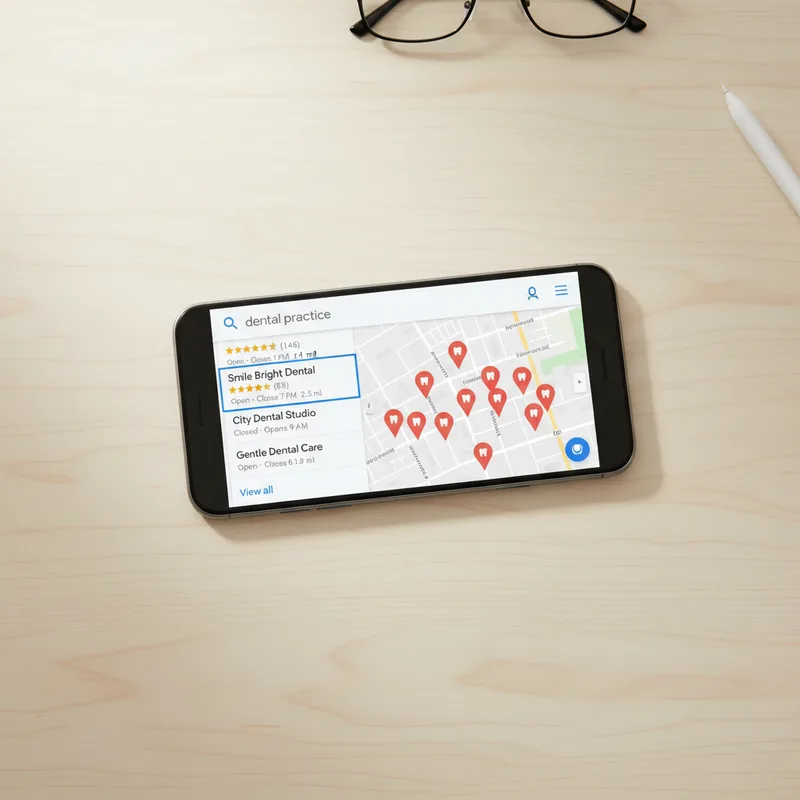
Local search dominates patient acquisition. 78% of location-based searches result in offline purchases.
Google Business Profile optimization:
Claim and fully optimize your Google Business Profile
Include accurate business hours, phone number, website URL, and detailed service descriptions
Upload high-quality photos of your office interior, staff, and equipment
Profiles with photos receive 42% more requests for directions and 35% more website clicks
Ongoing engagement:
Regularly post updates about services, staff achievements, or community involvement
Respond to every review within 24-48 hours
Thank positive reviewers and address concerns professionally
Monitor your profile for questions and answer them promptly
Active engagement signals to Google that your business consistently serves and supports customers.
| Local SEO Task | Priority | Frequency | Impact |
|---|---|---|---|
| Google Business Profile audit | High | Monthly | Directly affects Map Pack ranking |
| Review response | High | Within 24-48 hours | Builds trust + engagement signal |
| NAP consistency check | High | Quarterly | Prevents ranking drops from conflicting info |
| Local directory listings | Medium | Quarterly | Strengthens local authority signals |
| GBP photo uploads | Medium | Monthly | 42% more direction requests |
| Location page creation | Medium | One-time + updates | Targets neighborhood-level searches |
2. Reviews and Local Visibility
Review generation:
- Implement a systematic review generation strategy
- Send follow-up emails to satisfied patients 3-5 days after their appointment with direct links to review platforms
- Focus primarily on Google reviews, while also encouraging reviews on healthcare-specific platforms such as Healthgrades and Yelp
Location-specific content:
- Develop location-specific content for your website
- Create dedicated pages for each city or neighborhood you serve
- Include local landmarks, community involvement, and area-specific dental health concerns
- A practice near a university may address dental care for college students
- A practice in a retirement community may focus on senior oral health maintenance
Local directories:
Ensure your practice appears in local directories, including chamber of commerce listings, healthcare directories, and local business associations
Maintain consistent NAP (name, address, phone) information across all platforms to strengthen local search rankings
Content and Social Media Marketing Checklist
Content strategy in mid-2026 looks different than a year ago. AI search summaries now appear in over 60 percent of queries. Google pulls structured answers from web pages and shows them above traditional results. Practices that publish fact-based blog content with clear headings and structured answer blocks earn more citations. Thin, keyword-stuffed articles are losing ground fast.
1. Educational Content for Patients
Content planning:
Develop a content calendar that addresses common patient questions and concerns
Focus on topics patients frequently ask about, such as what to expect during a root canal, how often children should visit the dentist, or foods that strengthen tooth enamel
Content creation:
Create blog posts, videos, and infographics explaining procedures, preventive care, and oral health tips
Ensure content is clear, accurate, and easy for patients to understand
Content formats and repurposing:
Produce content in multiple formats to support different learning preferences
Some patients prefer detailed written articles, while others respond better to short videos or visual infographics
Repurpose high-performing content across formats, such as turning a popular blog post into a video or infographic
2. Social Media Presence
Platform selection:
Maintain active profiles on platforms where your target patients spend time
Facebook works well for family practices targeting parents
Instagram appeals to younger demographics interested in cosmetic procedures
LinkedIn can be effective for practices targeting business professionals
Content strategy:
Share behind-the-scenes content that highlights your team's personality and expertise
Post patient success stories with proper consent
Feature staff spotlights and community involvement activities
Avoid overly clinical content that may increase dental anxiety
Focus on positive, approachable messaging that builds trust
Community engagement:
Engage authentically by commenting on local business posts
Share community events and participate in relevant healthcare discussions
Prioritize relationship building over direct promotion
| Platform | Audience Fit | Content Type | Posting Frequency |
|---|---|---|---|
| Families, adults 30-65 | Community posts, testimonials, events | 3-5x per week | |
| Younger adults 18-40, cosmetic interest | Reels, before/after, team spotlights | 3-5x per week | |
| Professionals, B2B referrals | Practice growth tips, industry news | 1-2x per week | |
| TikTok | Gen Z, young adults under 30 | Short-form video, myth busting, humor | 3-5x per week |
Related: Want to see the most common red flags dental marketing agencies try to hide? → 10 Dental Marketing Red Flags Agencies Won't Address
Paid Advertising and Budget Planning Checklist
Common dental advertising channels:
1. Google Ads for Dental Practices
Google Ads delivers the highest ROI for most dental practices
Average cost per click ranges from $6-12 for general dental terms and $15-25 for specialized procedures
Focus on local keywords such as dentist near me, emergency dental care plus city name, and specific procedures offered
Create separate campaigns for general dentistry, cosmetic procedures, and emergency services
Use distinct messaging and landing pages for each service
2. Facebook advertising for Dental Practices
Facebook ads are effective for awareness campaigns and promoting specific services
Use location targeting within 10-15 miles of your practice
Apply demographic filters based on age, income, and interests relevant to your services
3. Budget Allocation and Tracking
Allocate your marketing budget using the dental marketing checklist
| Channel | Budget Allocation | Expected ROI | Tracking Method |
|---|---|---|---|
| Google Ads | 40-50% | 300-500% | Call tracking, form fills |
| Local SEO/Website | 20-30% | 400-600% | Organic traffic, conversions |
| Social Media | 10-15% | 200-300% | Engagement, lead generation |
| Print/Traditional | 5-10% | 150-250% | Promo codes, patient surveys |
| Content Marketing | 10-15% | 250-400% | Traffic growth, patient acquisition |
Track key performance indicators, including cost per new patient acquisition, lifetime patient value, and return on advertising spend (ROAS). Most successful dental practices aim for a 4:1 ROAS minimum, meaning every dollar spent on marketing generates four dollars in revenue. Use tracking phone numbers, UTM codes on digital campaigns, and patient intake forms asking "How did you hear about us?" to measure effectiveness accurately.
Running Google Ads for Your Practice?
DentalBase manages PPC campaigns built specifically for dental practices, with transparent reporting and no long-term contracts.
See PPC Ad Management →Paid advertising drives opportunity, but patient conversion systems determine whether that opportunity becomes revenue. The next section focuses on turning inquiries into booked appointments and long-term patients.
Patient Conversion and Retention Systems
Many dental marketing strategies fail not because of poor traffic generation, but because leads are mishandled after they make contact. Front-desk performance, system integration, and patient reactivation campaigns directly influence whether marketing spend turns into booked appointments and long-term patients.
By mid-2026, more practices are testing AI-powered call handling tools. These systems answer missed calls, capture caller details, and text back within seconds. They do not replace a trained front desk. They fill the gap during lunch breaks, peak hours, and after-hours calls that go to voicemail. Practices using automated follow-up report recovering 20 to 30 percent of calls that would otherwise be lost.
1. Front-Desk Call Handling and Follow-Up
Your front desk is one of the most critical conversion points in your dental marketing checklist. Even high-quality leads are wasted if calls are missed, rushed, or handled inconsistently.
Stat worth knowing:38% of new patient calls go unanswered during business hours, and 80% of callers who reach voicemail never call back. Every missed call is a missed appointment.
Call handling best practices
Answer calls within three rings whenever possible
Use a friendly, confident greeting that reassures anxious callers
Train staff to identify whether a caller is:
A new patient
An emergency case
An existing patient with a specific need
Avoid clinical jargon; focus on empathy and reassurance
Conversion-focused scripting
Train staff to ask open-ended questions:
"What prompted you to call us today?"
"How soon are you hoping to be seen?"
Emphasize availability, convenience, and next steps rather than pricing alone
Always offer the earliest appropriate appointment rather than asking, "Would you like to schedule?"
Missed-call and follow-up systems
Track missed calls daily
Return missed calls within 15-30 minutes whenever possible
Use voicemail and SMS follow-ups such as:
"We missed your call earlier, how can we help you today?"
Practices that actively follow up on missed calls often recover 20-30% more appointments without increasing ad spend
Related: Want to see what happens when AI handles your missed calls automatically? → DentiVoice AI Receptionist
2. CRM and Practice Management Software Integration
Marketing works best when it integrates with your operational systems. A disconnected tech stack leads to lost leads, poor attribution, and inconsistent patient experiences.
System integration checklist
Ensure your website forms connect directly to your CRM or practice management software
Automatically log:
New patient inquiries
Appointment requests
Lead sources (Google Ads, organic search, social media, referrals)
Assign responsibility for lead follow-up so no inquiry goes unanswered
Benefits of integration
Faster response times for new patient inquiries
Accurate tracking of cost per acquired patient
Better insight into which marketing channels produce the highest lifetime patient value
Advanced usage
Tag patients by service interest (e.g., cosmetic, emergency, family dentistry)
Trigger automated reminders or follow-ups based on patient behavior
Use dashboards to identify bottlenecks between inquiry, booking, and first visit
3. Email and SMS Reactivation Campaigns for Existing Patients
Acquiring a new patient is significantly more expensive than reactivating an existing one. A complete dental marketing checklist includes structured reactivation campaigns to maximize patient lifetime value.
Identify reactivation opportunities
Patients are overdue for recall appointments
Patients who canceled and never rescheduled
Inactive patients who have not visited in 12-24 months
Campaign strategy
Use personalized email and SMS sequences rather than one-off messages
Focus messaging on:
Preventive care reminders
Limited-time scheduling availability
Seasonal or insurance-related prompts (e.g., "Use your benefits before year-end")
Best practices
Keep messages friendly and non-judgmental
Avoid fear-based language
Include clear calls to action, such as:
"Book your cleaning online."
"Reply YES, and we'll call you."
Performance benchmarks
Well-executed reactivation campaigns can recover 5-15% of inactive patients
SMS typically outperforms email for short-term appointment reminders
Email works best for educational content and longer-term re-engagement
| Outreach Method | Best For | Typical Response Rate | Key Advantage |
|---|---|---|---|
| SMS | Recall reminders, short-term follow-up | 20-45% open rate | Fastest response, highest read rate |
| Educational content, year-end benefit reminders | 15-25% open rate | More detail, better for longer messages | |
| Phone call | Overdue patients, high-value reactivation | 10-20% answer rate | Personal touch, can book on the spot |
| Direct mail | Inactive 12+ months, local awareness | 1-3% response rate | Reaches patients who ignore digital |
Compliance, Privacy, and Ethical Marketing Checks
Every marketing item must pass two critical tests: does it follow HIPAA rules, and does it meet your state dental board's advertising standards? Non-compliance risks fines, license issues, and lost patient trust. Check these boxes before scaling any campaign.
HIPAA and Patient Privacy
All dental marketing must comply with HIPAA regulations protecting patient health information. Never use patient names, photos, or specific treatment details without explicit written consent. When featuring patient testimonials or before/after photos, obtain signed authorization forms that specify exactly how the content will be used.
Implement secure systems for collecting and storing patient information through marketing channels. Ensure your website contact forms use SSL encryption, and any patient portal integrations meet HIPAA compliance standards. Train all staff on what patient information can and cannot be shared in marketing materials or social media posts.
Advertising Ethics and Regulations
Follow state dental board regulations for advertising, which vary by location but generally prohibit false or misleading claims. Avoid guaranteeing specific results, claiming to be "the best," or making unsubstantiated medical claims. Focus on factual information about your qualifications, services offered, and practice approach.
Ensure all marketing materials include required disclaimers and professional credentials. Some states require specific language about licensing or board certifications. Review your state dental board's advertising guidelines annually, as regulations can change.
Compliance Quick Reference
- Patient photos/testimonials: Signed HIPAA authorization required before use
- Before/after images: Must be real patients, no digital alterations, consent on file
- Claims in ads: No "best," no guaranteed outcomes, no unverified statistics
- Website forms: SSL encryption required, data stored in HIPAA-compliant systems
- State dental board rules: Review your state's specific advertising regulations annually
Maintain professional standards in all communications. Avoid sensationalized before/after photos or fear-based messaging about oral health consequences. Instead, focus on positive outcomes and patient education that builds trust while respecting patient dignity and professional ethics.
How to Use This Dental Marketing Checklist
Start by auditing each section against your current setup. Score yourself honestly. Fix the gaps in priority order. Then revisit quarterly to catch new issues before they cost you patients.
Implementation Strategy
Begin by auditing your current marketing efforts against this dental marketing checklist. Focus first on identifying gaps in your foundational setup. Investing in paid advertising makes little sense if your website is not converting visitors into appointments. Complete core elements such as branding, website optimization, and your Google Business Profile before advancing to more complex tactics.
Next, prioritize initiatives based on your practice's immediate needs and budget constraints. A new practice may need to focus heavily on local SEO and Google Ads to drive quick patient acquisition, while an established practice can shift attention toward content marketing and reputation management to support sustained, long-term growth.
Marketing Audit Cadence: What to Check and When
Stop trying to audit everything at once. Use this cadence to spread the work across the year.
DAILY
- Missed-call log review
- New review monitoring
- Lead inbox response
WEEKLY
- Google Ads performance
- Social post scheduling
- Booking-rate snapshot
MONTHLY
- Google Business Profile audit
- GBP photo refresh
- Cost-per-patient review
- Blog publishing cadence
QUARTERLY
- Full checklist re-score
- NAP consistency check
- Reactivation campaign run
- HIPAA & ad-claim review
Quick Self-Assessment: How Does Your Marketing Stack Up?
Check each item you have completed.
Your score: count your checks out of 8. Below 5? Prioritize the unchecked items before adding new marketing channels.
Continuous Improvement Approach
Review and update your dental marketing checklist quarterly. Digital marketing evolves quickly as search algorithms change, new social media platforms emerge, and patient behaviors shift. Strategies that worked six months ago may no longer deliver the same results today.
Track performance consistently and make adjustments based on data, not assumptions. If Google Ads are not generating quality leads, review your keywords, ad copy, and landing pages before increasing spend. If social media engagement declines, reassess whether your content still resonates with your target audience.
A dental marketing checklist helps keep your efforts effective, compliant, and aligned with your practice's growth goals. For complex initiatives such as advanced SEO or multi-location marketing campaigns, consider partnering with dental marketing specialists who understand the regulatory and competitive landscape unique to dental practices.
Ready to Put This Checklist Into Action?
See how DentalBase helps dental practices grow with AI-powered marketing, SEO, and patient follow-up tools.
Book a Free Demo →Looking for more guides and resources?
Browse Resources →Sources & References
Frequently Asked Questions
A dental marketing checklist is a structured list of tasks organized by category: website setup, local SEO, content marketing, paid advertising, patient conversion, and compliance. Practices use it to audit their marketing, identify gaps, and prioritize next steps. It should be reviewed quarterly as search algorithms and patient behavior shift.
At minimum, dentists need a mobile-friendly website with online booking, an optimized Google Business Profile, a review generation process, and local SEO. Google Ads captures patients actively searching for care. Email and SMS campaigns reactivate existing patients at a fraction of new-patient acquisition cost. Social media builds awareness but rarely drives direct bookings on its own.
All claims must be truthful and verifiable. Patient photos and testimonials require signed HIPAA authorization. Never guarantee specific outcomes or use fear-based messaging. Follow your state dental board's advertising rules, which vary by location. Review marketing materials annually to confirm they still meet current regulations.
Most practices allocate 5 to 10 percent of gross revenue to marketing. Google Ads typically takes 40 to 50 percent of that, local SEO 20 to 30 percent, and content plus social media split the rest. Track cost per new patient and target a 4:1 return on ad spend.
Google Ads and local SEO consistently deliver the strongest returns. Google Ads captures patients at the moment they search for care, producing immediate leads. Local SEO builds long-term visibility in the Map Pack and organic results, lowering cost per patient over time. The two work best together rather than as alternatives.
Review the full checklist quarterly. Google's algorithm, ad costs, and patient behavior all shift throughout the year. At minimum, audit your Google Business Profile monthly, refresh blog content every 90 days, and review ad performance weekly. Annual strategy overhauls are too infrequent to catch problems early.
AI tools are increasingly used for call handling, content creation, patient follow-up, and ad optimization. AI receptionists answer missed calls and capture caller details around the clock. AI-assisted content tools help produce blogs faster. They work best as supplements to a trained team, not replacements.
AI Overviews now appear in more than 60 percent of Google searches and pull short, structured answers from web pages above the regular results. Dental practices win AI citations by publishing clear blog posts with answer blocks, FAQs, named entities, and verifiable statistics. Thin or generic content gets skipped.
Was this article helpful?
Written by
Dentalbase Team
The Dentalbase Team is a collective of dental marketing experts, AI developers, and practice management consultants dedicated to helping dental practices thrive in the digital age.