My Dental Practice Automation Guide: Five Wins and Two Lines
I automated five things after phone answering and kept two human. Here is my dental practice automation guide for owners deciding what to hand off.
Share:
Table of contents
After I stopped answering my own phones, people kept asking the same question: "What did you automate next?" It's a fair question. Once you see how much time and money a single automation can recover, you start looking at your entire front office differently. This is my dental practice automation guide, built from the five things I actually automated after call answering, and the two things I deliberately kept human.
I'm not going to pretend every automation worked perfectly on day one. Some took weeks to tune. But the pattern I landed on is repeatable, and it applies to practices of almost any size. If you're trying to figure out where to start, or where to stop, this is what I'd tell you over coffee.
Why Did I Start With Phone Answering Before Anything Else?
Phone answering came first because unanswered calls were the single largest revenue leak in my practice, costing more per month than any other operational gap I could measure. Most owners don't track this, but the loss compounds fast.
The math was hard to argue with. According to ADA practice research, 38% of new patient calls go unanswered during business hours. In my practice, the number was closer to 30%, but that still meant roughly six to eight new patient opportunities vanishing every week. Each of those calls carried a lifetime value between $12,000 and $15,000, according to Dental Economics estimates. Multiply that by even half the missed calls and you're looking at tens of thousands in lost production per quarter.
So the phone came first. Not because it was the easiest automation, but because the gap between "doing nothing" and "doing something" was widest there. I wrote about that transition in detail in an earlier article on unanswered calls and lost revenue. Once the phones were handled, I had breathing room to look at the next five.
Related: How I thought about that first phone automation decision → How AI Reception Helps Reduce Missed Calls and Voicemails
How Did Automated Appointment Confirmations Change My Front Desk?
Automated appointment confirmations gave my front desk team back roughly 45 minutes every morning by removing the need to manually call each patient on the next day's schedule. That time went straight back into patient-facing work.
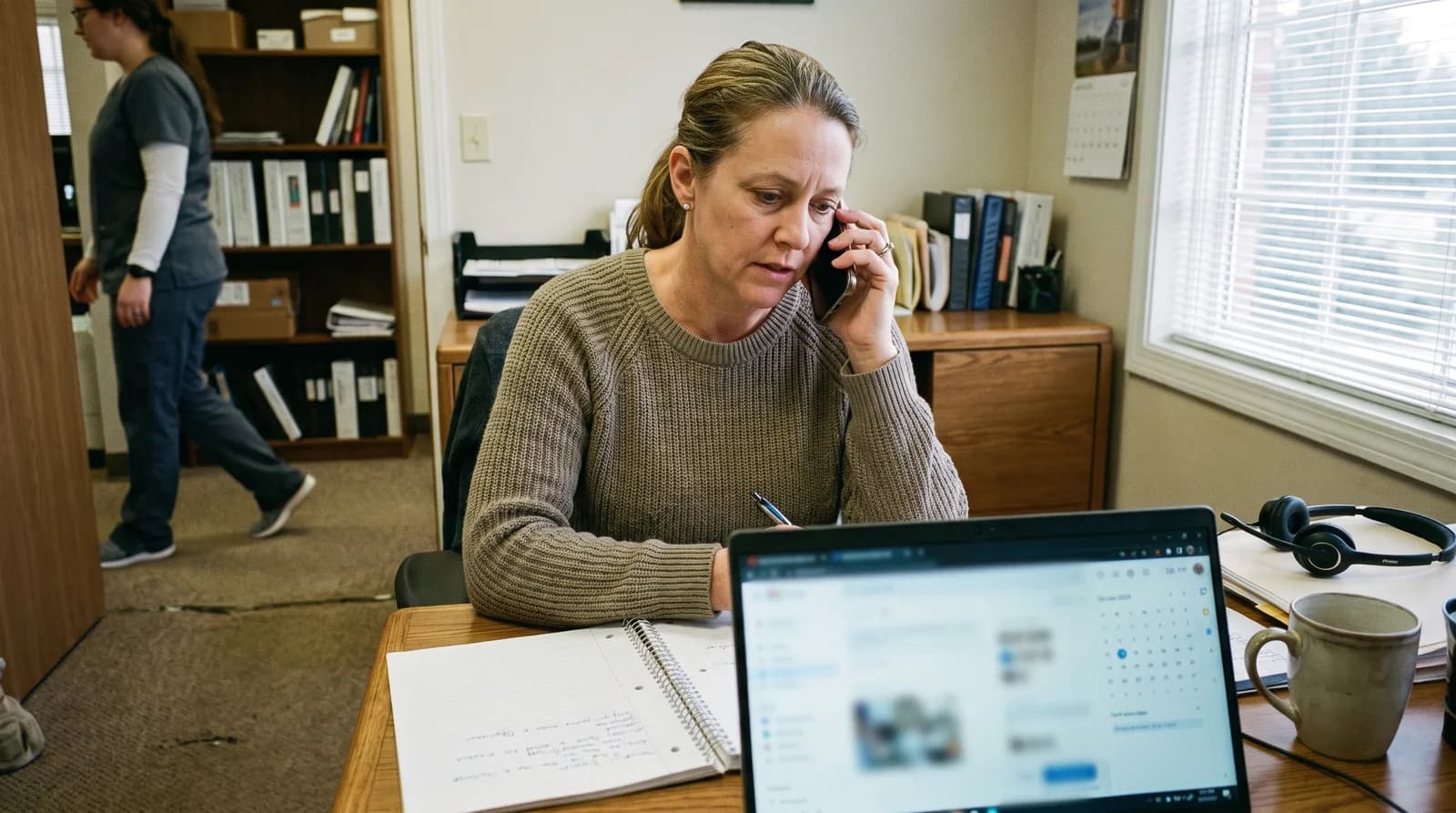
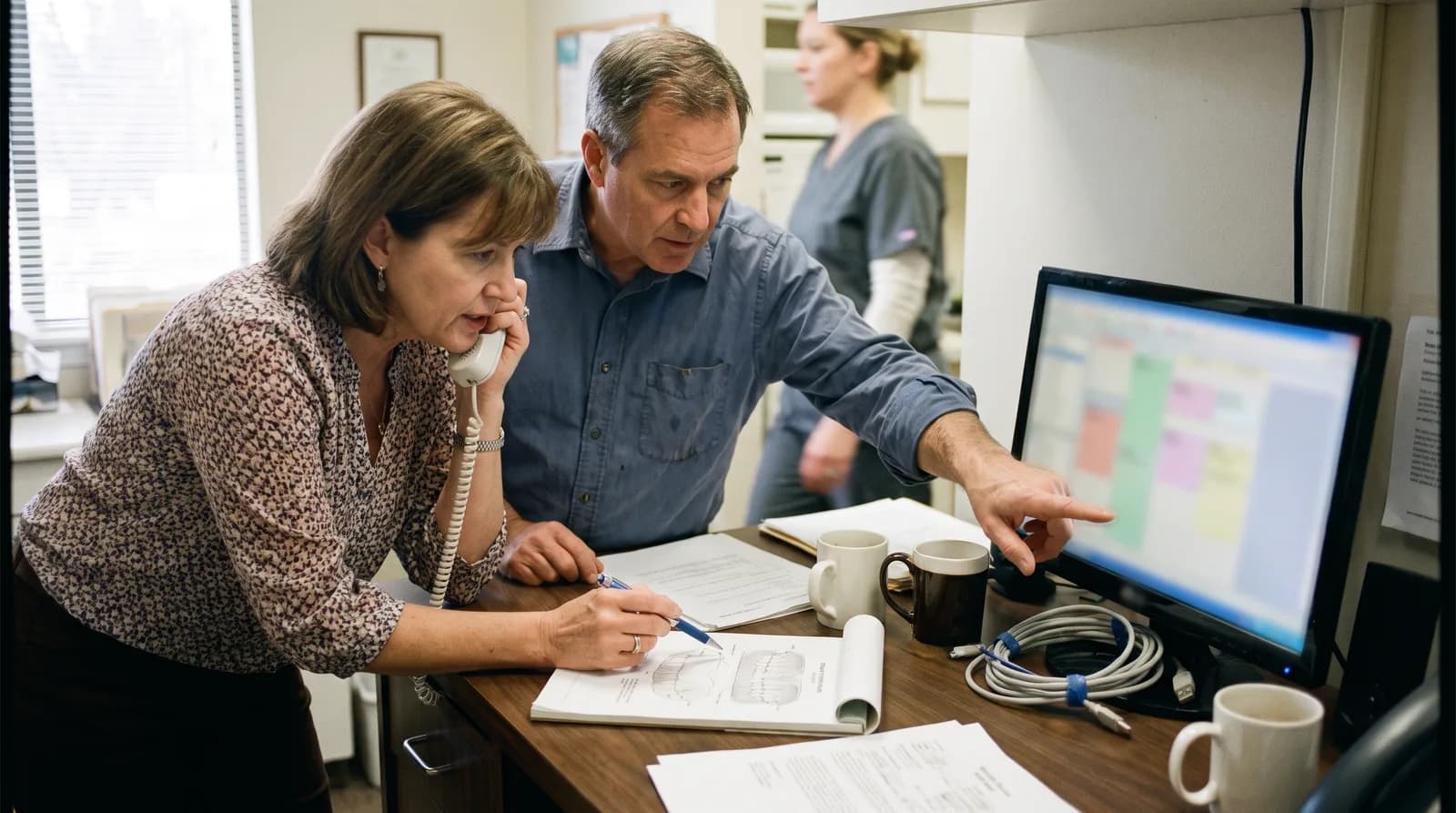
Before automation, my office manager would start each day with a printed schedule and a phone. She'd work through 20 to 30 names, leaving voicemails for the ones who didn't pick up, and then circling back an hour later to try again. That's not an exaggeration. It was the first task of every single workday.
Here's the thing. Most of those calls ended the same way: patient confirms, hangs up. The conversation lasted 30 seconds. But the dialing, the waiting, the voicemails, the callbacks added up to a block of time that could have been spent checking in patients, handling insurance questions, or just reducing the stress level behind the front desk. A study published in the Journal of Dental Hygiene found that SMS appointment reminders reduce no-show rates by 38%. That number tracked closely with what I saw once we switched to automated text and voice confirmations.
The confirmation system sends a text 48 hours before the appointment, then a second reminder the morning of. Patients reply "C" to confirm or call to reschedule. No-shows dropped. My front desk stopped dreading Monday mornings. That alone justified the switch. If you're still running manual confirmations, take a look at confirmation scripts and templates to see what the messaging should actually say.
BEFORE vs. AFTER
Appointment Confirmation Workflow
MANUAL (Before)
45 min
Staff time per morning. 20-30 calls. Multiple voicemails and callbacks. First task of every workday.
AUTOMATED (After)
0 min
Texts sent 48 hours and morning-of. Patients reply to confirm. Staff only handles exceptions.
No-show rate dropped roughly 35% in the first 90 days.
What Happened When I Automated Recall Reminders and Review Requests?
Automating recall reminders and review requests solved two problems that share the same root cause: both are time-sensitive, repetitive tasks that fall apart the moment your front desk gets busy with walk-ins and phone calls.
Recall Reminders
Recall is the backbone of hygiene production, and hygiene is where most practices earn their margin. But keeping patients on a six-month cycle requires consistent outreach, and consistency is the first thing to break when the schedule gets hectic. According to ADA data, 20-30% of patients become inactive within 18 months without follow-up. My own recall lapse rate was around 22% before automation.
Once I set up an automated recall sequence (text at 5 months, email at 5.5 months, phone call at 6 months if no response), that number fell to about 14%. Not zero. But a meaningful recovery. The system doesn't forget. It doesn't skip a week because three emergencies walked in on a Tuesday. That matters. For a deeper look at building recall workflows, I'd point you to this guide on dental recall systems.
Review Requests
Asking for Google reviews is awkward for most front desk staff. They know it matters, but bringing it up while a patient is checking out feels forced. Automated review requests remove that friction entirely. A text goes out 30 minutes after checkout with a direct link to your Google review page. No script. No uncomfortable pause at the front desk.
Research from BrightLocal's consumer review survey shows that 98% of people read local reviews before choosing a business, and 88% are more likely to choose a business where the owner responds to all reviews. My review volume roughly doubled in the first four months after automation, with an average rating that actually went up slightly. Staff were relieved. Patients didn't seem to mind. For context on why this matters for your search visibility, see our reputation management guide.
Related: Automated recall systems increase patient return rates by 25-40% → AI Dental Patient Reactivation: Complete Guide
Why Were Digital Intake Forms and Insurance Verification the Easy Wins?
Digital intake forms and automated insurance verification were the least dramatic automations on my list, but they removed two bottlenecks that quietly consumed front desk hours every morning without anyone tracking the cost.
Digital Intake Forms
Paper intake was a mess I tolerated for years. Patients would arrive, fill out four pages on a clipboard, and hand it to someone who then typed everything into the practice management system. Typos happened. Insurance ID numbers got transposed. And the whole process added 10 to 15 minutes to every new patient visit before anyone touched a dental instrument.
Moving to digital forms sent before the appointment meant patients filled everything out on their phone or computer at home. Data flowed directly into the PMS. No retyping. No clipboard. The morning check-in process shrank from a bottleneck to a quick ID scan and signature. According to Dental Economics research, practices with online scheduling and digital forms see measurably fewer front desk errors and shorter patient wait times. I'd agree with that completely.
Insurance Verification
Insurance verification used to happen the morning of the appointment, if it happened at all. Someone would call the carrier, sit on hold for eight minutes, scribble the benefits on a sticky note, and hope the information was still accurate by the time the patient reached the chair. When it wasn't, you got the uncomfortable conversation about coverage gaps after treatment had already started.
Automated verification runs 48 hours before the appointment. It pulls eligibility, remaining benefits, and frequency limitations directly from the carrier's electronic system. No hold time. No sticky notes. And when there's a problem, the front desk has two full days to call the patient and sort it out. That alone reduced same-day insurance surprises by about 70% in my practice. Worth it. If you're evaluating your front desk workflow more broadly, this front office setup guide covers how these pieces fit together.
AUTOMATION SCORECARD
The Five Things I Automated After Phone Answering
Appointment Confirmations
SMS + voice, 48hr and morning-of
~35% fewer no-shows
Recall Reminders
Text, email, phone sequence at 5-6 months
Lapse rate 22% to 14%
Review Requests
Automated text 30 min after checkout
Review volume doubled
Digital Intake Forms
Pre-visit completion, direct PMS sync
Check-in time cut 60%+
Insurance Verification
Automated eligibility pull 48hr before visit
70% fewer same-day surprises
See How These Automations Fit Into a Broader Roadmap
A step-by-step look at which dental practice automations to tackle first, second, and third.
Read the Full Automation Roadmap →What Should a Dental Practice Never Automate?
Treatment plan conversations and patient complaints are the two things I will never hand to a system, because both require the kind of real-time emotional judgment that only a person in the room can provide.
Treatment Conversations
A treatment plan is not a grocery list. When I present a $4,000 implant recommendation to a patient who wasn't expecting it, I'm reading their face. I'm noticing whether their arms cross, whether they lean forward with curiosity or back with concern. I'm adjusting my language depending on whether they seem confused by terminology or frustrated by cost. No automation can do that.
There's a real temptation to script these conversations or let a system generate patient-facing treatment explanations. I understand why. Case acceptance is directly tied to revenue, and standardization feels like it should help. But every patient walks in with a different financial situation, a different pain threshold, and a different set of trust signals they need before saying yes. A scripted message might be accurate. It won't be right for every person sitting in that chair. The ADA's dental informatics resources discuss how technology should support clinical decisions, not replace the practitioner's role in communicating them.
Patient Complaints
Complaints are the other line I won't cross. When a patient is upset, whether it's about a billing error, a scheduling mix-up, or a clinical outcome they didn't expect, they need to feel heard by a human being. Not redirected. Not triaged by a chatbot. Heard.
I've watched what happens when practices route complaints through automated response systems. The patient gets a form response. They get angrier. They leave a one-star review that says "they didn't even care enough to talk to me." That review lives on your Google Business Profile forever. The cost of one mishandled complaint can undo months of positive reviews and patient goodwill. According to BrightLocal data, 88% of consumers are more likely to use a business where the owner responds to all reviews. The same principle applies to complaints handled before they reach the review stage. A real conversation, with a real apology if warranted, almost always costs less than the alternative.
DECISION FRAMEWORK
Automate It or Keep It Human?
AUTOMATE WHEN...
- Task is repetitive and time-bound
- Outcome doesn't change based on who does it
- Failure to complete is worse than imperfect execution
- Patient doesn't need to feel "known" during the interaction
KEEP HUMAN WHEN...
- Empathy or emotional reading is required
- Trust is being built or repaired
- The conversation must adapt in real time
- Getting it wrong carries lasting reputational cost
How Do You Build Your Own Dental Practice Automation Guide?
Your automation roadmap doesn't need to match mine exactly, because every practice has a different staff size, patient volume, and tolerance for technology change. The filter matters more than the list.
I ask three questions about any task before I automate it:
- Is it repetitive enough that a human doing it adds no unique value? Confirmations, reminders, and form collection all pass this test.
- Is the consequence of a mistake recoverable? A misspelled text confirmation is fixable. A mishandled complaint is not.
- Does the patient need to feel personally connected to whoever handles it? Checking insurance doesn't require a personal touch. Explaining why a root canal is necessary absolutely does.
If a task passes all three, automate it. If it fails even one, keep it human. That's the line. Most practices I've talked to land on a similar set of five to seven automations that clear the bar, and a shorter list of two or three that don't. The specific tools change. The principle stays the same.
For a more detailed dental practice automation guide that covers tool selection and implementation order, that companion article walks through the technical side. This article was about the thinking that should happen first. And if you're still weighing whether your front desk costs justify automation investments, the numbers usually speak for themselves once you actually track them.
The practices that get automation right aren't the ones that automate the most. They're the ones that know where to stop.
See How Automation Works in a Real Practice
Book a demo and we'll walk through which automations make sense for your practice size, patient volume, and current workflow.
Book a Free Demo →More guides on practice operations and front desk efficiency
Browse Resources →Sources & References
Frequently Asked Questions
Start with phone answering because missed calls carry the highest per-incident revenue loss. Then move to appointment confirmations, recall reminders, review requests, intake forms, and insurance verification. Each builds on the time savings of the one before it.
Most practices recover 30 to 60 minutes of front desk time per day. Manual confirmation calls for a 20-patient schedule involve dialing, voicemails, and callbacks that consume the entire first hour of every morning.
Yes. Automated verification pulls eligibility, remaining benefits, and frequency limitations from carrier systems 48 hours before the appointment. This gives your team two full days to resolve coverage gaps before the patient arrives.
No. Complaints require empathy, active listening, and real-time judgment. Automated responses make upset patients angrier and often lead to one-star reviews that carry lasting reputational cost exceeding any time saved.
A text with a direct Google review link is sent 30 minutes after checkout. This removes the awkwardness of staff asking in person. Most practices see review volume double within three to four months of implementing automation.
Treatment plan conversations and patient complaints should remain human-led. Both involve trust-building, emotional reading, and adaptive communication. Automating either one risks damaging patient relationships and long-term practice reputation.
Yes. Multi-channel recall sequences using text, email, and phone outreach at timed intervals increase return rates by 25-40% according to industry data. The key advantage is consistency that manual outreach can't match during busy weeks.
Apply a three-question filter: is the task repetitive with no unique human value, is a mistake easily recoverable, and does the patient need personal connection? If all three favor automation, proceed. If any favors a human, keep it manual.
Was this article helpful?

Written by
Dr. Muhammad Abdel-rahim DMD
Muhammad Abdel-rahim, DMD, is a dentist and implantologist at Peterborough Family Dental & Implant Center with a passion for blending clinical excellence, leadership, and innovation. He believes dentistry extends beyond restoring smiles to building trust, confidence, and sustainable systems that help patients and teams thrive. With experience leading and scaling dental practices, Dr. Abdel-rahim brings a strategic mindset to patient care and practice growth. He is particularly interested in communication, critical thinking, and the thoughtful application of artificial intelligence to improve clinical outcomes, workflows, and the overall patient experience.