Dental AI vs Manual Follow-Up: The Staffing Cost Comparison
Dental AI vs manual follow-up staffing cost: hour-by-hour comparison for recalls, reminders, reviews, and verification. AI saves $45,000-95,000/year.
Share:
Table of contents
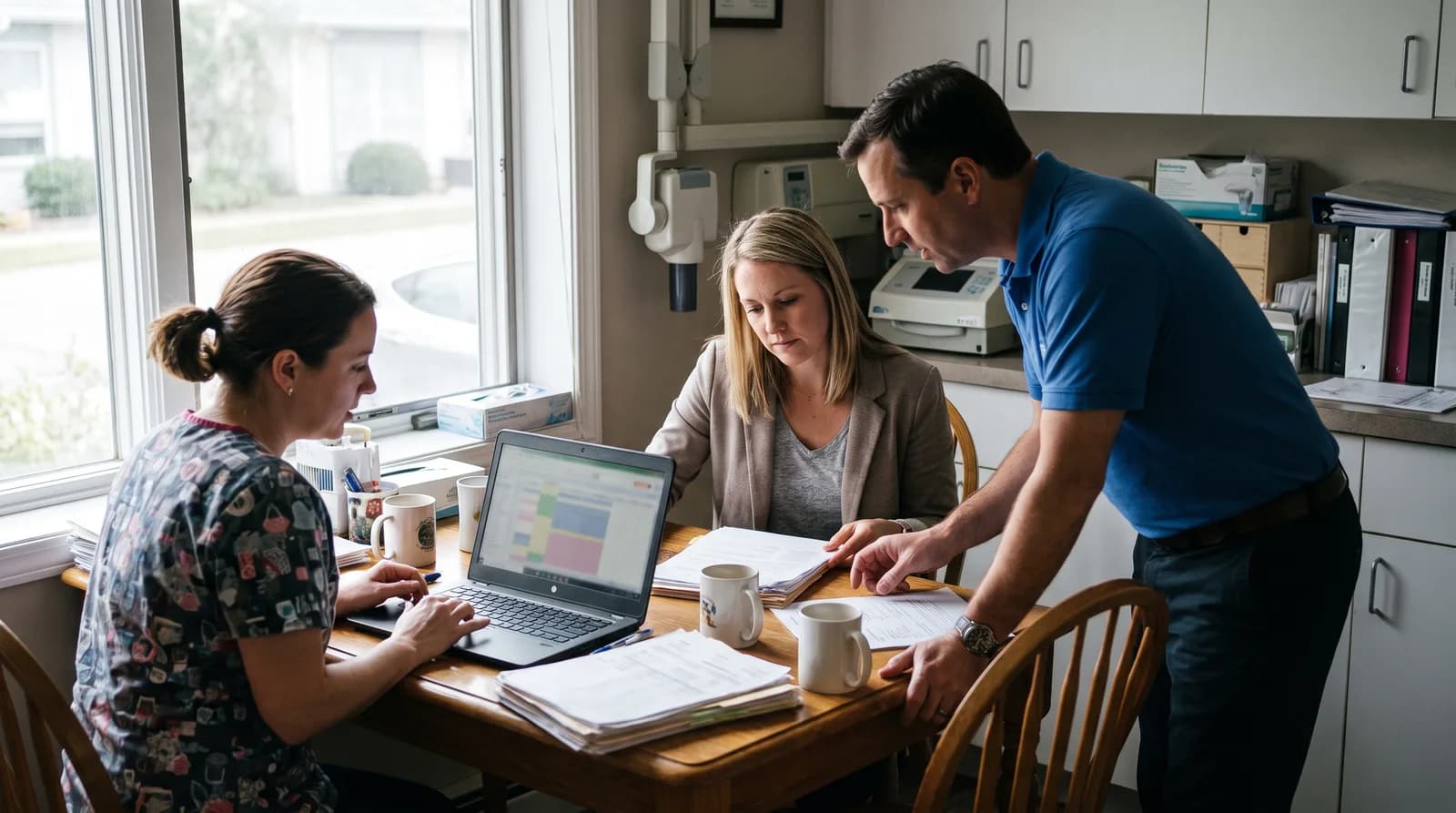
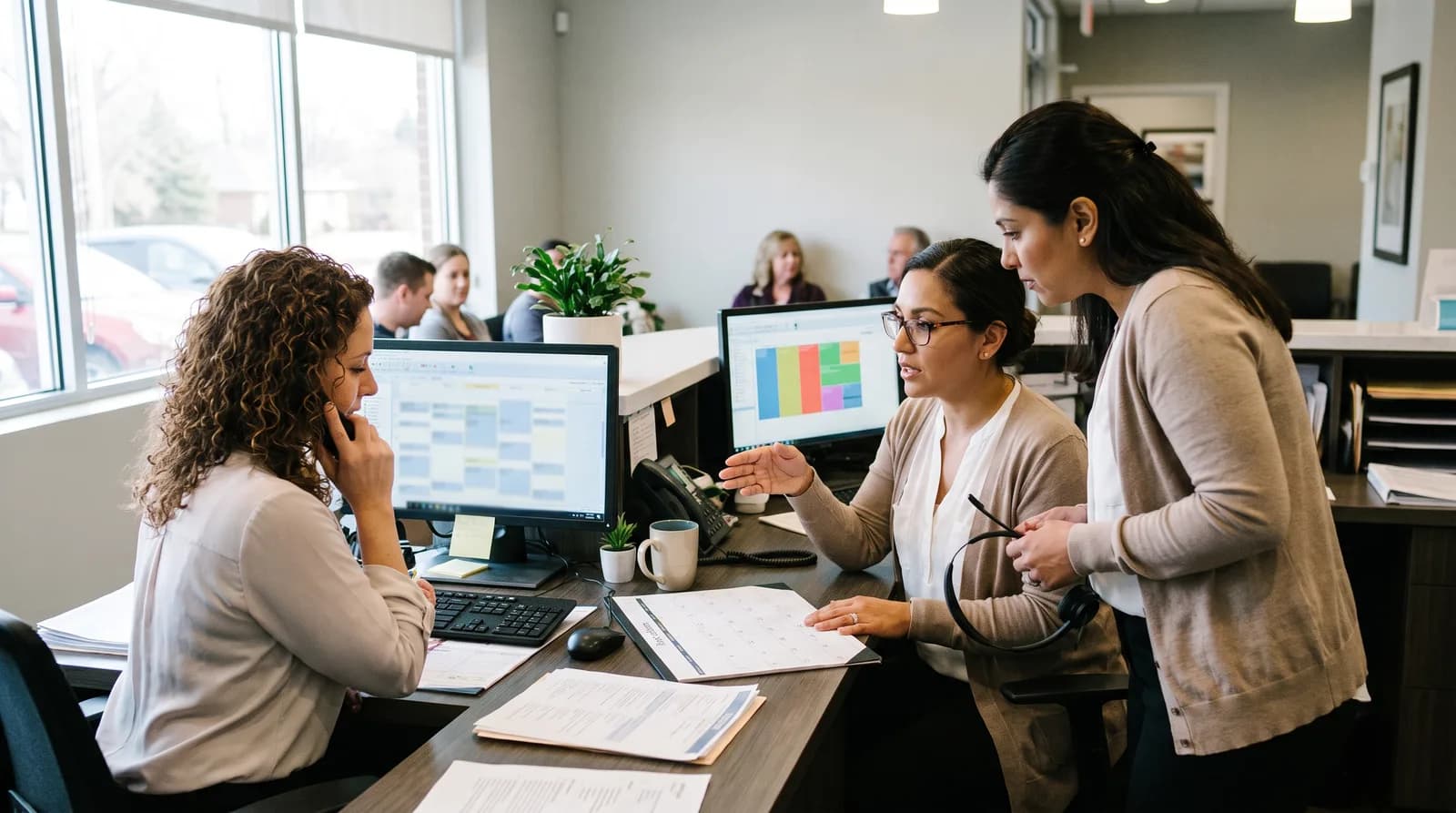
The dental AI vs manual follow-up staffing cost comparison reveals that practices spending 20-35 staff hours weekly on phone follow-ups, recall outreach, appointment reminders, review requests, and insurance verification are paying $45,000-95,000 annually in labor for tasks that AI completes in seconds at a fraction of the cost. The question isn't whether AI is cheaper. It is. The question is what happens to the 20-35 hours of staff capacity freed up when AI handles the repetitive outreach that currently consumes your most expensive resource: human attention.
This guide provides the hour-by-hour dental AI vs manual follow-up staffing cost breakdown across five follow-up categories, the specific dollar comparison for each, what staff does with recovered time, and the total cost of ownership analysis that includes both the direct savings and the indirect revenue gains. According to BrightLocal, 98% of consumers expect responsive communication. Manual follow-up fails this expectation because staff can't call 200 patients while also serving the 30 patients physically in the office. According to the ADA, staffing costs represent the largest expense category in dental practice operations.
How Many Hours Does Manual Follow-Up Actually Consume?
Most practice owners underestimate follow-up labor because it's distributed across multiple staff members throughout the day rather than concentrated in one visible block.
| Follow-Up Task | Manual Hours/Week | AI Hours/Week | Annual Staff Cost (Manual) |
|---|---|---|---|
| Appointment reminders/confirmations | 5-8 hrs | 0 | $5,200-12,480 |
| Recall outreach | 4-8 hrs | 0 | $4,160-12,480 |
| Insurance verification | 8-15 hrs | Under 1 hr (exceptions) | $8,320-23,400 |
| Review requests | 2-3 hrs | 0 | $2,080-4,680 |
| Reactivation calls | 3-5 hrs | 0 | $3,120-7,800 |
| Total | 22-39 hrs/week | Under 1 hr/week | $22,880-60,840/year |
At $20-30/hour (fully loaded front desk cost including benefits and taxes), the manual follow-up labor costs $22,880-60,840 annually. This doesn't include the opportunity cost of what staff could have done instead: serving in-office patients, presenting treatment plans, improving patient experience, and handling complex scheduling that AI can't do. The total cost including opportunity cost reaches $45,000-95,000. See our AI receptionist guide.
Replace 22-39 hours of manual follow-up with AI
DentalBase automates reminders, recall, verification, reviews, and reactivation from one platform. Staff redirects 20-35 hours weekly to patient-facing activities.
Book a Free Demo →How Does AI Handle Each Follow-Up Category Differently Than Staff?
The performance difference goes beyond hours saved. AI outperforms manual on consistency, timing, volume, and coverage.
- Appointment reminders: Staff calls 80-100 patients per week with inconsistent timing (some get called 3 days before, others the morning of). AI sends a three-touchpoint sequence to every patient identically: email 7 days, SMS 48 hours, AI call day-of. Confirmation rates jump from 60-75% (manual, inconsistent) to 85-95% (AI, systematic). The 20-30% confirmation improvement reduces no-shows by 40-50%, recovering $25,000-80,000 annually in production from empty chairs. See our reminders guide and no-show prevention guide.
- Recall outreach: Staff works from exported PMS lists that are outdated the moment they're printed. They reach 10-15 patients per hour, leaving hundreds untouched. AI outreaches every overdue patient automatically via SMS, email, and AI phone call on a cascading schedule (1 month, 2 months, 3 months overdue). Recall compliance improves from 40-60% (manual) to 70-85% (AI). At 500 overdue patients, recovering an additional 15-25% represents 75-125 patients at $200-400 per hygiene visit: $15,000-50,000 annually. See our recall automation guide and recall gap guide.
- Insurance verification: Staff spends 10-20 minutes per patient calling insurance companies and waiting on hold. AI batch-verifies all next-day patients overnight in seconds each. Staff arrives to color-coded dashboards (green verified, yellow changed, red failed). Time drops from 8-15 hours/week to under 1 hour handling only exceptions. Additionally, verified coverage presented during booking increases conversion 30-40%. See our verification guide.
- Review requests: Staff remembers to ask some patients and forgets others. The patients they ask aren't always the happiest (the most satisfied patients leave quickly after checkout). AI sends automated review requests to every patient 2-4 hours post-visit with a satisfaction gate routing happy patients to Google reviews and unhappy patients to private feedback. Review velocity jumps from 5-10/month (manual) to 20-30/month (automated). See our review collection guide.
- Reactivation: Staff dials through cold lists for hours with 5-10% contact rates because patients don't answer unknown numbers. AI sends personalized SMS and email first, then places AI phone calls to non-responders. AI reactivation reaches 40-60% of lapsed patients versus 5-10% manual contact rate. Recovering 10-15% of lapsed patients at $800-1,500 lifetime value produces $40,000-112,000 annually for a practice with 500 lapsed patients.
What Happens to the 20-35 Hours of Staff Time AI Frees Up?
The recovered hours are the hidden multiplier in this comparison. Where staff redirects those hours determines whether AI produces cost savings or revenue growth.
- Phone coverage improvement: Staff freed from recall calls and reminder calls can answer inbound patient calls that currently go to voicemail. 38% of dental calls go unanswered. Redirecting even 5-10 hours weekly to phone coverage reduces miss rates by 15-25%, recovering $50,000-150,000 in annual production. Combined with AI reception handling overflow, the practice achieves 95-100% answer rates.
- Treatment plan presentation: Staff who previously spent mornings making recall calls now have time to prepare and present treatment plans during patient visits. Treatment case acceptance typically runs 40-60%. Practices that dedicate staff time to presentation support see 10-20% improvement in acceptance rates, producing $30,000-80,000 in additional annual production from the same patient base.
- In-office patient experience: The front desk person who's always on the phone making outbound calls can't simultaneously greet arriving patients, answer questions, or provide the attentive experience that generates positive reviews and referrals. Redirecting phone time to patient-facing interaction improves satisfaction scores and review sentiment. According to Moz, patient experience directly influences review quality and local rankings.
Related: See the full AI receptionist ROI calculation. → AI Dental Receptionist ROI Calculator: Is It Worth the Investment?
What Does the Total Cost Comparison Look Like?
The complete comparison includes direct labor cost, AI platform cost, and the revenue impact of performance improvements.
| Metric | Manual Follow-Up | AI Follow-Up |
|---|---|---|
| Annual labor / platform cost | $22,880-60,840 | $3,600-12,000 |
| Confirmation rate | 60-75% | 85-95% |
| Recall compliance | 40-60% | 70-85% |
| Review velocity | 5-10/month | 20-30/month |
| Reactivation contact rate | 5-10% | 40-60% |
| Verification time | 10-20 min/patient | 3-10 seconds/patient |
| Coverage hours | 40-50 hrs/week (business only) | 168 hrs/week (24/7) |
| Annual revenue from follow-up | Baseline | +$130,000-392,000 above baseline |
AI costs 5-17x less than manual labor ($3,600-12,000 vs $22,880-60,840) while producing 2-4x better results across every metric. The combination of lower cost and higher performance creates a net improvement of $150,000-400,000+ annually for typical practices. Connect to your ROI tracking, spend breakdown, and cost benefit analysis. Track through GA4.
Staffing cost is only half of the equation. To see how follow-up labor stacks up against recovered patient revenue, run the same hours through a lifetime value calculation.
How Do You Transition from Manual to AI Without Losing Continuity?
The transition period requires overlap to prevent follow-up gaps that lose patients during the switch.
- Week 1: Run AI in parallel on reminders only. Staff continues manual follow-up for all categories. AI sends reminders alongside staff calls. Compare completion rates. If AI reminders produce equal or better confirmation rates (they will), stop manual reminders at the end of week 1. Staff hours freed: 5-8.
- Week 2: Add recall and review automation. AI takes over recall outreach and post-visit review requests. Staff stops making recall calls and asking for reviews manually. Verify that every overdue patient receives outreach and every completed visit triggers a review request. Staff hours freed: 6-11 additional.
- Week 3: Add verification automation. AI batch-verifies scheduled patients overnight. Staff reviews the exceptions dashboard instead of calling insurance companies. Verify that verification data matches PMS records. Staff hours freed: 8-15 additional.
- Week 4: Add reactivation and optimize. AI launches reactivation campaigns for lapsed patients. Review all automation metrics from weeks 1-3 and adjust scripts, timing, and messaging based on results. By end of week 4, staff has recovered 20-35 hours weekly and redirected to phone coverage, treatment presentation, and patient experience.
The critical success factor during transition is not stopping manual follow-up before confirming AI follow-up is working. Each week's parallel operation proves AI handles the function before staff stops doing it manually. If AI recall messages aren't delivering in week 2, staff continues recall calls until the issue is resolved. Parallel operation costs more for 4 weeks but prevents the patient follow-up gap that loses appointments during the switch. Document each week's handoff metrics so the practice has baseline data for ongoing optimization after the transition completes.
Compliance with HIPAA applies to all patient communication data. TCPA requires consent for automated outbound calls and texts. Connect to your marketing strategy, tech consolidation, social media, and email marketing.
Replace 22-39 hours of follow-up with AI that performs better
DentalBase automates reminders, recall, verification, reviews, and reactivation. Staff redirects to patient care. Results improve across every metric.
Book a Free Demo →Explore more guides and tools for dental practice growth.
Browse Resources →Sources & References
Frequently Asked Questions
22-39 hours across five categories: appointment reminders (5-8 hrs), recall outreach (4-8), insurance verification (8-15), review requests (2-3), and reactivation calls (3-5). At $20-30/hour: $22,880-60,840 annually in direct labor cost.
AI: $3,600-12,000/year with under 1 hour weekly staff time. Manual: $22,880-60,840 in labor alone. AI costs 5-17x less while outperforming manual across every metric (confirmation, recall compliance, review velocity, contact rates).
Yes across every metric. Confirmation rates: 85-95% AI vs 60-75% manual. Recall compliance: 70-85% vs 40-60%. Review velocity: 20-30/month vs 5-10. Reactivation contact: 40-60% vs 5-10%. Insurance verification: seconds vs 10-20 minutes per patient.
20-35 hours weekly redirect to phone coverage (reducing 38% unanswered calls), treatment plan presentation (10-20% acceptance improvement), and in-office patient experience (improving reviews and referrals). The redirected time produces $80,000-230,000 in additional annual revenue.
Staff reaches 10-15 patients per hour from outdated lists. AI outreaches every overdue patient automatically via SMS, email, and phone on a cascading schedule. Recall compliance improves from 40-60% to 70-85%, recovering 75-125 additional hygiene visits annually.
Manual: staff calls insurance companies for 10-20 minutes per patient (8-15 hours weekly). AI: batch-verifies all scheduled patients overnight in seconds. Staff reviews exception dashboard under 1 hour weekly. Additionally, verified coverage during booking increases conversion 30-40%.
Four weeks with parallel operation: week 1 reminders, week 2 recall+reviews, week 3 verification, week 4 reactivation. Each category transitions independently so no follow-up gaps occur. Staff recovers 20-35 hours by end of week 4.
Direct labor savings: $19,280-48,840/year (manual cost minus AI cost). Performance improvement revenue: $130,000-392,000 from better confirmation, recall, reactivation, and reviews. Total annual impact: $150,000-440,000 improvement over manual follow-up.
Was this article helpful?
Written by
Dentalbase Team
The Dentalbase Team is a collective of dental marketing experts, AI developers, and practice management consultants dedicated to helping dental practices thrive in the digital age.