Missed Call Text Back Dental: Does It Actually Work?
Missed call text back dental setups recover 5-12% of missed calls. Honest evaluation of when it pays off, when it doesn't, and how it compares to AI.
Share:
Table of contents
Automated SMS reply to a missed call is a feature most VoIP and CRM vendors will pitch as the fix for unanswered calls. The promise is simple. A patient calls, the line rings out, and within seconds an automated SMS goes back saying "Sorry we missed you, can we help?" Some patients reply, you book the appointment by text. The question every owner needs answered honestly is whether missed call text back dental setups actually recover the calls you're losing, or just feel like they do.
This article is the practical evaluation. What text back does well, what it doesn't, when it pays off, when it doesn't, and how it stacks up against a live AI receptionist that picks up the phone in the first place.
For the broader picture of how phone systems for dental offices fit together in 2026, see our complete owner's guide to phone systems for dental offices.
What Is Missed Call Text Back for Dental Offices?
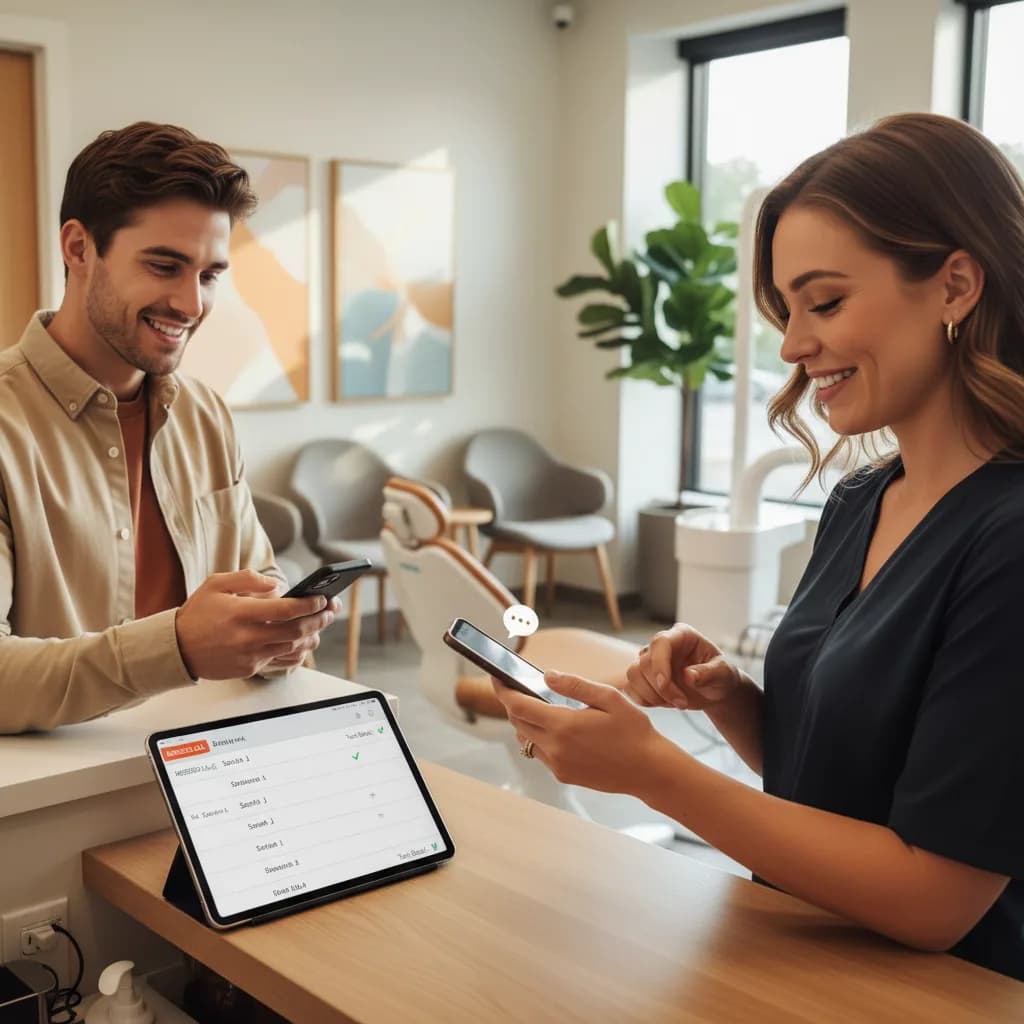
This is an automated SMS that fires within seconds of an unanswered or missed call, sending a templated message to the caller's mobile number. The message typically apologizes, offers help, and invites the patient to reply by text or schedule online.
The mechanic is straightforward. Your phone system or call-tracking platform detects the missed call event and triggers a webhook. That webhook sends an SMS through a service like Twilio or a packaged dental tool. The patient gets the text within 5-30 seconds depending on the setup. If they reply, the message lands in a shared inbox the front desk monitors during business hours.
What it includes (typically)
- Automated SMS within 5-30 seconds of a missed inbound call.
- Templated message, usually personalized with the practice name and a callback or booking link.
- Two-way reply handling through a shared inbox or CRM.
- Tracking dashboard showing send rate, reply rate, and (sometimes) booking attribution.
Worth noting upfront: this approach is reactive. It runs only after a call has already been missed. The phone still rang out. The patient still hit voicemail. Whether that voicemail experience converts depends on what the SMS says and how fast the patient sees it. For the broader set of fixes that prevent the miss in the first place, see Dental Office Missed Calls Solution: 5 Fixes That Work.
How Well Does Missed Call Text Back Dental Recovery Actually Work?
It works modestly: typical reply rates fall between 15% and 30% of the SMS sent, with a smaller fraction converting to a booked appointment. The honest assessment is that it recovers roughly 5-12% of missed calls. Real money, but a long way from a live system's 100% answer rate.
The performance varies based on three things. The speed of the SMS (under 15 seconds matters), the quality of the message wording, and the responsiveness of the front-desk team to inbound replies. A 30-minute reply lag from the practice cuts text back booking rate roughly in half, because patients have already moved on by then.
What the data actually shows
Cross-industry research from Marchex on call recovery and from Forbes on voicemail abandonment together suggest the pattern: 80% of voicemail callers don't leave a message, but a meaningful share will respond to a fast SMS if the message reads like it came from a person, not a robot. That's where the value sits. It catches a slice of the people who would have ghosted entirely.
What it doesn't do: These tools don't book the appointment by themselves. It surfaces an interested patient in your reply inbox. Someone still has to handle the conversation. If your front desk is buried, the reply chain stalls and the recovery rate drops further.
When Does Text Back Pay Off for a Dental Practice?
It pays off for dental practices with high inbound call volume, a responsive front desk that can manage the reply inbox in real time, and a budget where recovered calls outweigh platform cost. For most practices, that's a low-three-figures monthly investment recovering two to four bookings. Solidly positive ROI.
It pays off less when the practice is already too short-staffed to handle the inbound replies, when after-hours volume dominates (text back replies sit unanswered overnight), or when the missed-call problem is concentrated during peak clinical hours where the front desk also can't watch the SMS inbox.
Where text back fits well
- Light-volume practices with occasional misses. A few missed calls a week, a responsive team, a simple SMS automation. Cheap insurance against the 80% voicemail-abandonment problem.
- Marketing-heavy practices. If you're spending $150-$300 per new patient acquisition through digital channels per WordStream, recovering even one booking a week pays for the platform several times over.
- Practices with strong front-desk SMS habits already. If your team is already responsive to text inquiries, the reply lane is staffed.
Where text back falls short
- After-hours dominance. If most of your misses are evenings and weekends, the reply lag erases most of the recovery rate.
- Buried front desks. The same staffing constraint that caused the missed call also slows the reply, defeating the purpose.
- New-patient calls. First-time inquirers usually want to talk to a person to assess the practice, not exchange texts. Text back recovers a smaller share of new-patient calls than existing-patient calls.
Audit your missed calls before picking a tool
Text back, AI receptionist, and answering services solve different problems. A one-week call audit tells you which fits. Browse our resources for the templates we use.
Browse Resources →How Does Missed Call Text Back Dental Compare to an AI Receptionist?
These two solve different problems. Text back is reactive, recovers a fraction of already-missed calls. An AI receptionist is proactive and prevents the call from being missed in the first place. They're not direct substitutes. Owners often choose one over the other.
The choice usually comes down to volume, after-hours mix, and budget. Text back is cheaper monthly but only recovers a slice. AI receptionist costs more but answers nearly everything that rings.
| Factor | Missed Call text back | AI Receptionist |
|---|---|---|
| When it acts | After call is missed | Before call is missed (answers live) |
| Recovery rate | 5-12% of missed calls | 95%+ (calls aren't missed in the first place) |
| Books appointment | No (front desk handles reply) | Yes (direct PMS booking) |
| After-hours coverage | Limited (replies sit until morning) | Full 24/7 |
| Monthly cost | $50-$200/month typical | $300-$800/month typical |
| Setup time | Hours to days | 1-3 days + 2-4 weeks voice training |
| Front-desk load | Adds reply work to existing load | Reduces inbound load |
Plenty of practices use both. It catches the cracks an AI receptionist might still miss (network blips, dropped connections, edge cases), while the AI handles the structural volume. For practices not ready for a full AI move, the SMS-only option is a defensible mid-tier option.
Related: If you're weighing text back against a full AI receptionist for your practice, this guide compares the two head to head. → AI Dental Receptionist Software for Small Practices
What Should a Good Missed Call Text Back Setup Include?
A good setup includes four things at minimum: SMS firing within 15 seconds, conversational message wording, two-way reply handling through a real shared inbox the front desk monitors, and integration with the practice management system so reply-driven bookings don't require manual data entry.
Most off-the-shelf text back tools handle the first two. The reply inbox and PMS booking pieces are where vendors differ. Skipping those two creates more work for the front desk, not less.
Message wording that actually gets replies
Most vendor default templates read like robots. "Hi, we missed your call. Reply with your inquiry." That's a 15% reply rate. Better wording is short, sounds like a person, and includes the practice name and a clear next step. Something like: "Hi, this is Sarah from Northpoint Dental. We just missed your call and want to make sure you get help. Reply with what you need or text BOOK for available appointments." Personal name, practice name, two clear options.
What to demand from a vendor
- Speed: SMS within 15 seconds of the missed-call event. Anything slower loses replies fast.
- Two-way inbox with reply notifications on whatever device the front desk monitors during the day.
- PMS integration for at least basic appointment lookup. Full booking is even better.
- Conversion tracking at the call level so you can measure whether text back actually books patients or just sends messages.
- HIPAA compliance and a signed BAA. Patient phone numbers are PHI when associated with appointment context.
For PMS integration specifically, look for tools that work with Open Dental, Dentrix, or Curve Dental natively rather than via clunky calendar sync. The integration depth determines whether the reply inbox creates manual work or removes it.
See how DentiVoice prevents the missed call entirely
A 24/7 AI receptionist that books directly into your PMS, so text back never has to fire in the first place. Live demo with your call scenarios.
Book a Free Demo →How Do You Tell if Missed Call Text Back Is Worth It for Your Practice?
Here's the test: pull last month's missed-call data, estimate new-patient inquiries, multiply by a 5-10% recovery rate, and value those at $1,200+ per new-patient lifetime per Dental Economics. If that several times exceeds platform cost, pilot it. If not, the missed-call problem needs a different fix.
Most practices that run this math find positive ROI, but a small one. The bigger question is opportunity cost: every dollar spent on text back is a dollar not spent on a fix that addresses the structural cause. For practices with under 8-10 missed calls a week, text back is fine. For practices with 15+, the math usually favors moving up to a system that prevents the misses entirely.
The 30-day pilot framework
If you're going to test it, structure it as a 30-day pilot with three measured outcomes:
- SMS deliverability: what percentage of missed calls actually triggered an SMS within 15 seconds?
- Reply rate: what percentage of those SMS got a patient reply within 24 hours?
- Booking conversion: what percentage of replies converted to a booked appointment in your PMS?
If deliverability is under 90%, the tech isn't working. If reply rate is under 15%, the message wording needs work. If booking conversion is under 25%, the front-desk reply lane is the bottleneck. Each of those is fixable, but you need 30 days of clean data to know which.
The honest truth about these setups: they're useful, but they're a partial fix. The structural problem behind missed calls in 2026 is front-desk capacity, peak-hour math, and after-hours coverage. It's a band-aid on the smallest of those three. It'll catch some patients you'd have lost, and that's worth something. It won't change the underlying pattern.
If you're piloting, do it deliberately and measure honestly. If your missed-call rate is high enough that recovery isn't sufficient, look at the broader call-handling model first. The pillar guide above is the right starting point, and the diagnostic guide on why dental practices miss calls in the first place tells you whether text back even fits your specific pattern.
Stop trying to recover missed calls. Stop missing them.
DentiVoice answers every patient call live, books directly into your PMS, and covers 24/7. See how it handles your actual call mix.
Book a Free Demo →Want more on phone systems, call recovery, and dental front-office automation?
Browse Resources →Frequently Asked Questions
Yes, modestly. Typical missed call text back dental setups recover 5-12% of missed calls through SMS reply, with reply rates of 15-30% and a smaller share converting to bookings. It's positive ROI for most practices, but it doesn't fix the underlying volume of missed calls.
Under 15 seconds is the threshold. SMS triggered within 5-15 seconds maintains reply rates near 30%. SMS lagging 30+ seconds drops reply rates roughly in half because patients have already started calling another practice or moved on entirely.
Standalone text back tools typically run $50-$200 per month for a single-location practice, depending on SMS volume and PMS integration depth. Bundled CRM platforms with text back as a feature run higher. ROI depends on missed-call volume and reply-handling capacity.
It can be, but only with vendors that sign a Business Associate Agreement, encrypt SMS data in transit and at rest, and limit message content to non-PHI templates. Patient phone numbers tied to appointment context are PHI under HIPAA, so the BAA is non-negotiable.
AI receptionists answer calls live and prevent the miss; text back recovers a fraction after the miss. AI is more expensive ($300-$800/month) but recovers 95%+ of calls. Text back ($50-$200) recovers 5-12%. The AI approach has better unit economics for higher-volume practices.
Yes if missed-call volume is low (under 8-10 per week), the front desk can monitor an SMS reply inbox in real time, and the platform integrates with your PMS. For higher volumes, a more proactive solution like an AI receptionist usually delivers better ROI than recovery-only text back.
Demand SMS firing under 15 seconds, two-way reply through a real shared inbox, native PMS integration with Open Dental or Dentrix, call-level conversion tracking, and a signed BAA for HIPAA compliance. Skip vendors that can't deliver all five at the demo stage.
Was this article helpful?
Written by
Dentalbase Team
The Dentalbase Team is a collective of dental marketing experts, AI developers, and practice management consultants dedicated to helping dental practices thrive in the digital age.