AI Dental Receptionist After Hours: DentiVoice Now Live
DentiVoice is now an AI dental receptionist after hours, answering every call and booking appointments to stop missed-call revenue loss.
Share:
Table of contents
An AI dental receptionist after hours now means your DentiVoice line answers every call, not just the ones during business hours. DentalBase built this directly into the DentiVoice AI receptionist platform, and it closes a gap that costs practices real revenue every week. According to ADA Health Policy Institute tracking, 38% of new patient calls go unanswered during business hours, and the after-hours problem is worse. Most of those callers never try again. They call the next practice on the list instead. If you're weighing this against the bigger picture, our full guide to AI receptionists for dental practices covers pricing, integrations, and what to expect.
This update changes that math, and it's part of the broader DentalBase services lineup built for dental practices. DentiVoice now picks up 100% of inbound call volume, whether it arrives at 2 PM during a busy checkout line or 9 PM on a Tuesday. No voicemail. No hold music. No gap in coverage when your front desk clocks out. Here's what changed, why an AI dental receptionist after hours matters for your schedule, and how to see it working on your own line.
What Does an AI Dental Receptionist After Hours Actually Do for DentiVoice?
It means DentiVoice answers every call to your practice line, at any hour, without routing to voicemail. The system picks up in under two seconds, collects the caller's intent, and either books the appointment or escalates it. There's no longer a "closed" state for your phone line.
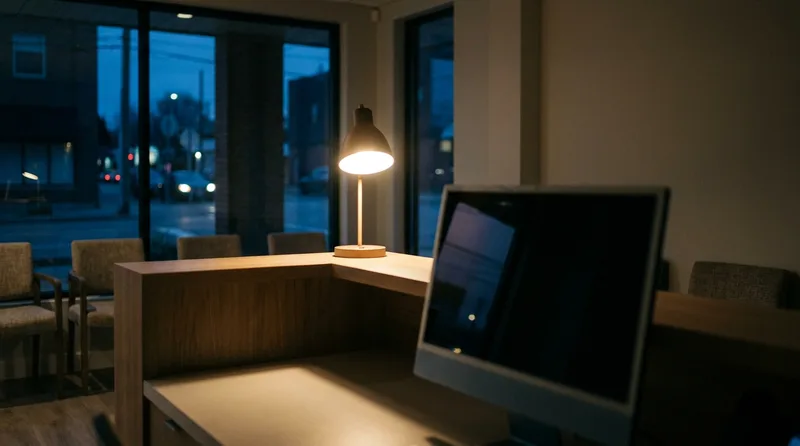
Calls that used to hit voicemail at 7 PM on a Thursday now get the same handling as a call at 10 AM on a Monday. That distinction matters because most practices treat after-hours coverage as an afterthought. A 2024 Dental Economics report found that nearly one in three calls to a dental office goes unanswered, a pattern that compounds once the lobby lights go off and the line still keeps ringing. DentiVoice removes the gap entirely rather than patching it with a generic answering service script.
- Calls placed during open hours, peak lunch rush, or staff lunch breaks get answered the same way
- Calls placed nights, weekends, and holidays get the identical intake flow, not a "leave a message" prompt
- Overflow calls during busy periods, when the front desk is already on another line, get picked up instantly instead of queued
See It Handle a Real Call
Watch DentiVoice answer, qualify, and book an after-hours appointment in a live demo, no script required.
Book a Free Demo →Why Were So Many Calls Going Unanswered in the First Place?
Front desk teams are stretched across too many tasks to catch every ring. Staff are checking in patients, verifying insurance, and processing payments, all while the phone competes for attention. Something usually gives, and it's typically the fourth ring nobody had a free hand for.
Receptionists, the Bureau of Labor Statistics notes, are typically the first point of contact for an organization while juggling phones, visitors, and administrative work at the same time. A typical practice receives 15 to 20 missed calls per week during business hours alone, and that number climbs once the office closes.
The math gets worse outside business hours. After-hours calls represent 27% of total patient call volume, per Dental Economics reporting, which means more than one in four calls arrives when nobody is physically there to answer. A patient with a cracked filling at 8 PM, or a parent finally finding ten free minutes after the kids are in bed, calls and gets silence. Not always an emergency. Often just someone ready to book, at the one moment your office happens to be dark.
Hold times make it worse for the calls that do connect. Most callers won't wait. The average caller hangs up around the 90-second mark, and once they're gone, they rarely call back. They call somewhere else.
| Call Scenario | Without 24/7 Coverage | With DentiVoice |
|---|---|---|
| After-hours call | Routed to voicemail, no callback | Answered live, intent captured, booking attempted |
| Overflow during peak hours | Caller placed on hold or sent to voicemail | Picked up instantly, no hold queue |
| Urgent or emergency call | Depends on whether staff happens to be free | Triaged and escalated to the on-call protocol |
How Does DentiVoice Handle a Call When the Office Is Closed?
DentiVoice answers the same way it does during business hours, then routes based on what the caller needs. The system listens for intent, whether that's booking a cleaning, asking about insurance, or reporting a dental emergency, and responds accordingly instead of defaulting to a recorded message.
For routine scheduling requests, DentiVoice books directly into your practice's open slots and confirms the appointment on the call. For urgent or ambiguous situations, it follows your practice's emergency protocol, which might mean connecting the caller to an on-call number or providing guidance until they can be seen. The system doesn't guess. It follows the workflow your practice configures, every time, at any hour.
This same after-hours handling holds regardless of the caller's language. DentiVoice detects and responds to Spanish calls with the same booking accuracy and emergency protocol logic, even at 2 a.m.
- The call connects in under two seconds, no hold music, no menu tree
- DentiVoice gathers the patient's name, reason for calling, and preferred timing
- For scheduling, it checks availability and books directly, or flags urgent cases for the on-call protocol
- A transcript summary lands in your dashboard so the team can review overnight activity each morning
That last step matters more than it sounds. Your team walks in at 8 AM with full visibility into what happened overnight instead of a blinking voicemail light and a guessing game. A morning huddle that used to start with "did anyone check the machine" now starts with an actual list of who called, why, and whether they booked. That shift alone changes how the front desk plans the first hour of the day.
What Happens to Overflow Calls During Busy Hours?
Overflow calls get answered immediately instead of competing for a busy front desk's attention. When your team is already handling two patients at the counter and a third on another line, DentiVoice picks up the fourth call without making that caller wait in a queue or hit voicemail.
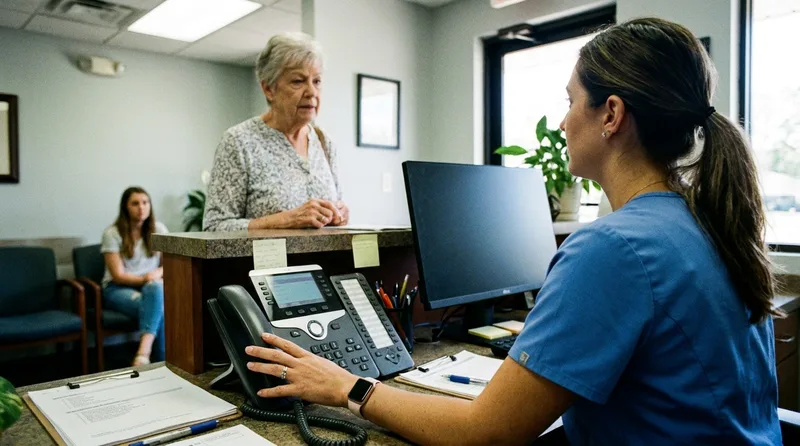
This solves a different problem than after-hours coverage, but it's connected. A three-provider practice receiving roughly 200 calls per week will lose somewhere between 40 and 75 of them if business-hours coverage alone isn't enough, based on the same missed-call patterns Dental Economics has tracked across the industry. Most of those losses happen not because the office is closed, but because the team is simply busy with someone standing in front of them.
DentiVoice doesn't replace your front desk. It catches what they physically can't, the fourth ringing line while they're mid-conversation with a patient at the counter. The front desk stays focused on the person in front of them. The phone still gets answered.
Curious How Many Calls Your Practice Is Missing?
See a live walkthrough of DentiVoice handling after-hours and overflow calls for a practice like yours.
Book a Free Demo →Does Answering Every Call Actually Increase Booked Appointments?
Yes, because a call that gets answered live converts at a meaningfully higher rate than one sent to voicemail. Most callers who reach voicemail simply hang up and don't leave a message, and they rarely call back on their own. According to Forbes reporting on customer service behavior, roughly 80% of callers who hit voicemail abandon the attempt entirely.
That abandonment rate is the real cost of missed calls, more than the missed call itself. A single missed new patient call can represent over $1,200 in lifetime value to the practice, factoring in the initial visit plus the years of recall, hygiene, and treatment revenue that typically follow, a figure consistent with average patient spend tracked by ADA practice research each year. Multiply that across 15 to 20 missed calls a week and the number stops being abstract.
The stakes go beyond one practice's revenue. CDC oral health data shows untreated dental disease already drives tens of billions in lost productivity nationally each year, and every missed call that pushes a patient to skip care entirely adds to that total.
DentiVoice converts that math by simply removing the voicemail step. Every call gets a live interaction and a real attempt at booking, whether the caller dialed in at 11 AM or 11 PM.
How Does This Compare to a Traditional Answering Service?
A traditional answering service takes a message; DentiVoice books an appointment directly into your schedule. That's the functional difference, and it matters. A human answering service can confirm a caller's name and number, but most can't see your live availability or write directly into your practice management system the way a connected AI receptionist can.
Patient expectations have shifted toward instant resolution across nearly every industry, a trend HubSpot's customer service research has tracked closely, and dentistry isn't exempt. Practices using Dentrix, Open Dental, Eaglesoft, and similar systems already have their scheduling logic built into the platform. DentiVoice's after-hours and overflow handling uses that same logic, so a booking made at midnight lands on the same calendar your front desk sees at 8 AM, no manual entry, no double-checking that a message actually got passed along. That removes an entire daily task: cross-referencing voicemail notes against the schedule before the day even starts.
- Traditional answering services relay a message; DentiVoice attempts a real booking
- Traditional services often charge per minute or per call; DentiVoice runs as part of the platform
- Traditional services can't see your schedule; DentiVoice checks availability in real time
What Should a Practice Owner Check Before Turning This On?
Before enabling 24/7 coverage, confirm your emergency escalation protocol is current and that DentiVoice has the correct on-call number for after-hours urgent cases. The system follows whatever routing rules your practice sets, so an outdated on-call contact will simply pass the gap downstream instead of closing it.

It's also worth reviewing your appointment buffer settings so DentiVoice books into slots your team actually wants filled, rather than every open minute on the calendar. A few minutes spent configuring this upfront prevents a string of awkwardly timed bookings later. Most practices set this up once during onboarding and rarely touch it again.
One more thing worth a five-minute review: make sure your team knows where the overnight transcript dashboard lives and who checks it first each morning. A 24/7 receptionist only helps if someone glances at what it logged. Most practices fold this into the existing morning huddle rather than creating a new task.
Quick setup checklist
- Confirm the on-call emergency number is current
- Set appointment buffers and blocked-off times in the schedule
- Review the call transcript dashboard so your team knows where to check each morning
Where Can Practices See This Feature in Action?
Practices can request a live demo to hear DentiVoice handle an actual after-hours or overflow call in real time, rather than reading about it secondhand. The demo walks through a simulated call, the booking confirmation, and the morning-after transcript view, so you can see exactly what your team will see.
For practices already running DentiVoice, this update activates automatically. No reconfiguration is required for existing accounts. New practices evaluating the platform can see the full call-handling flow, including after-hours and overflow scenarios, before deciding whether it fits their workflow.
The phone has always been the front door of a dental practice. Right now, that door closes every night and during every busy stretch, and the patients knocking during those windows usually just walk to the next house on the street. Answering every call, at every hour, keeps that door open. Practices ready to see the difference can request a demo and watch DentiVoice handle a real after-hours call before committing to anything.
Stop Losing Patients to Voicemail
See DentiVoice answer a real after-hours call, book the appointment, and log the transcript, live.
Book a Free Demo →Want to see what else DentiVoice handles beyond inbound calls?
Browse Resources →Sources & References
- ADA Health Policy Institute
- Phone calls: Are you losing patients at Hello? - Dental Economics
- 7 reasons your front desk may be losing new patients - Dental Economics
- Receptionists - Occupational Outlook Handbook, U.S. Bureau of Labor Statistics
- Oral Health Facts - CDC
- 70+ Customer Service Statistics - HubSpot
Frequently Asked Questions
It removes voicemail entirely from your practice line. DentiVoice now answers 100% of inbound calls at any hour, including after-hours, weekends, and overflow during busy periods, instead of routing unanswered calls to a recorded message.
DentiVoice books appointments directly into your schedule using your practice management system, including Dentrix, Open Dental, and Eaglesoft. A traditional answering service can only relay a message for your team to follow up on later.
DentiVoice picks up in under two seconds, day or night. There is no hold music, no menu tree, and no delay between the ring and a live response, whether the call arrives at 10 AM or 10 PM.
DentiVoice triages the call and escalates it according to your practice protocol, which may include connecting the caller to an on-call number. The system follows the routing rules your practice configures rather than guessing at every step.
No, this update activates automatically for existing DentiVoice accounts with no manual setup required. Practices should still confirm their on-call emergency number and appointment buffer settings are current before relying fully on after-hours coverage.
A typical practice misses 15 to 20 calls per week during business hours alone, according to Dental Economics, and after-hours calls add roughly 27% more volume on top of that during closed hours each week.
Yes, practices can request a live demo that walks through a simulated after-hours call, the booking confirmation, and the overnight transcript dashboard your front desk would see waiting for them the next morning.
Yes, new practices can see the full 24/7 call-handling flow, including overflow and after-hours scenarios, during a live demo before deciding whether DentiVoice actually fits their existing front desk workflow and staffing setup.
Was this article helpful?
Written by
DentalBase Team
Expert dental industry content from the DentalBase team. We provide insights on practice management, marketing, compliance, and growth strategies for dental professionals.