Treatment Presentation Tips That Get Patients to Say Yes
These dental treatment presentation tips help more patients say yes to recommended care and raise your case acceptance rate without pressure tactics.
Share:
Table of contents
Treatment Presentation Tips That Get Patients to Say Yes
These dental treatment presentation tips address one of the most expensive problems in any practice: patients who sit in the chair, hear the recommendation, say they will think about it, and never call back. That stack of pending treatment sitting in your practice management software is not a patient problem. It is a presentation problem, and it has a direct cost.
The way treatment gets introduced, framed, and followed up on directly determines whether a patient schedules or walks out. The adjustments covered here are not scripts or pressure tactics. They are specific communication shifts that help patients understand why their care matters now, not six months from now.
Why Patients Say No - It Rarely Comes Down to Just the Money
The cost objection is real. Nobody is pretending otherwise.
But here is what sits underneath it: a patient who does not fully understand the consequences of untreated decay or gum disease is not going to prioritize spending money on it. Cost only feels prohibitive when the health stakes are not clear. When the stakes are clear, patients find a way.
The ADA Health Policy Institute has documented cost as a frequently cited barrier to dental care in the United States, but their research also shows that health literacy and patient trust can significantly affect treatment decisions.
"Cost is the reason patients give. Comprehension is often the real variable."
Picture this: a patient comes in for a routine exam. You detect early-stage periodontal disease and recommend scaling and root planing. Your treatment coordinator explains the fee. The patient says they will call to schedule. They do not call.
Was it the money? Partly. But the more honest answer is that the patient left without urgency. They heard "deep cleaning" and thought it could probably wait. They did not leave your office worried about their gums. They left thinking it was optional.
The Scope of the Problem
- 26% of American adults have untreated tooth decay at any given time (CDC NHANES, 2019)
- Cost is a commonly cited barrier to dental care, but health literacy and patient trust are significant factors too (ADA Health Policy Institute)
- Many untreated cases were already diagnosed - patients were told, and chose to wait
Patient communication techniques for dentists have to address comprehension before the cost conversation, not after it.
Common Mistakes in Dental Case Presentation
Clinical training does not include communication training. The habits that form over years of practice are often the exact habits that reduce case acceptance. They fall into four predictable patterns.
Warning
Leading with the procedure name, "You need a root canal," stops patients from hearing anything else. Those words trigger fear before the explanation begins. Lead with what is happening to the tooth, not what you are about to do to it.
Overwhelming patients with clinical detail. Most patients cannot visualize a periapical lesion or a furcation defect. When explanations go technical, patients stop processing and start waiting for the price. Plain language and consequences keep them engaged.
Presenting cost before consequence. When the financial estimate arrives before the patient understands the urgency, the conversation becomes purely transactional. They are weighing a price against something they do not yet believe is critical. The order of information matters more than most dentists realize.
Skipping visuals entirely. Telling someone they have bone loss is abstract. Showing them the X-ray comparison or an intraoral camera image makes it real. Research on learning and information retention, including Allan Paivio's dual coding theory (Paivio, 1971), indicates that combining verbal with visual communication improves comprehension and recall compared to verbal explanation alone.
These dental treatment presentation tips start by recognizing these patterns in your own workflow before trying to fix the outcome.
Treatment Presentation Tips That Actually Work
Show the Problem Before You Name the Solution
If you are not already using intraoral camera images in every treatment conversation, that is one of the highest-leverage changes you can make. A magnified image of a cracked marginal ridge, a cavitated lesion, or a receding gumline turns an abstract recommendation into something the patient can see.
Walk through the image before you mention any procedure. Let the patient ask questions. Let them reach their own conclusion about the severity. When a patient says "that looks bad" before you have said anything, you have already done the most important part of the presentation. Before-and-after photos from similar completed cases are equally valuable for restorative and cosmetic work. Patients want to see the outcome, not just understand the procedure.
Lead With Health Consequences, Not Procedure Names
The same diagnosis lands completely differently depending on how it is framed. Compare these two approaches to the exact same clinical finding.
Same diagnosis. Different conversation. The second version gives the patient a reason to act now. It makes the cost of waiting concrete and specific, not alarming, just honest. This applies across every treatment category: periodontal disease, caries, orthodontic issues, and failing restorations. Lead with what happens if they wait.
Present Treatment in Phases When the Total Feels Large
A comprehensive plan with multiple procedures and a large out-of-pocket total is one of the fastest ways to trigger delay. When someone looks at a four-figure fee and a long itemized list, the instinct is to postpone everything until some vaguely defined "better time."
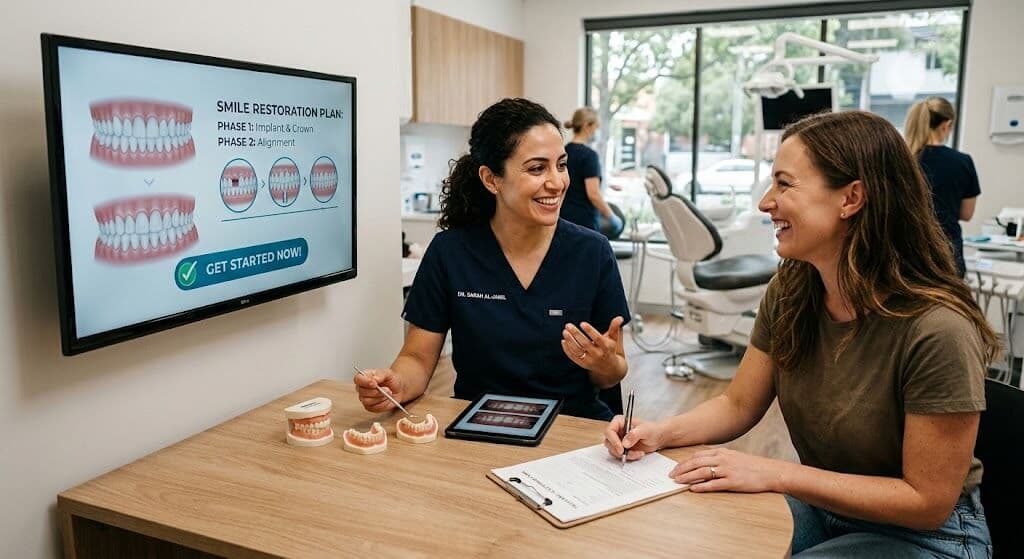
Phased presentation solves this. Walk through the plan by clinical priority. Start with what is urgent and clinically necessary. Show the logical sequence. Let the patient engage with which phase to begin, and make that first phase accessible enough that saying yes is easy. Third-party financing options like CareCredit allow patients to split the cost into monthly payments, which changes the decision entirely for many people. Presenting a monthly estimate alongside the recommendation is not a sales tactic. It removes a practical barrier.
Build a Follow-Up System for Pending Treatment
Most case acceptance does not happen at the appointment. It happens in the days and weeks after, if the practice follows up. Most practices do not follow up consistently.
Pending treatment sits in the system until the next recall visit six months later, when the tooth that could have had a crown now needs extraction. The dental treatment presentation tips you applied were sound. The follow-through was missing.
Tip
A structured pending treatment sequence, a text message at 48 hours, a personal call at two weeks, and an email at 30 days, moves a meaningful portion of pending cases off the list and onto the schedule. Patients who need care and have not scheduled are usually not saying no. They are saying not right now.
For practices building that follow-up workflow, this guide to dental patient communication strategies covers the mechanics in practical detail.
Want to learn more? Book a Free Demo
What Case Acceptance Actually Does to Practice Revenue
Here is the math, and it is not complicated.
If your practice presents $150,000 in treatment each month and accepts 50% of it, you are producing $75,000. Move that rate to 65% and you are producing $97,500, with no additional patients, no additional marketing spend, and no additional overhead. The same team, the same number of appointments, and the same chair time. The only thing that changed is how treatment is communicated.
Applying dental treatment presentation tips consistently is one of the highest-return activities in any dental practice. It does not require a new platform or a consultant. It requires a more intentional process with the patients already in your chairs.
Practices that track this carefully often find that improving case acceptance outpaces the return on paid advertising by a significant margin. Tracking where your marketing investment actually produces results becomes a different calculation when you account for pending treatment that never converted. The CDC oral health data on untreated conditions reflects how much unmet need exists, and in most practices, a significant share of that unmet need is already inside the existing patient base: diagnosed, presented, and delayed.
Three Things to Take From This
Most declined treatment is not a money problem. It is a comprehension and urgency problem. Patients say yes to care they understand and believe is necessary now, not care that feels abstract, optional, or like something they can revisit later.
The dental treatment presentation tips that reliably move case acceptance come down to four things: show visual evidence first, lead with health consequences rather than procedure names, offer phased options when the total is large, and follow up systematically on pending treatment. None of these require a script. They require consistency and the willingness to build a process around them.
And trust is built before the major recommendation, not during it. The time invested in explaining findings at every appointment, before the big case arrives, is what makes the presentation land when it matters. If you want to see how patient communication, follow-up systems, and practice growth connect, the DentalBase marketing resource library is a practical starting point for practices ready to work on this systematically.
Ready to Turn More Recommendations Into Scheduled Appointments?
DentalBase helps dental practices close the gap between treatment presented and treatment accepted.
Book Your Free DemoFrequently Asked Questions
Industry benchmarks vary, but most practice consultants consider 50-65% a typical range for general dental practices. High-performing practices with strong communication systems and patient trust often see rates above 70%. The number that matters most is your own baseline compared to where you were six and twelve months ago. Consistent improvement through better presentation and follow-up is more meaningful than chasing an industry average.
Start by making sure the patient genuinely understands the health consequence of not treating. Use intraoral camera images or X-ray comparisons to make the problem visible and concrete. Then present the cost alongside a phased treatment option and a monthly payment alternative through third-party financing. Most patients who decline expensive treatment aren't refusing care - they're unsure the urgency justifies the expense. Clarity on consequences changes that calculation.
Break the plan into phases ordered by clinical priority. Present the first phase as the immediate, necessary step and make that phase accessible enough that the patient can say yes to something. Show them the full treatment roadmap so they understand where each phase leads, but don't present the total as one overwhelming decision. Phased presentation reduces avoidance and keeps patients engaged over time.
Acknowledge the concern directly - don't dismiss it. Then ask whether the issue is the total amount or the timing. Many patients are not refusing treatment permanently - they need a path that fits their current budget. Offer a phased plan starting with what is urgent, introduce monthly payment options, and be honest about what happens clinically if they delay. A patient who feels heard and given real options is far more likely to move forward.
A 48-hour follow-up - a brief text or personal call - is the highest-conversion touchpoint for pending treatment. After that, a team member call at two weeks and an email reminder at 30 days cover most of the gap. Patients who haven't scheduled are usually not saying no permanently. They're saying not right now. A structured, non-pushy sequence gives them the opportunity to say yes when the timing feels right.
Was this article helpful?
Written by
DentalBase Team
The DentalBase Team is a collective of dental marketing experts, AI developers, and practice management consultants dedicated to helping dental practices thrive in the digital age.