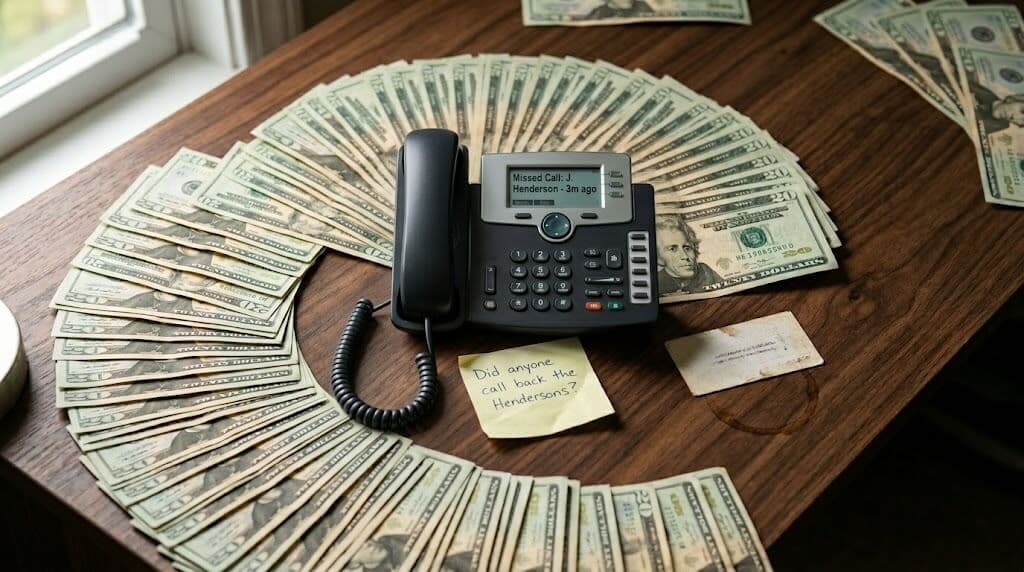
AI Patient Outreach: Turn Old Leads into Appointments
AI patient outreach dental leads system that converts old contacts into booked appointments with automated SMS, email, and phone sequences.
Share:
Table of contents
AI patient outreach dental leads conversion is the revenue recovery system most practices don't realize they need. Every dental practice sits on a database of old leads: website form fills who never booked, patients who called but didn't schedule, consultations that ended without treatment acceptance, and insurance inquiries that went cold. Industry data suggests the average dental practice has 200-500 unconverted leads at any given time, each representing $300-2,000 in potential production depending on the treatment discussed.
Manual follow-up on these leads almost never happens consistently. Front desk staff are managing same-day patients, answering inbound calls, and handling check-ins. Outbound outreach to old leads is the lowest-priority task in a busy office. AI patient outreach dental leads systems solve this by automating the entire follow-up process: identifying leads from your PMS and CRM data, scoring them by conversion probability, sending personalized multi-channel messages, handling responses and objections, and booking appointments directly into your schedule. According to the American Dental Association, reactivating existing contacts costs 5-7x less than acquiring new patients, making old lead conversion the highest-ROI application of AI in dental marketing.
What Types of Old Dental Leads Can AI Outreach Convert?
Not all old leads are equal. AI patient outreach dental leads systems achieve different conversion rates depending on the lead type, how long ago contact occurred, and how much intent the patient demonstrated before going cold.
| Lead Type | Example | Conversion Rate | Avg Revenue |
|---|---|---|---|
| Unscheduled treatment | Patient accepted crown but never booked | 25-40% | $800-2,000 |
| Website form fill | Submitted contact form, no appointment | 12-20% | $300-500 |
| Missed call / no-show | Called but hung up or missed appointment | 15-25% | $300-600 |
| Consultation only | Had consult for implants, didn't proceed | 10-18% | $1,500-5,000 |
| Insurance inquiry | Called about coverage, never booked | 8-15% | $300-500 |
Unscheduled treatment leads are the highest-value targets. These patients already visited your practice, received a diagnosis, and accepted treatment in principle. The only barrier was scheduling. AI outreach referencing their specific treatment plan ("Hi [Name], we noticed your crown from your visit last March was never scheduled. We have openings this week") converts at 25-40% because it's a reminder, not a sales pitch. This lead type alone often represents $50,000-200,000 in unscheduled production sitting in the average practice's PMS. Pull a report from your PMS today and you'll likely find a number that surprises you. Every week without follow-up on these leads is revenue walking out the door.
How Does AI Outreach Work Differently Than Manual Follow-Up?
Manual lead follow-up has three failure points that AI eliminates entirely: consistency, speed, and persistence.
Consistency
Staff outreach depends on someone remembering to pull a list, make calls, and track responses. That effort competes with every same-day task in the office. On busy days, outreach doesn't happen. During staff transitions, it stops for weeks. AI outreach runs continuously in the background. Every lead that enters the system receives the complete follow-up sequence regardless of office workload, staffing levels, or time of year. 38% of inbound dental calls go unanswered, so the same staff capacity issue that causes missed calls also prevents outbound follow-up.
Speed
Website form fills and missed calls lose value rapidly. A lead who filled out a contact form expects a response within minutes, not hours. According to BrightLocal, 98% of consumers research local businesses online, meaning your leads are simultaneously evaluating competitors. AI responds to new form submissions within 60 seconds via SMS with a booking link, while the average manual response time is 4-24 hours. That speed difference alone can double form-to-appointment conversion rates. Every minute of delay reduces the probability of conversion because the patient is actively comparing options. The practice that responds first wins the appointment in the vast majority of cases.
Persistence
Most leads don't convert on the first contact. They need 3-5 touchpoints across multiple channels before booking. Staff rarely complete a full follow-up sequence because each subsequent touchpoint requires remembering to check and re-contact. AI executes the complete sequence automatically: SMS at day 1, email at day 3, AI phone call at day 7, final SMS at day 14. It stops when the patient books, responds negatively, or opts out. This persistence captures the 40-60% of conversions that happen after the first message. Most practices give up after one attempt. The data consistently shows that leads who eventually convert often needed 3-5 touchpoints before they were ready to act. Without automated persistence, those conversions simply never happen. Systems like the DentalBase AI receptionist handle both inbound reception and outbound lead follow-up in one platform.
Convert old leads without adding staff hours
DentalBase's AI identifies unconverted leads in your PMS, sends personalized multi-channel outreach, handles responses, and books appointments automatically.
Book a Free Demo →What Does the Multi-Channel Outreach Sequence Look Like?
The optimal AI outreach sequence layers channels based on lead type, age, and communication preferences. Each touchpoint builds on the previous one with escalating personalization.
Sequence for unscheduled treatment leads
Day 1: Personalized SMS referencing specific treatment. "Hi [Name], your [treatment] from [date] hasn't been scheduled yet. We have openings this week. Tap to book: [Link]." Day 3: Email with treatment details and insurance reminder. "Your [insurance] benefits for [treatment] may expire at year-end. Let's get this scheduled before then." Day 7: AI phone call from the practice number. The AI identifies itself, references the treatment plan, answers questions about cost and coverage, and offers to book. Day 14: Final SMS. "Last reminder: your [treatment] is ready when you are. [Link]." Stop sequence if the patient books, declines, or opts out at any point.
Sequence for website form fills
Minute 1: Immediate SMS acknowledging the form and offering to answer questions or book. "Hi [Name], thanks for reaching out to [Practice]. Want to book a visit? Reply YES or tap: [Link]." Hour 1: Email with practice information, services, and booking link. Day 2: SMS follow-up if no response. Day 5: AI phone call to introduce the practice and offer scheduling. Speed on the first touchpoint is critical here because form-fill leads are actively searching and will book with the first practice that responds effectively. Connect form responses to your landing page optimization for maximum conversion.
Sequence for missed calls
Immediate: SMS within 30 seconds of the missed call. "Hi, you just called [Practice] and we missed you. How can we help? Reply or tap to book: [Link]." This instant response recovers 30-40% of missed calls that would otherwise result in the patient calling a competitor and booking there instead. The speed of the automated response is the competitive advantage: by the time a staff member notices the missed call and calls back, the patient has already booked elsewhere. Day 1: Follow-up SMS if no response. Day 3: AI phone callback during business hours. Pair this with AI phone reception so missed calls become rare events rather than daily losses.
Related: Reactivate patients who stopped visiting entirely with AI-powered campaigns. → How to Bring Back Inactive Dental Patients with AI
What Compliance Rules Apply to AI Lead Outreach?
AI outreach to dental leads operates under three regulatory frameworks with significant penalties for violations.
- HIPAA: Any message referencing treatment history, diagnoses, or clinical details constitutes protected health information. The AI platform must have a signed Business Associate Agreement. Messages to existing patients can reference treatment plans through secure channels. Messages to website leads who never became patients face fewer HIPAA restrictions since no PHI exists, but contact information must still be handled securely.
- TCPA: The Telephone Consumer Protection Act requires prior express consent for automated texts and calls. Website forms and appointment paperwork should include consent language for follow-up communications. Include opt-out instructions in every message. Honor opt-outs within 24 hours. Penalties range from $500-1,500 per unsolicited message.
- FTC and state laws: The FTC requires truthful, non-deceptive communication. AI-generated messages must accurately represent your practice and services. State-level regulations (including California's CCPA) may impose additional data handling and disclosure requirements for multi-state practices.
Build consent collection into every patient touchpoint from the first interaction: website forms should include automated communication consent, new patient paperwork should include follow-up consent, and your PMS should flag patients who have opted out. The AI system should automatically exclude opted-out contacts from all outreach sequences. The AI system should log all consent records, timestamp opt-out requests, and exclude opted-out contacts immediately. Review compliance with your patient communication policies quarterly.
How Do You Measure AI Outreach ROI and Optimize Results?
Track these five metrics monthly to prove ROI and identify which lead types and channels produce the most appointments.
| Metric | Target | Optimization Action |
|---|---|---|
| Lead-to-appointment rate | 15-25% overall | Test message copy and sequence timing |
| Response rate by channel | SMS 30-40%, email 15-20% | Adjust channel mix per lead type |
| Revenue recovered | $10,000-50,000/month | Prioritize highest-value lead types |
| Cost per converted lead | $8-20 | Compare to $150-300 new patient cost |
| Show rate | 85-90% | Add confirmation and reminder sequences |
The ROI math is compelling. A practice with 300 old leads running AI outreach at 15% conversion books 45 appointments. At $500 average production per visit, that's $22,500 in recovered revenue against $500-1,000 in monthly platform costs. Unscheduled treatment leads push the number higher because average production per converted lead is $800-2,000. Track performance by lead type and channel monthly using Google Analytics 4 UTM parameters on all outreach links. Test one variable per lead type per month (message copy, timing, or channel sequence) for clear optimization data. After 3-4 cycles your system will be calibrated to your specific patient population and lead mix. The practices generating the most recovered revenue from AI outreach are the ones that track results by lead type, understand which segments produce the most appointments, and focus their optimization energy on the highest-value categories first. Pair lead conversion data with your marketing plan, content calendar, and social media strategies for compounding patient acquisition across all channels.
Turn every old lead into a booked appointment
DentalBase identifies unconverted leads, runs multi-channel outreach sequences, handles responses and scheduling, and tracks every conversion with full compliance.
Book a Free Demo →AI patient outreach dental leads conversion transforms the untapped revenue in your PMS into booked appointments. Start with unscheduled treatment leads since they convert highest (25-40%) and represent the most production per appointment. Run the four-touchpoint sequence (SMS day 1, email day 3, AI phone day 7, final SMS day 14) and track lead-to-appointment rates by type. Add website form fill instant response (SMS within 60 seconds) and missed call recovery (SMS within 30 seconds) in month two. By month three, every lead entering your practice through any channel receives automated, personalized follow-up until they book, decline, or opt out. No lead falls through the cracks. No opportunity sits dormant in your database generating zero revenue. For practices integrating lead conversion with ad campaigns, social media management, and review generation, DentalBase connects every patient touchpoint into one AI-powered growth system.
Stop losing leads. Start booking appointments on autopilot.
DentalBase's AI converts old leads into revenue with automated outreach, scheduling, and full HIPAA compliance.
Book a Free Demo →Explore more guides and tools for dental practice growth.
Browse Resources →Sources & References
Frequently Asked Questions
An automated system that identifies unconverted leads from your PMS and CRM, scores them by conversion probability, sends personalized multi-channel follow-up via SMS, email, and AI phone calls, handles responses, and books appointments without staff involvement.
Five types: unscheduled treatment plans (25-40% conversion), website form fills (12-20%), missed calls and no-shows (15-25%), consultation-only visits (10-18%), and insurance inquiries (8-15%). Unscheduled treatments are highest priority due to production value.
Within 60 seconds. Leads who submit contact forms expect near-immediate responses and are simultaneously evaluating competitors. AI SMS response in under a minute can double form-to-appointment conversion rates compared to 4-24 hour manual response times.
For unscheduled treatment: personalized SMS on day 1, email with insurance details on day 3, AI phone call on day 7, final SMS on day 14. The sequence stops when the patient books, declines, or opts out at any touchpoint.
Yes, when properly implemented. The platform needs a signed Business Associate Agreement. Messages referencing treatment history require secure encrypted channels. Website leads without PHI face fewer restrictions, but all contact data must be handled securely.
A practice with 300 old leads at 15% conversion books 45 appointments averaging $500 production each, recovering $22,500. Unscheduled treatment leads average $800-2,000 per conversion, pushing recovery higher for practices prioritizing this lead type.
AI sends an SMS within 30 seconds of any missed call with a booking link and offer to help. This instant response recovers 30-40% of missed calls that would otherwise result in the patient calling a competitor.
Five metrics monthly: lead-to-appointment rate (15-25%), response rate by channel (SMS 30-40%, email 15-20%), revenue recovered ($10,000-50,000/month), cost per converted lead ($8-20), and appointment show rate (85-90%).
Was this article helpful?
Written by
DentalBase Team
The DentalBase Team is a collective of dental marketing experts, AI developers, and practice management consultants dedicated to helping dental practices thrive in the digital age.