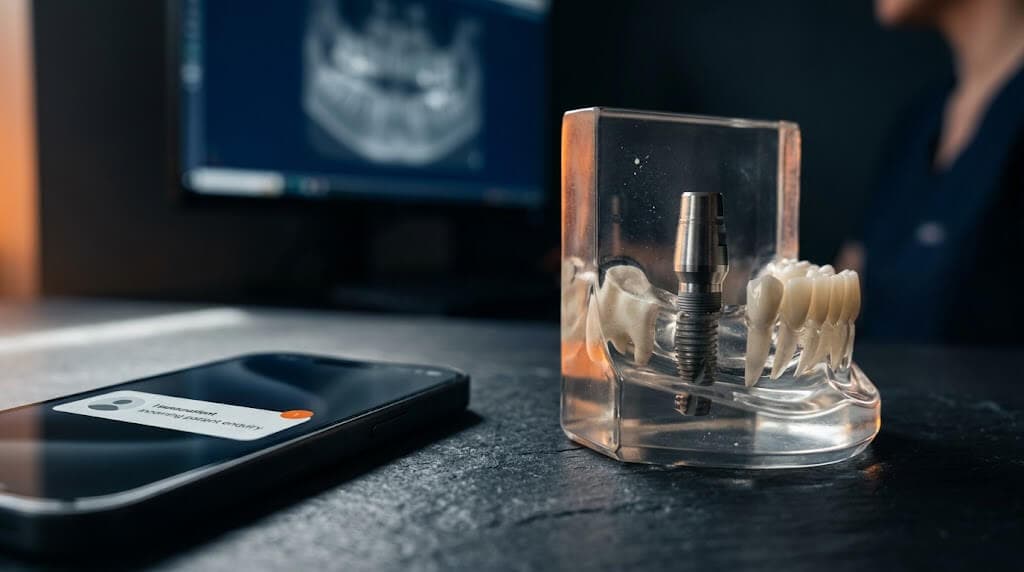
Dental Implant Lead Generation: A Practical 2026 Guide
Dental implant lead generation turns high-intent searchers into booked implant consults. Learn the channels, follow-up, and ROI math that win more cases.
Share:
Table of contents
Dental implant lead generation is the work of attracting patients who need implants and guiding them from first search to a booked surgical consult. The stakes are higher here than in general dentistry. One implant case can be worth several thousand dollars, so every lead carries real weight.
That value is exactly why these leads are hard to win. You are competing with oral surgeons, periodontists, and general dentists, all bidding on the same searches and chasing the same patients. PatientPop found 48% of patients research for more than two weeks before scheduling, and implant patients sit at the patient end of that spectrum.
This guide covers what implant lead generation involves, why it is so competitive, which channels work, how to convert leads into cases, and what a healthy cost per lead looks like.
What Is Dental Implant Lead Generation?
Dental implant lead generation is the process of attracting people actively considering implants and converting them into booked consultations. It pairs high-intent search visibility with persuasive proof and fast follow-up, because implant patients compare providers carefully before committing to surgery.
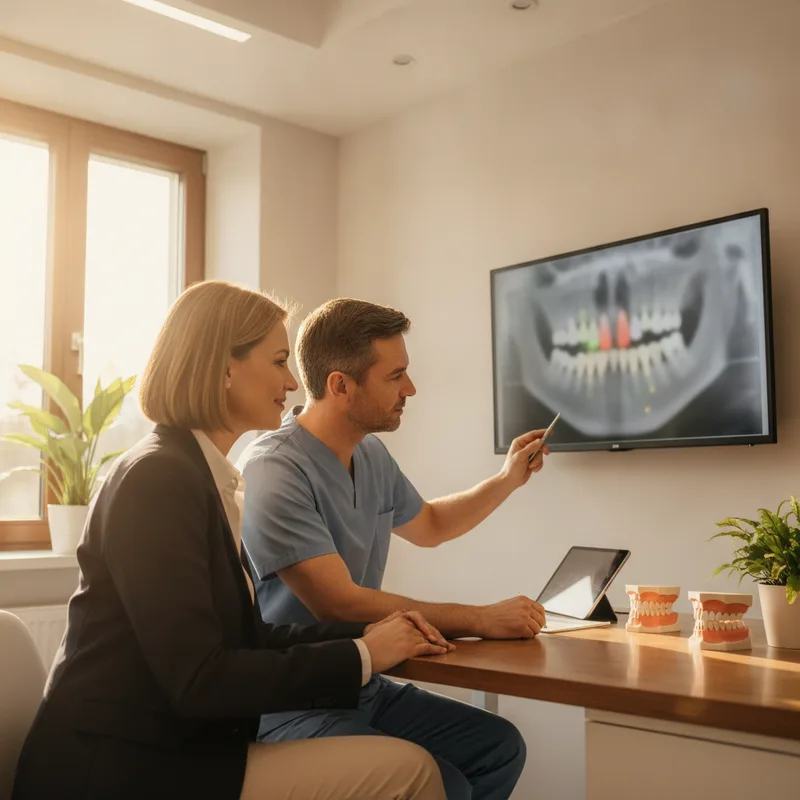
The patient journey is longer and more cautious than a routine cleaning. Someone missing a tooth weighs cost, recovery, and trust before they pick up the phone. Discovery has shifted, too. Search Engine Land reports AI Overviews now show on more than 60% of searches, so your practice has to surface across maps, organic results, ads, and AI answers at once.
Think of it as three jobs: get found by people researching implants, earn enough trust to prompt an inquiry, and convert that inquiry into a consult. Each job has its own metric. Treat them separately and you can find the exact point where cases leak out of your funnel.
It also helps to picture the actual person. Often it's someone who has avoided a smile for years, or who just lost a tooth and feels the gap with their tongue every hour. They are not price-shopping a cleaning. They are weighing a real change to their life against cost and fear. Marketing that speaks to that reality, plainly and without pressure, earns the inquiry that a feature list never will.
Why Are Dental Implant Leads So Competitive?
Implant leads are competitive because the case value is high and the buyer pool is limited. Several provider types bid on the same keywords, which pushes ad costs up and makes organic visibility harder to earn. The reward is large, so the competition is fierce.
The cost reflects that pressure. WordStream pegs the average cost per click for dental keywords at $6 to $8, and implant terms often run higher because the case value justifies aggressive bidding. Google's ad system rewards tight alignment between keyword, ad, and landing page, a principle reinforced throughout Google Search Central guidance. A generic page will lose to a focused one every time.
There is an upside to the difficulty. Because the buyer researches for weeks, a practice that shows up consistently across that window builds familiarity competitors don't. Our guide to SEO for dental implants covers how to rank for these high-value terms over time.
Competition also rewards specificity. A page built around "full-arch implants" or "single tooth implant cost" will out-convert a broad "implants" page, because it matches exactly what the searcher typed. The big players often run generic campaigns, which leaves the precise, long-tail searches open to a sharper local practice. You don't have to outspend the field. You have to be more relevant than they are for the searches that matter in your area.
Struggling to rank for implant keywords?
Our SEO and paid ads teams help implant providers compete for high-value search terms.
Explore Dental SEO →Which Channels Bring in Dental Implant Leads?
The channels that produce implant leads are local SEO, Google Ads, online reviews, referrals from general dentists, and reactivation of past patients. Each reaches the buyer at a different stage, so a mix beats betting everything on one source.

Search leads the way. Pew Research found 71% of people looking for a provider run a search first, and Google reports 46% of all searches seek local information. That makes ranking and ad presence the backbone of implant lead generation. Reactivation is the quiet winner most practices ignore, since the Harvard Business Review notes reactivating an existing patient costs five to seven times less than acquiring a new one.
| Channel | Strength | Cost profile |
|---|---|---|
| Local SEO | Durable, high intent | Low ongoing, slow build |
| Google Ads | Immediate visibility | High per click |
| Reviews | Builds surgical trust | Time, not money |
| Patient reactivation | Cheapest qualified leads | Very low |
Don't sleep on your own database. Patients who declined treatment a year ago, or who have a failing tooth on a watch list, are warm implant leads. Our guide to AI patient outreach shows how to turn that list into booked consults.
The mix should shift with your goals. Need cases this quarter? Weight toward Google Ads and a reactivation push, since both produce inquiries fast. Building for the next few years? Invest in SEO, reviews, and referral relationships that lower your cost per case over time. Most practices run too few channels and lean on whichever one they started with, which caps growth and leaves them exposed when that single source gets more expensive.
How Do You Convert Implant Leads Into Booked Cases?
You convert implant leads by responding immediately, presenting cases clearly, and removing friction around cost. A high-value lead who reaches voicemail or waits a day for a callback often books elsewhere. Speed and a confident consult process do most of the work.
The leak is usually the phone. ADA Practice Transitions data shows 38% of new patient calls go unanswered during business hours, and Forbes reports 80% of voicemail callers never call back. For an implant case worth thousands, a single missed call is expensive. Dental Economics estimates one missed new patient call costs $1,200 or more in lifetime value, and that figure understates a surgical case.
Once the lead is on the phone, the consult decides everything. Clear imaging, honest options, and financing that fits real budgets move a hesitant patient toward yes. Our guide to dental implant case acceptance digs into the conversation that turns maybe into a booked surgery. Patient research backs the urgency: the ADA Health Policy Institute tracks how far patients will go for the care they trust.
A few conversion habits separate practices that book cases from those that quote and lose them:
- Answer live, every time. A real voice in the first minute beats the most polished callback hours later.
- Offer a clear next step. Book the consult on the first call rather than promising to follow up.
- Lead with financing. Cost is the top objection, so name the monthly option before the patient has to ask.
- Confirm and remind. A confirmed consult with a reminder shows up far more often than an unconfirmed one.
Never miss a high-value lead again
See how DentalBase answers every call and follows up automatically, so implant leads don't slip away.
Book a Free Demo →What Is a Good Cost Per Implant Lead?
A healthy cost per implant lead is one your case value comfortably covers. Benchmarks put the cost to acquire a new dental patient at $150 to $300 through digital channels, and implant cases sit at the high end of patient value, which leaves generous room to invest in quality leads.
Judge spend by cost per booked case, not cost per click. If implant clicks run higher than the $6 to $8 dental average and your landing page converts near the 10% rate Unbounce reports for dental, you can model cost per lead, then apply your consult-to-case rate. General marketing benchmarks compiled by HubSpot show the same lesson across industries: measure to the sale, not the click.
Context helps here. Dental Economics puts average patient lifetime value at $12,000 to $15,000 for a general practice, and a full-arch implant case can exceed that on its own. When one case pays for dozens of leads, the question shifts from "is this lead expensive?" to "are we capturing enough of them?"
To keep spend honest, track a short list of numbers every month:
- Cost per lead: total channel spend divided by qualified implant inquiries.
- Consult booking rate: the share of leads that turn into a scheduled consult.
- Consult-to-case rate: the share of consults that become a booked surgery.
- Cost per started case: the number that actually tells you if a channel pays.
Most practices track clicks and stop there. The ones that grow follow the lead all the way to the surgical chair, then move budget toward whatever channel produces the cheapest started cases, not the cheapest clicks.
How Reviews and Reputation Influence Implant Decisions
Reviews carry extra weight for implants because the patient is choosing a surgeon, not just a service. Surgery raises the stakes, so social proof reassures the nervous buyer. A strong, recent review profile converts more of the expensive traffic you already earn.

The evidence is clear. The BrightLocal Local Consumer Review Survey found 98% of people read local reviews before choosing a business, and 88% favor businesses whose owners respond to reviews. Software Advice reports 77% of patients use online reviews when finding a dentist. For a surgical decision, those numbers climb.
Make reviews a routine, not an afterthought. Ask every satisfied implant patient, respond to every review, and feature before-and-after stories where patients can find them. Our dental review generation strategy gives you a workflow, and for broader funnel context see our lead generation guide.
Implant reviews are also more persuasive when they tell a story. "Painless and quick" is fine, but "I hid my smile for ten years and now I don't think about it" sells the outcome a nervous patient is actually buying. When you ask, prompt patients to describe the before and the after, not just the service. Those specific, emotional reviews do more to convert a hesitant high-value lead than any ad you could run.
Related: Want every part of your growth engine in one place? Explore the DentalBase platform →
Building a Steady Flow of Implant Leads
Strong dental implant lead generation is a system, not a campaign. Get found for high-value searches, capture inquiries with instant follow-up, and convert them with proof and a confident consult. Each part raises the return on the others.
Start where the leak is largest, which is usually the phone or the follow-up. Fix that, then sharpen your search visibility and your review flow. A practice that answers every call and presents cases well is already winning implant patients its competitors are losing.
Turn implant searches into booked cases
See how DentalBase helps implant providers get found, capture every lead, and convert consults into surgeries.
Book a Free Demo →Want more growth playbooks?
Browse Resources →Sources & References
Frequently Asked Questions
Dental implant lead generation is the process of attracting people considering implants and converting them into booked surgical consultations. It blends high-intent search visibility, strong social proof, and fast follow-up, because implant patients research and compare providers carefully before committing.
It varies by market and channel. Dental clicks average $6 to $8, and implant terms often cost more. Anchor your budget to cost per booked case rather than cost per click, since one implant case can be worth several thousand dollars.
Local SEO and Google Ads drive the most new implant inquiries, while patient reactivation produces the cheapest qualified leads. Most practices combine paid search for speed with SEO and reviews for durable, lower-cost visibility over time.
Because the case value is high, multiple provider types bid aggressively on the same keywords. Oral surgeons, periodontists, and general dentists compete for limited demand, which raises both ad costs and the bar for organic visibility.
Immediately. Forbes reports 80% of callers who reach voicemail never call back, and a missed new patient call can cost over $1,200 in lifetime value. For a surgical case worth thousands, same-day or instant follow-up is the standard.
Yes, more than for routine care. Patients choosing implant surgery weigh trust heavily, and BrightLocal found 98% of people read local reviews before choosing a business. A recent, responsive review profile converts more of your high-value traffic.
Was this article helpful?
Written by
DentalBase Team
Expert dental industry content from the DentalBase team. We provide insights on practice management, marketing, compliance, and growth strategies for dental professionals.