New Dental Patient Acquisition: A 2026 Growth Guide
New dental patient acquisition is how practices attract and book first-time patients. Compare the channels, costs, and follow-up that win new patients.
Share:
Table of contents
New dental patient acquisition is the process of attracting first-time patients and turning them into booked, paying appointments. It sounds simple. In practice, most practices lose patients at predictable points, and the leaks cost more than the marketing.
The math is unforgiving. Industry benchmarks put the cost to acquire a new dental patient at $150 to $300 through digital channels, while average patient lifetime value runs $12,000 to $15,000. Every patient you fail to capture is not a lost click. It's a lost decade of care.
This guide breaks down what acquisition really involves, what it costs, which channels work, how to convert visitors into booked patients, and why retention quietly makes the whole thing cheaper.
What Is New Dental Patient Acquisition?
New dental patient acquisition is the full path from a stranger discovering your practice to a first appointment on the books. It spans visibility, website experience, and follow-up. The goal is booked first visits, not website traffic or social media followers that never schedule.

Discovery starts with search. Pew Research found 71% of people looking for a provider run a search first, and a Google health study reports 86% contacted a provider after searching. Patients increasingly begin with maps, organic listings, ads, and AI answers all at once, which is why a complete, consistent presence matters more than any single channel. Google's own page-experience guidance shows how much the on-site experience shapes whether that search turns into a visit.
Picture acquisition as a funnel with three gates: get found, get the click, get the booking. Many practices obsess over the first gate and ignore the other two. A practice that ranks well but books poorly is leaving money on the table at the bottom of the funnel.
The patient's path is rarely a straight line. Someone might find you on a map at lunch, read your reviews that evening, check your website on a phone the next morning, then finally call. PatientPop found 48% of patients research for more than two weeks before scheduling. Your job is to stay present and consistent across that whole window, so that when the patient is ready to act, you are the obvious, easy choice rather than a name they have to hunt for again.
How Much Does It Cost to Acquire a New Dental Patient?
Most practices spend $150 to $300 to acquire a new patient through digital channels, though the figure swings with market, competition, and channel mix. The number only matters next to lifetime value, which dwarfs it. That gap is what makes acquisition worth doing well.
Treat cost per patient as a portfolio, not a single line. Referrals cost almost nothing. Paid search costs the most per head but delivers fast. Organic search and reviews sit in between, cheap over time but slow to build. The U.S. Bureau of Labor Statistics projects dental employment will grow about 4% through 2032, a reminder that demand is steady and worth competing for.
| Channel | Relative cost | Speed |
|---|---|---|
| Patient referrals | Lowest | Ongoing |
| Local SEO and reviews | Low over time | Slow build |
| Google Ads | Highest per patient | Fast |
For a practice just opening its doors, the channel order matters even more. Our first-year marketing plan lays out where to start when you have no patient base yet.
One number changes the whole conversation: payback period. If a new patient costs $250 and produces $1,000 in the first year alone, you recover the spend in a couple of visits and profit for years after. That framing makes a "high" acquisition cost look cheap, and it protects you from cutting a channel during a slow month just because the per-patient cost looked large in isolation. Always read acquisition cost against lifetime value, never on its own.
Want help picking the right channels?
Our SEO and growth services help practices attract new patients without wasting budget.
Explore Dental SEO →Which Channels Bring in New Dental Patients?
The channels that drive new patients are local search, a fast mobile website, online reviews, paid ads, and word-of-mouth referrals. Local visibility does the heaviest lifting, because most patients search with intent to book nearby and act quickly on what they find.
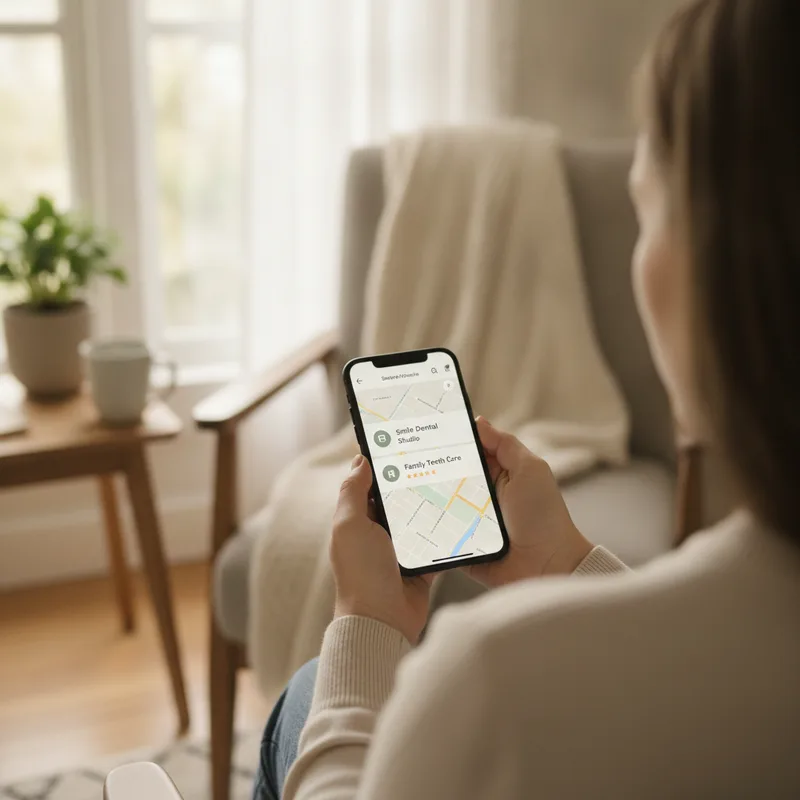
Local search is the foundation. Google reports 46% of all searches seek local information, and BrightEdge found 68% of online experiences start with a search engine. A complete Google Business Profile is one of the highest-return assets you own. According to the BrightLocal Local Consumer Review Survey, practices that post regularly on their profile see meaningfully more website clicks, and 98% of consumers read reviews before choosing a business.
Your website closes or kills the deal. Google data shows 62% of dental searches happen on mobile and 44% of mobile health searchers booked an appointment, so a slow or clumsy mobile site quietly bleeds patients. See our guide on how a mobile-optimized website increases new patient bookings. Broader benchmarks compiled by HubSpot point the same way: speed and clarity decide whether a visit happens.
Treat each channel as one entry point to the same destination. A patient might arrive from a map listing, a friend's recommendation, or a paid ad, but they all land on the same website and call the same phone. If those shared touchpoints are weak, every channel underperforms at once. Strengthening the booking experience lifts your return on all of them together, which is why conversion work usually beats chasing one more traffic source.
Referrals deserve a real system, not luck. A simple ask at the end of a great visit, a card to hand a friend, or a quick follow-up text turns satisfied patients into a steady, near-free source of new ones. The channels that look unglamorous on a dashboard are often the ones with the lowest cost per patient.
How Do You Convert Website Visitors Into Booked Patients?
You convert visitors by making booking effortless and responding to every inquiry fast. Most acquisition spend is wasted at the bottom of the funnel, where a clunky form or an unanswered phone turns an interested patient into a missed one. Conversion is where the cheapest growth hides.
Two leaks dominate. First, the phone: ADA Practice Transitions data shows 38% of new patient calls go unanswered during business hours, and Forbes reports 80% of voicemail callers never call back. Second, booking friction: Zocdoc found 77% of patients want online booking, yet only 26% of practices offer it. Close those two gaps and you book more patients without spending another dollar on traffic. An AI receptionist can answer when your team can't, as our patient communication automation guide explains.
Speed compounds the effect. A patient who books online at 9pm or reaches a friendly voice on the first ring rarely keeps shopping. Practices with online scheduling also see 24% fewer no-shows, per Dental Economics, so the same convenience that wins the patient also protects the appointment.
If you want a short conversion checklist, start here:
- Answer every call live during business hours, with overflow coverage after hours.
- Offer real online booking, not just a contact form that lands in an inbox.
- Reply same day to every web inquiry, ideally within minutes.
- Make the mobile site fast, with the phone number and booking button above the fold.
- Confirm and remind so the first appointment actually shows up.
Stop losing new patients at the phone
See how DentalBase answers every call and books patients around the clock, so no inquiry slips away.
Book a Free Demo →Why Retention Makes Acquisition Cheaper
Retention and acquisition are not separate budgets; they fund each other. Keeping a patient costs a fraction of finding one, and loyal patients refer others, which lowers your blended cost per new patient. Ignore retention and you are constantly refilling a leaking bucket.

The numbers make the case. The ADA reports 20 to 30% of patients become inactive within 18 months without follow-up, and the Harvard Business Review notes reactivating an existing patient costs five to seven times less than acquiring a new one. A steady recall and reactivation system protects the patients you already paid to acquire. Our guides to patient recall software and patient reactivation show how to build that loop.
Email ties it together. The DMA pegs email marketing returns at $44 for every $1 spent, making it one of the cheapest ways to acquire and retain at once. Our guide to email marketing for dental patients covers both sides of that coin.
There's a mindset shift worth making here. A new patient isn't the finish line; it's the start of a relationship that either compounds or quietly ends. The practices that grow fastest treat the first visit as the moment to set up the second, the recall, and eventually the referral. Acquisition gets the headlines, but retention is what makes the numbers work, because every patient you keep is one you never have to pay to replace.
Related: Measuring and improving loyalty is its own discipline worth mastering. Read the patient retention guide →
Common New Patient Acquisition Mistakes
The costliest mistake is buying traffic while ignoring conversion. Practices happily fund ads, then send those clicks to a slow website or an unanswered phone. Fix the bottom of the funnel before widening the top, or you simply pay more to lose patients faster.
The patterns repeat across struggling practices:
- No online booking. Patients who want to book at midnight can't, so they book a competitor.
- Ignoring the phone. A missed call is a missed patient worth thousands in lifetime value.
- Neglecting reviews. A thin or stale review profile undercuts every other channel.
- No referral system. The cheapest patients come from happy ones you never asked.
- Skipping measurement. Without call and form tracking, you can't tell which channel pays.
Pick the biggest leak and fix it this month. For most practices, that's the phone or the booking experience, not a shortage of traffic.
Building a Reliable New Patient Engine
Durable new dental patient acquisition comes from a connected system: get found locally, win the click with a fast site, book the patient without friction, and keep them with steady follow-up. Each piece lowers the cost of the next.
Start by auditing your funnel end to end. Call your own office, fill out your own form, and search your own name on a phone. The gaps you find are usually cheaper to fix than the next ad campaign, and closing them lifts every channel at once.
Then move in order: fix conversion first, strengthen local visibility second, and build retention to lower your blended cost over time. New dental patient acquisition rewards practices that treat it as a connected system rather than a series of one-off campaigns. Build it once, measure it honestly, and let each booked patient make the next one cheaper to win.
Grow your new patient base
See how DentalBase helps practices get found, book every inquiry, and keep patients coming back, all from one platform.
Book a Free Demo →Want more growth playbooks?
Browse Resources →Sources & References
Frequently Asked Questions
New dental patient acquisition is the process of attracting first-time patients and converting them into booked appointments. It covers being found in local search, winning the click with a strong website, and following up fast enough to turn interest into a scheduled visit.
Most practices spend $150 to $300 per new patient through digital channels, though it varies by market and channel mix. The figure is small next to average patient lifetime value of $12,000 to $15,000, which is what makes acquisition worth doing well.
Local search attracts the most new patients because people search with intent to book nearby. A complete Google Business Profile, a fast mobile website, and steady reviews compound over time, while paid ads add speed when you need patients quickly.
Optimize your Google Business Profile, earn consistent local reviews, and keep a fast, mobile-friendly website. Google reports 46% of searches seek local information, so appearing in the local map pack with strong reviews is one of the highest-impact moves.
Retention is far cheaper. The Harvard Business Review notes reactivating an existing patient costs five to seven times less than acquiring a new one. Strong recall and follow-up protect the patients you already paid to acquire and generate referrals.
As fast as possible, ideally instantly. Forbes reports 80% of voicemail callers never call back, and a missed new patient call can cost over $1,200 in lifetime value. Online booking and an always-on phone close that gap.
Was this article helpful?
Written by
DentalBase Team
Expert dental industry content from the DentalBase team. We provide insights on practice management, marketing, compliance, and growth strategies for dental professionals.