The First Five Minutes: Dental Patient First Impression
A dental patient first impression forms before the exam. Here is how I measured the first five minutes and the cheap fixes that won new patients.
Share:
Table of contents
A new patient forms their dental patient first impression long before you ever pick up an instrument. By the time they are in the chair, the verdict is mostly in. It was set on the phone, in the parking lot, at the front desk, and in the waiting room.
I am a dentist in Peterborough, New Hampshire, and for years I assumed my clinical work was what new patients judged. Then I measured where their opinion actually formed. It was almost never the dentistry. This is a walk through the first five minutes, what patients are really judging in each one, and the cheap fixes that moved my numbers.
What shapes a dental patient first impression?
A dental patient first impression is shaped almost entirely before the exam, across four touchpoints: the phone call, the arrival, the front desk greeting, and the wait. Patients cannot judge your clinical skill yet, so they judge everything around it instead. That impression sets their trust for every visit after.
Think about what a new patient actually knows when they sit down. Nothing about your hand skills. Nothing about your diagnostics. They have spoken to someone on the phone, found your office, walked in, and waited. Every one of those is a data point they use to decide whether they made the right choice. According to BrightLocal, 98% of people read local reviews before choosing a business, so they arrive primed to confirm or reject a story they have half-written. PatientPop has found that 48% of patients spend more than two weeks researching before they schedule, which means the in-person visit is the final test of a decision they have mostly made.
So the first move is to stop thinking of the visit as starting in the operatory. It starts at the first ring. Map the touchpoints, and you can see exactly where trust is won or lost.
How I measured where the impression actually forms
To find where the impression formed, I tracked each new patient touchpoint for a month: who called, whether we answered, how they were greeted, and how long they waited. Then I asked new patients one question at the end of the first visit. The pattern was clear within weeks.
The question was simple. What made you decide you would come back? Almost nobody mentioned the cleaning or the exam. They mentioned the person who answered the phone, how easy we were to find, whether the front desk knew their name, and how long they sat in the waiting room. The dentistry barely registered, because they had no way to judge it yet.
The touchpoints they actually named broke down like this:
- The phone call. Who answered, how fast, and whether they felt helped or rushed.
- The arrival. How easy the office was to find and park at, and the first sight of the space.
- The front desk. Whether they were greeted warmly and by name, or handed a clipboard and ignored.
- The wait. Not the length, but whether anyone set expectations for it.
That reframed my whole sense of where to spend effort. I had been polishing the part of the visit patients could not evaluate and ignoring the parts they could. If you want to improve your new patient experience, measure the four touchpoints before the chair first. They carry more weight than the exam.
Related: The experience that keeps those patients is mapped across the whole journey here. The Dental Patient Experience That Drives Retention →
Why is the phone call the very first impression?
The phone call is the very first impression because it is usually the first human contact a new patient has with your practice. A missed call, a long hold, or a rushed tone tells them what care will feel like before they ever walk in. Many never call back.
38%
of new patient calls go unanswered during business hours
Source: ADA Practice Transitions
The numbers here are hard to ignore. ADA Practice Transitions puts that figure at more than a third of new patient calls, and Dental Economics estimates the average practice misses 15 to 20 calls a week. Worse, Forbes reports that 80 percent of callers who reach voicemail leave no message and do not call back. Weave Communications has found that when a call goes unanswered, most callers simply contact the next practice on their list. The first impression was a dial tone.
Even answered calls leak patients. Marchex puts the average hold time before a caller hangs up at about 90 seconds. A new patient on hold is forming an opinion the entire time. That is why I treat the phone as the front door, not an afterthought.
Related: The root causes behind a phone that does not get answered are worth understanding. Why Dental Practices Miss Calls: The Real Root Causes →
What happens in the parking lot and at the door?
Before a word is spoken in person, patients judge findability, parking, signage, and the first sight of your space. A confusing arrival creates low-grade stress that colors everything after. A calm, obvious entrance tells a new patient they are in capable hands. The first sight matters.
This sounds minor until you watch it happen. A patient who circles the block looking for parking, or who cannot tell which door is yours, arrives flustered. They are already a little behind, a little annoyed, and primed to notice the next thing that goes wrong. I learned this by asking patients how their arrival went, and a surprising number described small frustrations I had never considered.
The fixes were cheap. Clearer signage, a note about parking in the appointment confirmation, and a tidy entrance. None of it was clinical. All of it shaped how the patient felt before anyone said hello.
How does the front desk make or break the first visit?
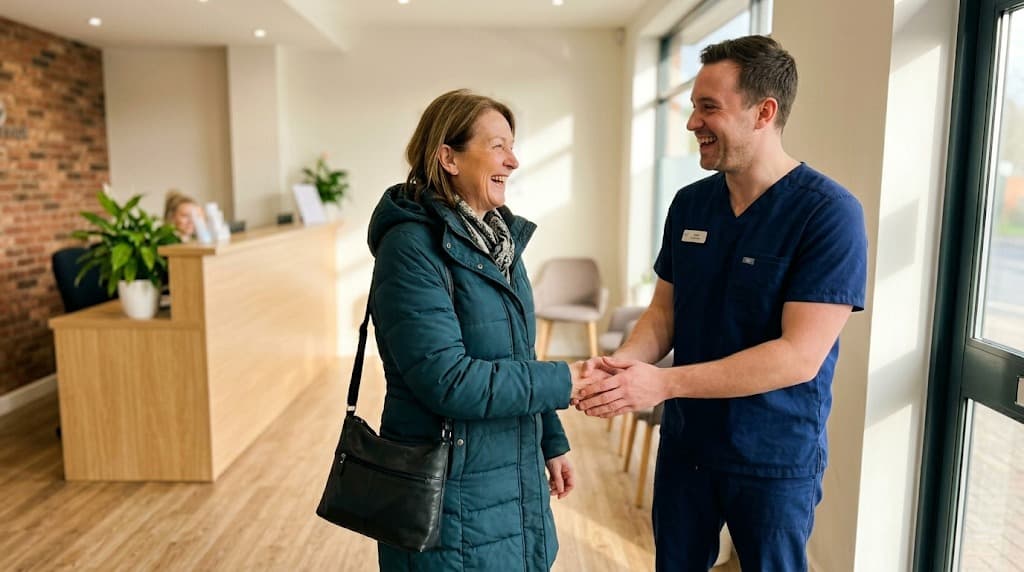
The front desk makes or breaks the first visit because it is the first face a new patient sees and the first voice that knows their name. A warm, prepared greeting signals competence and care. A cold, paperwork-first reception signals the opposite, no matter how good the dentistry is.
Here is what I noticed. When the front desk looked up, used the patient's name, and had their intake ready, the visit started on solid ground. When the patient was handed a clipboard and ignored for five minutes, the visit started in a hole the dentist had to climb out of. The greeting is not hospitality fluff. It is the moment trust is built or broken.
Two things made the biggest difference for us. Hiring front desk people for warmth and judgment, not just scheduling speed, and removing the paperwork wall so the first interaction was human, not administrative. Both are fixable with intention.
Is your front desk built for the first impression?
The first face a new patient sees sets the tone for everything after. Hiring for warmth and judgment, then clearing the paperwork wall, changes how the visit starts.
Read how to hire the front desk →Related: Cutting the intake busywork frees the front desk to actually greet people. Dental Form Automation: Cut Front Desk Busywork in 2026 →
What does the waiting room signal before the exam?
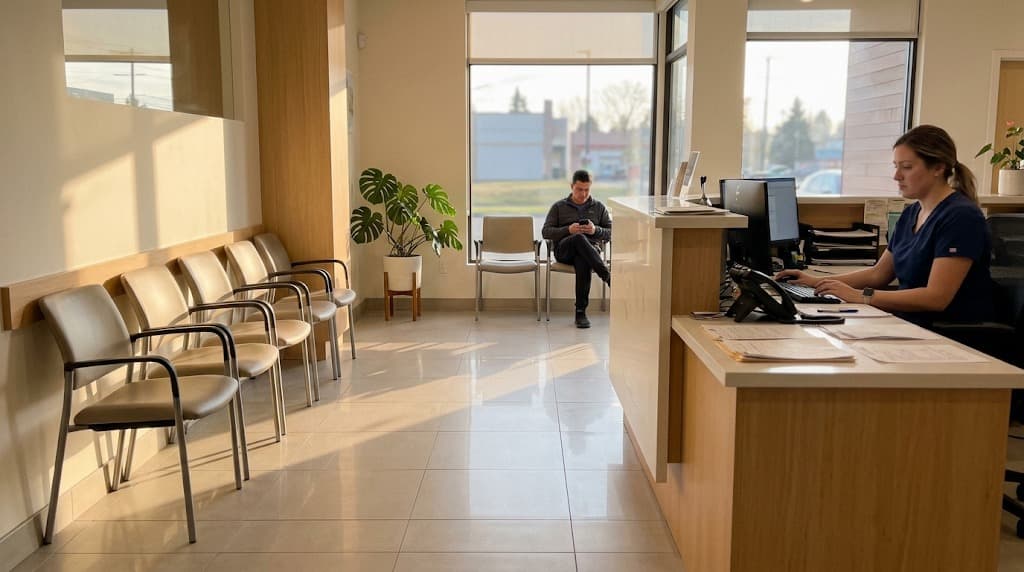
The waiting room signals respect for the patient's time and attention to detail. A long, unexplained wait reads as disorganization and erodes trust before the exam. A short, communicated wait in a clean, calm space reinforces the impression that the practice runs well.
Patients do not judge the wait by the clock. They judge it by whether they were told what to expect and whether the space felt cared for. A ten-minute wait with a heads-up feels fine. A ten-minute wait in silence, with no explanation, feels like twenty. I measured both our real wait and how long patients thought they waited, and the gap was the real story.
The cheap fix was communication. A quick word from the front desk about timing, and a tidier space, narrowed the perceived wait without changing the clock at all. Convenience and respect for time matter to patients. The ADA reports that 72 percent of patients say convenience is a top factor when choosing a provider, and federal data from the National Institute of Dental and Craniofacial Research shows how regular visits depend on patients feeling the practice is worth returning to.
Related: I timed the real wait against the perceived wait, and the gap was the story. Dental Office Patient Wait Time: Find the Real Cause →
The cheap fixes that punched above their weight
The highest-impact fixes cost almost nothing: answer the phone, make arrival easy, greet by name, and communicate the wait. None required new equipment or clinical change. In our experience, these small touchpoint fixes moved new patient satisfaction more than any upgrade to the operatory did.
Let me be specific about what we changed. We made answering the phone a tracked priority instead of a background task. We added parking notes and clearer signage. We trained the front desk to greet by name with intake ready. And we started telling patients what to expect on the wait. Each fix was small. Together they reset the entire dental patient first impression. This is basic experience economics, and HubSpot has written extensively on how the first interaction shapes whether a customer relationship continues at all.
If you only fix four things this quarter, fix these:
- Answer every new patient call live, and track the ones you miss.
- Send parking and entrance directions with the appointment confirmation.
- Greet new patients by name with their intake already prepared.
- Tell every waiting patient what to expect about timing.
The reason this works is simple. You cannot easily make a patient judge your dentistry better, because they cannot see it yet. But you can win the parts they can see, and those parts carry the impression. CDC guidance continues to frame routine dental care as the foundation of oral health, and a strong first visit is what gets a new patient to keep coming back for it.
| Touchpoint | What the patient judges | The cheap fix |
|---|---|---|
| The phone call | Were they answered, helped, and respected | Track and prioritize answering every call |
| Arrival | Findability, parking, first sight | Signage and parking notes in the confirmation |
| Front desk greeting | Warmth, preparation, knowing their name | Greet by name with intake ready |
| The wait | Respect for their time, organization | Communicate timing, keep the space calm |
When does added phone coverage earn its place?
Added phone coverage earns its place when missed calls quietly send new patients to competitors. If you cannot answer every call live during business hours, and especially after hours, the phone is leaking first impressions. That is the point where extra coverage pays for itself in saved new patients.
This is where I will be honest about the tradeoff. A small team cannot always answer every call, and after-hours calls are real. Dental Economics estimates that after-hours calls represent 27 percent of total patient call volume, and a new patient who hits voicemail at 6pm usually calls someone else. When that pattern shows up in your tracking, the phone has become your weakest first impression.
That is the case where a tool like DentiVoice can help, by making sure the very first impression, the call, is always answered. I am not suggesting it replaces a warm front desk. I am suggesting the first ring should never go unanswered, because that ring is the first thing a new patient judges. Measure your missed calls first, then decide.
Make sure the first ring is always answered
When missed and after-hours calls are sending new patients elsewhere, DentiVoice answers every call so the first impression is never a voicemail. See how it fits your practice.
Book a free demo →Where should you start fixing the first five minutes?
Start by measuring the phone. Track for one week how many new patient calls you answer live, how long callers wait, and how many reach voicemail. That single number tells you whether your dental patient first impression is strong or leaking before anyone walks in.
Audit your own first five minutes
Check each one your practice gets right today.
Your score: count your checks out of 6. Under four means the first five minutes are costing you patients.
The dentists who win new patients are not always the most skilled clinicians in town. They are the ones who understood that the verdict is in before the exam, and who fixed the cheap, unglamorous touchpoints everyone else ignores. Walk your own first five minutes this week. Answer the phone, ease the arrival, warm the greeting, and respect the wait. The dentistry will finally get the fair hearing it deserves.
See where your first impression is leaking
DentalBase helps you track calls, front desk performance, and the new patient experience so the first five minutes stop costing you patients. Book a walkthrough with our team.
Book a free demo →Want more operator-level guides on running and growing a practice?
Browse the DentalBase resource library →Sources & References
Frequently Asked Questions
A dental patient first impression is shaped before the exam across four touchpoints: the phone call, arrival, the front desk greeting, and the wait. Patients cannot judge clinical skill yet, so they judge everything around it instead.
The phone is usually the first human contact a new patient has with your practice. A missed call, long hold, or rushed tone signals what care will feel like. ADA data shows 38% of new patient calls go unanswered during business hours.
Most of the verdict is set in the first five minutes, before the exam begins. By the time a new patient is in the chair, the impression from the call, arrival, greeting, and wait has largely formed and colors everything after.
Start by measuring the phone, then ease arrival, warm the front desk greeting, and communicate the wait. These fixes cost almost nothing and move new patient satisfaction more than upgrades to the operatory do.
Yes. Patients judge the wait by whether they were told what to expect and whether the space felt cared for, not by the clock. A short, communicated wait in a calm space reinforces trust before the exam.
Add coverage once tracking shows missed and after-hours calls are sending new patients elsewhere. After-hours calls represent about 27% of total volume, per Dental Economics, and a voicemail at 6pm usually means the patient calls a competitor.
Polishing the clinical work patients cannot yet judge while ignoring the phone, arrival, greeting, and wait that they can. The dentistry barely registers on a first visit because new patients have no way to evaluate it.
Was this article helpful?

Written by
Dr. Muhammad Abdel-rahim DMD
Muhammad Abdel-rahim, DMD, is a dentist and implantologist at Peterborough Family Dental & Implant Center with a passion for blending clinical excellence, leadership, and innovation. He believes dentistry extends beyond restoring smiles to building trust, confidence, and sustainable systems that help patients and teams thrive. With experience leading and scaling dental practices, Dr. Abdel-rahim brings a strategic mindset to patient care and practice growth. He is particularly interested in communication, critical thinking, and the thoughtful application of artificial intelligence to improve clinical outcomes, workflows, and the overall patient experience.