
Dental Virtual Receptionist: A Practical 2026 Guide
A dental virtual receptionist answers calls, books appointments, and covers after-hours. Compare live services, AI options, costs, and how to choose one.
Share:
Table of contents
It's 12:40 on a Tuesday. The front desk is at lunch, two patients are checking out, and the phone rings for the fourth time in ten minutes. Nobody picks up. That caller, a new patient ready to book, dials the practice down the street instead. A dental virtual receptionist is built to catch that call.
It exists to stop exactly that, answering the calls your team cannot, books appointments, and covers the nights and weekends when your office is dark. The average practice misses 15 to 20 calls a week, according to Dental Economics, and most of those callers never try twice. This guide explains what a virtual receptionist does, what the options cost, and how to pick one that fits your practice.
What is a dental virtual receptionist?
A dental virtual receptionist is an off-site service or software that answers your practice's phone, books appointments, and routes messages. It functions like a front-desk receptionist without occupying a chair in your office, handling overflow during busy hours and full coverage after you close.
The category covers three broad types. A live answering service staffs human agents who follow your script. An AI receptionist uses voice software to handle calls automatically. A hybrid routes simple calls to AI and escalates complex ones to a person. Each answers the same core problem: a ringing phone with nobody free to pick it up.
Why does this matter so much in dentistry? Because the phone is still where appointments get booked. Research from ADA Practice Transitions found 38 percent of new patient calls go unanswered during business hours, and Weave Communications reports most unanswered callers simply contact another practice. Most patients find your practice through a search before they ever dial, and Google's own Search Central guidance shows how that discovery leads them to the phone. A virtual receptionist turns those missed rings into booked chairs.
Tired of missed calls turning into lost patients?
DentalBase answers every call, books appointments, and covers after-hours so no new patient slips away.
See the AI Receptionist →What can a virtual receptionist handle?
A dental virtual receptionist handles inbound calls, appointment booking and changes, basic insurance questions, after-hours coverage, and message routing. The strongest setups also confirm reminders and capture new-patient details, so your team starts the day with a filled schedule rather than a stack of voicemails.
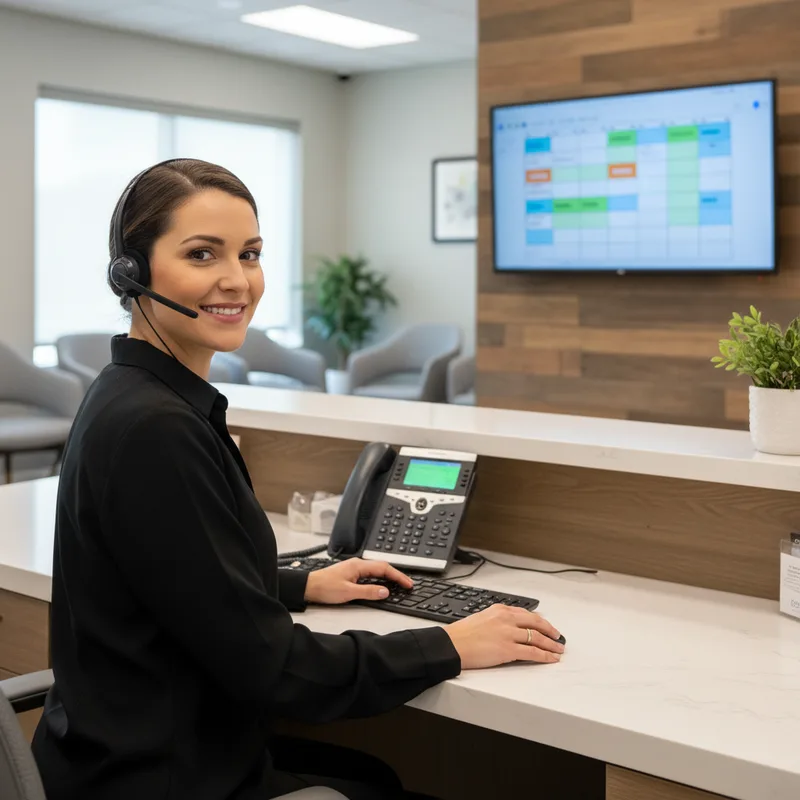
Picture the daily load. New patients calling to book, existing patients rescheduling, someone asking whether you take their plan, and the occasional emergency at 9pm. A capable service triages all of it. Simple bookings get handled on the spot, while clinical questions and detailed insurance verification get flagged for staff.
The after-hours piece is the one most owners underestimate. After-hours calls alone make up about 27 percent of total volume, per Dental Economics, so coverage past 5pm captures demand most practices never see.
Here is what a well-run service typically manages:
- New patient intake, capturing name, reason for the visit, and insurance so the chart starts before they arrive.
- Scheduling and rescheduling, ideally written straight into your calendar rather than left as a message.
- After-hours and overflow, the evenings, weekends, and lunch gaps when calls otherwise hit voicemail.
- Basic insurance triage, answering whether you accept a plan and routing the rest to your team.
- Appointment confirmations, cutting no-shows by reaching patients who ignore texts.
One caution: 80 percent of callers who reach voicemail leave no message and never call back, per Forbes. Whatever you choose, the point is a live answer, not a better voicemail greeting. Patients rarely give a second chance: if the first call stalls, they assume the practice is hard to reach and move on. That single missed ring can cost a year of cleanings, hygiene visits, and referrals from one new family. For the wider phone setup around it, see our guide to dental office phone systems.
Related: Covering nights and weekends without burning out staff → After-hours dental phone coverage
How much does a dental virtual receptionist cost?
A dental virtual receptionist usually costs $300 to $1,500 per month, depending on call volume and type. AI receptionists often charge per minute or per call, while live answering services bill a monthly retainer scaled to expected volume. Either way, it lands well below a full-time front-desk salary.
Run the comparison honestly. A full-time receptionist costs $35,000 to $45,000 a year in wages alone, before benefits, per general staffing benchmarks, and still goes home at 5pm. A virtual option covers more hours for a fraction of that, though it trades some of the personal touch a long-time staffer brings. Neither is strictly better; they solve different needs. The smartest setups often pair a small in-house team with a virtual layer that catches everything the team cannot, from the lunchtime rush to a Saturday toothache.
| Option | Typical cost | Coverage |
|---|---|---|
| Live answering service | $500 to $1,500/mo | Human agents, set hours |
| AI receptionist | $300 to $900/mo | 24/7, scales instantly |
| Full-time hire | $3,000+/mo | In-office, business hours |
Cost is only half the math. The other half is what a captured call is worth. If a single new patient is worth several hundred dollars and one recovered call a week pays the monthly fee, the question answers itself. Oral health is a near-universal, recurring need, tracked by the CDC Division of Oral Health, so the calls keep coming whether or not someone answers them.
Live answering service, AI, or hybrid: which is right?
A live answering service fits practices that want a human on every call. An AI receptionist fits those needing 24/7 coverage at lower cost and instant scaling. A hybrid fits practices that want AI to handle routine calls and people for the rest. Call volume and budget decide the line.
The real variable is consistency. Human agents bring warmth but get sick, take breaks, and cost more as volume grows. AI never sleeps and handles a sudden Monday-morning rush without a hold queue, though it needs clear rules for when to hand off. A hybrid tries to keep the best of both: software fields the routine "are you open" and "can I reschedule" calls instantly, while anything sensitive routes to a person. The tradeoff is setup time, since someone has to define which calls escalate and when. The average hold time before a patient hangs up is just 90 seconds, per Marchex, so capacity at peak matters more than most owners expect.
| Type | Suited to | Tradeoff |
|---|---|---|
| Live service | High-touch practices | Higher cost, set hours |
| AI receptionist | High volume, after-hours | Needs clear handoff rules |
| Hybrid | Mixed call types | More setup up front |
If you are weighing AI specifically, read our honest look at AI dental receptionist concerns before deciding.
How does it fit your practice software?
A virtual receptionist works with your practice management software only when it writes directly into the schedule, so bookings land without rekeying. Integration with systems like Dentrix, Open Dental, Eaglesoft, or Curve Dental is the difference between a booked slot and a sticky note.
This is where many services quietly fall short. A receptionist that only takes messages still leaves your team transcribing details and risking double-bookings. One that connects to your calendar checks real availability, books the slot, and updates the chart in seconds. Ask any provider exactly which systems they integrate with and whether booking is live or message-based. The answer changes your daily workload more than any feature on the brochure. A message-only service quietly hands the real work back to your front desk.
Two-way sync matters as much as booking. If a patient reschedules through the receptionist, your schedule should reflect it instantly, and reminders should fire from the same record. Patients increasingly expect this: 77 percent want online booking capability, per Zocdoc, and the phone experience should feel just as immediate. For the scheduling side, see why most online booking software doesn't actually book.
See a virtual receptionist booking into a live schedule
DentalBase connects to your practice software and books directly, no rekeying, no missed details.
Book a Free Demo →How do you choose a dental virtual receptionist?
Choose a dental virtual receptionist by matching its type to your call volume, confirming software integration, and checking how it handles after-hours and insurance calls. Then ask for an answered-call rate and a booked-appointment report, because outcomes matter more than promises.

Start with your own numbers
Pull a week of call data before you shop. The figures that matter most are simple:
- Total call volume and the hours when calls spike, usually mornings and lunch.
- Missed-call count, the rings that hit voicemail or got abandoned on hold.
- After-hours calls, which often reveal demand your team never knew existed.
A practice missing ten lunchtime calls a week needs different coverage than one drowning in weekend emergencies. Match the tool to the actual gap, not to a feature list.
Test before you commit
A demo tells you little; a trial tells you everything. Convenience drives loyalty, too, with 72 percent of patients naming it a top factor in choosing a provider, per the ADA Health Policy Institute.
Score a virtual receptionist before you sign
Check each item the service can clearly satisfy.
Your score: count your checks out of 6. Anything under five is worth a second look.
Run a short trial before committing. Listen to recordings, watch how bookings land in your schedule, and confirm the after-hours experience feels like your practice. If you also want help spotting weak vendors, our list of AI receptionist red flags applies to live services too.
Conclusion
The test for any dental virtual receptionist is simple: does it answer the calls your team misses and turn them into booked appointments? A polished script means nothing if the schedule doesn't fill.
Start by pulling one week of call data and counting the gaps. That number tells you which type of coverage you need and what a recovered call is worth. Steady demand for dental care, confirmed by the U.S. Bureau of Labor Statistics outlook, means the callers are out there; the only question is whether someone answers. Patients also judge you fast, and the BrightLocal consumer review survey shows how quickly a first impression forms, so make the call experience count.
Map your missed-call gap this week, list the hours you keep losing, then choose the option that closes it for good.
Never miss another new-patient call
See how DentalBase answers, books, and covers after-hours, then reports every call that became a patient.
Book a Free Demo →Want more front-office and growth guides?
Browse Resources →Sources & References
Frequently Asked Questions
A dental virtual receptionist is an off-site service or software that answers your practice's calls, books appointments, and routes messages. It works like a front-desk receptionist without sitting in your office, covering overflow, lunch breaks, and after-hours when your team cannot pick up.
A dental virtual receptionist typically costs $300 to $1,500 per month, depending on call volume and whether it is live or AI-driven. AI options often price per minute or per call, while live services bill monthly retainers based on expected volume.
A dental virtual receptionist costs far less than a full-time hire and covers nights and weekends, but a strong in-house team builds deeper patient relationships. Many practices use both: staff during peak hours, a virtual receptionist for overflow and after-hours.
Yes, when it integrates with your scheduling software. A dental virtual receptionist connected to systems like Dentrix or Open Dental can book directly into your calendar. Without integration, it takes a message and your staff rekeys it, which adds delay and error.
Most can handle basic insurance questions such as whether you accept a plan, then route detailed verification to your team. Complex coverage checks still need a trained staff member, so set clear rules for what the receptionist answers versus escalates.
Choose a dental virtual receptionist by matching its type to your call volume, confirming it integrates with your software, and checking how it handles after-hours and insurance calls. Ask for an answered-call rate and a booked-appointment report before you commit.
Was this article helpful?
Written by
DentalBase Team
Expert dental industry content from the DentalBase team. We provide insights on practice management, marketing, compliance, and growth strategies for dental professionals.