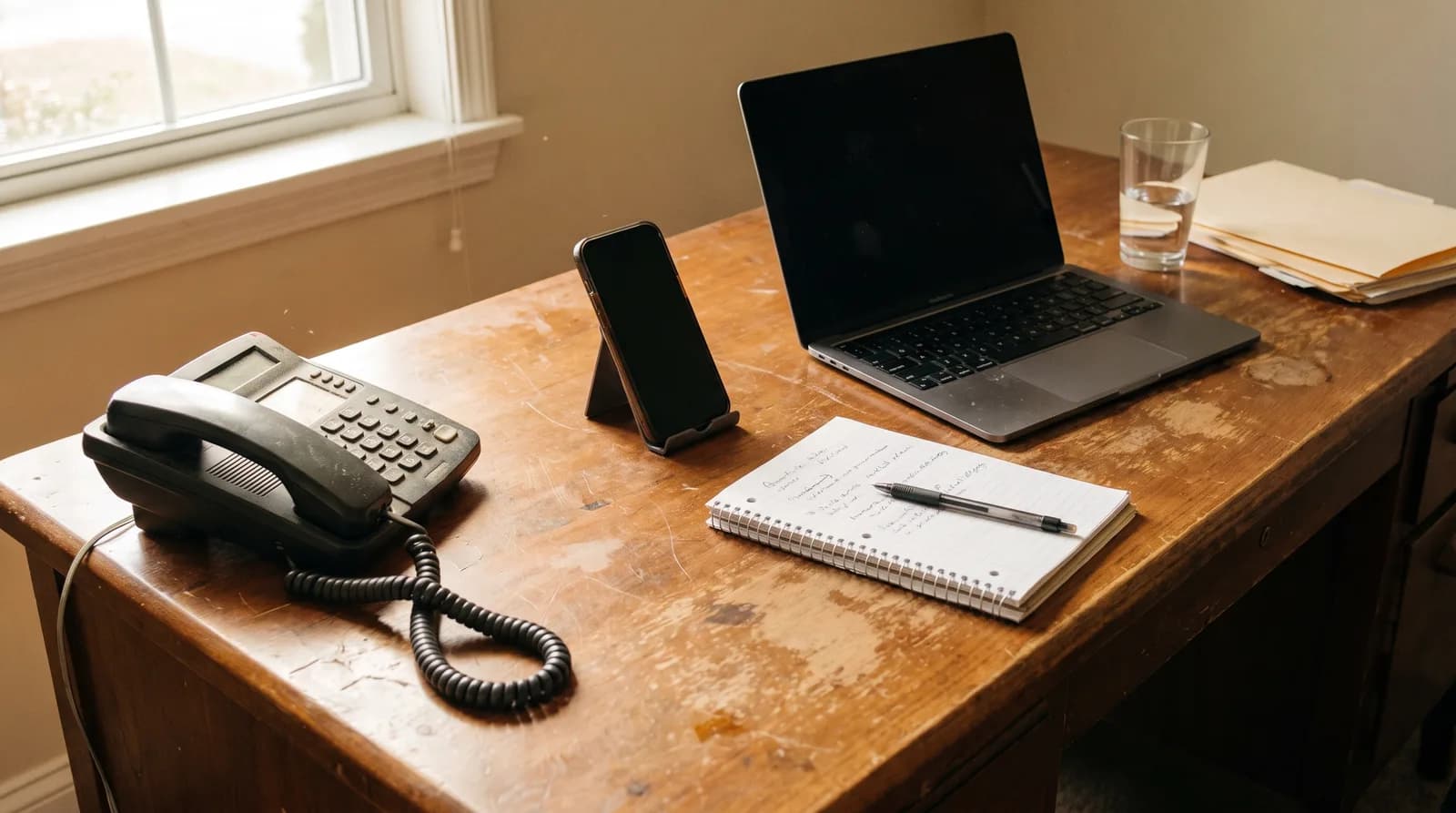
Phone, Text, or Email: The Best Dental Follow-Up Channel
How I choose the best follow up channel for dental patients, matching phone, text, and email to each follow-up job so every touch lands.
Share:
Table of contents
The best follow up channel for a dental practice depends on which follow-up job you are running, not a single universal answer. A no-show needs a phone call within the hour. A recall reminder works fine as a text. A treatment-plan nudge usually needs both. I learned this the hard way, by defaulting to whatever channel was easiest for my front desk that day, and watching response rates stay flat no matter how many touches we added.
I founded a dental practice management platform, but most days I am still at the chair in Peterborough, New Hampshire, treating patients myself. This guide is how I think about matching channel to follow-up type, what each channel is actually good at, and where the consent rules and over-contact limits sit so you stay out of trouble while you reach patients faster.
What Is the Best Follow-Up Channel for a Dental Practice?
There is no single best follow-up channel for a dental practice. The right channel depends on the follow-up type, urgency, and the patient's own habits. Phone, text, and email each do one job well and fail at the others.
I see practices pick one channel, usually phone or email, and run every follow-up job through it. That works for some patients and fails completely for others. A no-show patient who never answers calls might respond to a text in minutes. A treatment-plan patient weighing a financial decision might want the detail only an email can hold. Defaulting to one channel for everything is why so many follow-up programs underperform even when the team is putting in real effort.
I covered the broader system this fits into in my guide to building a dental patient follow-up system. Channel choice is one piece of that larger structure, alongside owners, triggers, and stop rules.
What Are the Strengths and Failure Modes of Phone, Text, and Email?
Phone calls carry the most warmth and handle complex conversations best, but they fail when patients screen calls or never check voicemail. Text gets read fastest but cannot hold detail. Email holds detail well but gets ignored or buried for days.
Phone
I use the phone when the conversation needs a real back-and-forth, like a no-show callback or a treatment-plan discussion with a financial component. Dental Economics has reported that text messaging is overtaking phone calls as the fastest way to reach patients. That tells me the phone's advantage now sits in depth, not speed. A call lets a patient ask questions in real time, which a text cannot. According to ADA Practice Transitions, 38% of new patient calls go unanswered during business hours. Forbes has reported that 80% of callers who reach voicemail never leave a message. That is exactly why I never rely on a single unreturned call as my whole follow-up effort.
Text
I use text for anything time-sensitive and short: a same-day no-show check-in, a recall nudge, a quick scheduling question. BrightLocal has found text replies average 60 times faster than email replies, with the average text reply landing in about 90 seconds compared to 90 minutes for email. That gap is why I default to text whenever speed matters more than depth.
I reserve email for anything with detail to convey, like financing options on a treatment plan or a written summary after a phone conversation. Email gives a patient something to reference later, which a text or a missed call cannot.
- Choose phone when the conversation needs real-time back-and-forth or carries financial weight.
- Choose text when speed matters more than detail and the message fits in a few sentences.
- Choose email when the patient needs something to reference later, like a financing breakdown or written summary.
Where Each Channel Wins
| Channel | Best For | Fails When |
|---|---|---|
| Phone | Complex or urgent conversations | Patient screens calls |
| Text | Fast, short, time-sensitive touches | Message needs detail or nuance |
| Detailed, reference-worthy content | Urgency matters more than depth |
Related: No-shows are their own follow-up job with their own urgency curve, and the channel decision there starts with how much the no-show is actually costing the schedule. See the true cost of no-shows in my benchmarks guide →
How Do You Match Channel to Follow-Up Type?
I match channel to follow-up type by ranking urgency and complexity for each job. A no-show is urgent and simple, so it gets a call first, then a text. A treatment plan is complex and less urgent, so it gets an email with a follow-up call.
I treat my own dental treatment plan follow-up sequence as a case in point. The first touch is a call, because the patient needs to hear the clinical reasoning again. The follow-up touches step down to text and email as urgency fades and the conversation shifts from clinical to logistical. A no-show gets the opposite order: text first for speed, call only if the text goes unanswered. Timing matters here too. After-hours calls represent 27% of total patient call volume according to Dental Economics, which is part of why text and email carry more of my after-hours follow-up than the phone does.
A Channel-Matching Reference
NO-SHOW
Text first, call if no response
RECALL
Text, with email backup
TREATMENT PLAN
Call first, then email and text
NEW PATIENT
Call, then text for reminders
How Should You Read the Patient Before Picking a Channel?
I read the patient by noting how they booked, their age range, and what channel they have already responded to. A patient who booked online and confirmed by text has told me their preference already, before I even have to ask.
I do not treat this as a rigid rule by age, because plenty of older patients prefer text and plenty of younger patients prefer a call. What I actually watch is behavior: did this patient reply to a previous text, or did they only ever pick up the phone? That history is a better predictor than any assumption about who they are. One unanswered call tells me almost nothing. Most callers who reach voicemail never leave a message, so silence is not the same as "this patient does not respond to calls."
I have a patient in her seventies who only responds to text, and a patient in his twenties who never replies unless I call. Neither fits the demographic story I would have guessed before checking the chart. Once a patient shows me a channel preference, I stop guessing and just use it. The mistake I see most often is sticking with one channel because it is the practice's default, instead of adjusting to what the individual patient has already shown you works.
Tracking Channel Preference by Hand Gets Messy Fast
Remembering which patient prefers which channel across hundreds of charts is not realistic for a busy front desk. DentalBase's AI receptionist logs response history automatically and picks the right channel on the next touch.
See How It Works →Why Do Multi-Channel Sequences Beat Single-Channel Outreach?
Multi-channel sequences beat single-channel outreach because they reach patients who would never have responded to the first channel alone. A patient who ignores calls might answer a text. A patient who skims texts might actually read an email.
HubSpot's research on multi-channel distribution makes a point I have found true in my own follow-up sequences too. A single channel reaches the people already inclined to respond, while layering channels catches the rest. I run my no-show sequence as text, then call, then email, rather than three rounds of the same channel. Each new channel is a fresh chance, not a repeat of the same failed attempt.
Three texts in a row to a patient who never opens texts is three wasted touches. One text, one call, and one email gives that same patient three completely different chances to notice the message, in three different formats, at three different moments in their day. That is the actual mechanism behind why multi-channel sequences outperform repeating the same channel: variety, not volume, is what catches the patients the first attempt missed.
What Are the Consent and Over-Contact Limits Per Channel?
Phone and text both carry real consent obligations under federal law, while email has fewer restrictions but still requires an opt-out option. I treat consent as a non-negotiable step before any automated outreach, not a formality to handle later.
The ADA has published clear guidance on the Telephone Consumer Protection Act for dentists who call or text patients, including a sample consent form. I get written consent before enrolling any patient in automated calls or texts, and I keep that documentation on file. The penalties for getting this wrong are real, and the rules apply per message, not per campaign.
- Get written consent before automated calls or texts, not just a verbal okay.
- Honor every opt-out request immediately and permanently, not just for that campaign.
- Cap touches per channel per week so outreach never tips into harassment.
Related: Consent tracking is just one piece of the patient experience that actually drives retention, which matters more than any single follow-up touch. See what drives dental patient retention →
What Does "Good" Actually Look Like on Each Channel?
Good performance on each channel means the response rate matches what that channel is built for: fast replies on text, thoughtful replies on email, and resolved conversations on calls. A "good" number on one channel can be a warning sign on another.
I do not expect the same response speed from email that I get from text. I do not measure call success by how fast someone answers either, since voicemail and callbacks are normal there. I watch text for same-day replies, email for engagement within a few days, and calls for whether the conversation actually resolved the question, not just whether the patient picked up.
If my texts are getting same-day replies but my email open rate is climbing without any bookings following, that gap tells me the email content is not landing. It does not mean email itself failed. I review each channel against its own bar, not against the others. Comparing a phone call's resolution rate to a text's reply speed measures two completely different things and tells me nothing useful about either one.
How Does Channel Choice Fit Into Your Broader Follow-Up System?
Channel choice is one decision inside the larger follow-up system I run, alongside the trigger, owner, sequence, and stop rule for each follow-up job. Picking the right channel without the rest of that structure still leaves gaps.
I treat channel selection as the last decision, not the first. Once I know the follow-up job, the urgency, and the patient's history, the channel almost picks itself. Practices that start with "should we text or call" before defining the job itself usually end up debating the wrong question. Get the structure right first, and channel choice becomes a quick, almost mechanical decision rather than a fresh debate every time.
I see this mistake most often with new follow-up programs. A team gets excited about a new texting platform, rolls it out for every follow-up job at once, and then wonders why response rates stayed flat for the harder conversations. The platform was never the problem. The job, the urgency, and the patient's own history should have decided the channel before the tool ever entered the conversation. Build the structure first, and the channel decision becomes the easiest part of the whole system, not the hardest.
The best follow up channel for a dental practice is never one answer, it is a decision you make fresh for every job, every patient, and every moment in the sequence. I stopped trying to pick a favorite channel years ago and started matching the channel to what the moment actually required. Map your own follow-up jobs by urgency and complexity, assign a default channel to each, and let your team's judgment fill in the rest from there.
Stop Guessing Which Channel Will Work
DentalBase helps practices match channel to follow-up type automatically, based on what has actually worked with each patient.
Book a Free Demo →Want more practice management guides like this one?
Browse Resources →Sources & References
Frequently Asked Questions
There is no single best channel. The right choice depends on the follow-up job: phone works best for urgent or complex conversations, text works best for speed, and email works best for detailed information.
It depends on the job. No-shows and quick reminders work well as texts since they get read fast, while treatment plan discussions and complex conversations usually need a phone call first so the patient can ask questions in real time.
A multi-channel sequence reaches patients who would not have responded to the first channel alone. Each new channel in a sequence is a fresh chance to be noticed, not a repeat of the same failed attempt.
Practices generally need prior written consent before sending automated calls or texts under the Telephone Consumer Protection Act. The ADA provides guidance and a sample consent form for dental practices.
Watch how the patient has responded in the past rather than guessing by age. A patient who replied to a previous text has shown a preference that is more reliable than any assumption.
According to BrightLocal, text replies average 60 times faster than email replies, with text typically getting a reply in about 90 seconds versus 90 minutes for email. That speed difference is why text works best for same-day, time-sensitive follow-up.
Was this article helpful?

Written by
Dr. Muhammad Abdel-rahim DMD
Muhammad Abdel-rahim, DMD, is a dentist and implantologist at Peterborough Family Dental & Implant Center with a passion for blending clinical excellence, leadership, and innovation. He believes dentistry extends beyond restoring smiles to building trust, confidence, and sustainable systems that help patients and teams thrive. With experience leading and scaling dental practices, Dr. Abdel-rahim brings a strategic mindset to patient care and practice growth. He is particularly interested in communication, critical thinking, and the thoughtful application of artificial intelligence to improve clinical outcomes, workflows, and the overall patient experience.