AI Phone Answering for Dental Offices: What It Does (2026)
AI phone answering for dental offices handles patient calls, books appointments, and answers questions 24/7. Learn how it works and what to expect.
Share:
Table of contents
AI phone answering for dental offices is changing how practices handle one of their biggest daily challenges: the ringing phone. Picture a three-provider practice pulling in 200+ calls a week. Your front desk team is checking in patients, verifying insurance, and fielding questions from the waiting room. The phone rings again. Nobody picks up. Guidance and practice management discussions from the ADA continue to emphasize how much patient communication shapes practice growth and retention. When calls are missed during the workday, the cost is not just inconvenience. It can be missed revenue before a patient ever walks through the door.
This article breaks down what AI phone answering actually does inside a dental practice, how calls move through the system, and what you should know before choosing one. No hype, no jargon. Just the mechanics.
What Is AI Phone Answering for a Dental Office?
AI phone answering is a conversational phone system that picks up patient calls, understands what the caller needs, and responds in real time using natural language. It's not a phone tree. It's not a voicemail box with a pleasant recording. It's a system trained on dental-specific workflows that can hold an actual back-and-forth conversation with your patients.
The difference between this and an old-school IVR system is significant. Traditional IVR forces callers to press buttons and listen to menus. Most patients hate it. AI phone answering skips all of that and talks to the patient directly, the same way your receptionist would. It can answer scheduling questions, collect new patient information, and route urgent calls to the right person.
Recent industry coverage, including this Dental Economics piece, reflects growing interest in AI across dentistry. Phone answering is often one of the first use cases practices explore because it addresses an immediate and measurable problem: missed calls. If your practice is still relying heavily on voicemail or manual call handling during busy hours, there is a real chance patients are reaching someone else first.
For a deeper look at how AI receptionists work across all practice types, see the DentalBase AI Receptionist complete guide.
Stop Losing Patients to Missed Calls
DentiVoice answers every patient call, books appointments, and captures new patient details without putting anyone on hold.
Learn About DentiVoice →How Does an AI Phone System Handle Patient Calls?
An AI phone answering system processes each call through a series of steps that happen in seconds: it answers, listens to the caller's request, identifies intent, and responds with the right information or action. The entire exchange sounds like a natural phone conversation, not a robotic script.
Here's what a typical call flow looks like. The system picks up within one or two rings, greets the patient by name if they're an existing caller, and asks how it can help. If the patient wants to schedule a cleaning, the AI checks available slots in your practice management system and books the appointment in real time. If the patient has a question about your hours or which insurance plans you accept, it answers immediately.
Intent Detection and Routing
The AI doesn't just listen to words. It identifies intent. A caller saying "my tooth has been hurting since yesterday" gets flagged differently than someone asking about teeth whitening prices. Emergency-sounding calls get triaged and routed to your on-call protocol. Routine calls get handled without ever involving your staff.
And this matters more than most practice owners realize. Research and business reporting, including this Forbes piece on voicemail behavior, suggest that many callers who reach voicemail never meaningfully engage with it. That alone is enough to make most practices rethink how often calls are being pushed to voicemail during the lunch rush.
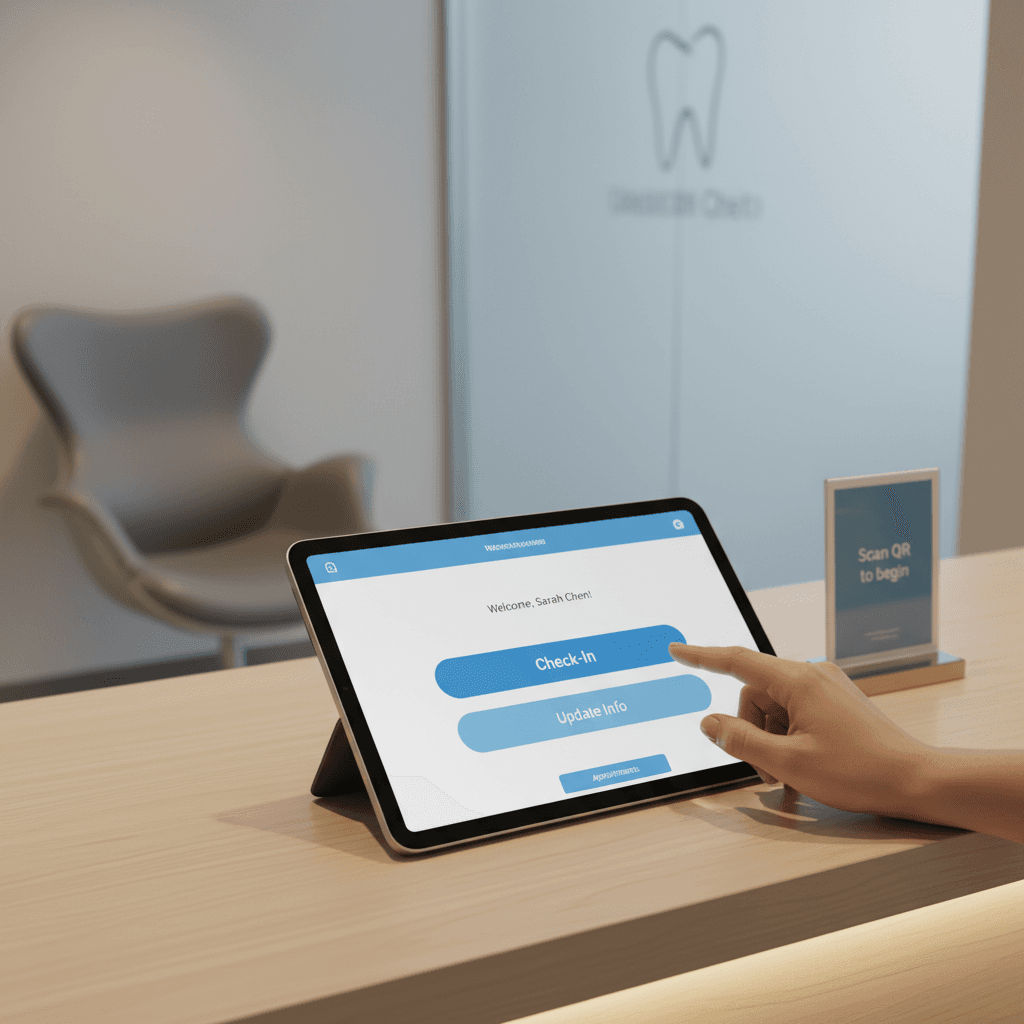
New patient intake is another area where AI handles the heavy lifting. The system collects name, contact info, insurance details, and reason for visit, then feeds that data directly into your PMS. No clipboard. No double entry. Your front desk sees the new patient record ready to go before the person even arrives.
What Types of Calls Can AI Answer Without Staff Help?
AI phone systems can handle a large share of the routine calls that eat up your front desk team's day. Not every call needs a human. Many do not. The trick is knowing which ones the AI resolves on its own and which ones get passed to your staff.
| Call Type | AI Handles Alone? | Notes |
|---|---|---|
| Appointment scheduling | Yes | Books directly into PMS in real time |
| Rescheduling or cancellations | Yes | Updates calendar and can offer alternative slots |
| Office hours, directions, parking | Yes | Responds from pre-loaded practice info |
| Insurance questions (general) | Partial | Confirms accepted plans; complex eligibility goes to staff |
| New patient intake | Yes | Collects demographics, insurance, and reason for visit |
| Emergency triage | Routes to staff | Flags urgency, follows on-call protocol |
| Post-treatment follow-up | Yes | Outbound calls for recovery check-ins |
| Recall and reactivation | Yes | Outbound reminders for overdue patients |
Industry discussions like this Dental Economics article make the same basic point: dental practices lose meaningful opportunity when routine calls go unanswered. Most of those missed calls are not highly complex. They are scheduling, rescheduling, and quick operational questions. They do not require clinical judgment. They require someone, or something, to pick up the phone.
That is where the math gets interesting. If even a portion of those missed calls are new patients worth $800 to $1,200 in first-year production, the revenue impact adds up quickly. The exact number will vary by practice, but the point holds: missed calls often cost more than they appear to on paper.
Related: See how missed calls translate to real revenue loss in your practice → 38% of Calls Go Unanswered: The Revenue Impact
Does AI Phone Answering Work After Hours and on Weekends?
Yes. AI phone answering runs 24/7 with no shift changes, sick days, or lunch breaks. It handles calls at 2 AM on a Saturday exactly the same way it handles calls at 10 AM on a Tuesday. For most dental offices, that's a major gap being filled.
After-hours call volume can represent a meaningful share of total patient demand, which is one reason this Dental Economics topic keeps coming up in practice growth discussions. Without a reliable answering workflow, many of those calls end up in voicemail or sit untouched until the next business day.
Why After-Hours Coverage Matters More Than You Think
Think about when patients actually have time to call. Working adults don't always phone the dentist at 2 PM. They often call during their commute, over lunch, or after dinner. If your phones shut off at 5 PM, you're much harder to reach during some of the most convenient calling windows.
AI phone answering keeps your practice open to new bookings around the clock. A patient calls at 8:30 PM to schedule a cleaning? Done. Someone wakes up Sunday morning with a cracked filling and needs an emergency slot Monday? The AI captures the details, flags the urgency, and your team sees the request first thing Monday morning.
For smaller practices running lean teams, this is where AI phone answering makes the biggest difference. You can learn more about how smaller offices are using this technology in this guide: AI Dental Receptionist Software for Small Practices.
And if you want to understand the full revenue picture for after-hours calls, take a look at After-Hours Revenue Your Practice Leaves Behind.
See How AI Phone Answering Works in Your Practice
Book a free demo to hear DentiVoice handle a real patient call, schedule an appointment, and sync with your PMS.
Book a Free Demo →How Does AI Phone Answering Connect to Your Practice Management System?
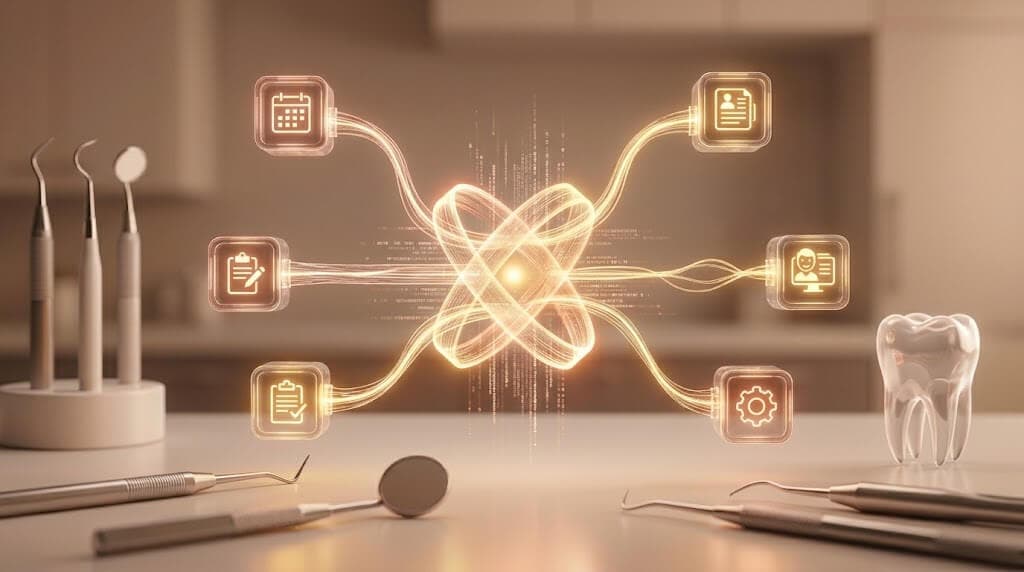
AI phone answering systems connect directly to your practice management software to read and write scheduling data in real time. That means when a patient books a slot over the phone, the appointment shows up in your PMS instantly, no manual re-entry needed.
The technical side works through API integrations. Systems like Dentrix, Open Dental, Eaglesoft, and Curve Dental all support connections that let the AI pull up available time slots, check provider schedules, and confirm bookings. The AI sees the same calendar your front desk sees.
What This Means Day to Day
Double-booking is one of the first fears practice owners raise. Fair concern. But because the AI reads live availability from your PMS, it should not be offering a slot that's already taken. If Dr. Patel is booked solid on Thursday morning, the AI should suggest the next available opening instead.
Data sync goes both ways. When the AI captures a new patient's name, phone number, insurance provider, and reason for visit, that information flows into your PMS as a new patient record. Your front desk sees it when they arrive Monday morning. No sticky notes. No transcription from voicemail.
For practices running multiple providers or locations, this integration becomes even more valuable. The AI can route patients to the right provider based on procedure type, location preference, or next available slot across all offices. If you're thinking about how automation fits into your broader operations, the Dental Practice Automation Guide for 2026 covers the full picture.
Related: Want to understand how automated follow-up calls work alongside phone answering? → How to Automate Dental Follow-Up Calls
What Should You Look for When Choosing an AI Phone Answering System?
Not all AI phone systems are built for dentistry. A general-purpose answering bot won't know the difference between a crown prep and a crown lengthening, and it won't understand your scheduling rules. You need a system trained specifically on dental workflows.
Here's what to evaluate before signing up with any provider:
- Dental-specific training: The system should understand common procedures, insurance terminology, and how dental scheduling works. Ask the vendor what data it was trained on. Generic call center AI won't cut it.
- PMS integration: Confirm it connects to your specific software. If you're on Dentrix, make sure you see a live demo with Dentrix, not a slide deck.
- HIPAA compliance: Any system handling patient health information needs to meet HIPAA requirements. Ask about encryption, data storage, and BAA agreements. Don't take "we're compliant" at face value.
- Emergency triage protocol: How does the AI handle a caller reporting severe pain, swelling, or bleeding? It should follow a clear escalation path, not just offer to schedule a cleaning.
- Reporting and analytics: You should be able to see call volume, types of calls handled, appointments booked, and calls escalated to staff. If you can't measure it, you can't improve it.
Convenience is clearly a major factor in how patients evaluate providers, and the broader ADA dental statistics landscape supports the idea that access and responsiveness matter. A phone system that answers quickly, books the appointment on the spot, and confirms via text aligns well with what many patients now expect from a modern practice.
If you want a side-by-side breakdown of different options, the AI Dental Receptionist Comparison for Small Practices covers what matters most. And for a broader cost-versus-value analysis, check the AI Dental Receptionist ROI Guide.
AI phone answering for your dental office isn't about replacing your front desk team. It's about making sure your practice does not depend entirely on staff availability to respond to incoming calls, whether it's 10 AM on a Monday or 9 PM on a Saturday. The practices that respond quickly are usually the ones that fill their chairs more consistently. That has not changed. What has changed is that you no longer need a person sitting by the phone every minute to make it happen.
Your next step: pull your call logs from the last 30 days. Count the missed calls. Compare that against your average new patient value. That number gives you a practical way to judge whether AI phone answering is worth exploring, and for many practices, it is at least worth a serious look.
Ready to Stop Missing Patient Calls?
See how DentiVoice AI phone answering works with your PMS, handles after-hours calls, and books appointments on the spot.
Book a Free Demo →Want more guides on growing your dental practice?
Browse Resources →Sources & References
- ADA Practice Management Resources
- Dental Economics: AI in Dentistry Current Applications
- Forbes: Voicemail Statistics and Consumer Behavior
- Dental Economics: The Cost of Missed Calls
- Dental Economics: After-Hours Calls in Dental Practices
- HHS HIPAA Information
- ADA Health Policy Institute Dental Statistics
Frequently Asked Questions
Reputable AI phone answering systems built for dental offices are designed to meet HIPAA requirements. Look for providers that offer encryption, secure data storage, and a signed Business Associate Agreement. Always verify compliance before signing up.
Yes. AI phone systems that integrate with practice management software like Dentrix, Open Dental, or Eaglesoft can check provider availability and book appointments in real time during the call. The appointment appears in your PMS instantly.
AI phone systems trained for dental offices include emergency triage protocols. When a caller describes symptoms like severe pain, swelling, or trauma, the AI flags the call as urgent and routes it to your on-call staff or emergency contact.
Most AI phone answering providers can work with your existing practice phone number through call forwarding or direct integration. You typically don't need to change your number or phone hardware.
Pricing varies by provider, call volume, and features. Most dental AI phone answering services charge a monthly subscription, often ranging from $200 to $800 per month depending on practice size and integration complexity.
Modern dental AI phone systems use natural-sounding voices and conversational patterns. Some patients may recognize it as AI, but studies show most callers care more about getting their question answered quickly than whether a human or AI picked up.
Some AI phone answering systems offer multilingual support, including Spanish. Check with your provider to confirm which languages are available and whether the system can detect a caller's preferred language automatically.
Was this article helpful?
Written by
DentalBase Team
The DentalBase Team is a collective of dental marketing experts, AI developers, and practice management consultants dedicated to helping dental practices thrive in the digital age.