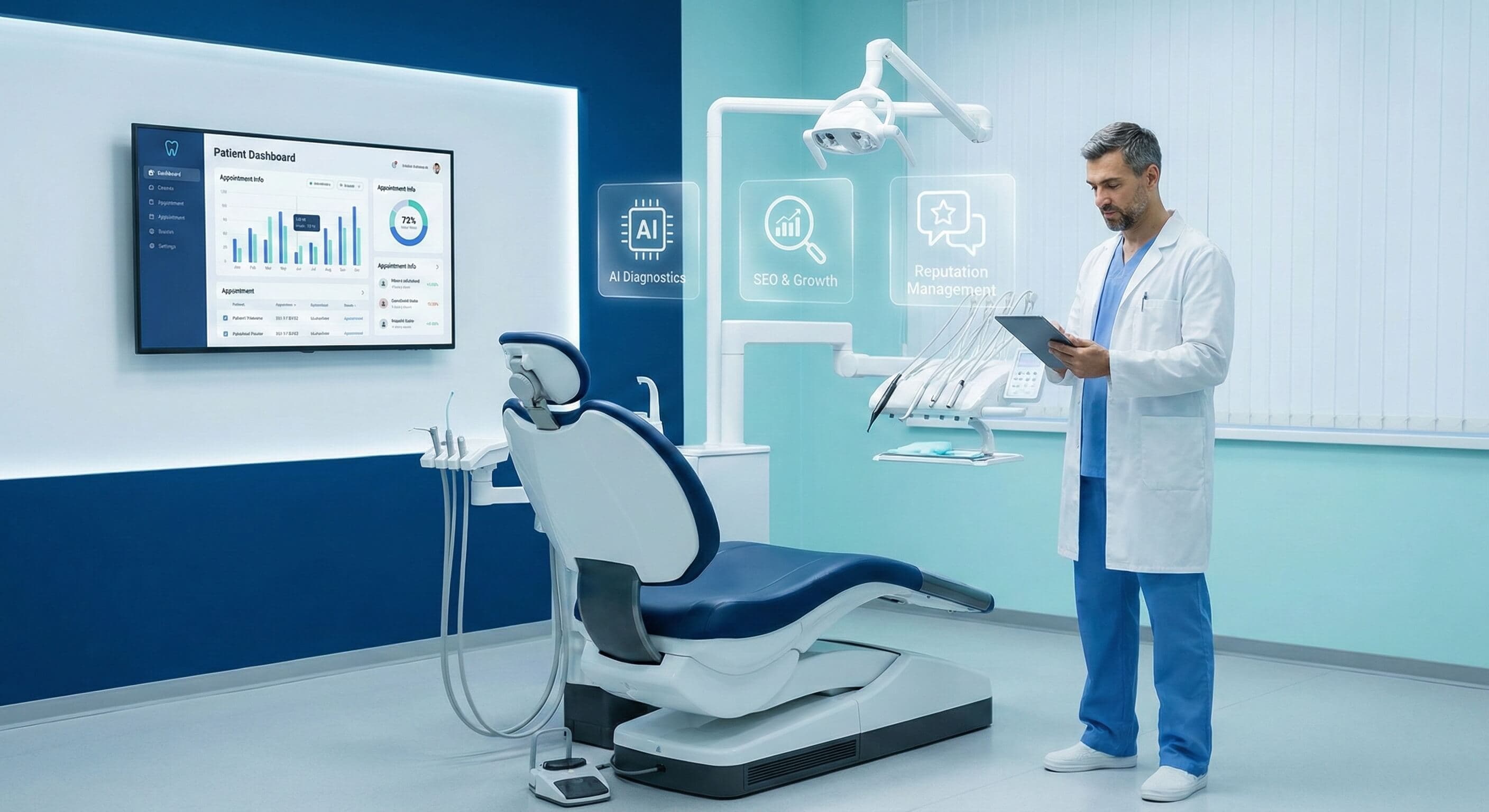
Dental Industry Trends: A Complete 2026 Guide
Discover the most impactful dental industry trends shaping practices in 2026. From AI technology to patient experience and workforce challenges.
Share:
Table of contents
Why Dental Industry Trends Matter for Modern Dental Practices
Dental industry trends shaping modern practices go far beyond new tools or equipment upgrades. They represent a fundamental shift in how dental care is delivered, experienced, and managed. For dentists, practice owners, and office managers, understanding these trends is essential for long-term competitiveness and sustainable growth.
From artificial intelligence automating front office workflows to changing patient expectations around convenience and personalization, today’s dental industry trends influence every aspect of practice operations. According to the American Dental Association, practices that proactively adapt to emerging trends report higher patient satisfaction, improved operational efficiency, and stronger financial performance.
This guide explores the most impactful dental industry trends defining 2025 and beyond. It focuses on technology adoption, patient-centered care, workforce challenges, regulatory considerations, and financial sustainability to help dental professionals make informed decisions about the future of their practices.
Technology-Driven Dental Industry Trends Transforming Dentistry
Technology remains the primary force reshaping the dental industry. Digital solutions now play a critical role in both clinical excellence and practice efficiency.
Digital Dentistry and Advanced Dental Imaging Systems
Digital dentistry has evolved far beyond traditional digital X rays. Modern practices now rely on comprehensive digital ecosystems that support diagnosis, treatment planning, and restorative workflows. Intraoral scanners generate precise 3D images within minutes, eliminating uncomfortable impressions and improving diagnostic accuracy by up to 20 percent.
CAD and CAM technology enables same day restorations, reducing patient visits while increasing chair utilization. Digital imaging systems also significantly reduce radiation exposure compared to film based radiography, improving safety for both patients and staff.
Read More: AI in Dentistry: Beyond X-Rays into Marketing & Patient Care
Artificial Intelligence in Dental Practices and Practice Management
Artificial intelligence is redefining how dental practices operate. While AI-powered diagnostics help detect early signs of decay, periodontal disease, and oral pathology, the most immediate impact of AI is seen in practice management.
AI-driven systems now automate appointment scheduling, patient communication, follow-ups, and intake processes. Predictive analytics help practices identify patients at risk of missed appointments, optimize schedules, and improve treatment acceptance rates. These capabilities allow dental teams to focus less on administrative work and more on patient care.
Platforms like dentalbase demonstrate how AI can unify patient communication, scheduling, and operational insights into a single intelligent system, reducing overhead while improving the patient experience.
One platform.
Smarter dental growth.
Book more patients and automate your front desk with DentalBase.
Digital Dentistry Trends Improving Clinical Accuracy and Efficiency
As digital tools become standard, practices that fully integrate digital workflows gain a measurable advantage.
Intraoral Scanners, CAD CAM, and Same Day Restorations
Intraoral scanning technology improves clinical precision while enhancing patient comfort. Digital impressions eliminate retakes and remakes caused by distortion, reducing material costs and lab delays. Combined with CAD and CAM systems, these scanners allow for same-day crowns and restorations, increasing case acceptance and practice profitability.
Reducing Errors and Chair Time Through AI Enabled Workflows
AI enhanced workflows reduce human error by standardizing processes and surfacing insights in real time. From automated charting assistance to treatment reminders, these tools shorten chair time, improve documentation accuracy, and create a smoother experience for both patients and clinicians.
AI in Dentistry: From Diagnosis to Front Office Automation
AI adoption in dentistry extends well beyond clinical applications, reshaping how practices manage daily operations.
AI for Dental Scheduling, Patient Communication, and No Show Reduction
Missed appointments remain one of the most significant revenue leaks in dental practices. AI powered scheduling systems automatically send appointment confirmations, reminders, and follow ups across multiple channels. These systems adapt messaging timing and tone based on patient behavior, significantly reducing no show rates.
Automated patient communication also improves responsiveness, ensuring patients receive immediate answers to common questions without increasing staff workload.
Predictive Analytics and Data Driven Decision Making
AI driven analytics transform raw practice data into actionable insights. Practices can identify trends in patient behavior, forecast demand, and evaluate which services drive the highest long term value. This data driven approach supports smarter staffing decisions, marketing strategies, and investment planning.
Patient Centered Dental Care Trends Shaping the Industry
Modern dentistry increasingly prioritizes patient experience alongside clinical outcomes.
Preventive and Minimally Invasive Dentistry Trends
Preventive dentistry continues to gain traction as both patients and providers recognize the benefits of early intervention. Risk based care models tailor recall intervals and treatment plans to individual needs rather than relying on universal schedules.
Minimally invasive techniques, such as laser dentistry and air abrasion, reduce patient anxiety and preserve natural tooth structure. Practices focused on prevention report fewer emergencies, higher retention rates, and stronger patient trust.
Using Technology to Personalize Patient Engagement
Patients now expect personalized care experiences similar to those offered in other service industries. AI powered platforms enable practices to customize communication, treatment reminders, and educational content based on patient history and preferences, strengthening relationships and improving outcomes.
Consumer Expectations and Convenience in Modern Dentistry
Convenience has become a defining factor in patient decision making.
Online Scheduling, Automated Reminders, and Virtual Consultations
Online booking, digital forms, and automated reminders are no longer premium features. They are baseline expectations. Virtual consultations and teledentistry options provide patients with faster access to care, especially for follow ups and triage situations.
Practices offering flexible scheduling options, including evenings and weekends, consistently attract more new patients and retain existing ones.
Read More: DentalBase AI Receptionist: New Features, Capabilities & How It Works
Dental Workforce and Practice Management Trends
Staffing challenges continue to impact practices nationwide.
Staffing Challenges and the 2 2 2 Rule
The dental industry’s 2 2 2 rule highlights the cost of turnover. Two weeks to fill a role. Two months to train. Two years to recoup the investment. Hygienist shortages and administrative burnout have forced practices to rethink traditional staffing models.
How AI Automation Supports Lean Dental Teams
AI automation reduces reliance on manual administrative labor. By handling routine tasks such as appointment coordination, patient follow ups, and intake processing, AI allows practices to operate efficiently with smaller teams while improving employee satisfaction.
Dental Service Organizations and Industry Consolidation Trends
Industry consolidation continues as Dental Service Organizations expand their footprint.
Independent Practices vs DSOs Technology as the Equalizer
While DSOs benefit from scale and centralized systems, independent practices are leveraging advanced technology to remain competitive. Cloud-based platforms and AI tools provide similar efficiencies without sacrificing autonomy, allowing smaller practices to thrive.
Read More: Multi-Location SEO: Strategies for Growing Dental Groups (DSOs)
Regulatory, Insurance, and Compliance Trends in Dentistry
Compliance requirements and insurance models are evolving rapidly.
Insurance Reimbursement and Value Based Care Models
Dental insurance is gradually shifting toward value based care, emphasizing preventive outcomes over volume. Practices must adapt billing processes and patient education strategies to navigate multiple reimbursement models effectively.
HIPAA, Cybersecurity, and Secure AI Systems
As practices handle more digital data, cybersecurity has become a top priority. Strong encryption, staff training, and secure cloud infrastructure are essential to maintaining compliance and protecting patient trust.
One platform.
Smarter dental growth.
Book more patients and automate your front desk with DentalBase.
Financial Sustainability Trends in the Dental Industry
Rising costs and stagnant reimbursement rates are reshaping practice economics.
Managing Rising Costs With AI Driven Efficiency
AI powered systems reduce administrative overhead, improve schedule utilization, and minimize revenue leakage from missed appointments. These efficiency gains directly support profitability without compromising care quality.
Membership Plans and Revenue Diversification
Many practices are adopting membership plans, elective services, and flexible payment options to stabilize cash flow while increasing patient access to care.
Data-Driven Decision-Making in Modern Dental Practices
Data has become one of the most valuable assets in dentistry. Modern dental practices generate information across scheduling systems, patient records, billing platforms, and marketing channels. Practices that successfully leverage this data gain a measurable competitive advantage.
Advanced analytics tools help identify patterns related to appointment utilization, treatment acceptance, patient lifetime value, and operational bottlenecks. Instead of relying on intuition, practice owners can make evidence based decisions that improve efficiency and profitability.
Data driven dentistry also supports better patient outcomes. By analyzing historical treatment data and engagement behavior, practices can proactively identify patients who may need follow up care, preventive interventions, or additional education. This improves continuity of care while strengthening patient trust.
Marketing and Patient Acquisition Trends in the Dental Industry
Dental marketing has evolved significantly as patient behavior continues to change. Traditional referral only growth models are no longer sufficient in competitive markets. Today’s dental practices must combine a strong digital presence with personalized patient engagement strategies.
Search engine optimization, online reviews, and localized digital advertising play a major role in patient acquisition. Patients increasingly research providers online before booking appointments, making website experience, online scheduling, and clear communication critical conversion factors.
Automation is also reshaping dental marketing. AI powered systems can segment patients based on behavior, send targeted reminders for overdue care, and re engage inactive patients automatically. These strategies reduce reliance on manual outreach while increasing appointment bookings and case acceptance.
Key Dental Industry Trends for 2026 and Beyond
Looking ahead, the most successful practices will focus on scalable, integrated solutions rather than isolated tools.
High Impact Trends Practices Should Prioritize
Artificial intelligence powered patient communication
Fully digital clinical workflows
Preventive and value based care models
Strong cybersecurity infrastructure
Workforce optimization through automation
One platform.
Smarter dental growth.
Book more patients and automate your front desk with DentalBase.
Preparing Your Dental Practice for the Future
Future ready practices adopt innovation strategically rather than reactively.
Building a Scalable, AI-Enabled Dental Practice
Practices should assess current workflows, identify bottlenecks, and implement AI solutions that directly improve patient experience and operational efficiency. Choosing platforms that integrate seamlessly with existing systems ensures smoother adoption and faster returns.
| Practice Area | Traditional Dental Practice | AI-Enabled Dental Practice |
|---|---|---|
| Appointment Scheduling | Manual calls and confirmations | Automated scheduling and reminders |
| No Show Management | Reactive follow-ups | Predictive reminders and automation |
| Patient Communication | Phone and email only | Multi-channel AI-driven communication |
| Front Office Workload | High administrative burden | Reduced workload through automation |
| Data Usage | Limited reporting | Real-time analytics and insights |
| Patient Experience | Inconsistent and time-dependent | Personalized and responsive |
| Staff Efficiency | Dependent on headcount | Scales without adding staff |
| Growth Capability | Linear and labor dependent | Scalable and system driven |
Conclusion: Turning Dental Industry Trends Into Action
Dental industry trends are reshaping how practices operate, compete, and grow. AI integration, patient-centered care, workforce optimization, financial sustainability, and regulatory compliance are now deeply interconnected.
Practices that embrace intelligent automation, invest in staff development, and prioritize patient experience will be best positioned for long term success. Technology should be used not to replace human connection, but to strengthen it by allowing dental professionals to focus on what matters most. Quality care and trusted relationships.
Frequently Asked Questions
The latest dental trends include AI-powered diagnostics and treatment planning, teledentistry consultations, digital impressions and 3D printing, enhanced infection control protocols, and flexible payment solutions. Technology integration is transforming patient care while addressing workforce challenges through automation and improved efficiency in practice management.
The 2 2 2 rule in dentistry refers to brushing teeth twice a day for two minutes using a toothbrush replaced every two months. This fundamental oral hygiene guideline helps maintain optimal dental health and prevents common issues like cavities and gum disease that dental practices regularly treat.
Key 2025 dental industry trends include increased adoption of AI for diagnostics, expansion of teledentistry services, implementation of flexible payment plans, focus on preventive care, integration of digital workflows, enhanced patient experience through technology, and addressing staffing shortages through improved practice management and automation solutions.
The three most pressing dental industry issues are staffing shortages particularly for dental hygienists, rising practice expenses reducing net income for practitioners, and insurance reimbursement challenges. These issues are creating financial pressure on practices while affecting patient access to care and overall practice sustainability.
Was this article helpful?
Written by
DentalBase Team
The DentalBase Team is a collective of dental marketing experts, AI developers, and practice management consultants dedicated to helping dental practices thrive in the digital age.