Dental Hygiene Production Per Hour: The True Chair Cost
Dental hygiene production per hour counts the cleaning plus the dentistry it diagnoses. See how to value the hour and what an empty chair really costs.
Share:
Table of contents
Dental hygiene production per hour is the number that tells you whether your hygiene department is an asset or an afterthought. Most owners never calculate it. They treat hygiene as a cost center that keeps patients clean, and they miss that it's the single most reliable engine of production in the whole practice.
I used to think this way in my own practice in Peterborough, New Hampshire. Hygiene felt like overhead with a heartbeat. Then I started measuring what an hour of hygiene actually produces, including everything it sets in motion downstream, and the number changed how I protect that schedule.
This article shows you how to calculate the true value of a hygiene hour, what an open hygiene hour really costs once you count the diagnosis it would have triggered, and why hygiene is the recall engine of the practice rather than a loss leader.
What is dental hygiene production per hour, and why does it matter?
Dental hygiene production per hour is the dollar value an hour of hygiene generates, counting both the hygiene services themselves and the restorative work that flows from what gets found in the chair. It matters because it reframes hygiene from a low-margin chore into the diagnostic front door of the practice.
Here's the part owners miss. A hygiene visit isn't just a cleaning. It's a recurring, scheduled diagnostic appointment where decay gets caught, perio gets staged, and crowns get flagged. The cleaning pays for the room. The diagnosis pays for the practice. When you measure hygiene only on the prophy fee, you undervalue it by a wide margin.
That mismatch leads to bad decisions. Owners under-invest in hygiene, tolerate open chairs, and cut hygiene hours when money is tight, never seeing that they're throttling their own diagnosis pipeline. Measure the hour correctly and you protect it differently.
There's a mindset shift buried in here. When you see hygiene as a cleaning service, every hour is worth one prophy fee, and an empty slot feels minor. When you see it as a diagnostic appointment, every hour carries the expected value of what gets found, and an empty slot feels like what it is: a missed chance to catch disease early and start treatment. Same chair, completely different stakes, depending only on how you measure it.
How do you calculate the value of an hour of hygiene?
Start simple: take your hygiene department's monthly production and divide by the hygiene hours worked. That gives you direct production per hour. Then add the downstream value, the restorative dentistry diagnosed during hygiene visits, to see the hour's true contribution.
Illustrative: the prophy fee is only part of the hour. The diagnosis it triggers is the rest.
The direct number alone usually lands well above what owners guess. Add the diagnostic value and the picture changes entirely. Dental hygienists are a sizable, well-paid part of the dental workforce, as the Bureau of Labor Statistics documents, so the hour you're paying for should be measured on everything it produces. A worked example with stated assumptions makes it concrete, but pull your own figures, because your fees and case mix are what matter.
| Component | Worked example (illustrative) | How to find it |
|---|---|---|
| Direct hygiene production / hour | $180 / hour | Hygiene production / hygiene hours |
| Downstream restorative diagnosed | +$120 / hour | Restorative from hygiene visits / hours |
| True value per hygiene hour | ~$300 / hour | Direct + downstream |
| Cost of one open hour | ~$300 lost | The hour doesn't come back |
Those figures are illustrative, with assumptions stated, not a claim about your numbers. The exercise is what matters. When you see direct and downstream value side by side, the hygiene hour stops looking cheap.
What does an open hygiene hour actually cost?
An open hygiene hour costs far more than a missed cleaning. You lose the direct hygiene production, you lose the diagnosis that visit would have produced, and you lose the restorative case that diagnosis would have started. One empty hour quietly removes three layers of value at once.
- Layer one, the cleaning: the direct hygiene production for that hour, gone and not recoverable.
- Layer two, the diagnosis: the exam, the perio probing, the cracked tooth or failing restoration that would have been caught.
- Layer three, the treatment: the restorative case that the diagnosis would have started, often the largest dollar value of the three.
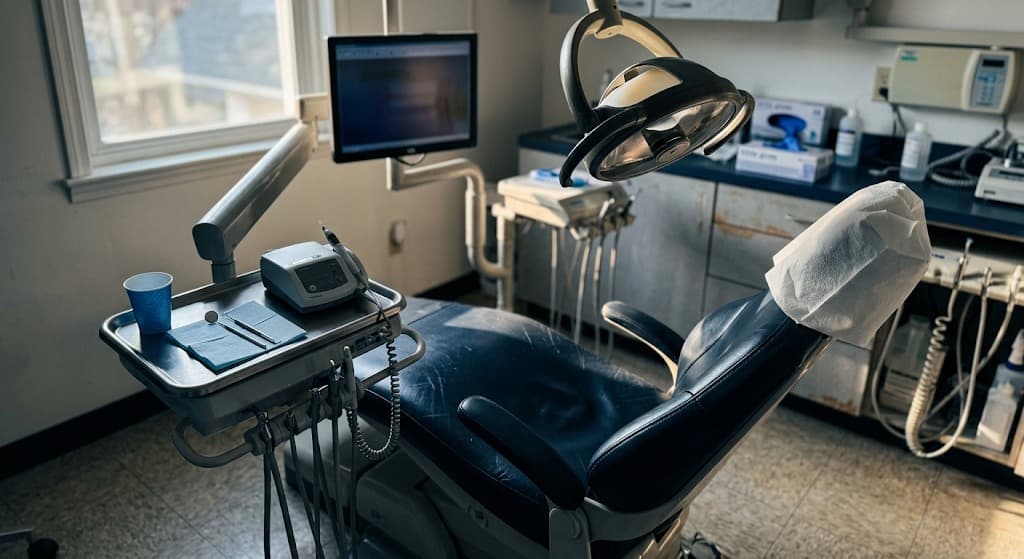
An open hygiene chair removes far more than a cleaning fee.
Think about what didn't happen in that empty chair. No exam, so the cracked molar goes unseen for another six months. No perio probing, so active disease keeps progressing untreated. No conversation about the crown the patient has been putting off. The cleaning revenue is the smallest thing you lost. The undiagnosed dentistry is the expensive part, and it compounds because care delayed often becomes a larger, costlier case later.
Run the numbers on a single week of gaps. If you average two open hygiene hours a week and each true hour is worth around $300 in direct and downstream value, that's roughly $600 a week, or somewhere near $30,000 a year walking out the door unbooked. Those are illustrative figures, but the scale is the point. A few empty hours a week is not a rounding error. It's a part-time salary's worth of production you never billed.
This is also where the empty chair meets your overhead. The room is still lit, the equipment still financed, the hygienist still paid. Fixed costs run whether the chair is full or not, so an open hour drops straight against your margin. It's the same dynamic that drives your overhead percentage: unused capacity is pure loss. With US dental care spending topping $124 billion a year, by ADA Health Policy Institute figures, the dentistry that goes undiagnosed in an empty chair is a real slice of a very large pie.
Empty chairs and overhead are the same problem.
An open hygiene hour costs you because your fixed costs never stop. See how overhead actually behaves before you cut hours.
Read the overhead guide →Why isn't hygiene a loss leader?
Hygiene isn't a loss leader because it generates the recurring diagnostic visits that feed every other part of the practice. A loss leader is something you sell at a loss to attract a profitable purchase. Hygiene isn't sold at a loss, and the dentistry it uncovers is the profitable purchase. It's the engine, not the bait.
Seen as a loss leader
A low-margin cleaning that keeps patients happy. First to get cut when money is tight.
Actually the engine
The recurring diagnostic visit that finds the restorative work paying for the whole practice.
Consider the lifetime view. A retained hygiene patient comes back twice a year for decades, and each visit is another chance to catch and treat. A general dentist's patient is worth roughly $12,000 to $15,000 over their lifetime, by Dental Economics estimates, and a huge share of that value is diagnosed in the hygiene chair. Protecting hygiene capacity is protecting patient lifetime value directly.
So when money is tight, cutting hygiene hours is exactly backward. You'd be shrinking the one department that finds the work that pays for everything else. The right move is to fill the hygiene schedule, not trim it. National demand supports this: most adults use dental services regularly, per the CDC, and that steady demand is what keeps a full hygiene column producing. Utilization data from the National Institute of Dental and Craniofacial Research shows the same steady pattern of routine care, which is exactly the recurring stream a hygiene schedule captures.
Protect the department that finds the work.
DentalBase helps owners keep hygiene chairs full and recall on track, so the diagnostic engine never sits idle.
Book a free demo →How do hygiene schedule gaps happen?
Hygiene gaps come from two places: patients who fall out of recall and reappointments that never get made. A patient leaves without booking the next visit, the recall system fails to bring them back, and six months later, there's a hole in the schedule nobody planned for. The gap is a system failure, not bad luck.
The mechanics are worth naming, though the deeper fix is its own topic. Failed reappointment at checkout is the biggest leak: a patient who walks out unscheduled is far less likely to return on time. Then recall breakdowns compound it. Roughly 20% to 30% of patients go inactive within 18 months without follow-up, by ADA figures, which is exactly how a full column erodes into a gappy one over a year. And the patients you try to win back judge you online first: BrightLocal research shows most people read reviews before booking, so reputation shapes how easily a lapsed patient returns.
I'm keeping this brief on purpose, because the why-chairs-go-empty problem deserves its own deep treatment. The point here is the cost of the gap, not the full recall playbook.
Related: The recall-leak side of this, why hygiene chairs go empty and how to plug it, has its own deep guide. Dental Recall Gap and Hygiene Revenue: The Cost of Empty Chairs →
How to fix it as a system, not a staffing band-aid
Fixing hygiene gaps is a systems problem, not a staffing one. The instinct when a chair sits empty is to question the hygienist or cut the hours. The real fix is to make the schedule self-healing: reappoint at checkout, automate recall, and watch the right number every week. A great hygienist in a leaky scheduling system will still have gaps, and that's not their failure to solve.
A few moves protect your hygiene hour better than any staffing change:
- Reappoint before they leave: every hygiene patient books their next visit at checkout, not "we'll call you." This single habit closes the largest leak.
- Automate recall: recall systems can lift return rates by 25% to 40%, by Dental Economics estimates, so the column refills without front-desk heroics. A solid recall system does this work quietly in the background.
- Track hygiene reappointment rate: make it one of the few numbers you check weekly, alongside the rest of your core practice KPIs.
- Treat retention as a hygiene strategy: the patients who keep their hygiene visits are the ones who stay for years, so your broader patient retention work and your hygiene schedule are the same fight.
- Fill same-week openings fast: a short call list of flexible patients turns tomorrow's gap into today's production.
Measure dental hygiene production per hour, protect the schedule like the asset it is, and the math takes care of itself. Hygiene isn't the department to cut when times are tight. It's the one to fill.
Keep your hygiene engine running full
DentalBase keeps recall on track and chairs booked, so your most productive hours never sit empty.
Book a free demo →More operator guides for practice owners
Practical, numbers-first guidance on running a profitable practice. No fluff.
Browse resources →Sources & References
Frequently Asked Questions
Direct hygiene production often lands well above the prophy fee, and the true figure is higher once you add diagnosed restorative work. Pull your own numbers, since fees and case mix vary, and measure both direct and downstream value.
Divide your hygiene department's production by the hygiene hours worked for the direct figure. Then add the restorative dentistry diagnosed during hygiene visits, divided by the same hours, to capture the hour's true contribution.
More than a missed cleaning. You lose the direct hygiene production, the diagnosis that visit would have produced, and the restorative case that diagnosis would have started, all while fixed costs keep running against your margin.
No. Hygiene generates recurring diagnostic visits that feed restorative production, so it is the engine, not the bait. Cutting hygiene hours shrinks the department that finds the work paying for everything else.
Two causes: patients who leave without reappointing, and recall systems that fail to bring them back. Around 20% to 30% of patients go inactive within 18 months without follow-up, which steadily erodes a once-full column.
Protect the schedule as a system. Reappoint every patient at checkout, automate recall to refill the column, track hygiene reappointment rate weekly, and keep a short call list to fill same-week openings fast.
Was this article helpful?

Written by
Dr. Muhammad Abdel-rahim DMD
Muhammad Abdel-rahim, DMD, is a dentist and implantologist at Peterborough Family Dental & Implant Center with a passion for blending clinical excellence, leadership, and innovation. He believes dentistry extends beyond restoring smiles to building trust, confidence, and sustainable systems that help patients and teams thrive. With experience leading and scaling dental practices, Dr. Abdel-rahim brings a strategic mindset to patient care and practice growth. He is particularly interested in communication, critical thinking, and the thoughtful application of artificial intelligence to improve clinical outcomes, workflows, and the overall patient experience.