Oral Surgery Answering Service: After-Hours Call Guide
An oral surgery answering service handles post-op emergencies, surgical pain calls, and after-hours triage. Here is what to look for and how to set one up.
Share:
Table of contents
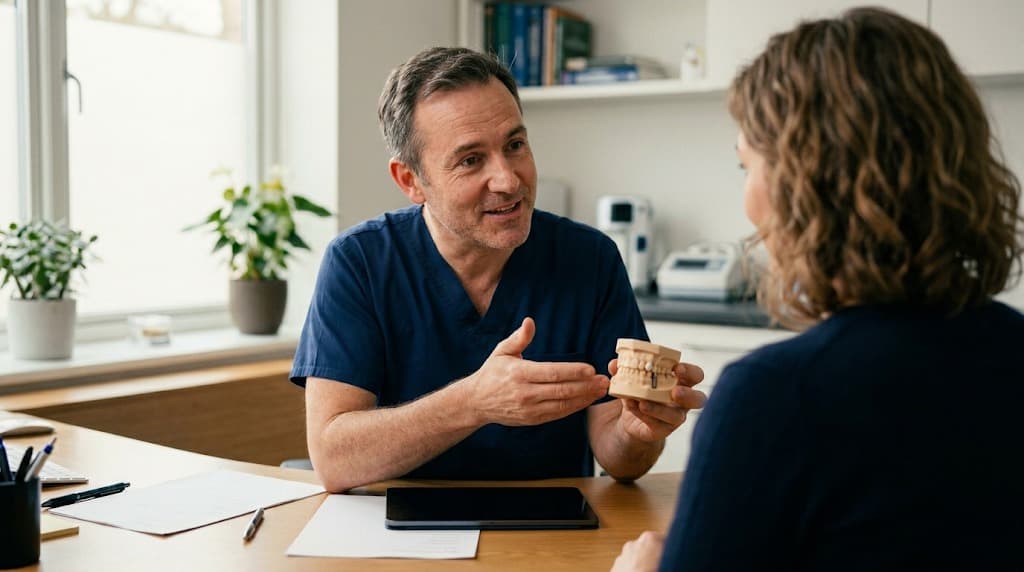
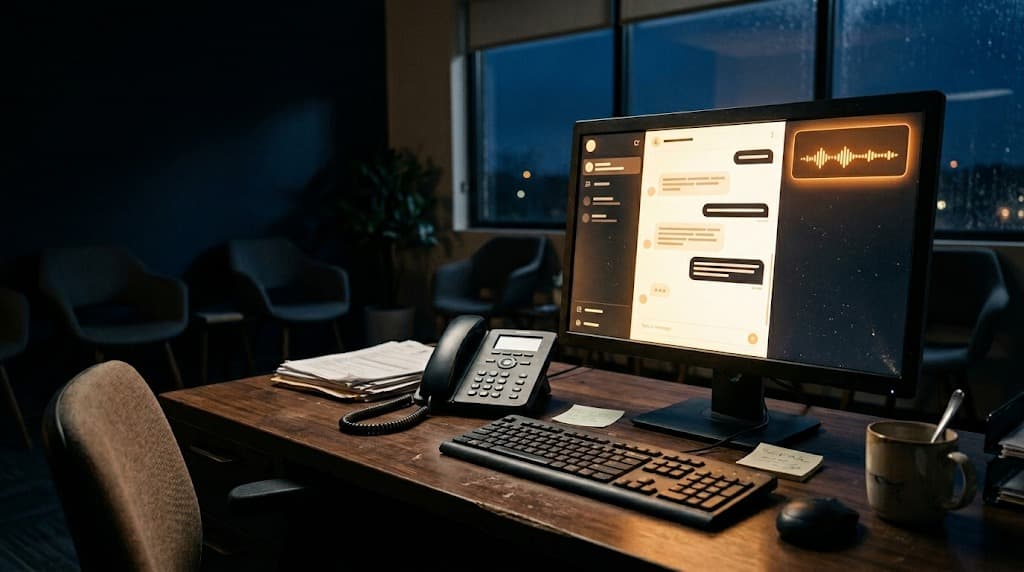
An oral surgery answering service does something a routine dental phone line was never built for: it handles a panicked post-extraction patient at 11 p.m. who is bleeding and scared. That call is not a scheduling request. It is a clinical event, and how it gets answered decides whether the patient calms down at home or ends up in an emergency room.
Oral surgery generates a different kind of after-hours traffic than a general practice. Pain, swelling, sedation recovery, and surgical complications don't keep business hours. This guide breaks down what an answering service handles for a surgical practice, why those calls carry more risk, and how to choose coverage that protects both your patients and your case volume.
What Does an Oral Surgery Answering Service Actually Handle?
An oral surgery answering service answers calls outside office hours, triages post-op and surgical concerns, and routes urgent cases to the on-call surgeon. Routine callers get booked or scheduled for a morning callback. Your team starts the day with organized summaries instead of a voicemail backlog.
The work splits into two streams. The first is clinical triage, where the responder grades urgency against your protocol and either reassures the patient or escalates. Common after-hours clinical calls include:
- Post-op bleeding that won't slow with pressure
- Worsening swelling or signs of infection
- Breakthrough pain that prescribed medication isn't controlling
- Sedation recovery questions from a patient or caregiver
The second stream is ordinary front-desk work: new consult requests, rescheduling, insurance questions. These don't need a surgeon at midnight, but they still need a human or a capable system to capture them before the caller gives up. For the full picture of how automation manages a surgical practice end to end, see our guide to how an AI receptionist works for oral surgery, which covers referral intake, sedation scheduling, and post-op follow-up.
Here's the distinction that matters. A general dental answering service treats almost every call as a scheduling task. A surgical practice can't. Roughly one in four after-hours calls to an oral surgery office involves a clinical question, not a booking. Your coverage has to know the difference, or it either wakes the surgeon for nothing or sits on a real emergency.
Speed matters too. Call-analytics data from Marchex puts the average patient's patience at about 90 seconds on hold before they hang up. A surgical caller in pain has even less. And research from Weave Communications shows that when a call goes unanswered, most patients simply contact another practice instead of waiting.
Every after-hours call answered, none missed
DentiVoice answers surgical calls 24/7, follows your triage rules, and routes true emergencies to your on-call surgeon.
See How It Works →Why Are After-Hours Calls Higher-Stakes for Oral Surgery?
After-hours calls are higher-stakes for oral surgery because the calls are clinical, not administrative. A post-op patient in pain at night needs an answer now. If they reach voicemail, they don't wait politely. They call an emergency room, post a one-star review, or lose trust in your practice.
The Post-Op Risk Window
| 0–24 hrs | 24–48 hrs | 48–72 hrs |
| Highest risk bleeding, acute pain | Elevated swelling, dry socket | Tapering healing |
This window almost always crosses a night or a weekend, when no one is at the desk.
The volume alone is significant. Dental Economics reporting notes that 75% to 80% of patients who reach voicemail never leave a message and don't call back. For a general office, that's a lost cleaning. For a surgical office, that's a patient who underwent a procedure in your chair this week, now alone with a complication and no way to reach you.
After-hours volume is not a rounding error either. Industry reporting in Dental Economics puts after-hours calls at roughly 27% of total patient call volume. For a surgical practice, a sizable share of that quarter is clinical.
The surgical window compounds it. The first 24 to 72 hours after an extraction or implant placement is when bleeding, dry socket, and swelling spike. That window almost always crosses a night or a weekend. A patient who can't reach a real responder during it learns a hard lesson about your practice at the worst possible moment.
And the trust damage spreads. Most prospective patients read reviews before booking, and a single account of "I called after my surgery and nobody answered" does lasting harm. The American Dental Association stresses patient communication as a core part of practice operations, and for surgical practices that standard simply starts earlier in the evening.
Related: See how general practices solve the same problem without burning out staff → After Hours Dental Phone Coverage Without Staff Burnout
What Is the Real Cost of a Missed After-Hours Surgical Call?
The real cost of a missed surgical call is far higher than a missed routine call. A new consult for implants or full-arch treatment can represent thousands in case value, and a frightened post-op patient who can't reach you can turn into a complaint, a refund, or a malpractice exposure.
What Voicemail Costs a Surgical Practice
After-hours callers who never connect
80%
reach voicemail and never leave a message
Forbes
90s
average hold time before a caller hangs up
Marchex
A post-op patient in pain waits even less than the average caller.
Run the math on a single consult. A wisdom teeth case, an implant, or full-arch treatment carries a case value many times that of a cleaning. When that prospective patient calls after hours and hits voicemail, they call the next surgeon on their list. You never knew the call happened. The lost production doesn't show up in any report, which is exactly why it goes unaddressed for years.
Then there's the reputation cost, which is harder to undo. Surveys from BrightLocal show how heavily patients weigh reviews before choosing a provider. One public account of an unanswered post-op call can outweigh a dozen positive reviews. For a referral-driven surgical practice, that reputational hit also reaches the general dentists who send you cases.
The phone line itself is part of the risk. A consult lost to a dropped or unanswered call is revenue you funded with marketing dollars and then let walk. Reliable call handling protects that spend, and it protects the goodwill that keeps referrals coming.
Related: Dropped calls quietly cost surgical practices new patients → Dental VoIP Reliability: Why Drops Lose You New Patients
The lesson is simple. Spend a few hundred dollars a month on reliable coverage, or risk losing a single implant case that was worth far more. For a surgical practice, the math almost always favors coverage.
How Should You Triage Post-Op vs. Routine After-Hours Calls?
Triage starts with a written protocol that separates clinical urgency from administrative requests. The responder grades each call against your criteria, escalates true emergencies to the on-call surgeon, and defers everything else to a morning callback. The protocol removes guesswork from the person answering the phone.
After-Hours Call Triage: Two Paths
EMERGENCY → ON-CALL SURGEON
Escalates immediately, day or night.
- Heavy bleeding that won't slow with pressure
- Spreading swelling or signs of infection
- Pain that prescribed medication can't control
- Post-op fever
ROUTINE → MORNING CALLBACK
Logged and reassured, surgeon's phone stays quiet.
- Routine soreness or discomfort
- Diet, rinsing, or aftercare questions
- Prescription refill requests
- Rescheduling a follow-up
A written protocol decides the path, not the person who happens to answer.
Surgical triage isn't an optional judgment. It needs documented rules, because the consequences of getting it wrong run in both directions.
What Counts as a Real Emergency
Heavy bleeding that doesn't slow with pressure, swelling that's compromising the airway or eye, a fever spiking after surgery, or pain that breakthrough medication won't control. These reach the surgeon directly. The CDC treats oral health as part of overall health, and a post-surgical infection is a medical event, not a dental inconvenience.
What Can Wait Until Morning
Routine soreness, questions about diet or rinsing, a prescription refill request, or rescheduling a follow-up. The responder reassures the patient, logs the call, and books a morning callback. The surgeon's phone stays quiet, and the patient still feels heard. That balance is the entire point.
Why the Protocol Has to Be Written Down
A protocol in someone's head doesn't survive a 2 a.m. call or a new staff member. Write it. Spell out the exact symptoms that trigger escalation, the order of who gets called, and the script for a routine deferral. A documented protocol also protects you legally, since it shows a consistent standard of after-hours care. Review it with your team quarterly, and update it whenever your procedure mix changes.
Build triage rules your coverage actually follows
DentiVoice runs your escalation protocol on every call, so emergencies reach you and routine questions don't.
Book a Free Demo →Answering Service vs. AI Receptionist vs. Virtual Receptionist for Oral Surgery
The three options differ in cost, speed, and judgment. A live answering service adds human nuance for sensitive calls. An AI receptionist answers instantly, never misses a call, and charges a flat rate. A virtual receptionist sits between them, offering trained staff at a lower cost than an in-house hire.
For a surgical practice, the deciding factors are usually triage capability and integration. A service that can't follow an escalation protocol is just a polite message-taker. One that can't fit into your schedule forces a next-day delay, losing time-sensitive consults. The 2024 sedation-safety work documented by the National Institute of Dental and Craniofacial Research and allied bodies is a reminder that surgical patients carry medical complexity, while routine patients don't.
The table below compares the four common ways oral surgery practices cover calls, including after-hours.
| Coverage Option | Handles Triage? | Books in Real Time? | Answers Instantly? | Typical Cost Model |
|---|---|---|---|---|
| Voicemail | No | No | No | Free, but 80% hang up |
| Live answering service | Sometimes, with a protocol | Only with integration | Usually, during staffed hours | Per minute or per call |
| Virtual receptionist | Yes, if trained on your protocol | Yes, with PMS access | During covered hours only | Monthly retainer or hourly |
| AI receptionist | Yes, by protocol | Yes | Yes, 24/7 | Flat monthly fee |
Watch the cost models in particular. A live-service billing-per-minute model gets expensive fast during a heavy post-op weekend, exactly when call volume peaks. A flat-fee model doesn't punish you for a busy stretch, which is why high-volume surgical practices tend to favor it.
Many practices stop treating this as either-or. AI handles the volume and instant pickup, while a human team or the on-call surgeon takes genuine escalations. That hybrid covers both the booking you'd otherwise lose and the clinical call you can't afford to mishandle. If you're still mapping out your phone setup, the questions in our guide to dental office phone systems apply directly to a surgical practice.
It's also fair to be skeptical of automation on sensitive calls. We address the common objections honestly in AI Dental Receptionist Concerns, including how escalation keeps a human in the loop for emergencies.
Related: Weighing whether a virtual receptionist fits your front desk? Start here → Dental Virtual Receptionist: A Practical 2026 Guide
What Should You Look for When Choosing Oral Surgery Call Coverage?
Look for five things: HIPAA compliance, a written surgical triage protocol, direct escalation to your on-call surgeon, integration with your scheduling software, and full call transcripts. Miss anyone, and you risk a safety gap, a lost consult, or a compliance exposure you won't see until it's a problem.
Before you compare providers, get clear on what non-negotiable means for a surgical practice. The five items below are the ones that separate real coverage from a glorified voicemail:
- HIPAA compliance across call handling and storage
- A written triage protocol built for post-op emergencies
- Direct surgeon escalation, not a message left for morning
- Scheduling integration so consults book in real time
- Full transcripts and organized morning summaries
Use the checklist below to confirm each one in writing before you sign.
Oral Surgery Call Coverage Checklist
Check each item your provider can confirm in writing.
Your score: count your checks out of 5
One more practical note: ask how the provider handles your older patients. A surgical practice sees plenty of patients who want to talk to a person and won't engage with a text-back link. The case for voice-first coverage is covered in dental software for elderly patients that calls, not texts. Coverage that defaults to SMS will lose them.
Finally, confirm how after-hours insurance questions get handled, since those calls eat front-desk time the next morning. Our breakdown of AI receptionists for dental insurance calls shows what can be automated and what still needs a person.
Conclusion
The thing to remember about an oral surgery answering service is that it's a patient-safety system first and a booking tool second. Every other dental practice can treat the after-hours phone as a scheduling convenience. You can't. Your callers are recovering from surgery.
Start with the checklist. Pin down triage, escalation, and integration before price, because a cheap service that mishandles a post-op emergency costs more than any monthly fee. Then decide whether a live service, an AI receptionist, or a hybrid fits your call volume and budget. Book a demo, walk a provider through a real post-op scenario, and watch how they route it.
Never miss a post-op call again
See how DentiVoice answers surgical calls around the clock, triages emergencies, and books consults in real time.
Book a Free Demo →Want more practical guides on front desk coverage and practice growth?
Browse Resources →Sources & References
Frequently Asked Questions
An oral surgery answering service answers patient calls outside office hours, triages post-op and surgical emergencies, and routes urgent cases to the on-call surgeon. It books routine callers and sends your team organized summaries the next morning.
Trained responders follow your triage protocol, asking about bleeding, swelling, pain level, and fever. Calls flagged as urgent reach the on-call surgeon directly. Routine post-op questions get scripted reassurance and a morning callback, keeping your surgeon's phone quiet.
It depends on call volume and budget. AI receptionists answer instantly, never miss a call, and cost less per call at scale. Live answering services add human judgment for sensitive emergencies. Many practices run both, with AI handling volume and humans handling escalation.
Live answering services typically charge per minute or per call, often $1 to $2 per minute, which adds up during heavy post-op weekends. AI receptionist pricing is usually a flat monthly fee regardless of volume, which favors busy surgical practices.
Many can, if they integrate with your practice management system. Without integration, the service takes a message and your front desk books it the next day. Real-time scheduling matters most for consult requests, where delay loses the case to a competitor.
Oral surgery generates post-op pain, bleeding, and sedation-recovery questions that arrive nights and weekends. Roughly 27% of patient calls come after hours. A panicked post-extraction patient who reaches voicemail may head to an emergency room instead of your office.
Look for HIPAA compliance, a written triage protocol for surgical emergencies, direct escalation to your on-call surgeon, integration with your scheduling software, and full call transcripts. Without these, you risk safety gaps and lost consults.
Was this article helpful?
Written by
DentalBase Team
Expert dental industry content from the DentalBase team. We provide insights on practice management, marketing, compliance, and growth strategies for dental professionals.