10 Ways to Fix Front Desk Burnout at a Dental Practice
Front desk burnout is fixable without adding headcount. See ten fixes, from task batching to AI call coverage, that reduce daily stress.
Share:
Table of contents
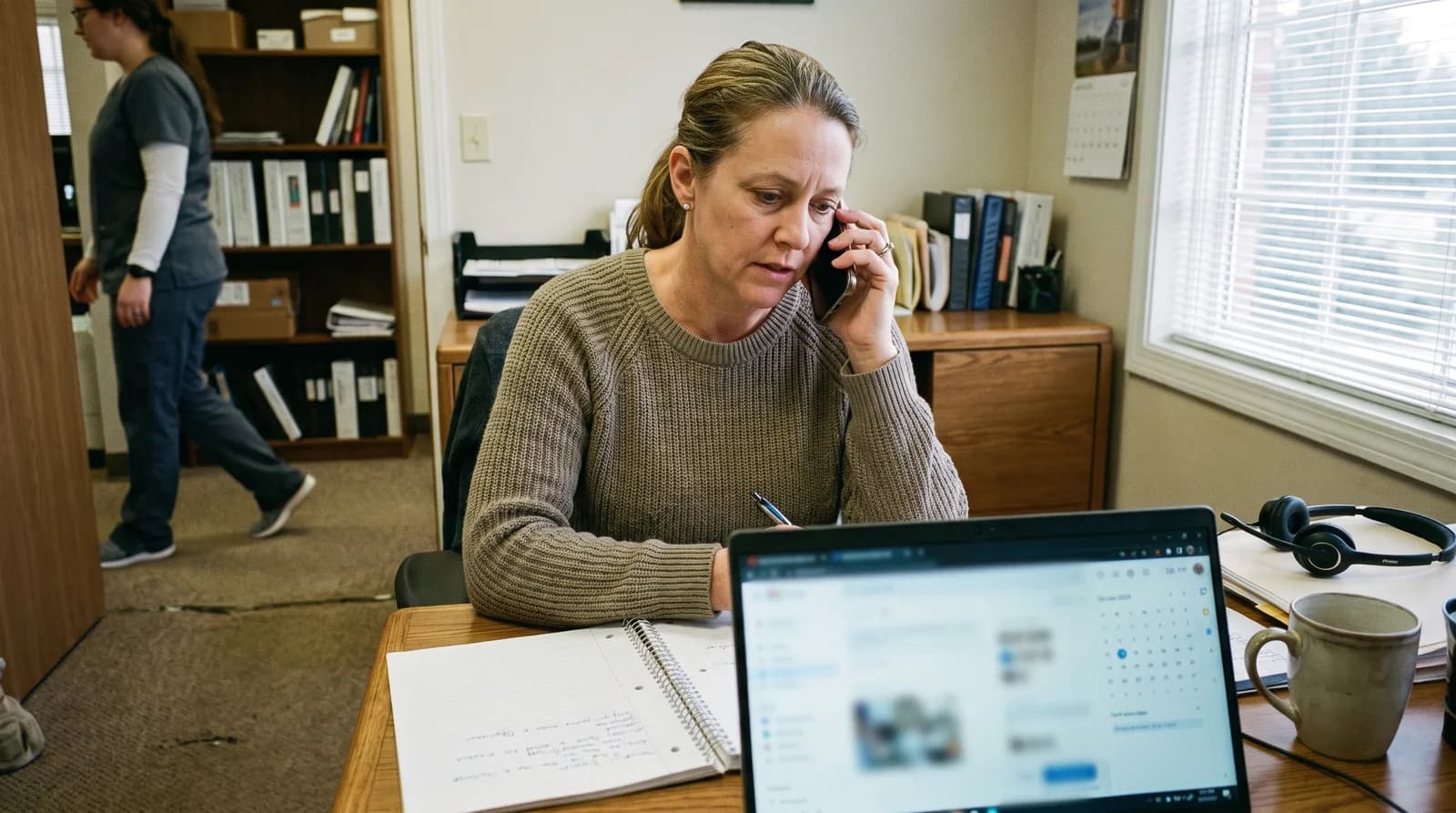
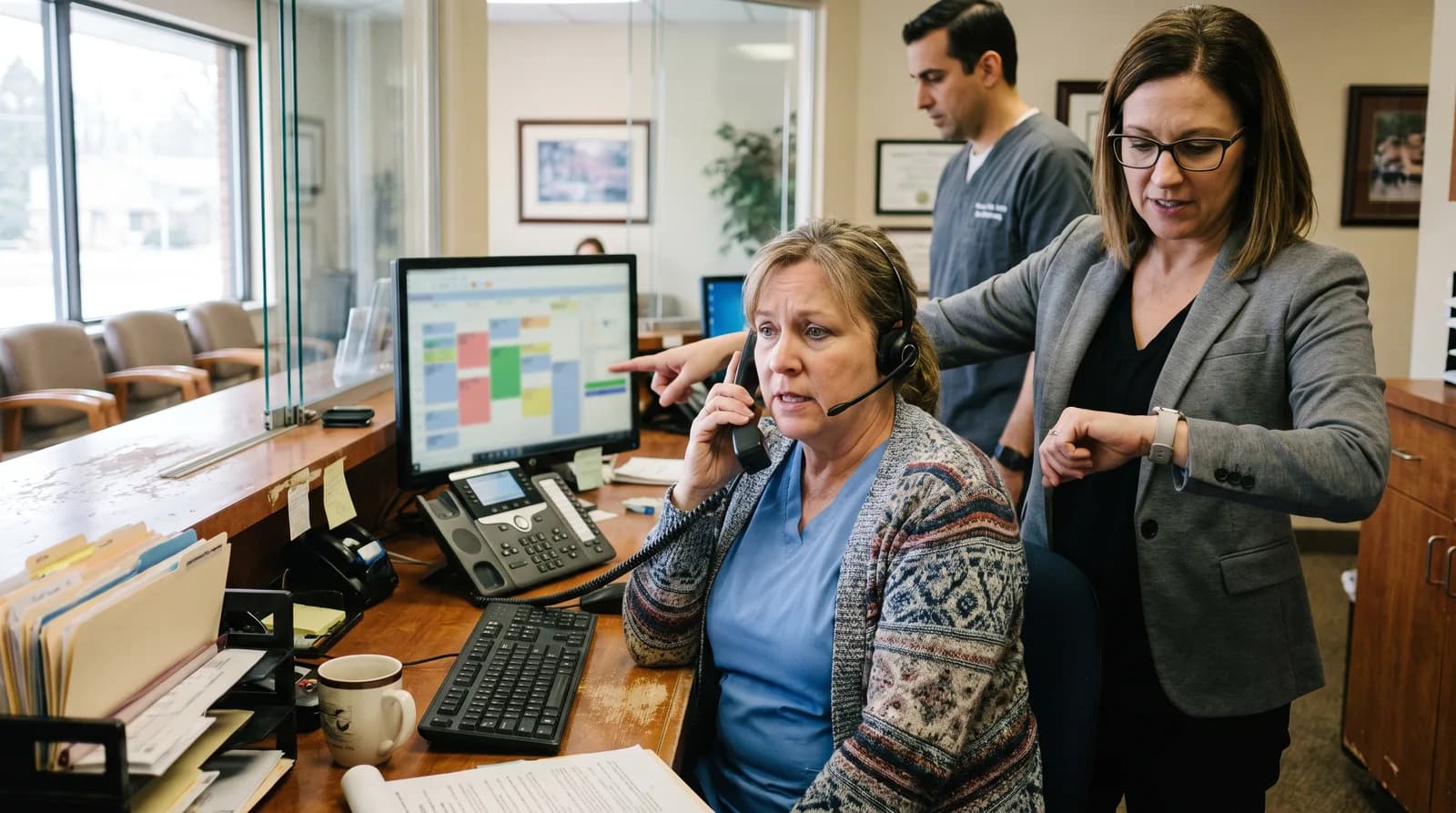
Front desk burnout builds quietly. One interrupted task and one unanswered phone line at a time, a normally capable team member starts making mistakes they never used to make. By the time it becomes visible to the doctor or office manager, it has usually been building for months. An AI receptionist like DentalBase's DentiVoice can take part of the phone load off a team facing front desk burnout, but it works best alongside the fixes below.
The good news is that most of the causes are fixable without adding headcount. A mix of process changes, clearer boundaries, and the right technology support can lighten the daily grind behind front desk burnout. The pressure is widespread: the ADA's wellness resources report that more than 82% of dentists feel major stress about their careers.
This guide covers ten specific fixes, from task batching to call coverage, that address the most common sources of burnout at a dental front desk. It also shows where call coverage fits alongside the process changes.
How do you reduce repetitive front desk tasks that drain energy?
Batching repetitive tasks like insurance verification, recall list building, and claims follow-up into set blocks of time reduces the mental fatigue of constant task-switching. A front desk that handles these tasks in scattered five-minute bursts between phone calls burns more energy than one that batches them into a focused hour.
How to batch effectively
Set aside a specific block, ideally when call volume is naturally lower, for each repetitive task category. Insurance verification for the next day's patients, for example, fits well into a late-afternoon block once the day's check-ins have slowed down. Batching does not eliminate the work itself. It removes the constant mental gear-shifting that makes the same amount of work feel considerably heavier over the course of a full day. Most teams notice the difference within the first week of trying it.
Tasks to start batching first
- Insurance verification for tomorrow's schedule during a low-call-volume block.
- Recall list building and outreach in one dedicated session per week.
- Claims follow-up batched rather than handled reactively throughout the day.
How do you cut down phone interruptions during patient-facing tasks?
Routing calls away from the front desk during active checkout and check-in moments, even for a few minutes, prevents the constant interruption. That interruption makes both the phone call and the in-person interaction feel rushed. A team member split between a ringing phone and a patient standing at the counter serves neither one well.
Setting up a do-not-disturb window
A short do-not-disturb window during peak check-in and checkout times, with calls routed to voicemail, a second line, or an AI receptionist, protects the quality of both interactions. A twenty-minute window costs little, since voicemail and callbacks can cover most of what comes in. It is one of the simplest changes to implement, and many teams feel relief quickly. The interruption itself, not just the extra work, is what wears people down over a full shift.
Considering AI call coverage as one of your fixes?
See how DentiVoice absorbs peak call volume so your front desk can focus on the patient in front of them.
See AI Receptionist →Does a shared team calendar reduce coverage-related stress?
Yes, a shared, visible calendar for PTO, sick days, and shift swaps reduces the last-minute scrambling that spikes stress for whoever is left covering the desk. Uncertainty about who is covering what, discovered the morning of, is a preventable source of daily anxiety that compounds over a busy week.
What the calendar should track
A simple shared calendar removes most of this uncertainty before it becomes a problem. Keep it visible to the whole team and update it as a habit, not an afterthought. Pair it with a basic cross-coverage plan. That way, no single person becomes the only one who knows how to handle a specific task when they are out unexpectedly. The combination of visibility and backup coverage removes two separate sources of stress at once. The setup effort is minimal: a shared document and a habit of keeping it current. Many offices already have a scheduling tool that supports this without adding a new system.
| Coverage question | Without a shared calendar | With a shared calendar |
|---|---|---|
| Who's out this week? | Found out morning-of, often by surprise | Visible to the whole team in advance |
| Who covers a sick day? | Scrambled decision made under pressure | Backup plan already in place |
| Who approves a shift swap? | Handled informally, easy to lose track of | Logged in one place everyone can see |
How do you simplify checkout scripts without sounding robotic?
A shorter, more flexible checkout script covers the essentials: next appointment, payment, and any follow-up instructions. Skipping a rigid word-for-word format reduces the cognitive load of checkout without sacrificing consistency. An overly scripted checkout process adds mental overhead precisely at the point in the day when a team member is often most fatigued.
Checklist over script
Give the team a checklist of what must be covered, not a script of exactly how to say it. This preserves consistency in outcomes while letting each team member handle the conversation in their own natural voice. A checklist also speeds up training, because a new hire can learn a short list of must-cover items faster than a full script. This approach takes noticeably less energy over a full day of checkouts than reciting a fixed script dozens of times. It also sounds more natural to the patient standing at the counter, which matters for how the whole visit is remembered.
Should front desk staff be cross-trained on each other's roles?
Yes, cross-training at least two people on every front desk function prevents a single point of failure from turning a normal day into a crisis. A front desk where only one person knows how to run a specific insurance claim type carries a hidden stress load even on ordinary days.
Building rotation into the schedule
Rotate responsibilities periodically, not just to build backup coverage but to prevent any one task from becoming a single person's permanent, unshared burden. This also makes vacations and sick days genuinely less stressful for everyone involved, since coverage no longer depends on one specific person being present that day. A team where knowledge is shared recovers from an absence in minutes rather than scrambling for hours. Even an hour of shadowing per role, spread over a few slow afternoons, builds this kind of coverage without disrupting the regular schedule. For a structured approach, see our dental front desk cross-training guide.

Where cross-training reduces risk most
| Function | Single-person risk | Cross-trained outcome |
|---|---|---|
| Insurance verification | Claims stall when that person is out | Coverage continues without delay |
| Scheduling exceptions | Front desk unsure how to handle edge cases | Any team member can apply the same rule |
| Checkout and payment plans | Slower checkout when the usual person is busy | Checkout speed stays consistent |
Want a full front desk workflow audit?
DentalBase can help identify which of these fixes will make the biggest difference for your specific team.
See DentalBase Services →How do you set boundaries around same-day walk-ins and requests?
A clear, written policy on how same-day walk-ins and urgent requests get handled should be shared with the whole team in advance. It prevents the front desk from improvising a stressful decision under pressure every single time one comes up. Improvising the same decision repeatedly is more exhausting than making it once and writing it down.
What the written policy should define
Define which situations get worked in and which get referred to an urgent care alternative. Also define who has authority to make exceptions when a situation does not fit the policy cleanly. Having this decided in advance removes a recurring source of in-the-moment stress from the day. It also gives newer team members a clear reference, instead of having to guess or interrupt someone busier to ask. A one-page summary posted near the front desk works well as a quick reminder. This helps most with a walk-in scenario that does not come up often enough to memorize.
What belongs in a written phone triage protocol?
A written triage protocol should cover a dental emergency call, a routine scheduling request, a billing question, and an angry or upset patient. Each situation deserves a clear script or decision tree of its own. Without one, every call requires the front desk to improvise a response from scratch, which adds up over dozens of calls a day.
Why consistency matters on the phone
The phone is often a patient's first contact with your practice, so a calm, consistent response sets the tone for the relationship, even during a stressful call. A written protocol gives every team member the same calm starting point. The tone of a difficult call no longer depends on who happens to answer it. Review and update the protocol every few months as new situations come up that the original version did not anticipate. For help with onboarding and training around protocols like this, the ADA's team management resources cover hiring, training, and compliance for dental staff.
Related: Front desk bandwidth and burnout are closely related problems with overlapping fixes. See our front desk bandwidth guide →
How do you rotate high-stress tasks fairly across the team?
Rotating the tasks that generate the most stress, such as collections calls or fielding complaints, prevents any one team member from absorbing a disproportionate share of the emotionally draining work. Burnout concentrates fastest in whoever consistently gets assigned the hardest conversations.
Tracking the pattern
Track, even informally, who handles which difficult interactions over a month, and rebalance if the pattern looks lopsided. This is a small habit for heading off front desk burnout. It prevents one person from quietly burning out while the rest of the team remains unaware of how much they are absorbing. A brief monthly check-in on this specific pattern costs almost nothing. It catches an imbalance long before it becomes a resignation, which costs far more in lost training time and morale than a five-minute check-in ever does. The ADA's guidance on managing effective team meetings outlines a timed agenda that works well for a short check-in like this.
Quick Check: Is High-Stress Work Being Shared Fairly?
Check each item that's true for your front desk right now.
Your score: count your checks out of 4
Does recognizing front desk effort actually reduce burnout?
Yes, specific, timely acknowledgment of front desk effort tends to improve morale and reduces the sense of invisible, unappreciated labor that contributes heavily to burnout. Generic praise delivered rarely does far less than specific feedback delivered consistently over time.
What effective recognition looks like
Specific, frequent recognition works better than rare, generic praise because it tells someone what to keep doing. That holds for a dental front desk just as it does for any team under sustained pressure. Patients notice the mood at the desk, too. BrightLocal's Local Consumer Review Survey tracks how heavily consumers rely on online reviews when judging local businesses. A less stressed front desk tends to show up in how patients describe their visit. A brief, specific comment after a hard day goes further than most practices realize it does. Naming exactly what someone handled well, rather than a generic thank you, is what makes the recognition actually land.
How does DentiVoice help reduce front desk burnout specifically?
DentiVoice, DentalBase's AI receptionist, answers calls during the windows when your team is stretched thinnest, such as morning check-in, lunch coverage gaps, and after hours. That takes the phone off a stressed front desk, so staff can focus on the patient in front of them.
Related: Preventing burnout is one piece of a complete dental front desk staffing plan. See the full staffing playbook for preventing burnout before it starts →
Where the impact shows up most
According to Dental Economics, the average practice misses 15-20 calls per week, and after-hours calls represent 27% of total patient call volume. According to ADA Practice Transitions data, 38% of new patient calls go unanswered during business hours. Voicemail rarely catches the overflow: according to Forbes, 80% of callers who reach voicemail don't leave a message and won't call back. That volume either lands on a stressed front desk or gets missed entirely.
The full list at a glance
Front desk burnout rarely has a single cause, so a single fix rarely solves it. The nine process and culture changes above address how the team works. Call coverage addresses how much work reaches the team.
- Batch repetitive tasks like insurance verification into set blocks.
- Route calls away from active checkout and check-in moments.
- Use a shared calendar for PTO, sick days, and shift swaps.
- Simplify checkout to a checklist instead of a rigid script.
- Cross-train at least two people on every front desk function.
- Write down the policy for same-day walk-ins in advance.
- Build a written phone triage protocol for common call types.
- Rotate high-stress tasks fairly across the team.
- Give specific, frequent recognition rather than rare generic praise.
- Add call coverage support like DentiVoice for peak-stress windows.
Pick two or three fixes from this list to start with this month, rather than trying to fix front desk burnout all at once.
See How DentiVoice Takes Pressure Off Your Front Desk
Book a free demo to see how AI call coverage fits into a broader plan to reduce front desk burnout.
Book a Free Demo →Want more practice management guides like this one?
Browse Resources →Sources & References
Frequently Asked Questions
Constant task-switching, phone interruptions during patient-facing moments, unclear coverage during absences, and unwritten decisions that get improvised repeatedly are the most common causes. Most are fixable through process changes rather than adding staff.
Process changes address a large share of the problem, but call volume during peak-stress windows is often the piece that process changes alone cannot fix. Combining process fixes with call coverage support addresses both sides.
Cross-training at least two people on every function removes the hidden stress of being the only person who knows how to handle a specific task. It also makes absences far less disruptive for the whole team.
Yes, an AI receptionist like DentiVoice answers calls during peak-stress windows such as morning check-in and after hours. That takes phone volume off the front desk so staff can focus on the patients in the office.
Start with two or three fixes rather than all ten at once. A team recovering from burnout benefits more from a few changes done well than many changes implemented halfway.
Yes, specific and frequent recognition tends to improve morale and reduces the sense of invisible, unappreciated labor. Generic praise delivered rarely does far less than specific feedback delivered consistently over time.
Was this article helpful?
Written by
DentalBase Team
Expert dental industry content from the DentalBase team. We provide insights on practice management, marketing, compliance, and growth strategies for dental professionals.