Dental Appointment Reminder Systems: Complete Guide (2026)
A complete guide to dental appointment reminder systems: how SMS, email, and two-way AI confirmations work, what they cost, and how to cut no-shows.
Share:
Table of contents
Introduction to Dental Appointment Reminder Systems
Dental appointment reminder systems have become essential tools for modern dental practices. They fundamentally transform how practices manage patient communications. These automated platforms streamline appointment confirmations, reschedule requests, and follow-up communications. They also maintain full compliance with required healthcare regulations and requirements.
The core purpose of dental appointment reminder systems extends beyond simple notifications. They serve as comprehensive communication platforms that enhance patient engagement. They improve practice efficiency and reduce administrative overhead. According to the American Dental Association, such practices experience 15-20% fewer missed appointments. This occurs compared to practices relying solely on manual outreach.
Modern reminder systems integrate seamlessly with practice management software. They create automated workflows that trigger at predetermined intervals. These systems typically send initial reminders 48-72 hours before appointments. They follow with confirmation requests 24 hours prior. This ensures patients have multiple touchpoints to confirm, reschedule, or cancel visits.
The evolution of these systems reflects broader changes in patient communication preferences. Practices now offer reminders via text messages, phone calls, emails, and patient portal notifications. This multi-channel approach accommodates diverse patient demographics and communication preferences. It ultimately improves appointment adherence rates across different patient populations.
What Is a Dental Appointment Reminder System?
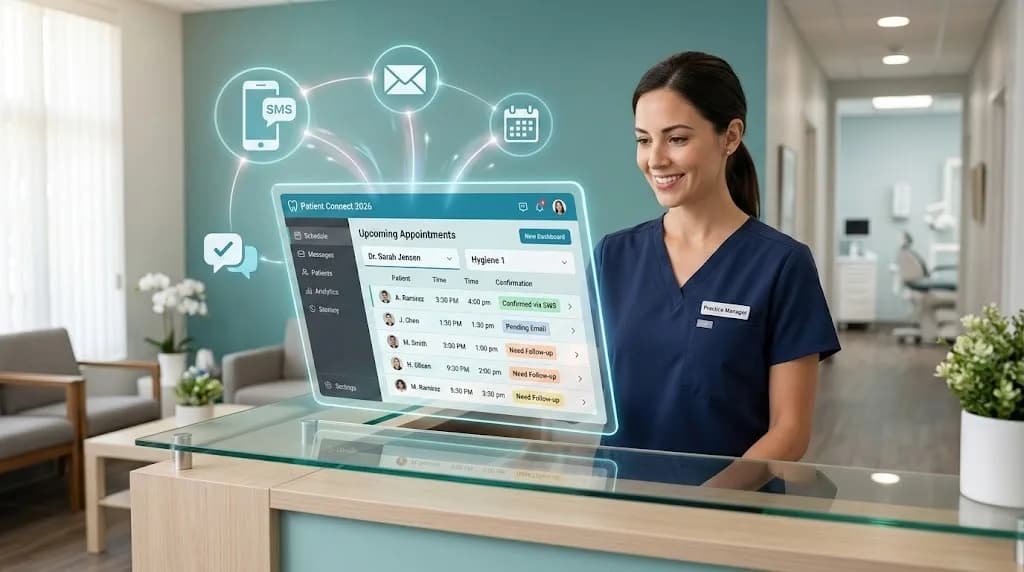
A dental appointment reminder system is an automated communication platform. It sends scheduled notifications to patients about upcoming dental appointments. These systems integrate with practice management software to operate effectively. They automatically pull appointment data, triggering communications based on predetermined schedules and patient preferences.
The foundation of effective reminder systems lies in their ability to process patient information. They process appointment details and communication preferences to deliver personalized messages at optimal times. Unlike manual reminder processes, automated systems ensure communication remains consistent. This consistency holds regardless of staff availability or workload fluctuations.
Core Components of Reminder Systems
Modern dental appointment reminder systems include several essential components. Patient database integration, message customization engines, delivery channel management, and response tracking capabilities.
- Patient database integration ensures accurate appointment information. Information flows seamlessly from practice management systems into reminder workflows.
- Message customization engines allow practices to tailor communications. They base messages on appointment types, patient demographics, or treatment histories.
- Delivery channel management enables practices to send reminders through multiple communication methods. It accommodates patient preferences while maintaining compliance with healthcare communication regulations.
- Response tracking capabilities monitor patient interactions, including confirmations, reschedule requests, and cancellations. These capabilities provide valuable data to support practice optimization efforts.
Types of Reminder Delivery Methods
Contemporary systems support diverse delivery methods, each serving specific patient preferences.
- Text message reminders offer immediate delivery and high open rates. These features make them particularly effective for younger patient demographics.
- Phone call reminders provide a personal touch. They work well for older patients or those preferring verbal communication.
- Email reminders allow detailed appointment information. They also include links to patient portals or online forms.
- Push notifications through practice apps offer real-time communication. They suit tech-savvy patients who have downloaded practice-specific applications.
How Dental Appointment Reminder Systems Work
The operational mechanics of dental appointment reminder systems involve sophisticated automation workflows. These workflows begin with appointment scheduling and continue through post-appointment follow-up. These systems create seamless communication cycles that reduce administrative burden. And they improve patient engagement and appointment adherence rates.
Integration with practice management software forms the foundation of system functionality. When appointments are scheduled, modified, or cancelled, reminder systems automatically update their communication queues. These updates ensure accuracy and prevent outdated notifications across all communications. This real-time synchronization eliminates manual data entry and reduces human error in patient communications.
Step-by-Step Reminder Workflow
The typical workflow begins 72 hours before scheduled appointments. Systems automatically generate initial reminder messages. These messages include appointment dates, times, provider names, and practice contact information. Patients receive these reminders through their preferred communication channels. Response mechanisms allow patients to confirm, reschedule, or cancel directly.
Twenty-four hours before appointments, systems send confirmation reminders requesting explicit patient responses. These communications often include preparation instructions, parking information, or forms requiring completion before visits. Patients can respond via text, phone, or online portals. Responses automatically update appointment statuses in practice management systems.
Morning-of reminders serve as final notifications, typically sent 2-4 hours before appointment times. These brief messages confirm appointment details and may include last-minute instructions. They can also provide contact information for urgent communications.
Real-World Example: A Typical Patient Reminder Journey
Consider Sarah, a 35-year-old patient scheduled for a routine cleaning on Thursday at 10:00 AM. On Monday evening, she receives an initial text reminder: "Hello Sarah, this is a reminder of your dental cleaning appointment. On Thursday, January 15th, at 10:00 AM with Dr. Johnson. Reply YES to confirm or CANCEL to reschedule."
Wednesday morning, Sarah receives a confirmation request: "Hi Sarah, please confirm your appointment tomorrow at 10:00 AM. We'll have your intake forms ready, and parking is available in our main lot." When Sarah responds "YES," the system updates her appointment status and sends an automatic confirmation.
Thursday at 8:00 AM, Sarah receives a final reminder: "Good morning, Sarah! Your cleaning appointment with Dr. Johnson is at 10:00 AM today. See you soon!" This journey demonstrates how dental appointment reminder systems create multiple touchpoints while maintaining personalized, relevant communication.
Benefits of Dental Appointment Reminder Systems
The implementation of dental appointment reminder systems delivers measurable benefits across multiple practice areas, from operational efficiency to patient satisfaction. These systems create value through reduced no-shows, improved staff productivity, and enhanced patient communication experiences.
Practices typically observe 15-30% reductions in no-show rates within 90 days of implementing automated reminder systems. This improvement translates directly to increased revenue, with average practices recovering $2,000-$5,000 monthly through better appointment adherence. The consistency of automated communications ensures every patient receives timely notifications regardless of staff schedules or workload variations.
Operational Benefits for Dental Practices
Staff productivity improvements represent significant operational advantages of reminder automation. Eliminating manual reminder calls frees staff time for patient care, treatment coordination, and practice development activities. Administrative teams report saving 8-12 hours weekly on reminder-related tasks, allowing focus on higher-value activities such as treatment planning support and patient education.
Revenue predictability increases when practices can rely on consistent appointment adherence rates. Dental appointment reminder systems provide advanced notice of cancellations and reschedule requests, enabling practices to fill open slots and maintain optimal schedules. This improved scheduling efficiency reduces revenue gaps and enhances practice cash flow management.
Data collection capabilities built into reminder systems provide valuable practice insights. Tracking response rates, preferred communication channels, and appointment adherence patterns helps practices optimize their patient communication strategies and identify opportunities for service improvements.
Patient Experience Benefits
Patients appreciate consistent, professional communications that respect their time and preferences. Automated reminders demonstrate practice organization and commitment to patient convenience, contributing to positive practice perceptions and patient loyalty.
Multiple communication channel options accommodate diverse patient preferences, from text-preferring millennials to phone-preferring older patients.
The ability to respond directly to reminders empowers patients to manage their appointments conveniently. Online rescheduling options, confirmation responses, and cancellation capabilities provide 24/7 access to appointment management, improving patient satisfaction while reducing staff workload during busy periods.
Want to see what reminders could save you?
Estimate your monthly no-show cost (missed appointments × average production per visit), then compare it to the cost of automation to gauge ROI.
Comparing Dental Appointment Reminder System Options
The landscape of dental appointment reminder systems includes diverse options ranging from basic notification platforms to comprehensive patient communication suites. Understanding feature differences, scalability considerations, and implementation requirements helps practices select systems aligned with their operational needs and growth objectives.
System categories generally fall into three tiers: basic reminder services, integrated practice management solutions, and comprehensive patient engagement platforms.
- Basic systems focus primarily on appointment notifications with limited customization options.
- Integrated solutions combine reminders with practice management features.
- Comprehensive platforms offer advanced analytics, patient portal integration, and multi-channel communication capabilities.
Common Feature Comparison
Essential features vary significantly across system types and price points. The following comparison illustrates key differences between system categories:
| Feature | Basic Systems | Integrated Solutions | Comprehensive Platforms |
|---|---|---|---|
| SMS Reminders | ✓ | ✓ | ✓ |
| Email Reminders | ✓ | ✓ | ✓ |
| Phone Call Reminders | Limited | ✓ | ✓ |
| Two-Way Communication | Basic | ✓ | ✓ |
| Custom Message Templates | Limited | ✓ | ✓ |
| Analytics Dashboard | Basic | ✓ | Advanced |
| HIPAA Compliance | ✓ | ✓ | ✓ |
| Practice Management Integration | Basic | Native | Advanced |
| Patient Portal Integration | ✗ | Limited | ✓ |
| Multi-Location Support | Limited | ✓ | ✓ |
| API Access | ✗ | Limited | ✓ |
Advanced features like predictive analytics, patient segmentation, and automated follow-up sequences typically appear only in comprehensive platforms. These capabilities enable sophisticated communication strategies but require greater implementation effort and ongoing management.
Real-World Scenario: Small vs. Large Dental Practices
A single-location practice with a modest active patient base may thrive with a basic reminder system that focuses on SMS and email notifications. In many cases, moving from manual outreach to automated reminders can reduce missed appointments within the first few months, with minimal staff training and a predictable, lower monthly cost.
Conversely, multi-location dental groups with large patient volumes often need comprehensive platforms. These systems support centralized oversight while still allowing location-specific workflows and message customization. They also provide deeper analytics, patient segmentation, and stronger integrations with one or more practice management systems. The added capabilities can justify a higher monthly cost through improved schedule utilization and operational efficiency.
Considerations for system selection include practice size, patient demographics, staff technical capabilities, budget constraints, and growth plans. Smaller practices often prioritize simplicity and cost-effectiveness, while larger organizations require scalability, advanced features, and comprehensive reporting capabilities.
Compliance, Privacy, and Best Practices in the United States
Operating dental appointment reminder systems in the United States requires careful attention to healthcare privacy regulations, patient consent requirements, and communication best practices. The Health Insurance Portability and Accountability Act (HIPAA) establishes strict guidelines for patient health information handling, directly impacting how dental practices can implement and operate reminder systems.
Compliance considerations extend beyond basic HIPAA requirements to include state-specific regulations, telecommunication laws, and professional practice standards. Practices must ensure their reminder systems maintain appropriate safeguards while delivering effective patient communications.
HIPAA and Patient Communication Rules
HIPAA permits healthcare providers to communicate with patients about appointments, treatment reminders, and health-related information without explicit authorization, provided communications follow minimum necessary standards. Dental appointment reminder systems must limit information disclosure to essential appointment details: dates, times, provider names, and basic preparation instructions.
Patient consent for communication methods requires careful documentation and ongoing management. While HIPAA doesn't mandate specific consent for appointment reminders, practices should obtain patient preferences for communication channels and respect opt-out requests. Text message reminders carry additional considerations, as wireless carriers and patients may incur charges for message delivery.
System vendors must provide Business Associate Agreements (BAAs) outlining their responsibilities for protecting patient health information. Practices should verify vendor HIPAA compliance, data encryption standards, and breach notification procedures before implementation. Cloud-based systems require particular scrutiny regarding data storage locations, access controls, and backup procedures.
Best Practices for Effective Reminder Use
Successful reminder system implementation requires strategic planning and ongoing optimization. Timing considerations play a crucial role in effectiveness - sending reminders too early may result in forgotten appointments, while late reminders provide insufficient rescheduling opportunities. Most practices find success with 48-72 hour initial reminders followed by 24-hour confirmations.
Message content should balance informational value with patient privacy protection. Effective reminders include essential appointment details while avoiding specific treatment references that might compromise patient privacy if messages are inadvertently shared. Generic terms like "dental appointment" or "scheduled visit" maintain privacy while providing necessary information.
Response handling procedures must accommodate patient needs and communication preferences. Staff training should address common patient responses, rescheduling procedures, and technical support issues. Dental appointment reminder systems work most effectively when integrated into broader practice communication strategies that include patient education, post-treatment follow-up, and ongoing engagement initiatives.
Regular system performance monitoring helps practices optimize reminder effectiveness and identify improvement opportunities. Tracking metrics like response rates, no-show percentages, and patient satisfaction scores provides data for continuous system refinement and staff training updates.
Shortlisting vendors?
Ask each provider for (1) a HIPAA Business Associate Agreement (BAA), (2) proof of practice management integration, and (3) a live demo of the full confirmation → reschedule → cancellation workflow.
What Should You Look for in Automatic Appointment Reminder Software?
Automatic appointment reminder software sends confirmations, reminders, and follow-ups without staff lifting a finger. The best tools sync directly with your practice management system, support SMS, email, and voice, and let patients confirm or reschedule in one tap, turning a manual phone task into a hands-off workflow.
When evaluating automatic appointment reminder software, the differences that matter are less about sending a text and more about how the tool fits your day-to-day scheduling workflow. Prioritize four things: real-time PMS sync so confirmations never cause double-bookings, two-way replies that update the schedule automatically, customizable timing and cadence per appointment type, and HIPAA-aware messaging. A tool that only blasts one-way texts creates almost as much front-desk work as it saves.
Dentivoice - A Powerful Dental Appointment Reminder System
Dentivoice represents an advanced approach to dental appointment reminder systems, combining AI-powered communication capabilities with comprehensive practice management integration. This platform addresses the evolving needs of modern dental practices through intelligent automation, personalized patient interactions, and detailed performance analytics.
The system's AI receptionist functionality extends beyond basic reminders to include appointment scheduling, patient inquiries, and treatment follow-up communications. This comprehensive approach reduces administrative overhead while maintaining high-quality patient interactions that reflect positively on practice professionalism and patient care standards.
Dentivoice's integration capabilities work seamlessly with existing practice management software, ensuring accurate data synchronization and eliminating duplicate data entry requirements. The platform's HIPAA-compliant infrastructure provides secure patient communication while maintaining the flexibility to accommodate diverse practice needs and patient preferences.
Advanced features include predictive analytics that identify patients at high risk for no-shows, enabling proactive intervention strategies. The system's multi-channel communication approach accommodates patient preferences while providing practices with comprehensive interaction tracking and performance monitoring.
These capabilities make Dentivoice particularly valuable for practices seeking to optimize their patient communication strategies while maintaining compliance with healthcare regulations and professional standards.
Real Practice Results
"Our front desk was constantly juggling reminder calls, voicemails, and last-minute schedule changes. During busy weeks, confirmations slipped through the cracks, and no-shows were hurting production. The team felt stretched thin, and patients were frustrated when they couldn’t quickly confirm or reschedule.
Within 8 weeks of implementing Dentivoice appointment reminders, confirmations became automatic and two-way. No-shows dropped by 30%, and open slots were filled faster through real-time rescheduling. My staff regained hours each week and finally had breathing room to focus on patient care instead of repetitive phone work.
The financial lift was clear, and the biggest win was operational: a calmer front desk, happier patients, and a consistently fuller schedule."
, Dr. Rahim, Practice Owner, Peterborough Family Dental & Implant Center
How Do You Choose Dental Appointment Reminder Software That Fits Your Practice?
The right dental appointment reminder software does more than send texts, it reduces front-desk interruptions, updates the schedule automatically when patients respond, and stays compliant without requiring staff to manage each message manually. According to the Journal of Dental Hygiene, SMS appointment reminders alone reduce no-show rates by 38%, but that figure assumes the software is properly integrated and configured to your practice's workflow.
The evaluation process comes down to four questions: Does it sync in real time with your practice management system? Does it support two-way messaging so patients can confirm or reschedule without calling? Can you customize timing and cadence by appointment type? And does the vendor provide a HIPAA Business Associate Agreement?
Feature Checklist: What Dental Appointment Reminder Software Should Include
- Real-time PMS integration, Syncs with Dentrix, Eaglesoft, Open Dental, or your existing software so reminder data is never stale.
- Two-way messaging, Patients reply to confirm, cancel, or reschedule; the system updates the schedule automatically.
- Multi-channel delivery, SMS, email, and voice calls covering patients who prefer each channel.
- Customizable cadence, Different appointment types (hygiene, ortho, oral surgery) need different reminder timing and tone.
- HIPAA compliance documentation, Vendor provides a signed BAA, encrypted storage, and audit logging.
- Reporting dashboard, Tracks confirmation rate, no-show rate, and channel performance so you can optimize over time.
- Automated waitlist management, When a patient cancels, the system fills the slot from a waitlist without front-desk intervention.
Practices with online scheduling already see 24% fewer no-shows, according to Dental Economics, adding automated reminders that feed directly into that scheduling layer compounds the effect. The combination of self-scheduling and automated follow-up is what moves the needle from marginal improvement to a measurable reduction in lost production.
What Does Dental Appointment Reminder Software Cost, and Is It Worth It?
Dental appointment reminder software is typically priced between $100 and $500 per month depending on practice size, feature tier, and the number of reminders sent. Enterprise-level platforms with AI communication capabilities sit at the higher end of that range. Entry-level tools that send one-way texts with no PMS sync sit at the lower end, and generally produce weaker outcomes.
To evaluate ROI, start with a single metric: no-show rate. A single missed new patient call costs a practice more than $1,200 in lifetime patient value, according to Dental Economics. Most practices losing three or more patients per week to no-shows and cancellations recover the cost of a full-featured reminder platform within 60 to 90 days of deployment.
| Software Tier | Typical Monthly Cost | Key Capabilities | Best For |
|---|---|---|---|
| Basic | $100, $150 | One-way SMS and email reminders | Solo practices with simple scheduling |
| Mid-tier | $150, $300 | Two-way messaging, PMS sync, basic reporting | Growing multi-provider practices |
| Full-featured / AI | $300, $500+ | AI-driven two-way communication, scheduling, analytics, recall automation | Multi-location practices or DSOs |
How Do Dental Appointment Reminder Systems Reduce No-Shows?
Dental appointment reminder systems reduce no-shows by closing the communication gaps that lead to forgotten or ignored appointments. Most no-shows are not intentional, patients forget, lose track of dates, or simply do not receive a timely enough prompt to reschedule in advance. A well-configured reminder system solves each of these causes directly.
The mechanism is straightforward: reminders sent 72 hours out give patients enough lead time to reschedule if needed, which fills the slot rather than leaving it empty. The 24-hour reminder captures last-minute conflicts. Two-way messaging allows the patient to act on the reminder immediately, without needing to call during business hours. Automated recall systems operating this way increase patient return rates by 25 to 40%, according to Dental Economics.
Beyond the mechanics, reminder systems also improve attendance by reinforcing the perceived value of the appointment. A personalized, timely message that includes the provider name, appointment type, and preparation instructions signals professionalism and reduces the psychological friction of attendance. Practices with structured follow-up programs retain 15% more patients annually, according to BrightLocal patient behavior research, compared to practices relying on front-desk calls alone.
The data on channel effectiveness matters here too. SMS reminders consistently outperform phone calls for younger demographics because of immediacy, text messages carry a 98% open rate versus less than 20% for voicemail. Email reminders work well for longer-lead appointments and provide space for pre-appointment instructions. The most effective dental follow-up channel depends on patient demographics, but multi-channel systems that let patients choose consistently outperform single-channel setups.
Can Dental Appointment Reminder Systems Integrate with Any Practice Management Software?
Most modern dental appointment reminder systems are designed to integrate with the major practice management platforms, Dentrix, Eaglesoft, Open Dental, Carestream Dental, and Curve Dental are the most widely supported. Integration depth varies: some platforms offer a full bidirectional sync where patient responses update the schedule in real time, while others pull appointment data on a scheduled basis and require manual reconciliation of cancellations.
For practices running less common PMS software, most reminder vendors offer a CSV import/export workflow as a fallback, though this approach removes the real-time benefit and increases front-desk workload. Before selecting a dental appointment reminder software platform, confirm with the vendor exactly which integration method is available for your PMS, what data fields sync, and how cancellation and reschedule responses are handled on the schedule side.
Cloud-based practice management systems typically offer deeper API integrations than legacy on-premise systems. If your current PMS limits integration options, that constraint should factor into your patient follow-up system planning, choosing reminder software that works well with your PMS today reduces migration friction later.
Conclusion: Using Dental Appointment Reminder Systems Effectively
Dental appointment reminder systems represent essential infrastructure for modern dental practices, providing automated communication capabilities that improve patient engagement while reducing administrative burden. The implementation of these systems requires careful consideration of practice needs, patient demographics, compliance requirements, and long-term operational objectives.
Successful system deployment extends beyond technology selection to include staff training, patient education, and ongoing performance monitoring. Practices that approach reminder systems as comprehensive communication strategies rather than simple notification tools typically achieve better results in terms of appointment adherence, patient satisfaction, and operational efficiency.
The evolution of dental appointment reminder systems continues advancing toward more sophisticated AI-powered platforms that provide predictive analytics, personalized patient interactions, and seamless integration with broader practice management ecosystems.
Key implementation considerations include system scalability, vendor support quality, compliance capabilities, and integration requirements with existing practice management software. The investment in effective reminder systems typically generates positive returns through reduced no-shows, improved staff productivity, and enhanced patient satisfaction within 90 days of deployment.
For practices ready to enhance their patient communication capabilities, exploring modern reminder system options provides opportunities to improve operational efficiency while delivering better patient experiences. The combination of automated efficiency and personalized communication creates competitive advantages in today's patient-focused dental care environment.
Ready to reduce no-shows and automate confirmations?
Explore a modern platform like Dentivoice or book a quick demo to see how AI-driven, two-way reminders can fit your practice’s workflow.
Sources & References
Frequently Asked Questions
A dental appointment reminder system is automated software that sends SMS, email, or voice notifications to patients about upcoming visits. It integrates with your practice management software to pull appointment data, trigger messages at set intervals, and update the schedule when patients confirm or reschedule, without manual staff work.
Reminder systems pull appointment data from your PMS and send messages at preset intervals, typically 72 hours and 24 hours before the visit. Patients reply to confirm, cancel, or reschedule. Those responses update the schedule automatically, reducing the front desk follow-up calls required to fill or confirm the day's appointments.
Reputable dental appointment reminder systems are HIPAA compliant when properly configured. They use encrypted messaging, secure data storage, and require vendors to sign a Business Associate Agreement. Practices must also obtain patient consent for communications and limit the health information included in reminder messages.
Prioritize real-time PMS integration, two-way messaging, multi-channel delivery (SMS, email, voice), customizable cadence by appointment type, HIPAA compliance documentation, and a reporting dashboard. Automated waitlist management, where cancellations trigger outreach to fill the slot, is a high-value feature that reduces lost production time.
Most dental appointment reminder software costs between $100 and $500 per month. Basic one-way SMS tools sit at the lower end. Full-featured platforms with AI-driven two-way communication, scheduling integration, and analytics sit at the higher end. Most practices recover this cost within 60 to 90 days through reduced no-shows.
An appointment reminder system refers to the overall strategy, channels, timing, and rules, for reaching patients before visits. Automatic appointment reminder software is the tool that executes it, syncing with your PMS to send, track, and respond to messages without manual work. The software is what powers the system.
According to the Journal of Dental Hygiene, SMS appointment reminders reduce no-show rates by 38%. Automated recall systems that include reminders increase patient return rates by 25 to 40%, per Dental Economics. Results depend on reminder timing, message personalization, and whether two-way confirmation is enabled.
Most dental appointment reminder software integrates with major PMS platforms, Dentrix, Eaglesoft, Open Dental, Carestream Dental, and Curve Dental. Integration depth varies: some offer real-time bidirectional sync, others use scheduled data pulls. Always confirm with the vendor how your specific PMS handles cancellation and reschedule responses before purchasing.
Was this article helpful?
Written by
Dentalbase Team
The Dentalbase Team is a collective of dental marketing experts, AI developers, and practice management consultants dedicated to helping dental practices thrive in the digital age.