How AI Phone Systems Reduce Dental No-Shows by 75%
An AI phone system dental no-shows solution handles inbound reschedules 24/7 and places outbound confirmations. Reduces no-shows from 15-20% to 3-5%.
Share:
Table of contents
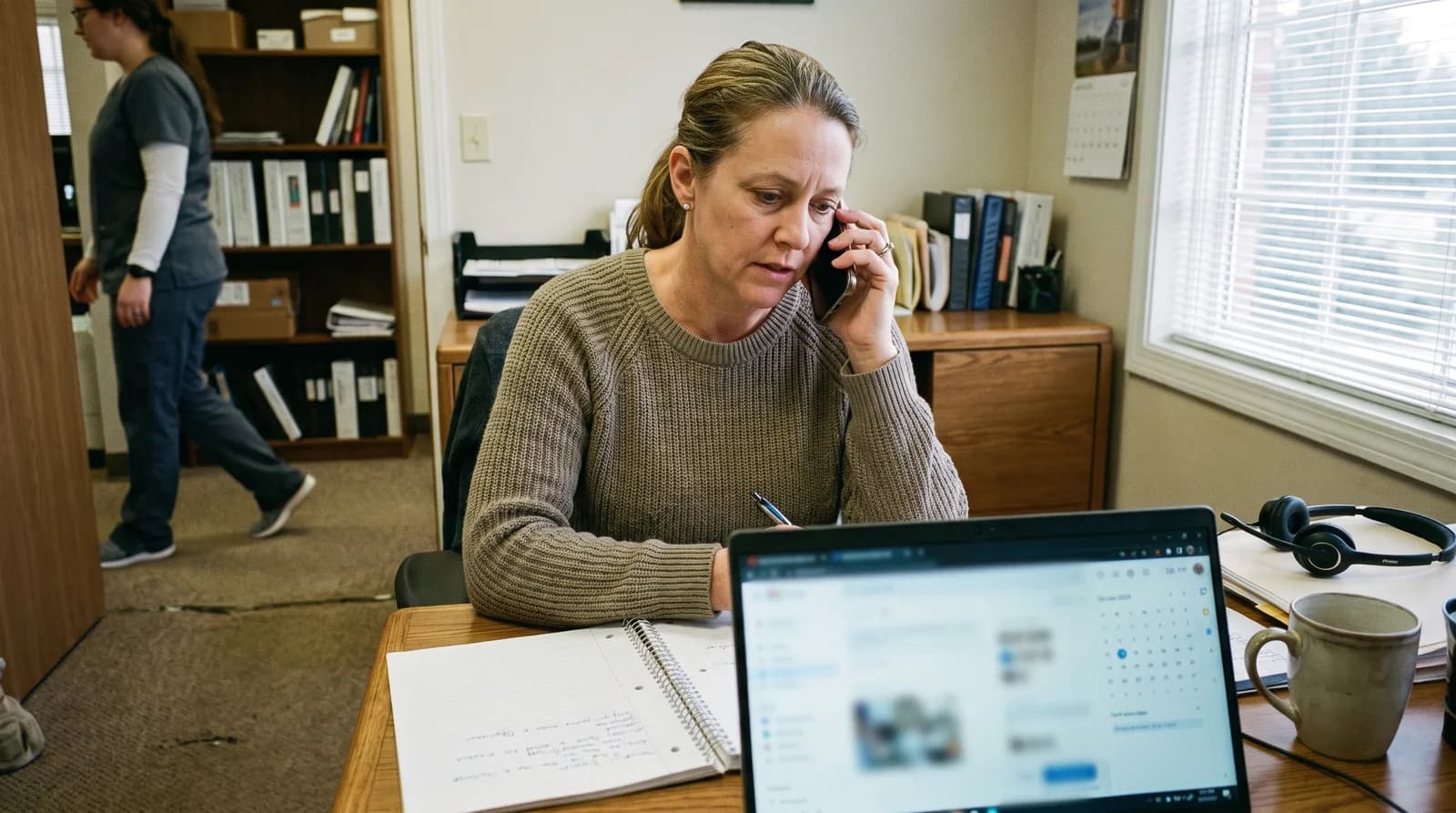
An AI phone system dental no-shows solution works because it addresses the root cause most practices miss: patients don't no-show because they forgot. They no-show because they couldn't reach anyone to reschedule. A patient who realizes Wednesday afternoon that they can't make Thursday's appointment calls the office. The phone rings 6 times and goes to voicemail. They mean to call back. They don't. Thursday arrives and the chair sits empty. The practice blames the patient for not showing up. The real failure was the phone system that converted a cooperative rescheduling attempt into an empty chair. The patient tried to do the right thing. They called to let you know. Nobody picked up.
38% of dental calls go unanswered during business hours. After hours, it's 100%. An AI phone system eliminates both gaps by answering every call, processing reschedules and cancellations in real time, and triggering waitlist activation the moment a slot opens. According to BrightLocal, 98% of consumers expect responsive communication from businesses. When patients can reach your office 24/7 to manage their appointments, no-show rates drop from 15-20% to 3-5% because the friction that causes no-shows disappears. Phone accessibility is one layer of a larger system. For the complete approach, see our dental no-show reduction playbook.
How Does the Unanswered Phone Create No-Shows?
The connection between an AI phone system dental no-shows reduction and call answering is direct and measurable. Every unanswered call from a patient trying to reschedule or cancel converts into a no-show through a predictable chain of events.
| Scenario | What Happens Without AI | What Happens With AI | Revenue Impact |
|---|---|---|---|
| Patient calls to reschedule during lunch rush | Voicemail, forgets to call back, no-shows | AI reschedules, fills original slot | 2 appointments saved |
| Patient calls at 8pm to cancel tomorrow | No one answers, patient doesn't show | AI cancels, triggers overnight waitlist fill | Slot filled by morning |
| Patient on hold 4+ minutes | Hangs up, no-shows or calls competitor | AI answers immediately, handles request | Patient retained |
| Patient calls Saturday about Monday appointment | Weekend voicemail, office doesn't hear until Monday AM | AI reschedules Saturday, fills Monday slot | 48 hours to fill vs 0 |
Each scenario happens multiple times weekly in every dental practice. At 38% unanswered during business hours and 100% after hours, a practice with 25 appointment-related calls per week is missing 10-15 of them. If even 30% of those missed calls were patients trying to reschedule or cancel, that's 3-5 preventable no-shows per week, or 150-260 per year at $200-400 per slot. That's $30,000-104,000 in annual production lost purely to phone accessibility. For the complete missed call cost analysis, see our $40K monthly cost breakdown.
Answer every call. Eliminate phone-caused no-shows.
DentalBase AI reception answers every call 24/7, processes reschedules in real time, fills cancellations from your waitlist, and reduces no-shows by 75%.
Book a Free Demo →How Does the AI Phone System Handle Inbound Appointment Changes?
The inbound side of an AI phone system dental no-shows solution handles the calls patients make when their plans change. This is the prevention layer that catches cancellations and reschedules before they become no-shows.
- Immediate answer, zero hold time: AI answers within 2 rings, 24 hours a day, 7 days a week. No hold music. No "please hold while I check." No voicemail. The patient's intent to reschedule is captured the moment they call rather than being lost to voicemail where 60-70% of patients never call back.
- Real-time PMS schedule access: AI connects directly to Dentrix, Eaglesoft, Open Dental, or your PMS to see available slots in real time. When a patient says "I need to move my Thursday appointment," the AI offers specific alternatives ("I have Tuesday at 10am or Wednesday at 3pm. Which works better?") and rebooks during the same call. No callback required. No second phone call. No hoping the patient remembers to try again tomorrow. The appointment change is processed completely within a single interaction.
- Cancellation processing with waitlist trigger: When a patient calls to cancel outright, AI confirms the cancellation, asks if they'd like to rebook for a future date, and immediately triggers waitlist activation. The slot enters the fill sequence within 2 minutes of the cancellation call ending. Without AI, that cancellation sits in a voicemail until morning when it may be too late to fill.
- After-hours capability: 40-50% of cancellation and reschedule calls happen outside business hours because patients manage personal logistics in the evening. An office that's unreachable after 5pm loses all after-hours reschedule attempts to no-shows. AI captures every one. See our AI receptionist guide for the complete capability set.
How Does the AI Phone System Handle Outbound Confirmations?
The outbound side places confirmation calls to patients on the schedule, creating verbal commitments that reduce no-shows to 3-5% among confirmed patients.
- Tiered outreach based on risk: AI calls high-risk patients (previous no-shows, no SMS response, long booking windows) 48 hours before their appointment. Medium-risk patients get a call if they haven't responded to the automated SMS confirmation. Low-risk patients (consistent history, already confirmed via SMS) don't receive a phone call unless the practice opts for universal outreach. See our AI no-show prevention guide for the complete risk scoring framework.
- Conversational confirmation, not robocall: "Hi [FirstName], this is [Practice Name] calling about your appointment with Dr. [LastName] on [Day] at [Time]. Will we see you?" The conversational format produces verbal commitment. Patients who say "yes, I'll be there" to another voice honor that commitment at 95-97% rates versus 88-92% for text confirmation. In our experience, verbal confirmations reduce dental no-shows more effectively than text-only reminders.
- In-call rescheduling: If the patient says "actually, I need to move that," the AI reschedules during the same call rather than telling them to call back. This prevents the loss of the 30-40% of patients who intend to reschedule but never follow through on calling back during office hours, each of whom becomes a no-show.
- Voicemail with SMS follow-up: Patients who don't answer receive a personalized voicemail and an immediate SMS: "We just tried to reach you about your [Day] appointment. Reply C to confirm or call [phone]." The dual-channel approach captures patients across their preferred communication method.
The outbound system runs automatically from the PMS schedule. No staff member needs to pull a list, dial numbers, or track who was reached. The AI manages the entire confirmation workflow based on rules set during initial configuration. Compliance with HIPAA requires minimum necessary information in calls. TCPA requires prior express consent for automated outbound calls.
Related: See the complete multi-channel reminder sequence. → Automating Appointment Reminders: Save Time and Reduce No-Shows
Outbound confirmation works on appointments that exist. The overdue recall column needs the system pointed the other way, generating the list before anyone is booked at all. Our walkthrough of PMS-driven automation that sorts and recovers overdue recall lists covers that side of the workflow.
What Does the Complete AI Phone-Based No-Show Prevention System Produce?
When inbound and outbound AI phone capabilities operate together, the combined system addresses every cause of dental no-shows through a single infrastructure investment.
| No-Show Cause | % of No-Shows | AI Prevention | Reduction |
|---|---|---|---|
| Couldn't reach office to cancel/reschedule | 30-40% | 24/7 inbound answering | 90-95% |
| Forgot about appointment | 25-35% | Outbound confirmation calls | 80-90% |
| Schedule conflict emerged | 15-20% | In-call rescheduling | 70-80% |
| Dental anxiety / avoidance | 10-15% | Empathetic call + reassurance | 30-40% |
| Genuine emergency | 5-10% | Cannot prevent, but captures cancellation | 0% (fills slot instead) |
The weighted average across all causes produces a 70-80% total reduction in no-shows. A practice moving from 18% no-show rate to 4% across 100 weekly appointments at $300 average production recovers $21,840/month ($262,080 annually). The AI phone system investment of $300-1,000/month produces a 22-87x ROI on no-show prevention alone, before counting the revenue from new patient calls the AI also answers. Connect to your ROI tracking system, recall compliance, and unified AI platform strategy.
How Do You Implement AI Phone No-Show Prevention and Measure Results?
Implementation follows a four-phase rollout that produces measurable results within 30 days.
An AI phone system is one pillar of no-show prevention. Understand the causes first in why dental patients no-show and how to fix the root causes, enforce expectations with a dental no-show policy patients respect, and see the full set of tactics in the complete dental no-show reduction strategies playbook.
- Week 1: Integration and configuration. Connect the AI phone system to your PMS for real-time schedule access. Configure call scripts for inbound (reschedule, cancel, questions) and outbound (confirmation calls). Set risk-scoring rules for tiered confirmation outreach. Test with 5-10 real appointments before going live with the full schedule. This testing phase validates that PMS integration works correctly, call scripts sound natural, and rescheduling flows complete properly.
- Week 2: Soft launch. Route after-hours calls to AI while staff handles business-hours calls. This captures the 40-50% of reschedule and cancellation calls that happen evenings and weekends when no staff member is available, producing immediate no-show reduction without changing daytime workflows. Measure after-hours call volume and outcomes.
- Weeks 3-4: Full deployment. AI handles all inbound calls (overflow during busy periods, primary after hours) and all outbound confirmations. Staff focuses on in-office patient experience rather than phone time. Track no-show rate daily and compare to the 30-day pre-AI baseline. The improvement is typically visible within the first two weeks as after-hours and overflow calls begin converting to rescheduled appointments rather than no-shows.
- Month 2+: Optimization. Adjust confirmation call timing, script language, and risk-scoring thresholds based on 30 days of data. Review which patient segments respond best to AI calls versus SMS. Monthly dashboard: no-show rate (target under 5%), waitlist fill rate (target 40-60%), staff hours saved, and revenue recovered. According to Moz, patients who keep appointments and have positive experiences contribute to review velocity that strengthens local rankings.
Connect implementation to your automated call handling setup, reactivation campaigns, email marketing, and social media plan.
Reduce no-shows 75% with AI phone infrastructure
DentalBase AI answers every call, reschedules in real time, confirms appointments conversationally, and fills cancellations automatically.
Book a Free Demo →Explore more guides and tools for dental practice growth.
Browse Resources →Sources & References
Frequently Asked Questions
Two mechanisms: inbound 24/7 answering captures reschedule and cancellation calls that would otherwise go to voicemail and become no-shows. Outbound conversational confirmation calls create verbal commitments that patients honor at 95-97% rates versus 88-92% for text confirmations.
30-40%. Patients who call to reschedule or cancel, reach voicemail, and never call back account for the single largest no-show category. With 38% of calls unanswered during business hours and 100% after hours, this is the most preventable cause.
AI answers within 2 rings, accesses the PMS schedule in real time, offers specific alternative time slots, and rebooks during the same call. No callback required. The original slot immediately enters waitlist activation for filling.
AI phone confirmations produce 95-97% show rates versus 88-92% for SMS. Verbal commitments create stronger psychological obligation. AI also reaches 70-85% of patients versus 55-70% for SMS because some patients ignore texts but answer calls.
Within 2 minutes of cancellation. AI texts 3-5 waitlist patients simultaneously. For premium slots, AI calls top candidates directly. If unfilled in 2 hours, recall-overdue patients are contacted. System recovers 40-60% of cancelled slots.
22-87x ROI. A practice reducing no-shows from 18% to 4% across 100 weekly appointments at $300 average recovers $262,080 annually. AI investment: $300-1,000/month. This ROI is from no-show prevention alone, before counting new patient call revenue.
Four phases over 4-6 weeks: week 1 integration and configuration, week 2 after-hours soft launch, weeks 3-4 full deployment, month 2+ optimization based on data. Measurable no-show reduction appears within the first 30 days.
Yes when configured correctly. HIPAA requires minimum necessary information (date, time, practice name). TCPA requires prior express consent for automated outbound calls. Include consent in new patient paperwork and maintain opt-out compliance.
Was this article helpful?
Written by
DentalBase Team
Expert dental industry content from the DentalBase team. We provide insights on practice management, marketing, compliance, and growth strategies for dental professionals.