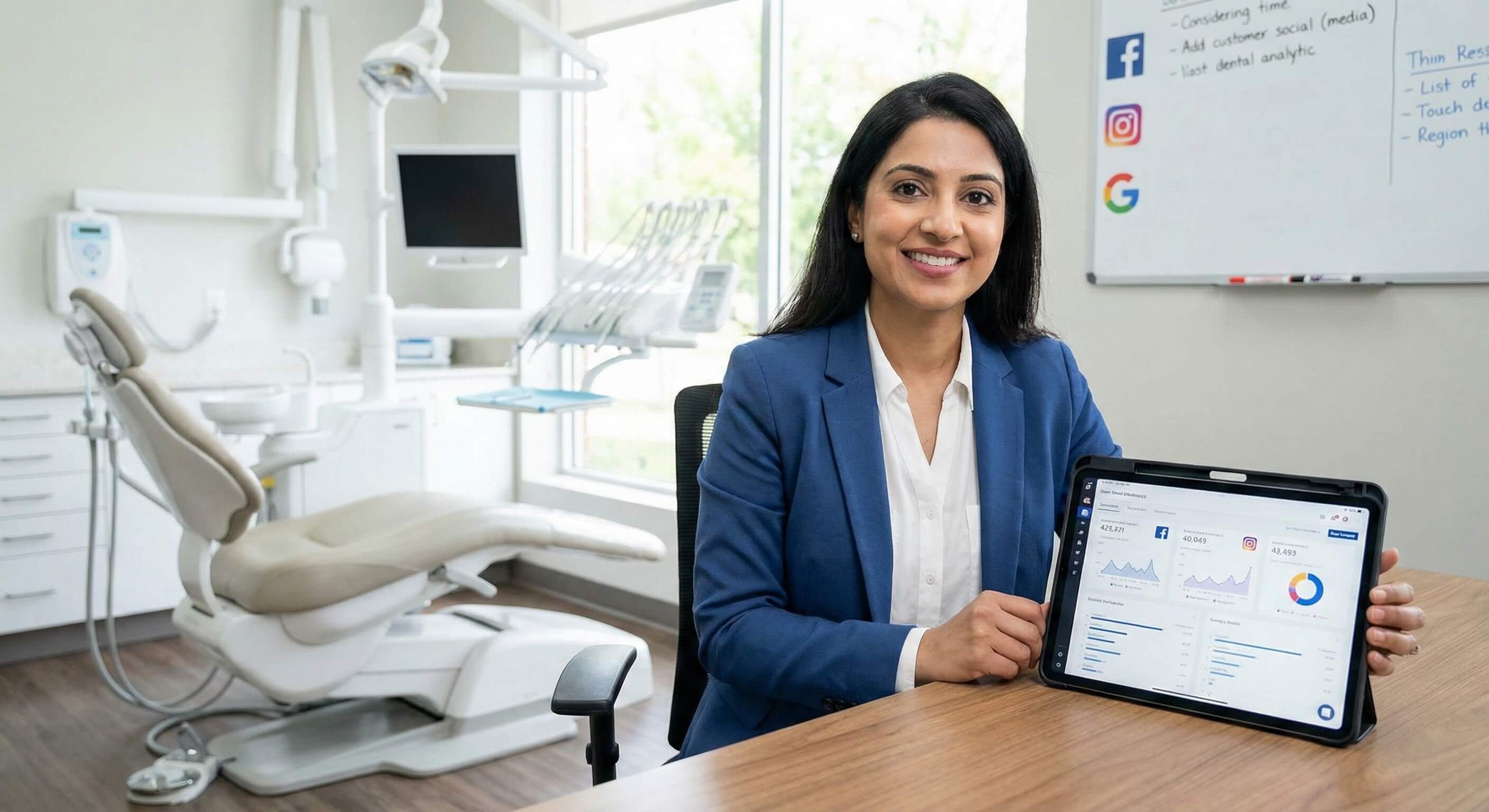
Social Media Marketing for Dentists: A Complete Guide
Learn effective social media marketing for dentists. Platform selection, content creation, compliance, and ROI measurement strategies for dental practices.
Share:
Table of contents
Introduction to Social Media Marketing for Dentists
Social media marketing for dentists has transformed from an optional marketing tactic. It is now an essential component of modern growth. With 72% of adults using at least one social media platform. Dental practices can no longer afford to ignore these digital channels. These channels drive patient acquisition and retention.
Social media marketing for dentists involves strategically using various online platforms. These include popular Facebook, Instagram, and Google My Business platforms. The goal is to build brand awareness, educate patients, and drive appointment bookings. Unlike traditional advertising, social media enables direct engagement with the local community. It helps dental practices showcase expertise and build trust before patients visit the office.
This comprehensive guide will walk you through platform selection and content creation. It also covers compliance requirements and performance measurement. You'll learn how to develop a sustainable social media marketing for dentists approach. It attracts new patients while maintaining professional standards and regulatory compliance. We'll cover practical aspects, from understanding HIPAA implications to measuring return on investment. These factors determine success in .
Choosing the Right Social Media Platforms
Platform selection represents the foundation of effective social media marketing for dentists. Rather than attempting to maintain a presence on every platform, successful dental practices focus. These efforts target channels where their target patients are most active and engaged.
Where Dental Patients Spend Time Online
Facebook remains the dominant platform for dental practices. About 69% of U.S. adults actively use the platform. The demographic skews toward adults aged 25-54. That aligns with dental practices seeking new patients with insurance coverage and disposable income. Facebook offers local business features like reviews, check-ins, and event promotion. These features are valuable for dental practices serving specific geographic areas.
Instagram attracts a younger demographic, with 71% of users under age 35. This platform excels for showcasing before-and-after transformations, office culture, and team personalities. The visual nature of Instagram makes it ideal for cosmetic dentistry practices. It also benefits those targeting millennial patients who prioritize aesthetics.
Google My Business is not technically social media. It functions as a critical social platform for local businesses. About 86% of patients read online reviews before choosing a healthcare provider. An active Google My Business profile directly impacts patient acquisition.
Platform Strengths and Limitations
Each platform offers distinct advantages and challenges for dental practices. Facebook provides robust advertising tools and detailed demographic targeting. However, organic reach continues to decline without paid promotion. Instagram generates high engagement rates. However, it requires consistent, high-quality visual content that can be resource-intensive to produce.
LinkedIn works well for dental practices targeting professional referral relationships and B2B connections. However, it offers limited direct patient acquisition opportunities. TikTok shows growing potential for reaching Gen Z patients. However, it requires significant time investment and comfort with video content creation.
The most successful dental practices typically focus on 2-3 platforms maximum. This ensures they maintain consistent, quality content across multiple channels. It prevents spreading resources too thin.
Creating Effective Content for Dental Audiences
Content creation forms the cornerstone of successful social media marketing for dentists. Success requires a strategic balance between educational value, trust-building, and engagement. Dental practices must navigate the unique challenge of making clinical information accessible. They must also maintain professional credibility and compliance standards.
Educational and Trust-Building Content
Educational content addresses common patient concerns and questions, positioning the practice as a trusted authority. Effective topics include seasonal oral health tips, explanations of common procedures, and preventive care guidance. For example, a post explaining "Why do I need X-rays every year?" addresses a frequent patient question while demonstrating clinical expertise.
Trust-building content humanizes the practice team and showcases the office environment. Patient testimonials with proper consent, team member spotlights, and behind-the-scenes office tours. They help potential patients feel comfortable before their first visit. Community involvement posts include participation in local health fairs or school presentations. These posts reinforce the practice's commitment to community wellness.
Before-and-after case studies prove particularly effective for cosmetic and restorative procedures. However, these require explicit patient consent and careful HIPAA compliance. Focus on the transformation story rather than just the visual results. Explain the treatment process and patient experience.
Real-World Content Examples
A pediatric dental practice in Austin increased appointment bookings by 35%. Growth came through educational content addressing common parent concerns. Their most successful posts included "5 Signs Your Toddler is Ready." It was for first dental visit, and "How to Make Brushing Fun for Kids." These posts generated significant engagement and shares among local parent groups.
A general practice in suburban Denver created a weekly Myth vs. Fact series. The series addressed common dental misconceptions. Posts debunked myths like "Bleeding gums are normal". They challenged "You don't need to see a dentist if your teeth don't hurt". These posts established clinical authority while encouraging preventive care appointments.
Seasonal content performs consistently well across dental practices. Back-to-school posts about sports mouthguards, holiday posts about sugar consumption, and New Year posts about oral health resolutions align with natural patient concerns and search patterns.
Struggling with what to post? Our AI prompts for dentists guide includes a prompt that generates 5 platform-specific captions in minutes.
Paid Social Media Advertising for Dental Practices
Paid advertising amplifies organic social media marketing for dentists efforts, providing targeted reach and measurable results. With organic reach on platforms like Facebook declining to as low as 2-6% of followers, paid promotion has become essential for consistent patient acquisition through social media channels.
Common Ad Types and Objectives
Lead generation ads work particularly well for dental practices, collecting contact information from potential patients interested in specific services. These ads typically offer valuable content like oral health guides or consultation scheduling in exchange for patient details. Cost per lead for dental practices typically ranges from $15-45 depending on location and service type.
Local awareness campaigns target users within a specific geographic radius of the practice, ideal for new patient acquisition and emergency dental services. These campaigns work particularly well for practices in competitive markets or those establishing presence in new locations.
Retargeting campaigns reach users who have previously visited the practice website or engaged with social media content. These campaigns typically show 3-5x higher conversion rates than cold audience targeting, making them cost-effective for appointment scheduling and treatment acceptance.
Video ads showcasing patient testimonials or procedure explanations generate higher engagement rates than static image ads. However, they require larger budgets and professional production quality to maintain practice credibility.
Example: Local Patient Acquisition Campaign
A family dental practice in Phoenix implemented a targeted Facebook advertising campaign to attract new patients within a 10-mile radius. The campaign featured three ad sets: general dental care for adults 25-45, pediatric services for parents 25-40, and cosmetic dentistry for adults 35-55.
The practice allocated $800 monthly across all campaigns, focusing 40% on general care, 35% on pediatric services, and 25% on cosmetic procedures. Ad creative included patient testimonials, office tour videos, and educational content about preventive care benefits.
Results after three months showed 127 new patient leads, with a conversion rate of 23% from lead to scheduled appointment. The cost per new patient acquisition averaged $38, significantly lower than traditional advertising methods. The pediatric campaign performed particularly well, generating 45% of total leads despite receiving only 35% of the budget.
| Campaign Type | Budget Allocation | Leads Generated | Conversion Rate | Cost Per Acquisition |
|---|---|---|---|---|
| General Dental | 40% ($320) | 48 leads | 25% | $35 |
| Pediatric | 35% ($280) | 57 leads | 28% | $31 |
| Cosmetic | 25% ($200) | 22 leads | 18% | $48 |
The practice continued the campaign with budget reallocation toward the highest-performing pediatric segment, ultimately achieving a 31% increase in new patient appointments over six months.
Compliance, Ethics, and Patient Privacy
Social media marketing for dentists requires strict adherence to healthcare privacy regulations and professional ethics standards. The Health Insurance Portability and Accountability Act (HIPAA) applies to all dental practice marketing activities, including social media content, making compliance knowledge essential for practice owners and marketing staff.
HIPAA Basics for Social Media
HIPAA's Privacy Rule prohibits sharing protected health information (PHI) without explicit patient authorization. PHI includes any information that could identify a patient in connection with their healthcare, extending beyond obvious identifiers like names and photos to include treatment dates, appointment times, and even general descriptions that could identify specific individuals.
Patient testimonials and before-and-after photos require written authorization specifically permitting social media use. The authorization must clearly state that the information may be shared publicly on social media platforms and cannot be used indefinitely - practices should establish expiration dates and obtain renewed consent when needed.
General educational content about procedures or oral health tips typically doesn't involve PHI, but practices must avoid creating content that could indirectly identify patients. For example, posting about "today's successful root canal" could potentially identify a patient if combined with other public information.
Employee training on HIPAA compliance for social media is essential. Staff members must understand that even casual mentions of patients or appointments can constitute violations. Personal social media accounts of employees also fall under HIPAA requirements when discussing work-related activities.
Compliance Checklist
Before posting any content, dental practices should verify: patient authorization is current and specific to social media use; no identifying information appears in backgrounds of photos; appointment scheduling or treatment information cannot identify specific patients; and all staff understand their responsibilities regarding patient privacy on social media.
Written policies should address social media use by both the practice and individual employees. These policies should specify approval processes for patient-related content, guidelines for responding to online reviews, and procedures for handling privacy breaches or inappropriate content.
Regular compliance audits help identify potential issues before they become violations. Review posted content quarterly to ensure continued compliance, monitor employee personal accounts for potential violations, and update authorization forms as social media platforms and privacy laws evolve.
Documentation of all patient authorizations and compliance training provides protection in case of investigations. The Department of Health and Human Services can impose fines ranging from $100 to $50,000 per violation, with maximum annual penalties reaching $1.5 million for repeat offenses.
Measuring Performance and ROI
Effective measurement distinguishes successful social media marketing for dentists campaigns from inefficient resource allocation. Dental practices must track both engagement metrics and business outcomes to optimize their social media investments and demonstrate return on investment to stakeholders.
Key Metrics to Track
Engagement metrics provide insight into content effectiveness and audience interest. Track likes, comments, shares, and saves across all platforms, but focus on meaningful engagement rather than vanity metrics. Comments asking questions about services or requesting appointments indicate higher-quality engagement than simple likes.
Reach and impressions measure content visibility, helping practices understand their organic and paid content distribution. However, these metrics mean little without corresponding engagement or conversion data. A post reaching 1,000 people with no engagement is less valuable than a post reaching 200 people with 20 meaningful comments.
Website traffic from social media indicates content effectiveness in driving potential patients to learn more about services. Use Google Analytics to track social media referrals, time spent on site from social visitors, and conversion rates from social traffic compared to other sources.
Lead generation metrics directly tie social media efforts to business outcomes. Track phone calls, online appointment requests, and contact form submissions attributable to social media campaigns. Assign unique phone numbers or landing pages to social media campaigns for accurate attribution.
Cost per acquisition (CPA) for paid social media campaigns enables comparison with other marketing channels. Calculate total campaign costs divided by new patients acquired through social media efforts. Industry benchmarks suggest dental practices should target CPAs between $25-75 for social media advertising, depending on service types and geographic markets.
Patient lifetime value considerations make higher acquisition costs acceptable for certain demographics or service lines. A cosmetic dentistry patient with $15,000 lifetime value justifies higher social media advertising costs than a patient seeking only basic preventive care.
Conclusion: Building a Sustainable Dental Social Media Strategy
Successful social media marketing for dentists requires a systematic approach combining platform expertise, content strategy, compliance knowledge, and performance measurement. Practices that view social media as a long-term patient relationship building tool, rather than a quick advertising fix, achieve the most sustainable results.
The most effective dental social media strategies focus on education and trust-building rather than aggressive promotion. Patients seek healthcare providers they can trust with their health and finances, making authentic, helpful content more valuable than promotional posts. Consistency in posting, engagement, and brand voice builds the professional reputation that converts social media followers into loyal patients.
Compliance with HIPAA regulations and professional standards protects both patients and practices from legal and ethical issues. Investing time in proper training, authorization processes, and regular compliance audits prevents costly violations and maintains professional credibility in the community.
Modern dental practices should allocate 10-15% of their total marketing budget to social media marketing for dentists activities, including both paid advertising and content creation resources. This investment typically generates a 3:1 to 5:1 return through new patient acquisition and improved patient retention.
Starting with one or two platforms and gradually expanding ensures quality over quantity in social media efforts. Focus on platforms where your target patients are most active, create valuable content consistently, and measure results to optimize performance over time. Social media marketing for dentists succeeds through strategic planning, consistent execution, and continuous improvement based on performance data and patient feedback.
Frequently Asked Questions
Yes, social media marketing is highly effective for dentists. Studies show that 88.8% of dental practices use social media platforms like Facebook for promotion, with 58.9% reporting they've gained new patients through these efforts. Social media allows dentists to engage directly with current and prospective patients, build trust through educational content, and showcase their expertise in a more personal, accessible way.
Facebook is the most popular and effective platform for dental practices, used by 88.8% of dentists according to industry surveys. Instagram is excellent for visual content showcasing before/after results and behind-the-scenes content. LinkedIn works well for professional networking and B2B referrals. The best platform depends on your target audience demographics and content strategy goals.
Yes, dentists can advertise on Facebook and Instagram, but must follow strict compliance guidelines. Advertisements must comply with HIPAA regulations, avoid making unrealistic claims about treatment outcomes, and follow platform-specific healthcare advertising policies. Paid social media advertising can be highly effective for dental practices when executed properly with appropriate targeting and compliant messaging.
Was this article helpful?
Written by
DentalBase Team
The DentalBase Team is a collective of dental marketing experts, AI developers, and practice management consultants dedicated to helping dental practices thrive in the digital age.