Emergency Dentist Marketing: How to Capture Urgent Patients
Learn proven emergency dentist marketing strategies — local SEO, Google Ads, GBP optimization, and call handling — to capture urgent patients.
Share:
Table of contents
Emergency Dentist Marketing: How to Capture Urgent Patients
By the DentalBase Team | March 12, 2026
When someone chips a tooth at 9 PM or wakes up with a throbbing abscess, they do not call around. They reach for their phone and search. Getting emergency dentist marketing right means being the first result they see and the first practice they call.
That search window is short. Many local service searches end in a phone call within the hour. For dental emergencies, the urgency is even sharper. Patients in pain are not comparing many options. They usually contact the first credible result they find.
This is what makes emergency dentist marketing different from general dental promotion. You are not trying to nurture interest over weeks. You are trying to win a decision that may happen in less than five minutes. Visibility matters, but so do speed, clarity, and trust. If your practice looks uncertain, slow, or hard to reach, the patient keeps scrolling.
Why Emergency Searches Behave Differently
According to the American Dental Association, dental emergencies are a common reason patients contact a practice outside of scheduled care. Patients searching urgently are often ready to book, not spend time researching options.
Is Your Google Business Profile Ready for Emergency Searches?
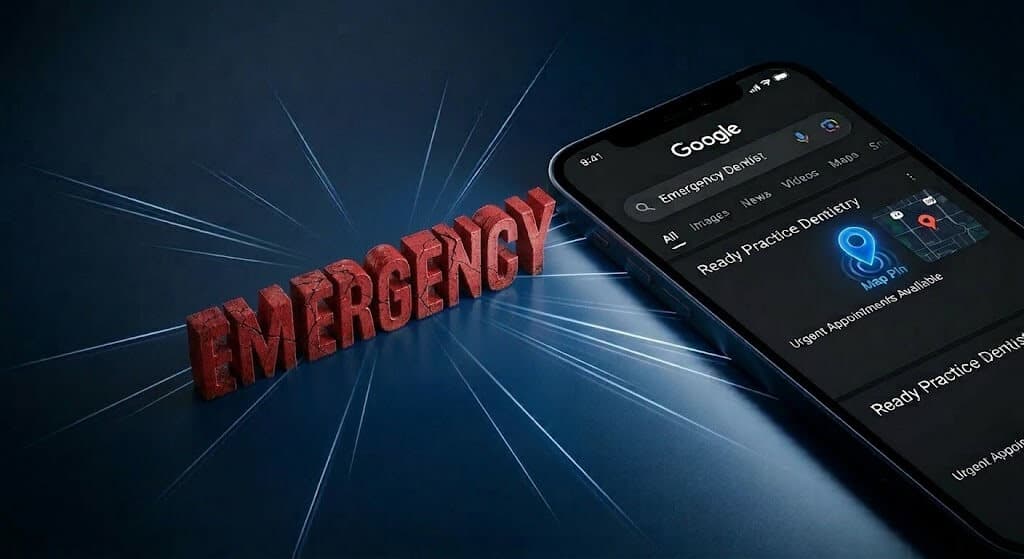
Your Google Business Profile is one of the most visible parts of your digital presence for local emergency searches. When someone types "emergency dentist near me," Google usually surfaces the map pack first, and the top few listings capture most of the attention.
Most practices set up their profile once and forget it. But emergency patients filter by "Open now," check weekend hours, look at recent photos, and scan the latest reviews. A profile that has not been updated in months will often lose to one that looks active and current.
In emergency dentist marketing, your GBP is not just a listing. It is your first impression. Patients are judging whether you look responsive, legitimate, and available. That means accurate categories, updated hours, relevant services, clear photos, and a description that reflects urgent care options. If your profile creates any doubt, the patient may move on before ever reaching your website.
Quick Win
Add "emergency dentistry" and "same-day appointments" directly as services in your GBP. These terms can help your listing appear in filtered emergency searches at no added cost.
Pair a strong profile with local map ads to push your listing above organic results during peak emergency hours. Our guide on Google Maps ads for dentists walks through the exact setup.
Why Reviews Matter More for Emergency Searches
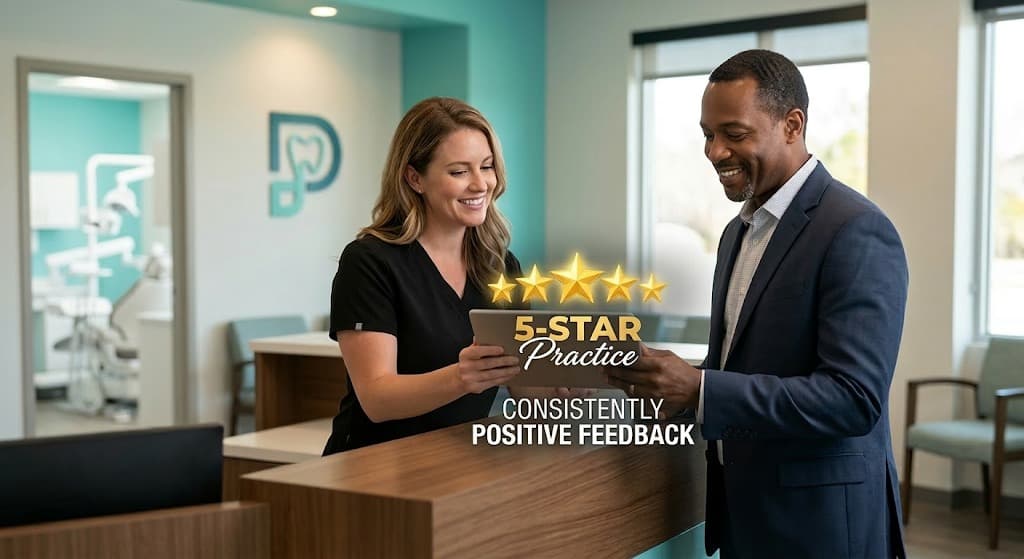
In routine dentistry, patients may take time to compare websites, insurance details, and service menus. In emergency dentistry, reviews work differently. They act as instant trust signals. A patient in pain is not reading twenty detailed testimonials. They are scanning for signs that other people were seen quickly, treated kindly, and relieved fast.
That means review strategy becomes part of emergency dentist marketing, not a separate reputation task. Reviews that mention words like "same day," "got me in fast," "handled my pain," or "called back right away" support the exact decision an emergency patient is trying to make. They reduce hesitation in a moment when hesitation costs you the lead.
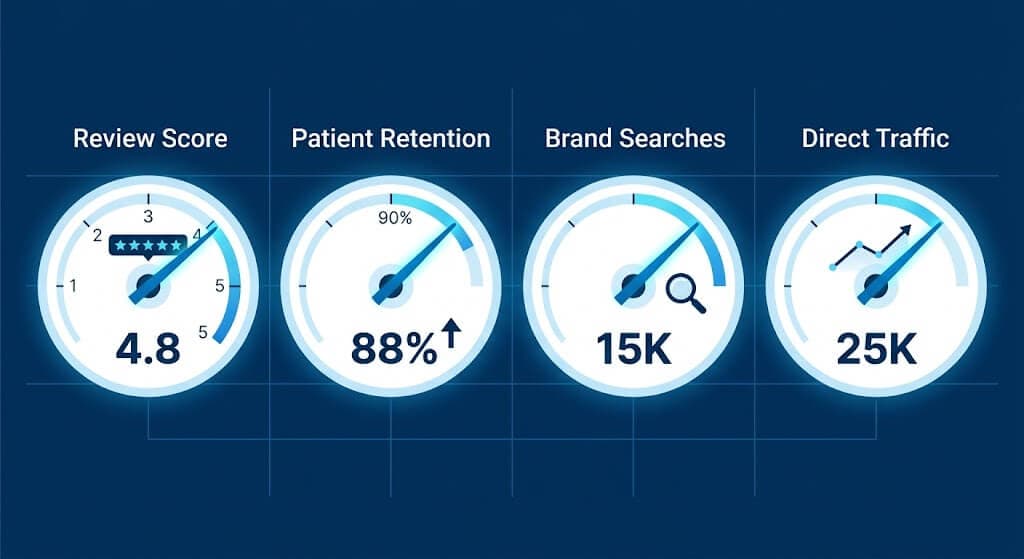
Your review presentation matters too. A strong star rating helps, but freshness matters almost as much. Recent reviews signal that the practice is active and currently trusted. If the last review is from eight months ago, patients may hesitate even if the rating is high. Freshness creates confidence that what they see is still true.
What Emergency Patients Look for in Reviews
| ✓ Mentions of same-day or fast appointments |
| ✓ Comments about pain relief and clear communication |
| ✓ Evidence that staff were calm, helpful, and responsive |
| ✓ Recent timestamps that make the practice feel active |
| ✓ Specific references to emergency or urgent dental visits |
How Does Local SEO Help You Rank for Emergency Dental Keywords?
Emergency dental SEO differs from routine care SEO in one key way: keyword intent. Patients in pain use symptom-driven language like "broken tooth dentist," "tooth pain same day appointment," or "knocked out tooth near me," not just a broad emergency phrase.
A dedicated emergency services page is non-negotiable. That page should address the most common dental emergencies by name, include your same-day availability prominently, load fast on mobile, and mention your location naturally. This is not keyword stuffing. It is writing for a patient who is scared and needs to know you can help today.
For the organic foundation your practice needs underneath all of this, our dental SEO beginner's guide for 2026 covers the full technical and content framework.
Good emergency dentist marketing also means building content around the actual language patients use when they are scared or in pain. They do not always know whether they need an oral surgeon, an endodontist, or a general dentist. They just know something hurts or broke. Your content should meet that language without sounding chaotic or stuffed with keywords.
Location signals matter here too. If your page clearly references the city, nearby neighborhoods, and service area in natural language, Google has a much better chance of connecting your page to local urgent intent. The best emergency pages feel simple to a patient but are structurally very clear to search engines.
Emergency SEO Page: 5-Point Checklist
1 | Dedicated /emergency-dentist page, not a buried subsection of your homepage |
2 | Phone number immediately below the H1, because patients in pain do not search for contact info |
3 | List specific emergencies by name: cracked tooth, knocked-out tooth, abscess, lost crown, broken wire |
4 | Page load under 3 seconds, because urgency and slow pages do not work together |
5 | Schema markup: MedicalBusiness with openingHours and medicalSpecialty properties |
Need a better way to capture urgent calls?
DentalBase helps practices turn emergency search traffic into booked appointments with stronger visibility, faster response, and better call coverage.
See How It WorksShould You Run Paid Ads for Emergency Dental Patients?
Yes, and the economics can make sense. Emergency dental searches often carry high cost-per-click because the intent is strong. A patient searching "emergency tooth extraction today" is usually ready to book with the first practice that looks credible and available.
Google Search Ads with call extensions are the most direct approach. A patient on mobile can tap your number directly from the search result without visiting your site at all. Removing that extra step matters more in dental emergencies than in many other service categories.
Ad Scheduling Tip
Increase bids on evenings (6 to 10 PM) and weekends. These are common dental emergency windows and also times when many practices are closed. Showing up during those hours is a real competitive advantage.
Local Services Ads (Google Guaranteed) are also worth testing for emergency terms. They display your name, rating, and a direct call button above other results, and you pay per verified lead rather than per click.
Paid search also gives you tighter control over intent. You can write ad copy around same-day care, urgent appointments, and fast call response, then send patients to a page built specifically for emergencies instead of a broad homepage. That matters because emergency dentist marketing works best when the message stays consistent from search result to landing page to phone call.
Does Your Website Make Emergency Booking Easy?
Many practices lose emergency patients after winning the click. The patient lands on a page that looks polished but makes urgent action harder than it should be. There is too much text above the contact options, no visible same-day language, and no clear next step for someone who needs immediate help.
Emergency patients do not want to decode your website. They want to know three things fast: can you see me today, how do I contact you now, and what kind of problems do you handle? If your page answers those questions clearly, conversion rises. If it delays the answer, bounce rates rise instead.
A strong emergency landing page should have a visible phone number, a short reassurance statement, a simple list of conditions treated, and a clear online booking or request option. This is one of the most overlooked parts of emergency dentist marketing because practices focus on traffic acquisition and underestimate the friction inside their own site.
Emergency Landing Page Essentials
| ✓ Headline that clearly mentions emergency care |
| ✓ Clickable phone number above the fold on mobile |
| ✓ Simple same-day or urgent care message |
| ✓ Short list of emergency conditions treated |
| ✓ Fast booking option for patients who cannot call immediately |
What Happens When the Emergency Patient Calls and No One Answers?
This is where most emergency dentist marketing quietly falls apart. You can rank first on Google, run well-targeted ads, and have a fast mobile website, then still lose the patient if the call goes unanswered.
Emergency patients do not usually leave voicemails. They call the next practice on the list. If your front desk is with another patient, handling insurance, or it is 7 PM on a Friday, that lead is often gone before the voicemail tone sounds.
The Missed Call Problem
The CDC's oral health data highlights access to care as a persistent gap in U.S. dentistry. Practices that close that gap by answering every call and offering after-hours booking are better positioned to capture demand that less responsive competitors miss.
An AI phone system helps cover this gap without adding headcount. DentiVoice, DentalBase's AI dental receptionist, answers every inbound call, identifies urgent needs, and books same-day appointments directly into your practice management system, even late at night or on weekends. It is not a replacement for your front desk. It supports the calls they physically cannot reach. Learn more about building a resilient dental call handling system.
The bigger point is simple. Emergency dentist marketing is not just traffic generation. It is capture infrastructure. Every unanswered call, every delayed reply, and every unclear booking path reduces the value of the traffic you paid for or ranked for. The practices that win are the ones that close the gap between demand and response time.

How Do You Track Whether Your Emergency Marketing Is Working?
If you cannot measure it, you cannot improve it. Emergency dentist marketing has specific tracking requirements because the primary conversion is almost always a phone call, not a form submission.
Call tracking with dynamic number insertion lets you attribute each call back to its source: organic search, paid ads, GBP, or direct traffic. This is how you determine which channels are producing emergency bookings versus general inquiries that simply mention pain.
5 Things to Track in Your Emergency Marketing
| ✓ Dedicated call tracking numbers per source: SEO, Ads, GBP |
| ✓ Google Analytics goal tracking for emergency page visits and form fills |
| ✓ Weekly GBP insights review: calls, direction requests, website clicks |
| ✓ After-hours call volume tracked separately from business hours |
| ✓ Average time to answer: under 3 rings is a strong target for emergency lines |
Connect marketing performance to actual case value over time. Emergency patients who receive prompt, attentive care often return for higher-value restorative work. Our breakdown of how practices grow implant case volume shows that emergency-to-restorative conversion can be a reliable production growth path for a general practice.
Why the First Emergency Visit Should Not Be the End of the Relationship
One weak point in many emergency dentist marketing strategies is that the practice treats the emergency as a one-time event. The patient comes in, the pain is managed, and no larger follow-up system kicks in. That leaves long-term value on the table.
Emergency patients often become restorative patients, hygiene patients, and long-term family patients if the handoff is handled well. The trust is already partly built because the practice helped them in a stressful moment. What matters next is whether you move them clearly into diagnosis, treatment planning, and a follow-up schedule instead of letting the relationship fade after the urgent visit.
That is why marketing and operations should not be separated too sharply. Strong emergency dentist marketing brings the patient in. A strong patient experience and follow-up process keep that patient in your system. When those two sides work together, emergency cases become one of the most reliable entry points into long-term production growth.
Putting It Together: A System That Does Not Leak
Emergency dentist marketing is a stack, not a single tactic: visibility through SEO and paid search, trust through your GBP and reviews, and capture through fast call handling and online booking. Remove one layer, and the system starts losing patients at that point.
The practices that consistently win emergency patients are not always the closest or the cheapest. They are the ones who show up first when searched, look credible within seconds, and answer the call. The National Institute of Dental and Craniofacial Research notes the importance of timely access to care when patients are dealing with tooth pain and urgent symptoms. Good emergency dentist marketing helps turn that urgent patient into a long-term patient, but only if you capture them in the first place.
Ready to Capture More Emergency Patients?
See how DentalBase helps practices rank, answer every call, and book urgent patients 24/7 without adding staff.
Book a Free DemoContinue Reading
| Google Maps Ads for Dentists: How to Show Up FirstDominate the local map pack when urgent patients search near you. |
| What Is Dental SEO? A Beginner's Guide 2026Build the organic foundation that keeps emergency patients finding your practice. |
| How to Increase Dental Implant Cases by $360K/YearTurn emergency patients into high-value restorative cases over time. |
Frequently Asked Questions
Emergency dentist marketing refers to the strategies that help dental practices appear in search results when patients are actively looking for same-day or urgent dental care. It combines local SEO, Google Business Profile optimization, paid search ads, and fast call handling to convert high-intent searches into booked appointments.
To rank for emergency dental searches, create a dedicated emergency services page on your website, optimize your Google Business Profile with accurate hours and emergency services listed, build consistent local citations, and accumulate recent positive reviews. Schema markup (MedicalBusiness with openingHours) and fast mobile load times also influence local pack rankings.
Yes. Emergency dental searches carry high commercial intent — patients are ready to book immediately. Call-only ads and call extensions let mobile users contact your practice directly from the search result page. Scheduling ads to run during evenings and weekends, when emergencies peak, improves return on ad spend significantly.
Most emergency patients do not leave voicemails — they call the next practice on the list. An AI phone system that answers after hours and during peak call volume captures these patients before they go elsewhere. For practices investing in emergency marketing, missed calls represent a direct and measurable revenue loss.
Beyond "emergency dentist near me," target symptom-driven keywords such as "cracked tooth dentist," "tooth abscess treatment," "broken tooth same day," and "tooth pain urgent care." These longer-tail terms often have less competition and higher booking intent than generic emergency terms.
Was this article helpful?
Written by
DentalBase Team
The DentalBase Team is a collective of dental marketing experts, AI developers, and practice management consultants dedicated to helping dental practices thrive in the digital age.