
Dental Social Media Marketing: A Practical 2026 Guide
Practical dental social media marketing guide for office managers and practice owners. Covers Facebook, Instagram, content ideas, and patient growth.
Share:
Table of contents
Dental social media marketing is one of the most discussed topics in practice growth, and one of the most inconsistently executed. Office managers juggling scheduling, phones, and insurance verification rarely have hours to spare for content strategy. Practice owners want results but often post sporadically and wonder why the follower count never moves.
This guide cuts through the noise. Social sits alongside the other dental marketing services a practice runs. It covers what platforms actually matter for dental practices, what content consistently performs, how to build a realistic posting schedule, and what separates practices that grow on social from those that treat it as a checkbox.
Social posts perform best when they can point somewhere substantial instead of a bare service page. A practice that keeps an active blog always has somewhere real to send that traffic, this step-by-step guide to starting a dental blog covers platform choice, HIPAA compliance, and a realistic publishing schedule for practices setting one up.
Social is one touchpoint in a longer evaluation, most patients also check your website and reviews before they commit to booking. This guide to how patients choose a dental office online covers the fuller path from first search to scheduled visit.
According to Dental Economics, 97% of dentists surveyed use Facebook as their main social platform. That adoption rate tells you the channel is taken seriously, but adoption alone doesn't drive new patients. Strategy does.
Why Does Social Media Matter for Dental Practices?
Social media is where patients form first impressions before they ever visit your website. A prospective patient who sees your office's Instagram page or a Facebook post from a friend's recommendation is already evaluating you, before you've had a chance to say a word.
According to PwC Health, 41% of people say social media content influences their treatment choices. That's not a fringe behavior. It's a meaningful share of patients who are letting social content shape decisions about their oral health care provider.
Keeping Patients Engaged Between Visits
Beyond acquisition, social media plays a role in retention. Patients who follow a practice stay connected between appointments. A well-timed post about seasonal teeth whitening or a reminder about flex spending deadlines keeps your practice top of mind when they're ready to book.
How Social Reinforces Your Other Channels
The case for social media in a practice's wider marketing mix isn't that it replaces other channels. It's that it compounds them, reinforcing SEO authority, feeding review generation, and building the kind of ambient familiarity that makes new patients feel they already know you when they walk through the door.
Which Platforms Should Dental Practices Focus On?
Not every platform deserves equal attention in dental social media marketing. The right choice depends on your patient demographics, your staff bandwidth, and what content your team can produce consistently. For most general practices that means Facebook first, Instagram second, and everything else treated as optional.

Facebook remains the dominant platform for dental practices. Its audience skews 35 to 65, which maps closely to the demographic that both needs dental work and has the insurance coverage to act on it. Facebook Business Pages are indexed by Google, which gives your posts a secondary SEO benefit. And Facebook's ad targeting is unmatched for local service businesses: you can serve ads specifically to homeowners, within a 10-mile radius, aged 30 to 55, who haven't interacted with your page before.
Facebook marketing for dental practices works well when the page functions as a community hub, not just a broadcast channel. That means responding to comments, sharing content patients actually care about, and using the platform's event features for in-office promotions or community involvement.
Dental Instagram marketing performs particularly well for cosmetic-heavy practices or any office that can produce consistent visual content. Before-and-after photos, short Reels of procedures, and team introduction posts all fit naturally on Instagram. The platform's average healthcare engagement rate sits at 1.2% according to Sprout Social, but practices with strong visual content regularly exceed that, and broader social media benchmark data shows the same pattern across service industries.
Instagram skews younger than Facebook, typically 18 to 34, which makes it valuable for practices trying to attract first-time adult patients or those in competitive urban markets where patients have more choices.
TikTok and YouTube
Both platforms are worth considering as secondary channels, not primary ones. YouTube video content builds long-term SEO value and is worth investing in if your team can produce educational or procedure explainer content. TikTok can drive significant visibility, but it demands a posting volume and format that few dental offices can sustain. If your team has one person managing social, Facebook and Instagram are the right starting point.
Spending hours on social with nothing to show for it?
DentalBase handles social media management for dental practices, consistent posting, local targeting, and content that actually converts.
See How It WorksWhat Does a Strong Dental Social Media Content Strategy Look Like?
Content strategy comes down to a single question: what does your audience actually want to see? The answer is not promotional posts about your specials. Patients follow practices that teach them something, show them the people behind the logo, or help them feel less anxious about dental care.
The 40/30/30 Content Mix
A working framework that balances these needs divides content into three categories:
- Educational content (40%): Posts that explain procedures, answer common questions, debunk myths, or share oral health tips. These establish credibility and are the most shareable content type.
- Team and culture content (30%): Introductions to staff, behind-the-scenes moments, office milestones, or holiday posts. These humanize the practice and reduce patient anxiety about visiting.
- Patient-focused and promotional content (30%): Before-and-after photos (with consent), reviews or testimonials, service highlights, and seasonal offers. These drive intent.
Adjusting the Mix to Your Practice Type
That ratio isn't fixed, it should reflect your practice's personality. A pediatric dental practice will skew heavily toward education and team culture. A cosmetic practice might lean harder into transformation content. The key is that no single category dominates the feed.
Which Dental Content Ideas Perform Well on Social Media?
Educational posts, short video, and patient transformation content perform most reliably for dental practices. Running out of ideas is the most common complaint office managers raise, so the formats below are worth keeping as a standing rotation because each one can be produced in-house with a smartphone:
Before-and-After Photos
These outperform almost every other content type for cosmetic practices. A single compelling transformation can generate more engagement than a month of informational posts. The requirement is written patient consent, not verbal, not implied. A signed HIPAA-compliant photo release is mandatory before anything identifiable goes online.
Short-Form Video (Reels and Stories)
Video posts get 48% more engagement than static posts on dental social accounts, according to Hootsuite data. That gap makes video the highest-return format available to practices. Content ideas include a 30-second tour of a new operatory, a day-in-the-life of a hygienist, a quick myth-bust ("Does whitening damage enamel?"), or a time-lapse of a same-day crown case. Grounding educational posts in published patient guidance, such as the NIDCR overview of tooth decay, keeps the claims accurate.
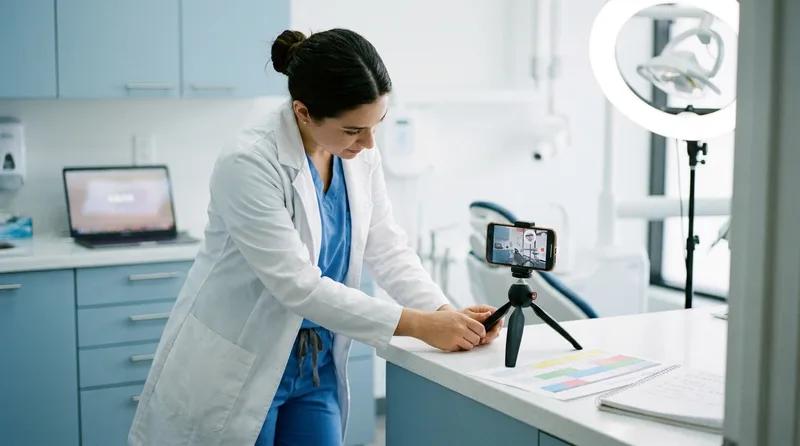
None of this requires professional production. A smartphone, decent lighting, and a consistent posting habit beat expensive video that never gets made.
Patient Education Carousels
Multi-image carousel posts work well on both Instagram and Facebook. Topics like "5 things that cause sensitive teeth" or "What to expect at your first visit" perform well because they give patients something to swipe through, increasing time-on-post and algorithmic reach.
Team Spotlights
A weekly or monthly introduction to a team member, including their role, a fun fact, and why they love working there, drives consistent engagement. Patients want to know who they'll be sitting across from. These posts also support hiring by showing the practice culture publicly.
Contests round out the mix when you need a burst of local reach. A giveaway built around a dental prize, such as whitening or a new patient exam, attracts people who will actually book, which is the core idea behind these patient-focused Instagram giveaway strategies for dentists.
Review Highlights
Turning a strong Google or Yelp review into a graphic post creates social proof without requiring new patient consent. Use the patient's first name only (or "a recent patient") and keep the design clean. Pair it with a brief thank-you caption.
How Should a Dental Practice Build a Realistic Posting Schedule?
Posting three to five times per week is the range most practices can sustain without burning out whoever manages the accounts. Consistency matters more than frequency, one skipped week is recoverable, but going dark for a month while your competitors post daily is a problem.
A Sample Weekly Posting Calendar
A dental social media calendar built for an office manager running solo might look like this:
| Day | Content Type | Example |
|---|---|---|
| Monday | Educational | "Why does sugar cause cavities?" carousel |
| Wednesday | Team culture | Staff spotlight on a hygienist |
| Friday | Patient-focused | Before-and-after or review highlight |
| As available | Short video | 30-second Reel or Story |
Batching Content to Stay Consistent
Content batching, setting aside 90 minutes every two weeks to create and schedule a month's worth of posts, is the most practical approach for small teams. Tools like Meta's native scheduling, or a simple spreadsheet tracking drafts, can eliminate the daily scramble. A 2026 dental posting calendar your team can follow turns those batching sessions into a repeatable monthly routine.
A batching session runs in five steps:
- Pick the themes. List the four to six topics the practice wants to cover that month, one per week plus a spare.
- Shoot the visuals in one pass. Photograph the team, the operatory, and any consented before-and-after cases in a single 20-minute block.
- Write the captions together. Drafting eight captions back to back is far faster than writing one a day.
- Schedule everything. Load the posts into Meta Business Suite with dates and times set.
- Leave two open slots. Keep room for timely posts, patient news, or a Reel that comes up mid-month.
How Does Facebook Marketing Work for Dental Practices Running Paid Ads?
Facebook marketing for dental practices reaches its full potential when organic content is backed by paid promotion. Facebook Ads allow practices to target by zip code, age range, household income, life events (like "recently moved"), and behavioral signals. For a practice promoting Invisalign or full-arch implants, this precision is genuinely valuable.
Ad Formats That Work for Dental Offices
The most effective paid social formats for dental offices are:
- Lead form ads: Users submit name, phone, and email without leaving Facebook. Useful for new patient offers, free consultations, or whitening specials.
- Retargeting ads: Served to people who visited your website but didn't book. These are among the highest-converting ad formats available.
- Video ads: A 15-30 second office tour or patient testimonial running as a paid placement can build brand familiarity faster than organic posting alone.
Where Paid Social Campaigns Break Down
A common mistake is running paid social without a conversion path. If someone clicks your ad, they should land on a page with one clear action: book an appointment or call the office. A generic homepage doesn't convert paid traffic reliably.
For practices exploring paid channels more broadly, a channel-by-channel marketing comparison can help frame where social fits relative to SEO and PPC.
What HIPAA Rules Apply to Dental Social Media Marketing?
HIPAA compliance is non-negotiable on social media, and violations are more common than most practices realize. The core rule: anything that could identify a patient, their image, name, procedure, or case detail, constitutes protected health information (PHI) and cannot be shared without written authorization.

Situations That Put Practices at Risk
Specific situations to watch for:
- Before-and-after photos: Require a signed, HIPAA-compliant photo and social media release before posting. Verbal permission is not sufficient.
- Review responses: Never confirm that someone is a patient, even when responding to a negative review. Acknowledge the concern and invite them to call the office.
- Staff posts: If team members post about their workplace, they cannot share patient information, identifiable images from the clinic, or details about specific cases.
- Comments and DMs: If a patient discloses their name and a treatment question in a public comment, do not respond with clinical detail. Move the conversation to a private channel.
Building a Routine Compliance Check
Running a quarterly review of your social media accounts against a HIPAA compliance checklist is a reasonable practice, one most offices skip until a problem surfaces. The ADA legal and regulatory resources are a useful starting point for the underlying rules.
How Do You Measure Whether Dental Social Media Marketing Is Actually Working?
Measure dental social media marketing by reach, engagement rate, profile clicks, and new patient source attribution, not by follower count. Follower count is largely a vanity number. What matters is whether social activity is contributing to patient acquisition and retention in a way the front desk can actually see.
Metrics That Actually Matter
Metrics worth tracking:
- Reach and impressions: How many people saw each post, and how does that compare to your follower base?
- Engagement rate: Likes, comments, shares, and saves divided by reach. The industry benchmark for healthcare is 1.2% on Instagram, use this as a comparison point, not a ceiling.
- Profile visits and link clicks: Are people clicking through to your website or booking page from social?
- New patient source attribution: When asking new patients how they found the practice, social media should be an option. Track how often it comes up over time.
- Response time: How quickly does the practice respond to comments and messages? Faster responses correlate with better conversion from social inquiries.
Tying Social Activity to Booked Appointments
Connecting social activity to actual patient bookings is difficult without call tracking or UTM parameters on your booking links, but even a simple monthly check of these metrics will tell you whether the channel is building momentum or stalling.
For practices trying to understand where new patients actually originate across all channels, this look at where dental patients come from covers source tracking in more depth.
What Mistakes Do Dental Practices Most Commonly Make on Social Media?
The three mistakes that hurt dental practices most on social media are inconsistent posting, over-promotion, and ignoring comments. Each one is a habit rather than a skill gap, which is why they persist even at practices paying for content. All three are fixable without extra budget:
Inconsistency
Posting heavily for a few weeks and then going quiet is worse than posting less frequently but reliably. Algorithms reward consistent activity, and so do patients who are evaluating whether a practice is active and attentive.
Over-promotion
Feeds that are 80% "special offers" and "call us today" posts don't perform, and they don't build trust. Patients aren't scrolling social to be sold to. They're looking for content that entertains, informs, or reassures them. Promotional posts should be the minority of what goes out.
Ignoring Comments and Messages
A post that gets engagement and receives no response from the practice signals indifference. Responding to comments, even with a simple acknowledgment, tells both the commenter and everyone watching that the practice is attentive. According to BrightLocal, 88% of people are more likely to use a business when the owner responds to all reviews. The same logic applies to social engagement.
There's a parallel between social media engagement and how a practice handles incoming calls. Patients who don't get a response, whether on social or on the phone, move on. Practices that struggle with missed calls tend to see the same pattern play out across all their patient touchpoints.
How Does Social Media Fit Into a Broader Dental Marketing Strategy?
Social media performs better as part of a connected marketing system than as a standalone channel. It supports search visibility, feeds review generation, amplifies word of mouth, and keeps the practice visible between appointments. Each of those effects is small alone and compounds when the channels run together:
Four Ways Social Supports Other Channels
- Supports SEO: Social signals contribute to domain authority over time. A practice that publishes consistent content and shares it socially builds more online visibility than one relying on a static website alone. The relationship between dental SEO and content marketing is direct.
- Feeds review generation: Patients who follow your practice are warm audiences for a review request. Mentioning reviews occasionally in social content, or linking to your Google profile in your bio, keeps the review pipeline active.
- Amplifies word of mouth: Social sharing extends the reach of referrals. A patient who tags your practice in a post about their whitening results reaches their entire network, without any additional ad spend.
- Bridges the gap between visits: Patients average two dental visits per year. Social media keeps your practice in their awareness during the other 363 days.
Connecting Social to the Wider Marketing Plan
Practices that integrate social with their broader dental marketing plan, including SEO, paid ads, referrals, and review management, tend to see social deliver more measurable returns than those treating it in isolation.
For practices evaluating the full range of digital options, mapping every channel side by side helps clarify where social sits relative to other investments in dental social media marketing and beyond.
Should a Dental Practice Outsource Social Media Management?
Outsource dental social media marketing when it is not getting done in-house, or when the content being produced does not reflect the practice well. Those two variables settle most of the decision. Cost matters less than whether the account is active, accurate, and recognizably yours.
When Outsourcing Makes Sense
Outsourcing makes sense when the office manager or admin team doesn't have dedicated time for social, and the account shows it through irregular posting, generic content, or no engagement. It also makes sense when the practice wants to run paid ads and doesn't have the expertise to manage targeting, creative, and budget optimization.
When to Keep It In-House
Keeping it in-house makes sense when someone on the team genuinely enjoys it and has the time to do it consistently, or when the practice's culture is so specific that outsourced content tends to feel generic.
The Hybrid Approach
A middle path, using an agency for strategy, templates, and paid ad management while the team handles day-to-day posting, often delivers the results practices want without the operational burden of running the full program solo.
See how DentalBase manages social for dental practices
From content creation to paid ad management, DentalBase handles social media so your team can stay focused on patient care.
Book a Free DemoBrowse ResourcesSocial and video are just one channel in a much bigger marketing stack; see our 2026 dental marketing guide for how they fit alongside SEO, PPC, and retention.
Related: If you want to see how other practices approach this, our list of dental influencers and Facebook groups worth following is a useful next stop.
Sources & References
Frequently Asked Questions
Most dental practices see the strongest results posting three to five times per week. Consistency matters more than volume. A practice posting reliably three times a week outperforms one that posts daily for a month, then goes quiet for two.
Yes, though not always directly. According to PwC Health, 41% of people say social media content influences their treatment choices. Social builds awareness and trust over time, which shortens the decision cycle. Paid Facebook ads can drive more immediate appointment inquiries.
Facebook is the safest starting point. It is the most widely used platform among dental practices and offers the most precise local ad targeting. Instagram suits visual content like before-and-after photos and Reels, and skews toward younger adults choosing a dentist.
Only with explicit written consent. HIPAA applies to any content that could identify a patient, including images, testimonials, or case details. Before posting before-and-after photos or patient stories, the practice must obtain a signed release. Generic office photos carry no such requirement.
Before-and-after transformations, short Reels showing procedures or team moments, and myth-busting carousel posts consistently outperform static promotional graphics. Instagram engagement in healthcare averages 1.2% according to Sprout Social, but practices posting authentic, educational content often exceed that benchmark.
Paid ads make sense once organic posting is consistent and the website converts. They accelerate results for cosmetic treatments, implants, and new patient offers. Without a dedicated landing page and a clear booking path, paid traffic tends to arrive and leave.
Was this article helpful?
Written by
DentalBase Team
Expert dental industry content from the DentalBase team. We provide insights on practice management, marketing, compliance, and growth strategies for dental professionals.