
Before and After Photos in Dental Marketing: The Rules
Before and after photos in dental marketing need signed consent, honest captions, and platform-specific rules. See what HIPAA, the ADA, and Meta require.
Share:
Table of contents
Before and after photos in dental marketing convert better than almost any other content a practice can post. HubSpot's marketing benchmark data consistently ranks visual proof and demonstration content above nearly every other format for engagement. They also carry more compliance risk. A single photo used without proper consent can trigger a patient complaint, a platform takedown, or a state board inquiry, even when the clinical work behind it was excellent.
Most practices know they need signed consent. Fewer know that consent alone does not cover every rule that applies. Meta's ad policies treat before and after images differently than organic posts. Several state dental boards have specific requirements around retouching and lighting consistency. If your practice uses DentalBase's social media management to post this kind of content, it helps to understand the rules behind it, not just the consent form.
This guide covers HIPAA and consent basics, ADA advertising ethics, state board patterns, and Meta's specific ad restrictions. It is general education, not legal advice. Always confirm current requirements with your own state dental board and legal counsel before publishing.
Compliant before and after photos build credibility, but they are only one factor patients weigh, your website and reviews matter just as much. This look at how patients choose a dental office online covers how visual proof fits into that broader decision.
What does HIPAA actually require for before and after photos?
HIPAA requires a specific, signed authorization before using a patient's photo for marketing, separate from routine treatment consent forms. A general new-patient intake signature does not cover this use, even if the patient verbally agreed at the chair.
What the authorization should include
The authorization should name the exact use: website, social media, print materials, or all three. It should also give the patient a clear way to revoke consent later. Practices commonly get this wrong by treating a verbal "sure, go ahead" as sufficient. They also err by reusing a photo years after the original consent, without checking whether the patient is still comfortable with it. Store signed authorizations with the patient's chart, not in a shared marketing folder, so the record stays tied to that specific patient and travels with it if the patient's file is ever requested or audited.
If a patient later revokes consent
If a patient later asks you to remove a photo, comply promptly. Revocation requests are not unusual, and delaying removal creates unnecessary risk for very little marketing upside.
How specific does a photo consent form need to be?
Yes, a photo consent form needs to specify where the image will appear. It should not just say the image can be used "for marketing." A blanket authorization without listed channels leaves room for dispute if a patient later objects to a use they didn't anticipate.
What details to include in the consent form
List each channel separately: website, Instagram, Facebook, Google Business Profile, print brochures, and any paid advertising. Include an expiration or review date, since a patient's comfort with a photo can change over time. This matters especially for cosmetic cases tied to a specific event or relationship. Note whether the patient can be identified by name, initials, or only by the photo itself, and honor whichever level of anonymity they chose. Trust plays a real role in these decisions too. The ADA Health Policy Institute has found that convenience and trust weigh heavily in how patients choose a provider, and a poorly handled consent request can quietly damage that trust even when nothing goes legally wrong.
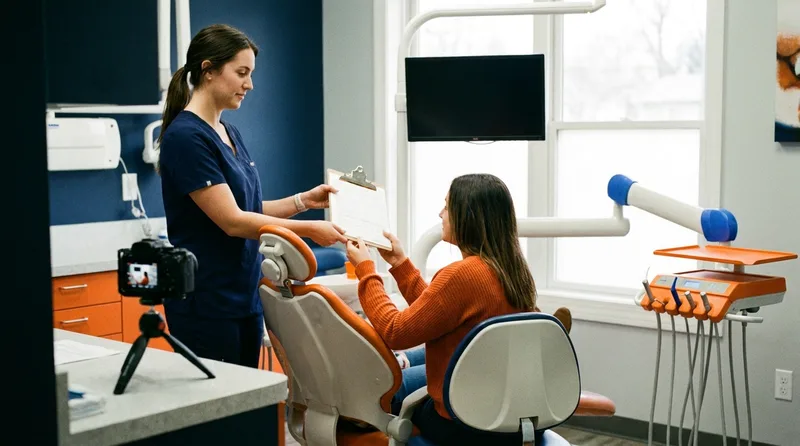
Consent form checklist
- Name each platform or channel where the photo may appear.
- Specify whether the patient will be identified by name.
- Include a clear process and contact for revoking consent later.
Let us handle consent-safe photo posting for you
DentalBase's social media management builds consent tracking and caption review into every before and after post.
See Social Media Services →What do ADA advertising ethics say about this kind of content?
ADA advertising ethics require that this kind of content represent typical, achievable results rather than best-case outcomes presented as standard. Selecting only the most dramatic transformation and implying it reflects every patient's experience runs against that guidance.
Avoiding misleading lighting and retouching
The same principle applies to lighting, angle, and retouching. A photo taken with harsher lighting in the "before" shot, paired with flattering lighting in the "after" shot, exaggerates the result beyond what the treatment actually achieved. This is not primarily a legal risk. It is a patient trust issue. Prospective patients increasingly compare marketing photos against real reviews. Software Advice research found that 77% of patients use online reviews when choosing a dentist, so an inconsistent photo sits right next to the same reviews they are cross-checking it against.
Building a consistent shooting protocol
Use consistent lighting, angle, and camera distance for both shots whenever possible. Caption photos honestly, noting the procedure performed and, where relevant, the number of visits it took. A simple written protocol for your camera setup keeps every team member shooting the same way, even as staff changes over time.
Do state dental boards have specific rules for these photos?
Many state dental boards have specific rules about unretouched images and consistent lighting for this kind of content, though the exact requirements vary by state. Some boards require a disclaimer noting that results vary. Others focus mainly on prohibiting retouching that misrepresents the outcome.
Why you need to check your specific state board
Because rules vary this much by state, check your specific state dental board's advertising regulations before publishing a before and after campaign. Do not assume a format that worked in another state will pass in yours. Some boards also restrict superlative claims paired with these images, such as describing a result as "the best" or "guaranteed." That language should generally be avoided in dental marketing regardless of state rules.
Common state board requirements at a glance
| Common state board focus | What it typically means | Practical fix |
|---|---|---|
| Unretouched images | No editing that changes the clinical outcome shown | Use minimal, non-outcome-altering edits only (cropping, exposure) |
| Consistent lighting/angle | Before and after shot under comparable conditions | Use a fixed camera position and lighting setup for both photos |
| Results-vary disclaimer | A note that outcomes differ by patient | Add the disclaimer directly in the caption, not just on your site |
This is general education, not legal advice. When in doubt, ask your state board directly or consult a healthcare attorney familiar with your state's advertising rules.
How does Meta treat before and after photos differently in ads versus organic posts?
Meta applies far stricter rules to this kind of content in paid ads than in organic posts. It can reject or limit the reach of ads that imply body-related or self-esteem-related transformation. An image that performs well as an organic Instagram post can still get rejected once it is boosted or run as a paid ad.

Why cosmetic cases are especially risky in paid ads
Cosmetic dental cases sit close to this line, since Meta's policy language covers appearance-related transformation content broadly, not just weight loss or skin treatments. Practices sometimes get an ad rejected without understanding why, when the same image posted organically never triggered a review. If you plan to run this content as paid social, review Meta's current advertising policy language before building the campaign. Guidance is updated periodically, and this is a fast-moving area.
How to test safely before running a full campaign
When in doubt, test cautious versions of the ad first. Try text-forward copy with a smaller or cropped image, rather than leading with a dramatic full-frame transformation photo.
Consent rules are only half the job. Once the photo is cleared for use, it still has to be posted somewhere patients actually see it, which is covered in this guide to dental social media marketing for practices.
Considering a paid before and after campaign?
See how DentalBase builds and reviews ad creative before it goes live, to reduce the risk of a platform rejection.
See PPC Services →What captions and disclaimers should accompany a before and after photo?
A caption should name the specific procedure performed, roughly how long treatment took, and note that individual results vary. Vague captions like "amazing transformation" without procedure detail add compliance risk without adding much marketing value either.
Where to put the disclaimer
Where your state board requires a results-vary disclaimer, include it directly in the caption. Do not assume a general disclaimer elsewhere on your website covers social posts too. Avoid superlative or comparative claims tied to the image, such as calling it the practice's "best case" or implying every patient sees similar results. Our guide to strong dentist review examples covers similar honesty and specificity principles for patient testimonials, which pair naturally with this kind of visual content.
Why specific language performs better
Moz's guide to on-page content makes a related point that applies here too: specific, concrete language builds more trust and performs better than vague superlatives, whether the audience is a search engine or a prospective patient scrolling Instagram.
Can you post this kind of content on Google Business Profile?
Yes, Google Business Profile allows this kind of content, though the same consent and honesty standards apply there as anywhere else you post it. An image without documented consent is not made safer to post simply because the platform is Google rather than Instagram.
The SEO upside of a well-documented photo gallery
Google Business Profile photos also carry SEO value beyond the compliance question, since profiles with recent, relevant photos tend to perform better in local search results. BrightLocal's consumer research found that 98% of people read local reviews before choosing a business. A well-documented photo gallery reinforces the same trust signal reviews provide. Keep the same consent file and caption standards consistent across every platform where a photo appears, including your Google profile. Google's own guidance on page experience also rewards fast-loading, well-optimized images, so compress files before uploading rather than posting camera-original file sizes.
Related: Honest, specific captions pair naturally with strong written patient testimonials. See dentist review examples →
What happens if a patient asks you to take down their photo?
Comply with a patient's takedown request as quickly as your platforms allow, generally within a few business days. Delaying removal, or arguing that the consent form technically still permits the use, creates far more risk than the marketing value of one extra photo is worth.
Removing the photo everywhere it appears
Remove the photo from every platform it appears on, not just the one the patient mentioned. Patients rarely know everywhere a practice has reused an image, and a photo posted once often ends up reshared on a review site, a staff member's personal account, or an old ad set that never got fully wound down. Document the request and removal date in the patient's chart. If the photo appeared in print materials already distributed, that is harder to retract immediately. Treat consent seriously before printing anything in the first place. Keep a running list of every place a given photo has been published, including any paid ad campaigns, so a takedown request never turns into a scavenger hunt across platforms and folders.
What Should a Practice Check Before Posting Before and After Photos?
Confirm signed, channel-specific consent, check consistent lighting and angle between the two shots, and write an honest caption naming the procedure before posting the image. Skipping any one of these steps is where most avoidable compliance problems start.
Build a pre-post checklist
Build a simple pre-post checklist your team follows every time. Cover consent on file and channel-specific, lighting and angle matched, and no retouching that changes the outcome. Add an honest caption naming the procedure, plus a results-vary note if your state requires one. A two-minute checklist costs far less than a takedown request, a board complaint, or a rejected ad campaign.
Quick checklist recap
- Confirm signed, channel-specific consent is on file for this exact use.
- Check that lighting, angle, and distance are reasonably consistent between shots.
- Write a caption naming the procedure, avoiding superlative claims.
- Add a results-vary disclaimer if your state board requires one.
Before and After Photo Compliance Self-Check
Check each item before the photo goes live.
Your score: count your checks out of 5
This kind of content works because it shows, rather than tells, what a practice can do. That same visual power is exactly why the rules around consent, honesty, and platform policy matter more here than for almost any other content type.
Build the consent and caption habits into your workflow once, and every future post gets easier and safer. When state or platform rules are unclear, confirm with your board or legal counsel rather than guessing.
Social and video are just one channel in a much bigger marketing stack; see our 2026 dental marketing guide for how they fit alongside SEO, PPC, and retention.
See How DentalBase Manages Compliant Social Content
Book a free demo to see how consent tracking and caption review fit into your practice's content workflow.
Book a Free Demo →Want more marketing guides like this one?
Browse Resources →Sources & References
Frequently Asked Questions
Yes, HIPAA requires a specific, signed authorization separate from routine treatment consent forms. The authorization should name the exact channels where the photo will appear and include a way for the patient to revoke consent later.
Retouching that changes the clinical outcome shown is not allowed under ADA advertising ethics and many state board rules. Minor edits like cropping or exposure adjustment are generally fine, but nothing that exaggerates the result.
Meta allows this content but applies stricter review to paid ads than organic posts, especially for anything implying appearance-related transformation. An image that performs fine organically can still get rejected once boosted or run as a paid ad.
Name the specific procedure performed and roughly how long treatment took, and add a results-vary note if your state board requires one. Avoid vague superlatives like 'amazing transformation' without any procedure detail behind them.
Comply within a few business days and remove the image from every platform it appears on, not just the one the patient mentioned. Document the request and removal date in the patient's chart.
No, state dental board rules vary in how they handle unretouched images, lighting consistency, and results-vary disclaimers. Check your specific state's advertising regulations rather than assuming another state's format applies to you.
Was this article helpful?
Written by
DentalBase Team
Expert dental industry content from the DentalBase team. We provide insights on practice management, marketing, compliance, and growth strategies for dental professionals.