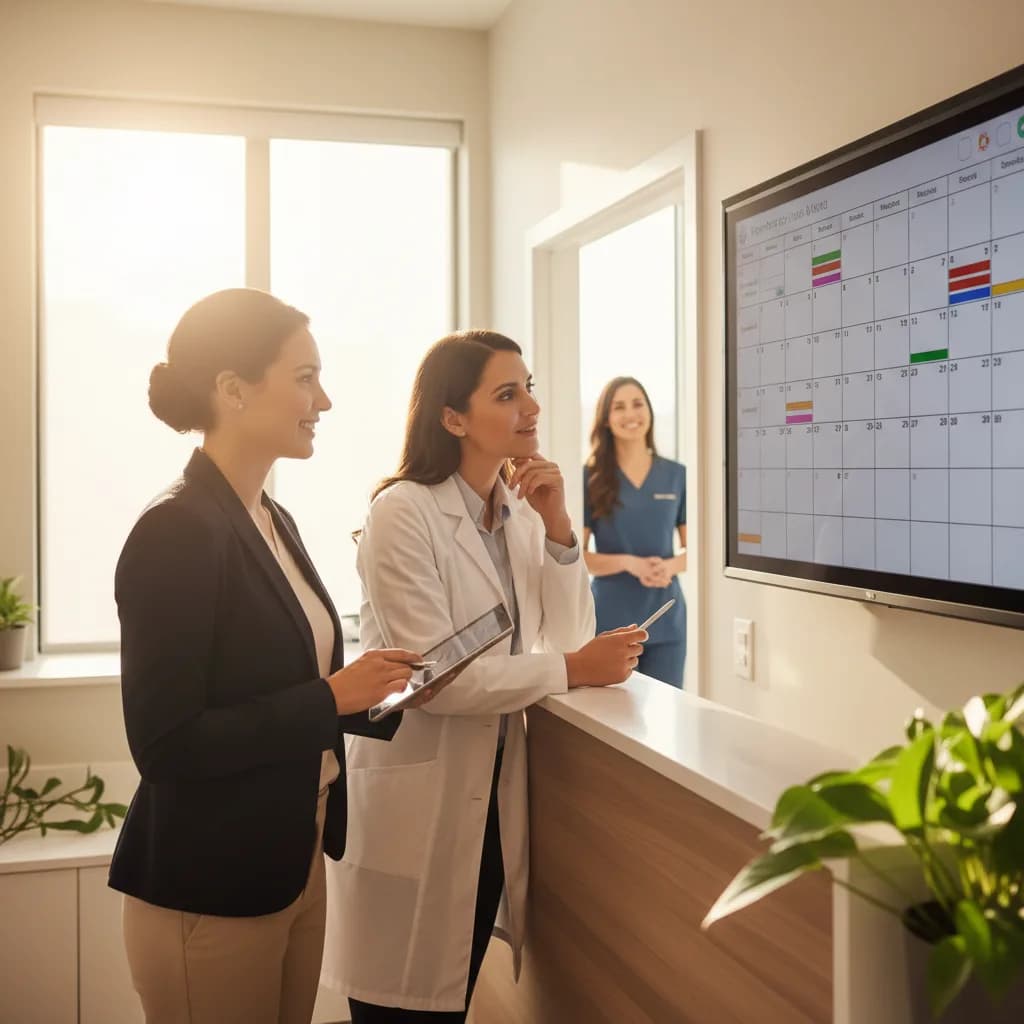
Smart Dental Scheduling: Waitlist, Overbooking, and Filling Every Chair
Smart dental scheduling reduce no-shows: automated confirmations, waitlist backfill, AI rebooking, overbooking math, and the system that fills every chair.
Share:
Table of contents
Smart dental scheduling means deploying a system that does more than send reminder texts. It requires automated confirmations that escalate through channels until the patient responds, waitlist management that fills cancellation gaps within minutes, AI rebooking that contacts no-show patients the same day, and strategic overbooking that accounts for predictable cancellation patterns without creating patient experience problems. The average dental practice loses $150,000-200,000 annually to no-shows and last-minute cancellations. The practices recovering most of that revenue aren't asking staff to call patients more aggressively. They're deploying scheduling intelligence that prevents, fills, and recovers gaps automatically.
This guide covers the four systems that smart dental scheduling uses to reduce no-shows and eliminate no-show revenue loss: confirmation cascades, waitlist automation, same-day AI rebooking, and predictive overbooking. Each system addresses a different stage of the no-show problem (prevention, replacement, recovery, and prediction). Scheduling is the mechanism; for the full prevention framework, see our dental no-show reduction playbook. According to BrightLocal, 98% of consumers expect responsive communication from businesses. Smart scheduling delivers that responsiveness automatically at every touchpoint. As a rule of thumb, no-show rates above 10% usually indicate a scheduling system problem rather than patient behavior. For scheduling service comparisons, see our scheduling services guide.
How Do Confirmation Cascades Prevent No-Shows Before They Happen?
The confirmation cascade is the first layer showing how smart dental scheduling reduce no-shows because preventing a no-show is worth more than filling the gap after it happens.
| Touchpoint | Channel | Timing | What It Catches |
|---|---|---|---|
| 1st confirmation | 7 days before | Schedule conflicts, forgotten appointments | |
| 2nd confirmation | SMS | 48 hours before | Patients who missed email |
| 3rd confirmation | AI phone call | Morning of appointment | Day-of conflicts, verbal commitment |
| Reschedule capture | Two-way SMS/AI | Any response | Converts cancels to reschedules |
- Email at 7 days catches scheduling conflicts early: Patients who realize they have a conflict can reschedule with a week of lead time, giving you maximum opportunity to fill the slot. Email includes appointment details, pre-visit instructions, and verified insurance cost estimate. Patients who confirm via email are removed from the 48-hour SMS. The cost estimate is critical: financial uncertainty is the #1 reason patients cancel within 48 hours.
- SMS at 48 hours reaches non-email-openers: SMS open rates are 95-98% versus 65-75% for email. "Reply C to confirm, R to reschedule" takes patients 3 seconds to respond. Two-way SMS allows instant rescheduling, converting potential no-shows into kept appointments at different times. Patients who respond to SMS are removed from the morning-of AI call.
- AI phone call morning-of creates verbal commitment: For the 15-20% of patients who didn't respond to email or SMS, AI calls the morning of the appointment. Verbal confirmation creates a stronger psychological commitment than text-based confirmation. AI can also handle same-morning rescheduling and add the patient to the waitlist for another date. See our reminders guide.
- Combined cascade result: The three-touchpoint cascade produces 85-95% confirmation rates versus 60-75% from single-touchpoint reminders. The 20-30% improvement eliminates 40-50% of no-shows. At 100 weekly appointments with a 15% no-show rate dropping to 5-8%, that's 7-10 recovered appointments weekly at $300 average production: $109,000-156,000 annually. See our no-show prevention guide.
Confirmation cascades that run automatically
DentalBase sends email, SMS, and AI phone confirmations automatically based on PMS data, captures reschedules instantly, and fills gaps from the waitlist without staff involvement.
Book a Free Demo →How Does Waitlist Automation Fill Cancellation Gaps?
Even the best confirmation cascade can't prevent every cancellation. Waitlist automation is the second layer that fills the chair within minutes of a cancellation rather than leaving it empty.
- Automatic waitlist notification when a slot opens: The moment a patient cancels, the system sends SMS to the first 5-10 patients on the waitlist for that time window: "[Practice name]: A [appointment type] slot opened for [date] at [time]. Reply YES to book or PASS to stay on the waitlist." The first patient to reply YES gets the slot. The entire process from cancellation to rebooking takes 3-15 minutes with zero staff involvement.
- Prioritized waitlist by appointment urgency: Not all waitlist patients are equal. A patient waiting for an urgent crown prep should be contacted before a patient waiting for a routine cleaning. Smart waitlist systems prioritize by appointment urgency, wait duration, and how long the patient has been on the list. This ensures the highest-value production fills cancelled slots first.
- Multiple simultaneous notifications: Notifying waitlist patients one at a time wastes the 30-60 minute window before the cancellation becomes unfillable. Notifying 5-10 patients simultaneously (first-to-respond wins) maximizes fill probability. At 5 notifications per cancellation with 25-35% response rate, the mathematical probability of filling the slot is 75-95%. Single notification: 25-35%. The simultaneous approach fills 2-3x more cancellation gaps.
- Revenue recovery math: A practice with 10 weekly cancellations losing $300 per empty chair loses $156,000 annually. Waitlist automation filling 70-85% of those gaps recovers $109,000-133,000. The system pays for itself within the first month. Track cancellation-to-fill rate weekly and optimize waitlist size (target: 15-25 patients on the waitlist at all times).
How Does Same-Day AI Rebooking Recover No-Show Patients?
When a patient doesn't show up despite the confirmation cascade, the third layer activates: immediate AI outreach to rebook them.
- AI contacts no-shows within 30 minutes: The moment a patient is marked as a no-show in the PMS, AI sends an SMS and optionally places a call: "We missed you at your appointment today. Would you like to reschedule? Here are available times this week." The speed matters because the further from the missed appointment, the less likely the patient reschedules. Same-day outreach recovers 30-45% of no-shows. Next-day outreach recovers 15-25%. Week-later outreach recovers 5-10%.
- Non-judgmental tone preserves the relationship: The outreach message should express concern, not frustration. "We missed you" not "You missed your appointment." Patients no-show for reasons ranging from genuine emergencies to simple forgetfulness. Punitive language (late fees, scolding tone) loses the patient permanently. Empathetic language recovers them for this appointment and all future ones.
- Reschedule with specific times, not open-ended offers: "Would you like to reschedule for Thursday at 2pm or Friday at 10am?" converts at 2-3x the rate of "Please call us to reschedule." Specific times reduce the mental effort required to act. Open-ended requests require the patient to check their calendar, call the office, and navigate scheduling, which most won't do. AI offers 2-3 specific times pulled from real-time PMS availability.
- Pattern flagging for chronic no-shows: Patients who no-show 3+ times within 12 months need a different approach. The system flags these patients for a personal staff call rather than automated outreach. The conversation addresses the underlying barrier (transportation, anxiety, financial, scheduling conflicts) and finds solutions. 40-50% of chronic no-shows have addressable barriers that automated messages can't resolve. See our cancellation reduction guide.
Related: See the complete patient communication automation system. → Dental Patient Communication Automation: The Complete System
How Does Predictive Overbooking Protect Against No-Show Revenue Loss?
Predictive overbooking is the advanced fourth layer that uses historical data to schedule slightly more appointments than the available chairs, knowing a predictable percentage won't show.
- The math behind safe overbooking: If your practice has a consistent 10% no-show rate after the confirmation cascade, booking 110% of capacity means the expected attendance fills 100% of chairs. On a day with 20 appointment slots, booking 22 patients results in an expected 20 patients arriving (2 predicted no-shows). This fills chairs that would otherwise be empty while accepting that occasionally all 22 arrive and the last 2 need brief waits or rescheduling.
- Patient-level no-show probability: Not all patients have equal no-show risk. New patients no-show at 2-3x the rate of established patients. Monday and Friday appointments no-show at higher rates than mid-week. Afternoon appointments no-show more than morning. Smart scheduling assigns a no-show probability to each appointment based on patient history, day of week, time of day, and appointment type. Overbook during high-risk slots, not across the entire schedule.
- Overbooking rules to prevent patient experience damage: Never overbook more than 10-15% above capacity. Never overbook emergency or complex procedure slots (these can't accommodate wait times). Schedule overbooking buffer patients into flexible time slots that can accommodate 15-minute waits without disrupting the clinical flow. If both overbooked patients arrive, the one with the shorter appointment goes first.
- Combine with waitlist for optimal results: Overbooking handles the predicted no-shows. Waitlist handles the unpredicted cancellations that happen day-of when overbooking can't respond. Together, they maintain 95-100% chair utilization versus 80-85% without either system. At 15-20% improvement across a full schedule, the annual revenue recovery is $150,000-250,000 for a typical practice.
How Do You Measure Smart Scheduling Performance?
Five metrics tracked weekly prove whether the scheduling system is producing results or just producing activity.
- No-show rate (target: under 5%): The primary metric. Track weekly. Pre-implementation baseline is typically 15-20%. Post-implementation target: under 5%. If the rate drops to 8% but stalls, investigate which cascade touchpoint patients aren't responding to. The morning AI call usually catches the final 3-5% gap. According to Moz, practices with lower no-show rates produce stronger patient retention that strengthens review velocity.
- Confirmation rate (target: 85-95%): What percentage of patients confirm through any channel before their appointment? Below 80% indicates a channel delivery problem (SMS not sending, email in spam, AI calls going to voicemail). Compare rates across email, SMS, and AI call to identify which channel your patient population responds to best.
- Waitlist fill rate (target: 70-85%): What percentage of cancellation gaps are filled from the waitlist? Below 60% means the waitlist is too small (fewer than 15 patients) or the notification method isn't working. Above 85% means the system is functioning optimally and the remaining unfilled gaps are likely same-day cancellations with insufficient response time.
- Same-day rebook rate (target: 30-45%): What percentage of no-show patients are rebooked within 24 hours? Below 20% suggests the AI outreach timing is too slow (should be within 30 minutes) or the messaging needs optimization. Track through GA4.
- Chair utilization rate (target: 95-100%): The ultimate metric combining all four systems. Total patient-occupied chair hours divided by total available chair hours. Pre-implementation: typically 80-85%. Post-implementation target: 95-100%. Connect to your ROI tracking, spend breakdown, unified platform, marketing strategy, social media, and email marketing. Compliance with HIPAA applies to all patient scheduling data. TCPA requires consent for automated calls and texts.
Fill every chair. Recover every no-show. Automatically.
DentalBase automates confirmation cascades, waitlist backfill, same-day AI rebooking, and scheduling analytics from one platform connected to your PMS.
Book a Free Demo →Explore more guides and tools for dental practice growth.
Browse Resources →Sources & References
Frequently Asked Questions
Four automated systems: confirmation cascades preventing no-shows (email→SMS→AI call producing 85-95% confirmation), waitlist automation filling cancellation gaps (70-85% fill rate in minutes), same-day AI rebooking (recovering 30-45% of no-shows), and predictive overbooking (booking 110% during high-risk slots).
Three touchpoints escalating through channels: email 7 days before (catches conflicts, includes cost estimate), SMS 48 hours before (95-98% open rate, two-way reschedule), AI phone call morning-of (verbal commitment from unconfirmed patients). Patients who respond at any stage exit the cascade.
When a patient cancels, the system instantly texts 5-10 waitlist patients simultaneously. First to reply YES gets the slot. The process takes 3-15 minutes with zero staff involvement. Simultaneous notification fills 75-95% of gaps versus 25-35% for one-at-a-time contact.
Within 30 minutes of the missed appointment. Same-day outreach recovers 30-45% of no-shows. Next-day: 15-25%. Week-later: 5-10%. Speed matters because urgency and availability fade quickly. AI automates the outreach the moment a no-show is marked in the PMS.
Yes when done predictably. If your no-show rate is 10%, booking 110% of capacity fills chairs that would otherwise be empty. Rules: never overbook more than 10-15%, never overbook emergency or complex slots, and schedule buffer patients into flexible time slots. Combine with waitlist for 95-100% utilization.
The average practice loses $150,000-200,000 annually to no-shows and cancellations at a 15-20% rate with $300 average production. Smart scheduling reducing the rate to under 5% recovers $109,000-156,000. Waitlist automation adds $109,000-133,000 by filling cancellation gaps.
Under 5%. Pre-implementation baseline is typically 15-20%. The confirmation cascade reduces to 5-8%. Same-day AI rebooking and waitlist automation push effective chair utilization to 95-100%. Anything above 10% indicates a scheduling system failure, not a patient behavior problem.
Patients with 3+ no-shows in 12 months need personal staff calls instead of automated messages. 40-50% have addressable barriers: transportation, anxiety, financial constraints, or scheduling conflicts. Personal conversations identify and solve the barrier. Automated messages can't resolve underlying issues.
Was this article helpful?
Written by
Dentalbase Team
The Dentalbase Team is a collective of dental marketing experts, AI developers, and practice management consultants dedicated to helping dental practices thrive in the digital age.