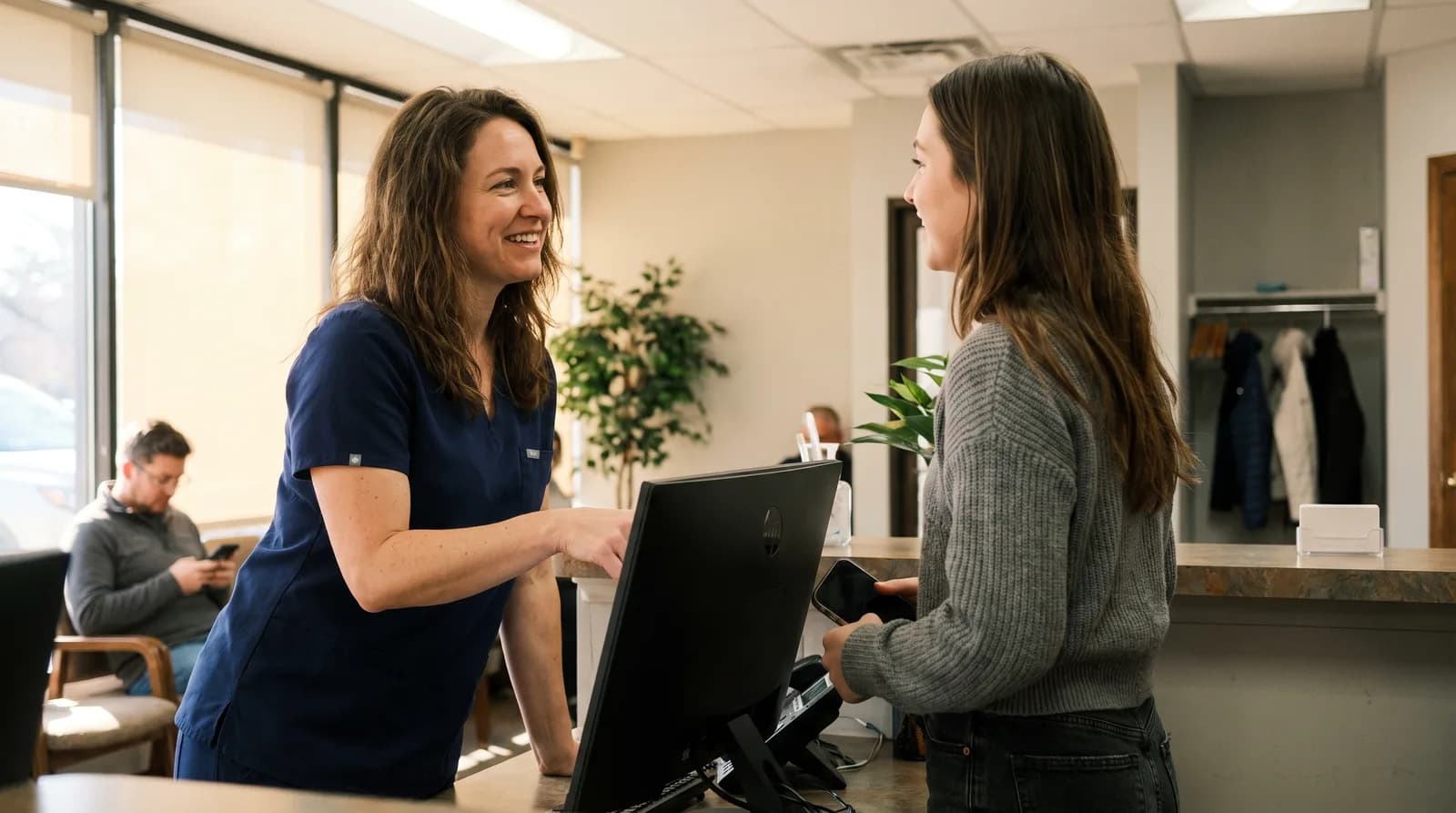
Dental New Patient Follow Up: Win Retention in Two Weeks
Dental new patient follow up doesn't end after the first visit. The two weeks after are when retention is won or lost. Here's the arc I use.
Share:
Table of contents
The first visit isn't the retention test. The two weeks after it are. I figured this out the hard way at my practice in Peterborough, NH, after watching new patients who left happy and never came back. No complaint, no bad review, no dramatic reason. They just drifted, and I had done nothing in the window when catching that drift was still easy. Dental new patient follow up, done properly, isn't a single call the next morning. It's a structured arc from the moment they walk out to the moment they're booked again, and every day of silence in that arc is a small vote for them going somewhere else. Building that arc is one of the first things I walk through with practices using DentalBase. It is also one of the first numbers I check against a practice's broader dental patient retention rate, since first-visit follow-up is where that number is won or lost.
This piece covers the full two-week onboarding arc through the second booked visit. The immediate 48-hour window is covered in a separate sibling post. This one starts where that one ends. If you've never mapped why patients leave a dental practice in the first place, that's worth reading alongside this one.
Why Is the Second Visit the Real Retention Test?
The second visit is the real retention test because a patient who doesn't return after the first visit almost never had a specific complaint. They just didn't feel enough pull to come back. The first visit is a trial. The second is a commitment, and what happens in the two weeks between them determines which way it goes.
I used to track new patient satisfaction and miss this entirely. My first-visit experience scores were fine. But when I started measuring how many new patients actually booked a second visit, the number was embarrassing. The visits felt good. The follow-up arc felt like nothing, because there was no arc. There was a confirmation text and then silence.
According to the ADA Health Policy Institute, practices with structured new patient onboarding programs retain significantly more first-year patients than those relying on recall reminders alone. That gap isn't about clinical quality. It's about what happens outside the chair in the two weeks after the first visit.
What Should a Dental New Patient Follow Up Look Like in Week One?
The sequence in week one should have three distinct touches: a same-day recap, a day-three next-step nudge, and a day-seven human check-in. Each one does a different job, and treating them as one generic "follow up task" is why most week-one sequences fail.
The Same-Day Recap
The same-day recap is a short, warm message that names what was found and what comes next. Not a generic "thanks for visiting" - something that shows the patient was seen as an individual. I have my front desk send a text within two hours of checkout that references the specific treatment discussed or the hygiene finding noted. It takes thirty seconds to personalise and it reads completely differently from a template. Patients notice.
This touch isn't clinical communication. It's relationship communication. The clinical notes are in their chart. This message exists to make a new patient feel like they chose the right practice.
A short video does this better than text when the treatment was complex. Post-procedure care clips answer the questions that otherwise become phone calls, and they cost nothing to reuse once filmed. Patients watch. They rarely re-read written instructions. Our breakdown of dental video content types covers which clips are worth producing once and deploying permanently.
The Day-Three Next-Step Nudge
By day three, the first visit is still fresh but the initial novelty has faded. This is the right moment for a next-step nudge: a short message that references any unscheduled treatment or their next hygiene appointment and makes it easy to book. Not a pressure pitch. A door left open. I use a text for patients under 50 and a phone call for patients over 60, based on what I've learned from my own patient mix in Peterborough. Channel choice matters here as much as timing.
Why Should You Book the Next Visit Before They Leave?
You should book the next visit before they leave because a patient who walks out without a scheduled appointment is far less likely to rebook than one who committed at checkout. Every day that passes between the first visit and the next booked appointment reduces the probability of return, and I've seen this directly at my own front desk.
The psychology is straightforward. A commitment made in the moment, in the presence of the person they've just met and trusted, is a stronger commitment than one made cold from home three days later. HubSpot's research on retention strategies consistently shows that the moment of highest engagement with a new customer is immediately after their first interaction, not days later when competing options have had time to surface. Chairside, I ask my hygienist to mention the next recall before the patient leaves the treatment room. At checkout, my coordinator confirms it and books it on the spot. We stopped asking patients to "call us when they're ready" for routine appointments years ago.
Before-they-leave booking isn't just convenient for the patient. It removes the largest drop-off point in the new patient onboarding arc entirely. A patient with a future appointment on the books doesn't need to be chased. They just need to be reminded.
Related: The first 48 hours after a new patient visit need their own dedicated sequence before the two-week arc kicks in. See the New Patient Follow-Up System: First 48 Hours →
What Kills a New Patient Relationship in Week One?
The most common killer of a new patient relationship in week one isn't a bad experience in the chair. It's a complete absence of contact after it. The patient leaves feeling fine, receives nothing, and quietly decides there's no particular reason to come back to this practice over any other. No drama. Just drift.
Beyond total silence, I've watched a few specific patterns kill new relationships at my own front desk before I fixed them:
- A generic "thanks for your visit" text that could have come from any practice on earth, which signals the patient isn't remembered as an individual.
- A voicemail follow-up call with no message left, which reads as the practice calling to fill a slot rather than checking in on a person.
- A next-appointment booking request sent without mentioning what the appointment is for, which creates friction that patients in the trial phase don't bother to resolve.
- A week of silence followed by a recall reminder that treats a brand-new patient exactly like a patient of ten years.
Each of these is a small signal that the practice doesn't distinguish new relationships from established ones. New patients are watching for exactly this. According to Dental Economics research on patient retention, most patients who leave a practice do so within the first year, and the majority have no complaint about clinical quality. The leaving is relational, not clinical.
How Do You Personalise Dental New Patient Follow Up by Patient Type?
You personalise the new patient sequence by reading three things: how the patient booked, what they said in the chair, and roughly where they are in life. None of this requires a detailed profile. It requires paying attention during the first visit and letting that inform the tone and channel of the follow-up sequence.
The Patient Who Booked Online
A patient who booked online without a referral is convenience-driven. They picked your practice the same way they pick a restaurant. The follow-up sequence should be frictionless and digital-first: text over phone, short messages, easy one-tap booking links. What they need to feel is that the convenience didn't come at the cost of quality. A personalised same-day text naming something specific from their visit goes a long way.
The Referred Patient
A referred patient already has a social bond to your practice through whoever sent them. They're warmer, but they're also evaluating whether the referral was worth vouching for. The follow-up here can be slightly more personal. I have my team mention the referral source in the recap message: "Glad Lisa's recommendation brought you in." That one line reinforces the social connection and lowers the chance of drift.
The Anxious Patient
The anxious patient needs a human touch in week one, not automation. A real phone call from someone on my team, not a text, not a portal message. I flag anxious new patients in our notes during the first visit and my front desk lead makes a personal call within 48 hours. The Bureau of Labor Statistics reports a median hourly wage near $18 for receptionists, and that's the cost I'm spending deliberately on these calls because the LTV of retaining an anxious patient who stays is worth many times that investment. The call doesn't push for a booking. It checks in. Booking comes later, once trust is a little more established.
| New Patient Type | Best Channel | Tone | Priority Touch |
|---|---|---|---|
| Online booking | Text | Concise, frictionless | Same-day recap |
| Referral | Text or call | Warm, personal | Mention referral source |
| Anxious patient | Phone call | Human, no pressure | Check-in before booking push |
| Long-lapsed returnee | Call or email | Welcoming, no guilt | Treatment recap and next step |
What Happens in Week Two of Dental New Patient Follow Up?
Week two of the new patient onboarding arc is the transition from onboarding to relationship. By day ten, a new patient who hasn't booked a second visit is already moving toward the lapsed column, even if neither of you has noticed yet. The week-two touch exists to close that gap before it becomes permanent.
My week-two sequence has two elements. First, a day-ten check-in: a brief, warm message that asks how they're doing after the first visit and mentions any unscheduled treatment discussed. Not a sales pitch. A genuine touchpoint that says this practice remembers them. Second, a soft booking nudge on day fourteen if a second appointment still isn't on the books.
After day fourteen, a new patient without a scheduled return moves out of the onboarding sequence and into the standard recall system. That's the handoff point. The new patient arc is officially over. The patient experience that drives long-term retention starts at this handoff, not at the first visit. It's worth noting that roughly a third of US adults skip a dental visit in any given year, according to CDC dental utilisation data, and a new patient handed off to a generic recall cycle with no relationship built is statistically likely to become one of them.
How Do You Measure First-Visit Return Rate?
You measure first-visit return rate by dividing the number of new patients who booked a second visit within 90 days by your total new patients in the same period. This is the single number that tells you whether your onboarding arc is working, and it's the metric I watch most closely for new patient health at my practice.
Most practices I've seen don't track this number at all. They track new patient volume and assume retention is fine if nobody complains. The number tells a different story. When I first calculated mine at Peterborough, it was in the low 50s percentage-wise. After building a structured two-week arc, I got it to 71%, documented in this breakdown of what I actually changed.
First-Visit Return Rate: What the Numbers Mean
Based on industry ranges and in-practice observation. Your case mix and market will affect these.
Below
50%
Onboarding arc likely missing
Average
55-65%
Some structure, inconsistent follow-up
Strong
70%+
Full two-week arc in place
Should Dental New Patient Follow Up Be Automated or Human?
New patient follow up should be a blend: automate the volume touches that don't require judgment, and keep human contact for the moments that build trust. The same-day recap can be templated with personalisation fields. The day-three nudge can be automated. The anxious-patient check-in cannot, and the day-seven call should never be a robot.
I run a blended model at my practice. Here's how I split the work:
- Automated text: same-day recap and day-three nudge for all new patients.
- Automated reminder: day-ten check-in message for patients not yet rebooked.
- Human call: day-one follow-up for flagged anxious patients.
- Human call: day-seven check-in for anyone still without a second appointment.
- Human call: day-fourteen final nudge before handoff to recall cycle.
That split means automation handles the volume and my team handles the moments that actually move the needle on retention.
According to PatientPop, automated recall systems increase patient return rates by 25% to 40%, but that figure assumes the automation is running alongside human judgment rather than replacing it. A fully automated new patient sequence that treats every first-time visitor the same way will always underperform a blended one. The follow-up system underneath it needs to be designed before you decide what to automate.
Automate the arc without losing the personal touch
DentiVoice runs the structured touches in the background so my front desk can focus on the calls that actually need a person, not the ones that just need a reminder.
See DentiVoice Follow-Up →What Does a Two-Week Dental New Patient Follow Up Arc Look Like?
A two-week new patient arc has seven touch points, each with a distinct purpose. The goal isn't to contact the patient constantly. It's to maintain a thread of connection from the first visit to the second booked appointment, without going silent long enough for drift to set in.
The Two-Week New Patient Arc
Day 0
Book the next visit at checkout
Hygienist mentions it chairside. Coordinator books it before they leave.
Day 0
Personalised same-day recap
Text within 2 hours. Names something specific from the visit.
Day 1
Anxious patient phone call
Human only. Check-in, no booking pressure. Flagged patients from first visit.
Day 3
Next-step nudge
References unscheduled treatment or next hygiene. Easy booking link attached.
Day 7
Human check-in call
Real person, not automated. Short, warm. For patients not yet rebooked.
Day 10
Week-two check-in
How are you doing, here's what's next. Mentions any open treatment.
Day 14
Final booking nudge or handoff to recall
Last chance in onboarding arc. No response moves patient to standard recall cycle.
The Arc Is the Work
Most practices lose new patients not because of a bad first visit but because nothing happened after it. The arc above doesn't require a bigger team, new software, or a major process overhaul. It requires a decision to treat the two weeks after the first visit as deliberately as you treat the visit itself.
Start with day zero. Book the next appointment before they leave. Send the same-day recap with something specific from their visit. Everything else in the arc builds on those two habits. If you have neither right now, fix those first and measure your first-visit return rate in 90 days. That number will tell you whether the rest is worth building.
The practices I've seen with strong new patient retention aren't doing anything exotic. They just decided the relationship doesn't end at checkout - and they built a sequence short enough to run consistently, even on the busiest weeks.
See how DentalBase structures the new patient arc
Book a free demo and we'll walk through how DentiVoice handles the two-week follow up sequence at your practice.
Book a Free Demo →Want more guides like this one
Browse DentalBase Resources →Sources & References
Frequently Asked Questions
Dental new patient follow up is the structured sequence of touches from checkout after the first visit through the second booked appointment. It covers the two weeks after visit one, not just the immediate 48-hour window.
Follow up the same day with a personalised recap, on day three with a next-step nudge, on day seven with a human check-in call, and on days ten and fourteen for patients who haven't rebooked. Each touch serves a different purpose.
The second visit converts a trial into a commitment. Most new patients who don't return have no specific complaint. They drifted because no one maintained contact in the two weeks after visit one.
A blended model works best. Automate the same-day recap and routine reminders. Keep human calls for anxious patients and the week-two check-in. Fully automated sequences underperform blended ones for new patients.
A first-visit return rate above 70% indicates a well-structured onboarding arc. Below 50% usually means no formal two-week sequence exists. Most practices without structured follow up sit in the 55% to 65% range.
Total silence after the visit is the most common cause. Other patterns include generic thank-you messages, voicemail calls with no message left, and booking requests that don't mention what the appointment is for.
Was this article helpful?

Written by
Dr. Muhammad Abdel-rahim DMD
Muhammad Abdel-rahim, DMD, is a dentist and implantologist at Peterborough Family Dental & Implant Center with a passion for blending clinical excellence, leadership, and innovation. He believes dentistry extends beyond restoring smiles to building trust, confidence, and sustainable systems that help patients and teams thrive. With experience leading and scaling dental practices, Dr. Abdel-rahim brings a strategic mindset to patient care and practice growth. He is particularly interested in communication, critical thinking, and the thoughtful application of artificial intelligence to improve clinical outcomes, workflows, and the overall patient experience.