AI Dental Appointment Booking: PMS Integration Guide
AI dental appointment booking with PMS integration, DentiVoice books directly into Dentrix, Open Dental, and Eaglesoft. No callbacks, no manual entry.
Share:
Table of contents
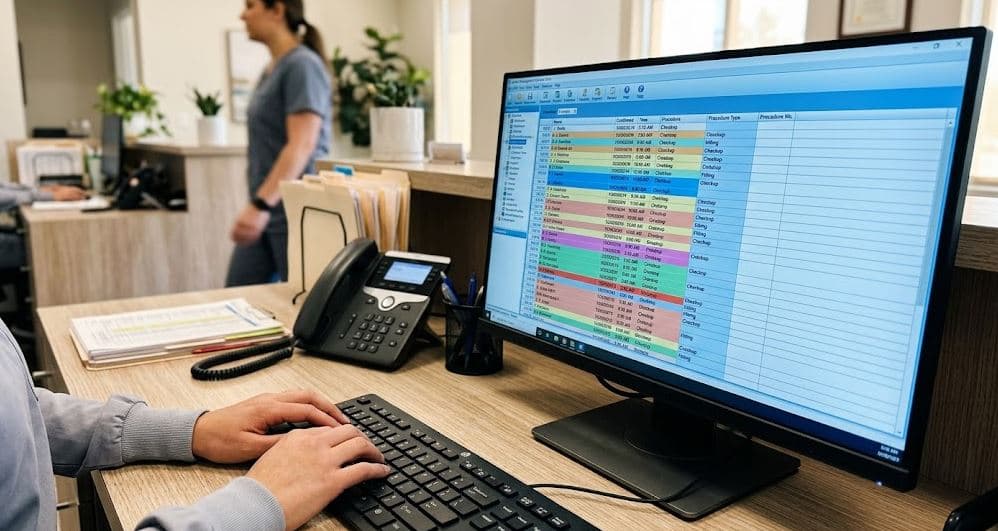
AI dental appointment booking with PMS integration means a patient who calls to schedule leaves the call with a confirmed time, not a callback promise. DentiVoice now reads live availability from Dentrix, Open Dental, and Eaglesoft and books the appointment directly into the practice management system during the call. According to Zocdoc research, 77% of patients expect on-demand scheduling when they contact a dental office by phone. Most practices cannot deliver that. Not because the front desk is unwilling, but because the schedule and the phone do not communicate in real time.
That disconnect is what DentiVoice's AI receptionist PMS integration closes, one confirmed booking per call, written directly to the practice management system, no manual entry on either end. See the full DentiVoice services overview for how this fits into the broader platform.
What PMS-integrated booking means in practice
- Live availability pulled directly from Dentrix, Open Dental, or Eaglesoft
- The appointment written into the PMS during the call, not after it
- No manual re-entry required from the front desk on either end
Why Can't Most Dental Practices Complete AI Dental Appointment Booking in One Call?
The obstacle is a systems gap: the phone and the PMS live separately, and connecting them has required a human coordinator in the middle. A front desk team member takes the call, checks the schedule, offers a time, and creates the appointment manually, a process that depends entirely on the team having capacity at that moment.
According to Dental Economics, only 26% of dental practices currently offer real-time phone-based scheduling with PMS integration. The remaining 74% run a two-step process: answer, then call back to confirm. Every additional step introduces dropout risk. The dental front desk bottleneck that a callback creates drives a measurable percentage of patients to find another practice before the appointment is ever confirmed. When calls arrive during a busy period or outside business hours, the gap becomes a booking loss. PMS integration removes the gap by giving DentiVoice direct real-time access to the schedule, so the AI can offer actual open slots, confirm the patient's choice, and complete the booking in a single call.
Why the two-step callback process fails patients
- A booking depends on the front desk having capacity at the exact moment of the call
- Every callback step adds a chance for the patient to drop out or call a competitor
- Busy periods and after-hours calls turn the gap into a lost booking outright
Practices that eliminate the callback loop see both higher booking conversion rates and measurably fewer no-shows, because a confirmed appointment made in one interaction carries more weight than one made after a follow-up call the next day.
How Does AI Dental Appointment Booking PMS Integration Work With DentiVoice?
DentiVoice integrates at the API level with all three major PMS platforms, Dentrix, Open Dental, and Eaglesoft. When a patient calls, the AI queries the PMS live to retrieve available slots filtered by appointment type, provider, and required duration, presents those options in conversation, confirms the patient's selection, and writes the booking back to the system immediately.
For a closer look at how that live connection works across scheduling, records, and outage handling, see does DentiVoice sync with your practice management software.
For new patients, DentiVoice collects name, date of birth, and contact information during the call and creates a record in the PMS automatically. For returning patients, it matches on name and phone number and attaches the booking to the existing profile. The front desk team receives a complete call summary, patient details, appointment type, booked time, and key call notes, and the appointment is already live in the schedule before the team reviews the note.
What happens during the call, step by step
- DentiVoice queries the PMS live for open slots by appointment type, provider, and duration
- Available options are presented in conversation and the patient confirms a time
- The booking writes back to the PMS immediately, before the call ends
- New patients get a record created automatically; returning patients are matched by name and phone
How double-booking is prevented
The integration also prevents double-booking. Because DentiVoice reads availability in real time, a slot confirmed by one caller is immediately removed from the pool for any concurrent caller. There is no lag and no risk of scheduling conflicts caused by a delay between booking confirmation and PMS update. According to ADA Health Policy Institute research, ease of the initial scheduling experience is one of the strongest predictors of long-term patient retention.
This same live PMS connection runs regardless of which language the caller speaks. Spanish-speaking callers get an identical booking experience, with the same availability check and the same scheduling rules applied on every call.
What Happens During Overflow When the Front Desk Is on Another Line?
Overflow is where real-time PMS booking has the clearest immediate impact. When the front desk is at capacity, calls go to hold or voicemail. Marchex data on dental call handling shows that the average patient hangs up after 90 seconds on hold and most do not call back.
DentiVoice handles those overflow calls with the same real-time PMS access as a live front desk member. A patient reaching DentiVoice during a busy period books their appointment in real time and ends the call with a confirmed slot in the schedule. The practice does not lose that booking to a hold queue or voicemail. The DentiVoice after-hours call handling update extended this same capability to evening and weekend calls, a patient calling at 9pm books the same way as one calling at 10am.
Why overflow calls are the clearest win
- Calls that would go to hold or voicemail get answered and booked instead
- The same real-time PMS access applies regardless of call volume
- Evening and weekend calls now book exactly like a mid-morning call
That appointment lands in the schedule overnight, and the team sees the confirmed booking and call summary when they arrive in the morning, with no callbacks required.
Does Automated AI Dental Appointment Booking Reduce No-Shows?
Yes, Dental Economics research shows practices with automated real-time scheduling see approximately 24% fewer no-shows compared to those using callback-based booking. Confirming an appointment in a single call creates a firmer immediate commitment than a booking finalized after a follow-up call.
The no-show and revenue numbers
There is also a long-term revenue argument. Dental Economics data puts the average dental patient lifetime value at $12,000 to $15,000. When a booking stalls because the callback does not connect, the practice does not just lose the appointment, it loses the patient's full long-term value. The reasons patients leave a dental practice often trace back to friction in early interactions, and a failed callback is exactly that kind of friction. PMS-integrated booking removes the dropout window by converting the call itself into a confirmed appointment on the first interaction. HubSpot retention research consistently finds that effort-free first interactions are among the strongest predictors of long-term customer loyalty across service industries.
How Does the Front Desk Workflow Change With PMS Integration?
The front desk gains a cleaner daily rhythm rather than losing visibility. After every DentiVoice booking call, the team receives a structured note with patient name, appointment type, booked time, reason for visit, and key call details. The appointment is already confirmed in the PMS before anyone reads the note.
How mornings change for the front desk
- Patients book in a single call, eliminating the callback list the team would otherwise work through each morning.
- Appointment records are complete and confirmed in the PMS before the team arrives for the day.
- New patient records are pre-created with contact and intake information collected during the call.
- The team receives a full transcript summary for every booking DentiVoice handles.
- Front desk capacity shifts toward in-office patient interactions and complex scheduling that genuinely needs human judgment.
The dental patient experience starts at the first call. A patient who books in one interaction without hold time or a callback arrives differently than one who went through a two-step process. According to BrightLocal research, first impressions formed before and during an initial visit are among the strongest drivers of patient review behavior and long-term loyalty. For practices running lean front desk teams, this reallocation changes the texture of the entire day.
Which Appointment Types Can DentiVoice Book Directly Into the PMS?
DentiVoice handles all standard appointment types using the slot durations, provider schedules, and availability rules already configured in Dentrix, Open Dental, or Eaglesoft. No separate scheduling setup is required beyond the initial onboarding configuration.
Appointment types DentiVoice handles directly
- New patient exams: DentiVoice books the correct slot length, collects intake details, and creates the patient record automatically in the PMS during the call.
- Hygiene appointments: Recall and cleaning appointments are offered based on available hygiene chair time and provider schedules pulled live from the system.
- Emergency visits: When a caller describes acute pain or an urgent concern, DentiVoice flags the call and offers next same-day or next-day availability per practice-defined emergency protocols.
- Follow-up consultations: Post-treatment and follow-up appointments are booked in real time and written to the PMS immediately upon patient confirmation.
Practices configure which appointment types DentiVoice handles autonomously and which route to the front desk. Concerns about AI handling complex scheduling decisions are addressed directly in the dental AI receptionist objections guide, most practices find the boundaries straightforward to define during onboarding.
It is worth noting that DentiVoice does not make clinical decisions, it handles logistics. The AI books times, collects information, and writes records. Which providers see which patients, which procedures require a specific chair, and any clinical intake requirements all remain governed by the practice's own PMS configuration. DentiVoice executes against those rules; it does not set them.
How Does Phone-Based PMS Booking Compare to Online Scheduling Widgets?
Online scheduling tools serve patients who prefer digital self-service booking. Phone-based PMS integration serves the larger share who prefer to call. ADA research shows phone calls remain the dominant contact channel for dental offices, representing the highest volume of inbound appointment requests across practice types.
Phone booking vs. self-service widgets
DentiVoice delivers the same real-time, no-callback booking experience through the phone channel that an online widget delivers through the browser, and the two run simultaneously without conflict. For a broader look at how AI fits into the modern practice, the AI for dentists practical guide covers where the technology creates the most measurable impact. Phone-based PMS booking captures the patients who call, including those with time-sensitive needs who want a live-format conversation before committing to a time.
- Online widgets serve patients who prefer digital self-service booking
- Phone-based PMS booking serves the larger share of patients who prefer to call
- Both channels run simultaneously without conflict against the same live schedule
There is also a quality difference in the patient interaction itself. A phone call, even one handled by an AI, gives a patient the opportunity to ask a question, confirm their insurance is accepted, or get clarity on what to bring to a first visit. A self-service widget is transactional by design. Both have a place in a modern practice's contact strategy, but the phone channel typically carries higher-intent patients: people who have already decided they want to come in and just need a time confirmed.
What Do Practices Need to Set Up PMS Integration With DentiVoice?
Setup happens during onboarding. The team connects DentiVoice to the practice's Dentrix, Open Dental, or Eaglesoft instance, configures appointment types and providers the AI can book, and sets scheduling rules, buffer times, lead times, and provider restrictions. Most practices complete the PMS integration within the first week.
What to have ready before go-live
- PMS API credentials must be active and carry read and write permissions for the schedule.
- Appointment type configurations in the PMS should accurately reflect current slot durations and provider availability.
- The front desk team should align on which appointment types DentiVoice handles autonomously versus which route for review before go-live.
Unlike a full dental software migration, DentiVoice's PMS integration does not replace or modify the existing system, it reads from and writes to it. The practice's scheduling setup, provider configurations, and appointment type logic all remain exactly as they are. DentiVoice layers on top of the existing infrastructure rather than requiring any changes to it.
See It In Action
Watch DentiVoice Book Directly Into Your PMS
See how a patient call ends with a confirmed appointment in Dentrix, Open Dental, or Eaglesoft, no manual entry, no callbacks, no follow-up required from your team.
Request the PMS Integration DemoThe Booking Gap Is a Revenue Gap, Here Is the Fix
Every call that requires a callback is a call at risk of not converting. The patient moves on, tries another practice, or does not pick up when the team calls back. Integrated PMS booking removes the callback entirely, eliminating the primary dropout point between a patient's first call and their confirmed appointment.
The bottom line
DentiVoice's integration with Dentrix, Open Dental, and Eaglesoft means every inbound call can end with a booking written directly into the schedule. No manual entry. No callback queue. No uncertainty about whether the patient will respond. The DentiVoice AI receptionist handles the full booking workflow, from first ring to confirmed appointment in the PMS, with every call summary ready for the team when they need it.
For practices measuring performance in booked appointments and retained patients, this is where the change registers most clearly in the numbers, and why AI dental appointment booking PMS integration is a structural fix to the call-to-booking conversion problem, not a feature addition.
For a look at how this direct integration model compares to a middleware-based competitor, see our DentalBase vs Dentina AI PMS integration comparison, which breaks down bidirectional sync, write-back speed, and PMS coverage side by side.
Sources & References
Frequently Asked Questions
DentiVoice currently integrates with Dentrix, Open Dental, and Eaglesoft, the three most widely used PMS platforms in US dental practices. The integration reads live schedule availability and writes appointments directly back into each system.
DentiVoice books real appointments. It reads actual open slots from the PMS in real time, offers them to the patient, confirms a time, and writes the appointment directly into the schedule. There is no message-taking, no callback loop.
No. When a new patient calls, DentiVoice collects their name, date of birth, and contact information during the call, then creates a new patient record in the PMS automatically. Existing patients are matched by name and phone number.
No. Because DentiVoice reads availability in real time from the PMS, the first confirmed booking removes that slot from the available pool. A second caller sees updated availability and is offered a different time.
No manual confirmation is required. The appointment is created in the PMS the moment the patient confirms the time on the call. The front desk team receives a call summary, but the booking is already in the schedule.
After every booking call, the front desk receives a summary including patient name, appointment time, reason for visit, and a transcript of key details from the call. The booking is already confirmed in the PMS.
Yes. DentiVoice is configured to handle appointment types by slot duration and provider availability, including new patient exams, hygiene appointments, emergency visits, and follow-up consultations, based on how the practice has set up its PMS schedule.
Yes. DentiVoice handles booking for after-hours and overflow calls using the same PMS integration. A patient calling at 9pm can book an appointment for next week without the practice having to return the call.
Was this article helpful?
Written by
DentalBase Team
Expert dental industry content from the DentalBase team. We provide insights on practice management, marketing, compliance, and growth strategies for dental professionals.