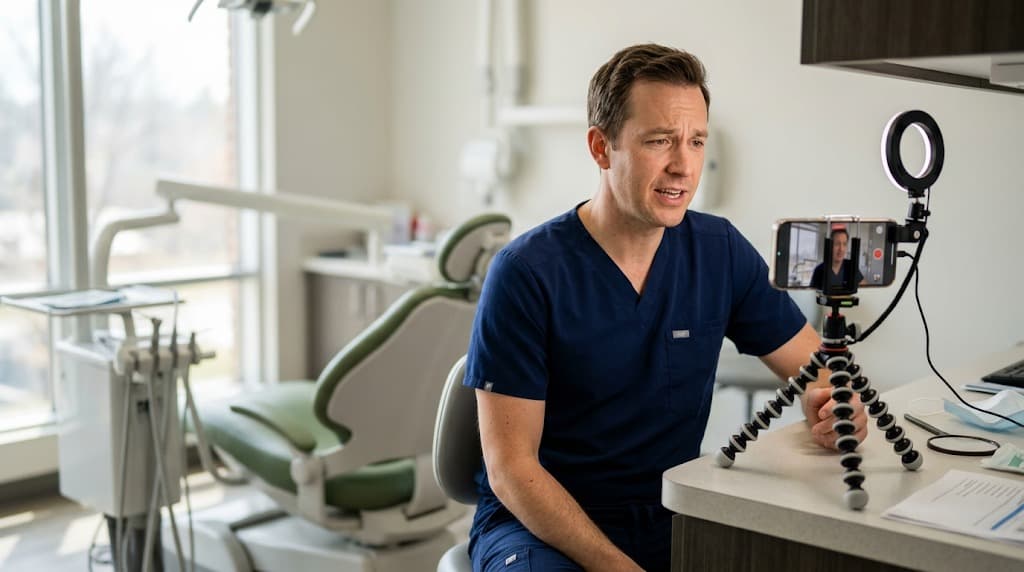
Dental Marketing Experts: What Makes a Great Dental Marketer (2026)
What makes a real dental marketing expert: skills to evaluate, red flags to avoid, when your practice is ready, and what results to expect.
Share:
Table of contents
The difference between a dental marketing experts team that grows your practice and one that drains your budget comes down to five things: dental industry experience, data-driven decision making, multi-channel execution, attribution tracking, and a willingness to be measured on patients, not pageviews. Most practices learn this the hard way after spending $30,000-$50,000 with a generalist agency that couldn't tell the difference between a cosmetic consultation and an emergency walk-in.
Here's why expertise matters more in dental than almost any other local service industry. According to Dental Economics, the average patient lifetime value for a general dentist is $12,000-$15,000. A marketing expert who understands dental patient behavior, insurance dynamics, and procedure-specific conversion patterns can target the patients worth $5,000-$8,000 in first-year production (implants, cosmetic cases) rather than filling your schedule with $180 cleanings that may or may not return. That targeting precision is what separates a dental marketing expert from a generalist who happens to have a dental client.
This guide breaks down what makes someone a genuine dental marketing expert, the specific skills to evaluate, how to tell real expertise from good sales pitches, and when your practice is ready to invest in expert-level marketing help.
What Makes Someone a Dental Marketing Expert?
A dental marketing expert is a professional who combines deep knowledge of dental practice economics with proven execution skills across search, paid media, content, and patient communication. The "dental" part isn't optional. General marketing knowledge applied to dentistry produces generic results.
The dental industry has specific dynamics that generalists miss. Hygiene recall drives 60-70% of recurring revenue for most practices, per HubSpot industry data. Insurance mix determines which patients are profitable and which aren't. Seasonal patterns (back-to-school, end-of-year insurance use-it-or-lose-it) create predictable demand spikes that experts exploit and generalists ignore. And according to BrightLocal, 98% of people read local reviews before choosing a business, which means reputation management is a marketing function, not an afterthought. The competitive structure of local dental markets, where 5-15 practices fight for the same zip code, requires geo-targeted strategies that national marketing playbooks don't cover.
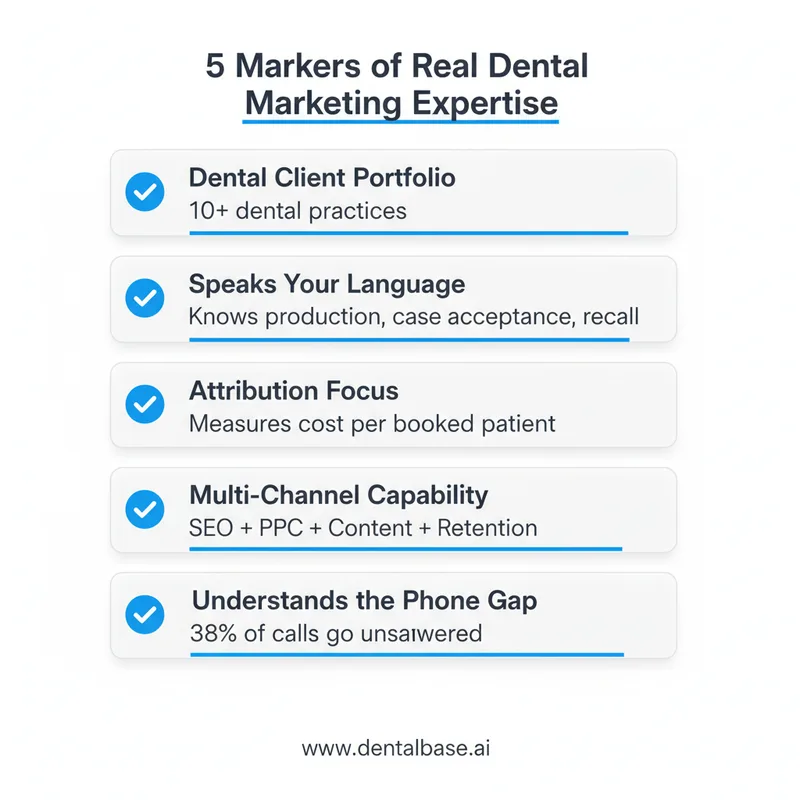
The Five Markers of Real Dental Marketing Expertise
- Dental client portfolio: They've worked with 10+ dental practices, not 10+ "healthcare" clients that include med spas, chiropractors, and wellness coaches. Ask for dental-specific case studies with before-and-after patient acquisition data.
- Speaks your language: They know what production per new patient means. They understand case acceptance rates. They can discuss the difference between PPO, fee-for-service, and Medicaid patient economics without a glossary. If you have to explain what a hygiene recall is, they're not a dental marketing expert.
- Attribution focus: They measure cost per booked patient, not cost per click. According to WordStream, the average cost to acquire a dental patient through digital channels is $150-$300. An expert knows this benchmark and can tell you how your practice compares.
- Multi-channel capability: Dental marketing works best as a system: SEO builds organic traffic, PPC captures high-intent searches, content builds trust, and retention campaigns protect existing revenue. An expert who only does one channel is a specialist, not a strategist.
- Understands the phone gap:38% of new patient calls go unanswered during business hours, per ADA data. A true dental marketing expert addresses this gap because generating leads that go to voicemail is worse than not generating them at all.
Looking for Expert-Level Dental Marketing?
DentalBase combines SEO, PPC, social media, and AI-powered patient communication with full attribution tracking, built specifically for dental practices.
Explore Our Services →What Skills Should a Dental Marketing Expert Have?
A dental marketing expert should have demonstrable skills in local SEO, paid search management, content strategy, patient communication systems, and marketing analytics. These five skill areas cover the full patient acquisition and retention funnel for dental practices.
Skill-by-Skill Breakdown
| Skill Area | What It Covers | How to Test It |
|---|---|---|
| Local SEO | GBP optimization, citation building, review strategy, Map Pack rankings | Ask them to audit your GBP in 10 minutes on the call. Real experts spot gaps instantly. |
| Paid Search (PPC) | Google Ads campaign structure, keyword targeting, landing pages, call tracking | Ask for their average cost per new patient for dental clients. If they say "cost per click" instead, that's a red flag. |
| Content Strategy | Blog publishing, procedure pages, FAQ content, AI search optimization | Ask how they approach content for AI Overviews. 60%+ of searches now show AI answers. |
| Patient Communication | Recall automation, SMS reminders, after-hours call handling, reactivation | Ask what happens to leads generated after hours. If they don't address it, they're leaving 27% of calls on the table. |
| Analytics & Attribution | Call tracking, UTM parameters, PMS integration, ROI reporting | Ask to see a sample monthly report. If it shows clicks but not booked patients, they're not tracking what matters. |
No single person excels at all five. That's why expert-level dental marketing usually comes from a team or a platform, not an individual freelancer. A solo consultant might be excellent at SEO but weak at PPC. An ad specialist might run great campaigns but have no idea how to build a recall system. The value of working with a dental-specific partner is getting all five capabilities under one roof, from dental marketing SEO to paid campaigns to patient retention. For a full framework on evaluating partners, see our guide on the best dental marketing companies.
How Do You Tell Real Dental Marketing Expertise From Good Sales Pitches?
You tell real expertise from a sales pitch by asking questions that require dental-specific knowledge and watching whether the answers include industry data, practice economics, and patient behavior insights or just generic marketing terminology dressed up with the word "dental."
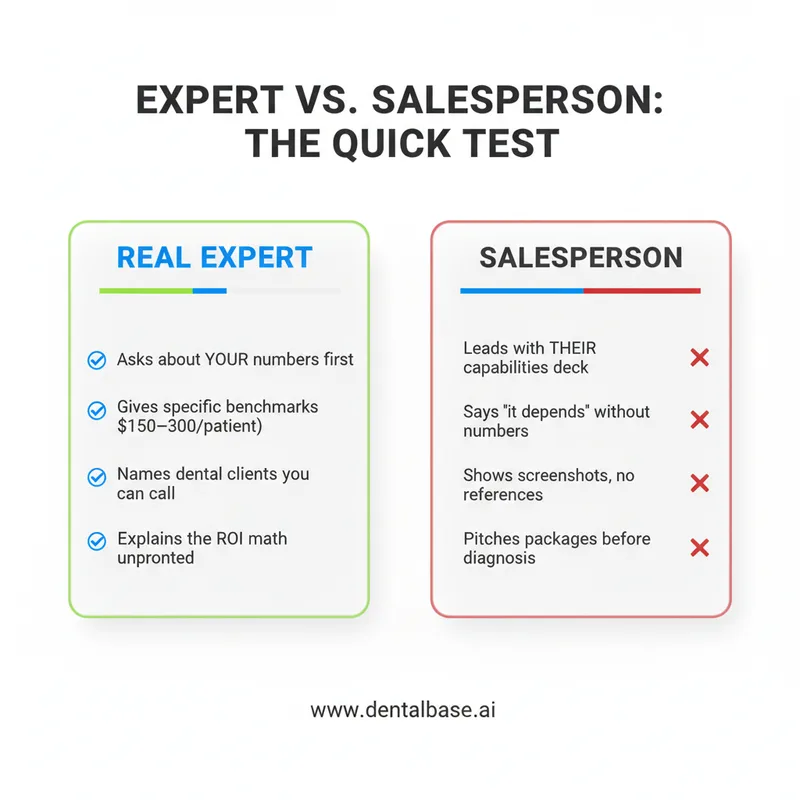
Here's a simple test. Ask: "What's a realistic cost per new patient for a general practice in a mid-size metro?" A real dental marketing expert will say "$150-$300 through digital channels, depending on competition and procedure mix, with implant and cosmetic leads running higher." A salesperson will pivot to talking about impressions, brand awareness, or "it depends on many factors" without giving you a number.
Red Flags That Signal Fake Expertise
- "We guarantee first-page rankings." Nobody can guarantee rankings. Google's algorithm changes constantly, and any expert who claims to control it is either lying or doesn't understand how search works.
- No dental clients in their portfolio. "Healthcare marketing" is not dental marketing. A company that markets for hospitals, urgent care clinics, and dermatologists doesn't understand the economics of a three-provider dental practice.
- They can't explain the ROI math. If they can't walk you through how a $3,000 monthly investment produces a specific number of patients at a measurable cost per acquisition, they're selling activity, not results. Real dental marketing experts think in patient lifetime value ($12,000-$15,000) and cost per booked appointment, not impressions and click-through rates.
- They don't ask about your current numbers. An expert's first question should be about your current new patient flow, retention rate, and marketing spend. A salesperson's first move is to show you their capabilities deck. If they pitch before they diagnose, they're selling a package, not a solution.
For a deeper dive into the questions that separate strong partners from weak ones, see our guide on choosing a dentist marketing agency.
Related: Not sure if you need an expert, a consultant, or a platform? → Consultant Dental Marketing: Do You Need One?
When Is Your Practice Ready for Expert-Level Marketing Help?
Your practice is ready for expert-level marketing help when you're spending $2,000 or more per month on marketing without clear attribution, when your growth has plateaued despite a full schedule, or when you're expanding into high-value services that require targeted patient acquisition strategies.
Not every practice needs a dental marketing expert right now. A startup practice in its first year with a $1,500 total marketing budget is better served by a straightforward dental office marketing plan focused on Google Business Profile, review generation, and basic Google Ads. Expert-level help becomes worth the investment when the basics are in place but the practice isn't growing proportionally to its spend.
Three Signals You're Ready
- You're spending but can't see the return. If $3,000-$5,000 per month goes out the door and you can't tell which channel produces which patients, you need expert-level attribution and analytics. See our guide on dental marketing ROI for the benchmarks you should be hitting.
- Your patient mix needs to shift. Moving from insurance-heavy general dentistry to implants, cosmetics, or Invisalign requires different messaging, different keywords, and different landing pages. A dental marketing expert knows how to reposition your practice for higher-value cases without losing your existing patient base.
- You're opening a second location. Each location faces different competitors, different search volume, and different patient demographics. A dental marketing expert who has launched multi-location campaigns can build a market-specific strategy instead of duplicating what worked at location one.
Ready for Expert-Level Marketing That Proves Its ROI?
DentalBase gives you SEO, PPC, social media, and AI-powered patient communication with full attribution. Every campaign tracked to booked appointments.
Book a Free Demo →Should You Hire an In-House Expert, an Agency, or Use a Platform?
The right format for dental marketing expertise depends on your budget, your growth stage, and how much control you want over day-to-day execution. Each option trades off cost, capability, and oversight differently.
| Option | Monthly Cost | Best For | Watch Out For |
|---|---|---|---|
| In-house hire | $4,000-$7,000+ (salary) | Large practices or DSOs with $10K+ monthly ad budgets | Hard to find dental-specific talent. One person can't cover all channels. |
| Dental marketing agency | $2,500-$10,000+ | Practices wanting full-service execution with a team | Long contracts, less transparency, and you may not own your accounts. |
| Dental marketing platform | Varies by services | Practices wanting expert execution with transparent data and lower overhead | Make sure the platform covers your specific needs (SEO, PPC, calls, social). |
Most single-location practices get the best value from a platform or agency with dental specialization. The in-house route only makes sense when your marketing budget exceeds $10,000 per month and you need someone managing vendors, campaigns, and patient communication full-time. For a broader perspective on all the dental marketing techniques an expert should be managing, we cover the full channel breakdown separately.
What Results Should You Expect From Dental Marketing Experts?
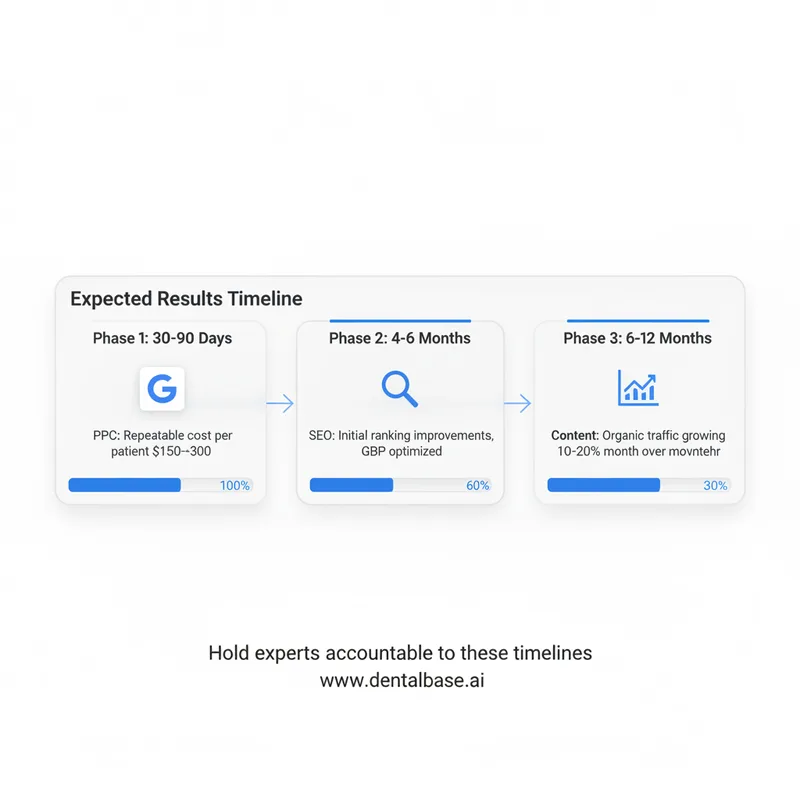
You should expect dental marketing experts to deliver measurable improvements in new patient volume, cost per acquisition, and organic traffic within specific timelines: PPC results in 30-90 days, SEO results in 4-6 months, and content marketing compounding over 6-12 months.
Vague promises like "more visibility" or "better brand awareness" aren't results. Real dental marketing experts set benchmarks before they start and report against them monthly. Here's what measurable looks like:
- Month 1-3 (PPC): A repeatable cost per new patient number, typically $150-$300. If it's above $400 after 90 days with no clear optimization plan, something is wrong. For PPC-specific benchmarks, see our guide on dental PPC advertising.
- Month 3-6 (SEO): Your Google Business Profile should be fully optimized, citation consistency should be cleaned up, and you should see initial ranking improvements for your target keywords. For the full local SEO checklist, see our dental local SEO guide.
- Month 6-12 (Content): Organic traffic to your blog should be growing 10-20% month over month. Your dental content marketing should be producing pages that rank and generate patient inquiries.
- Ongoing (Retention): Patient retention rate should be at or above 85-90%. No-show rates should decline. Reactivation campaigns should recover dormant patients at a fraction of new patient acquisition cost. See our guide on dental patient retention marketing.
Any dental marketing expert who resists being measured against these benchmarks is telling you something important about their confidence in delivering results.
The dental marketing experts who produce real growth for practices aren't the ones with the flashiest websites or the biggest promises. They're the ones who ask hard questions about your numbers before they propose anything, who think in patient lifetime value instead of clicks, and who build systems that compound over time instead of campaigns that expire. If you're ready to invest in expert-level help, start by checking whether your current marketing can even be measured. If you can't answer "what does it cost us to acquire a new patient, and which channel produces them?" then the first expert investment should be in tracking and attribution. Everything else improves once you can see the data. For the full picture of how expert marketing fits into a complete dental marketing strategy, start with our pillar guide. And if you're comparing partners, our dental reputation management guide covers one of the areas where expert help makes the biggest difference.
See What Expert Dental Marketing Looks Like
DentalBase handles SEO, PPC, social media, reputation management, and AI-powered patient communication with full attribution. Book a free walkthrough.
Book a Free Demo →Explore more guides and tools for dental practice growth.
Browse Resources →Sources & References
Frequently Asked Questions
A dental marketing expert has worked with 10 or more dental practices, understands practice economics like patient lifetime value and production per new patient, can demonstrate measurable results with before-and-after data, and has skills across multiple channels including SEO, PPC, content, and patient communication.
An in-house dental marketing hire costs $4,000-$7,000 per month in salary. Dental marketing agencies charge $2,500-$10,000 per month depending on scope. Marketing platforms built for dental offer expert-level execution at varying price points, typically lower than full-service agency retainers.
Expect a repeatable cost per new patient of $150-$300 from PPC within 90 days, initial SEO ranking improvements within 4-6 months, growing organic traffic from content within 6-12 months, and patient retention rates at or above 85-90% with proper retention systems in place.
They should report cost per booked patient by channel monthly, not just clicks and impressions. You should see your cost per acquisition declining over the first 90 days of PPC and organic traffic growing after 4-6 months of SEO and content work. If they resist measurement, that's a problem.
Most single-location practices get better value from an agency or platform because one person can't cover SEO, PPC, content, social, and patient communication effectively. In-house hires make sense for DSOs or practices spending $10,000 or more monthly on marketing who need full-time vendor management.
A dental marketing expert understands hygiene recall revenue, insurance patient economics, procedure-specific conversion patterns, and local competitive dynamics. A general marketer applies the same playbook to every industry and misses the dental-specific nuances that determine whether campaigns produce profitable patients or just traffic.
Was this article helpful?
Written by
DentalBase Team
Expert dental industry content from the DentalBase team. We provide insights on practice management, marketing, compliance, and growth strategies for dental professionals.