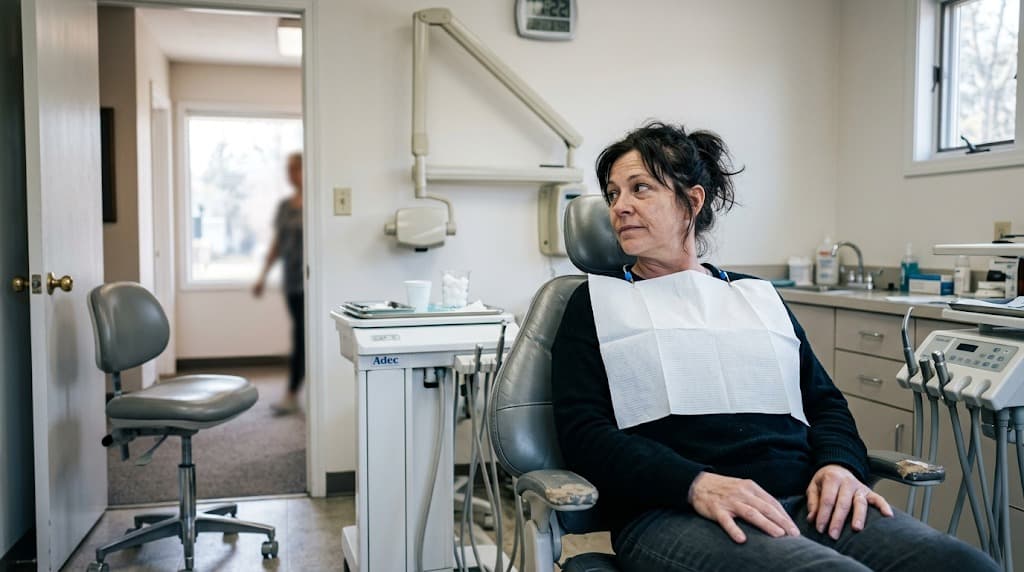
Dental Office Patient Wait Time: Find the Real Cause
What really causes long dental office patient wait time, the effect each cause has on patients, and how I diagnosed the hidden stall in my own practice.
Share:
Table of contents
For years, I treated long waits in my practice as bad luck. A heavy morning, a complicated patient, a provider running behind. What I missed is that the dental office patient wait time is rarely random. It has specific, repeatable causes, and each one does its own quiet damage to how patients feel about you.
Most owners try to fix waits by telling the team to hurry. That almost never works, because speed isn't usually the problem. The problem is structure: where the schedule collides, where a handoff stalls, where the front desk gets pulled away. Until you know which cause is yours, you're guessing.
This is a deep dive into the real causes of long waits, what each one does to the patient experience, and how I traced my own problem to its source. Less theory, more diagnosis. By the end, you'll know where to look first in your own office.
What causes a long dental office patient wait time?
Long dental office wait times come from a handful of structural causes: an overbooked or poorly sequenced schedule, the hygiene-to-doctor handoff stalling, check-in friction from paper forms, a provider running behind early and never recovering, and an understaffed front desk pulled away by the phone. Speed is rarely the real issue.
Here's the pattern I see in practice after practice. The wait isn't one big delay. It's four or five small structural stalls that stack on top of each other across a single visit. No single one feels fixable, so owners shrug and blame a busy day. But each stall has a cause you can name, and naming it is the first step to removing it. The stakes are real: patients increasingly cite convenience as a top factor when choosing a provider, and a long dental office patient wait time is the fastest way to feel inconvenient. Data from the NIDCR shows how often patients already delay care, so a frustrating visit only deepens that avoidance.
Worth noting: these causes compound. A provider who starts 10 minutes behind hands a delay to hygiene, which hands it to the front desk, which now has a backed-up lobby and a ringing phone. By mid-morning the whole system is behind, and no one can point to why. The cause was structural, not personal.
The five usual causes
- Schedule design: exam slots that don't line up with hygiene completion, so the doctor and the chair are never ready at the same time.
- The hygiene-to-doctor handoff: the patient sits gowned and idle while the doctor finishes in another operatory.
- Check-in friction: paper forms filled out in the lobby and insurance re-verification that stalls the front desk.
- Early slippage: a provider who falls behind in the first hour and never catches up all day.
- Phone load: one front-desk person juggling check-in and a ringing phone, so neither gets done fast.
Speed is the symptom. Structure is the cause.
In our experience, telling the team to move faster fixed nothing. Finding the structural stall, and removing it, fixed almost everything.
How does a long wait time actually hurt the patient experience?
A long wait time damages the patient experience in three ways: it inflates the felt wait far beyond the clock, it erodes trust before the clinical work even starts, and it shows up later as bad reviews and silent attrition. The harm compounds long after the patient leaves the chair.
The first effect is psychological. An unoccupied, unexplained wait stretches in the mind. Queue psychology research, going back to MIT operations scholar Richard Larson and his work on the social cost of waiting, has shown for decades that idle time feels far longer than busy time. A patient who waited 11 real minutes can swear it was 25, and that inflated memory is the one they act on.
The second effect is trust. A patient kept waiting with no update assumes they've been forgotten, and that feeling carries into the operatory. The third effect is the expensive one. BrightLocal has found 98% of people read local reviews before choosing a provider, so one "waited forever" review quietly costs you future patients. It matters more than ever, because the CDC reports only about 50% of US adults see a dentist in a given year, so every dental office patient wait time that ends in a bad review shrinks an already small pool. Patients who feel chronically rushed or ignored simply stop rebooking, which is the most expensive effect of all.
| Cause of the wait | Effect on the patient experience | The fix |
|---|---|---|
| Schedule collision | Feels chaotic, unpredictable visits | Sequence exams to hygiene completion |
| Hygiene-to-doctor handoff | Feels forgotten, captive in the chair | Block exam slots, give an update |
| Check-in friction | Frustrated before sitting down | Move intake forms out of the lobby |
| Phone pulling the front desk | Ignored at the desk, visible resentment | Take the phone load off the desk |
Read that middle column again. None of those effects are about minutes. They're about how the wait feels, and the feeling is what patients remember and review.
Related: Patients who quietly stop rebooking after a frustrating wait are the most expensive effect, and winning them back starts with a retention plan. See 15 dental patient retention strategies →
Why is the hygiene-to-doctor handoff the cause owners miss most?
The hygiene-to-doctor handoff is the most-missed cause because it's invisible to the owner and painful to the patient. The doctor is busy in another operatory, so from the front it looks productive. But the patient is gowned, alone, and idle, and that captive wait feels at least double the clock.
This is the cause I'd have bet against. I assumed our wait problem lived at the front desk, where I could see it. The handoff happens out of my sightline, in a closed operatory, so it never registered as a problem. Meanwhile it was the single worst stall in the building.
The reason it does so much damage is the captive nature of the wait. A patient in the lobby can read, scroll, or step out. A patient gowned in a chair can do none of that. They sit, they assume they've been forgotten, and every minute counts double. That's why the same number of minutes hurts far more in the chair than in the lobby. The cause hides where you can't see it, and the effect lands where it does the most harm.
Related: Every idle minute in the chair during the handoff is production you have already paid for and lost. See the true cost of hygiene chair time →
How did I trace my own wait-time problem to its source?
I traced my wait-time problem by logging three timestamps per patient and asking one question at checkout. The data pointed away from where I assumed the problem was. The front desk wasn't the worst offender. The hygiene-to-doctor handoff was, by a wide margin.
I ran it for two weeks with a clipboard and no new software. Here's the exact method anyone can copy:
- Timestamp 1: the scheduled appointment time, straight from the schedule.
- Timestamp 2: the real check-in time, noted the moment the patient walks in.
- Timestamp 3: the moment the patient is actually seated and care begins.
- One question at checkout: "Roughly how many minutes do you feel you waited today?"
The three timestamps gave me the real wait at each stage. The checkout question gave me the felt wait. When I laid them side by side, the handoff row was impossible to ignore.
| Stage of the visit | Actual wait (avg) | Perceived wait (avg) | The gap |
|---|---|---|---|
| Check-in to seated in lobby | 3 min | 6 min | +3 min |
| Lobby to treatment chair | 6 min | 9 min | +3 min |
| Hygiene-to-doctor handoff | 5 min | 11 min | +6 min |
The handoff gap was double every other stage. That one row rewrote my whole assumption. I'd been ready to hire another front-desk person to fix a problem that wasn't at the front desk at all. The measurement saved me a salary and pointed at the real cause. This kind of honest diagnosis is the backbone of the larger patient experience that drives retention.
How do you fix each cause of a long wait time?
You fix each cause at its source, not with speed. Every structural stall behind a long wait time has a specific, low-cost fix: resequence the schedule, move intake out of the lobby, protect the morning, add a simple update rule, and take the phone load off the front desk. Match the fix to the cause and the felt wait drops sharply.
Here is each of the five causes paired with the fix that actually removes it. Work them in order of whichever stall your own measurement flagged as worst.
Cause 1: Schedule design
When exam slots don't line up with hygiene completion, the doctor and the chair are never ready at the same moment, so someone always waits. The fix is to resequence the schedule so the doctor's exam check-ins are blocked to land when hygiene visits actually finish, not at arbitrary clock times. Stop letting the two columns collide. This is a one-time scheduling change, not a daily effort.
Cause 2: The hygiene-to-doctor handoff
This is the stall owners miss most, because the patient sits gowned and idle in a closed operatory while the doctor finishes next door. The fix pairs two moves. First, the schedule change above, so exams are timed to hygiene. Second, a standing rule that hygiene flags the doctor a few minutes before the patient is ready, instead of after. The handoff stops being a dead zone and becomes a scheduled baton pass.
Cause 3: Check-in friction
Paper forms filled out in the lobby and insurance re-verification at the desk turn check-in into a bottleneck before the visit even starts. The fix is to move intake out of the lobby entirely: send forms ahead of time and verify insurance the day before, not at arrival. That single change converts check-in from a five-minute stall into a wave-through. The full process is covered in our guide to dental form automation.
Cause 4: Early slippage
A provider who falls behind in the first hour hands that delay to every patient after, and the day never recovers. The fix is to protect the morning: build a small buffer into the first two or three slots and treat the first appointment as non-negotiable to start on time. Recovering 10 early minutes is worth far more than trying to claw them back at noon. Guard the start of the day and the rest of it tends to hold.
Cause 5: Phone load
One front-desk person juggling check-in and a ringing phone does neither fast, and the lobby backs up. The fix is to take the phone load off the desk so the team can check patients in without interruption. A phone that never stops ringing is one of the real root causes behind a slow front desk, and the front desk sitting at the center of all this is exactly why the front desk bottleneck can quietly cap your growth.
One fix costs nothing and outperforms its effort: a simple update rule. Any patient waiting past 10 minutes gets a quick, honest line, "the doctor is finishing up next door and will be right in." That sentence resets the felt clock even when the actual wait hasn't moved. The ADA's practice management resources make the same case: small structural habits, repeated, are what hold patients.
| Cause | The fix |
|---|---|
| Schedule design | Block exam check-ins to land when hygiene actually finishes. |
| Hygiene-to-doctor handoff | Time exams to hygiene and flag the doctor before the patient is ready. |
| Check-in friction | Send forms ahead and verify insurance the day before. |
| Early slippage | Buffer the first few slots and start on time, no exceptions. |
| Phone load | Take the phone off the desk so check-in never stalls. |
Taking the phone off the front desk is the fix you can make this week.
The DentalBase AI receptionist answers and books calls so your team can check patients in fast and keep the lobby wait short.
Explore the AI receptionist →Which cause should you investigate first?
Investigate the cause you're most sure isn't your problem. That false certainty is almost always where the biggest hidden stall lives. For most owners, that means looking at the hygiene-to-doctor handoff before touching the front desk, because the handoff is invisible from the front.
The stakes are higher than a few awkward minutes. Every patient who leaves over a frustrating wait has to be replaced, and retention research shows acquisition running 5 to 7 times the cost of keeping an existing patient. The ADA reports 20% to 30% of patients go inactive within 18 months without follow-up, and a chronic wait problem speeds that exit. Once you see the lifetime value of a single patient, investigating your wait causes stops being optional.
Which wait-time cause is hiding in your office? A self-check
Check each item your practice can honestly say it does today.
Your score: count your checks out of 5. Three or fewer means a hidden cause is probably inflating your felt wait.
Start this week. Time your actual wait at each stage for three days, then ask ten patients how long they think they waited. The stage with the biggest gap is your first cause to fix, and it's rarely the one you'd guess.
The single most useful lesson from all of this: a long wait is a structural problem with a findable cause, not a busy-day problem you tolerate. Diagnose the cause, fix it at the source, and keep measuring. The clock was never the thing patients remembered.
Take the phone load off your front desk and watch the lobby wait shrink
Book a short demo and see how DentalBase keeps your front desk free to check patients in fast, so the wait that patients feel stays short.
Book a Free Demo →More guides on measuring and improving the patient experience
DentalBase gives owners the tools and playbooks to turn experience signals into a steady, returning patient base.
Browse the resource library →Sources & References
Frequently Asked Questions
Long waits come from structural causes: a poorly sequenced schedule, the hygiene-to-doctor handoff stalling, check-in friction from paper forms, a provider running behind early, and an understaffed front desk pulled away by the phone. Speed is rarely the real issue.
It inflates the felt wait far beyond the clock, erodes trust before clinical work starts, and later shows up as bad reviews and silent attrition. The harm compounds long after the patient has left the chair.
Because it is invisible to the owner and painful to the patient. The doctor is busy in another operatory, so from the front it looks productive, while the patient sits gowned and idle, feeling that captive wait at double the clock.
I logged three timestamps per patient and asked one question at checkout for two weeks. The data pointed away from the front desk, where I assumed the problem was, and straight at the hygiene-to-doctor handoff as the worst stall.
Fix each at its source: resequence the schedule so exams align with hygiene completion, move intake out of the lobby, give a proactive update past 10 minutes, and take the phone load off the front desk. Speed alone fixes nothing.
Investigate the cause you are most certain is not your problem. That false certainty is almost always where the biggest hidden stall lives, which for many owners means the handoff before the front desk.
Was this article helpful?
Written by
DentalBase Team
Expert dental industry content from the DentalBase team. We provide insights on practice management, marketing, compliance, and growth strategies for dental professionals.