AI Receptionist for Orthodontic Practices: How It Works
See how the AI receptionist orthodontic practices depend on handles scheduling, parent calls, Invisalign routing, and seasonal spikes in 2026.
Share:
Table of contents
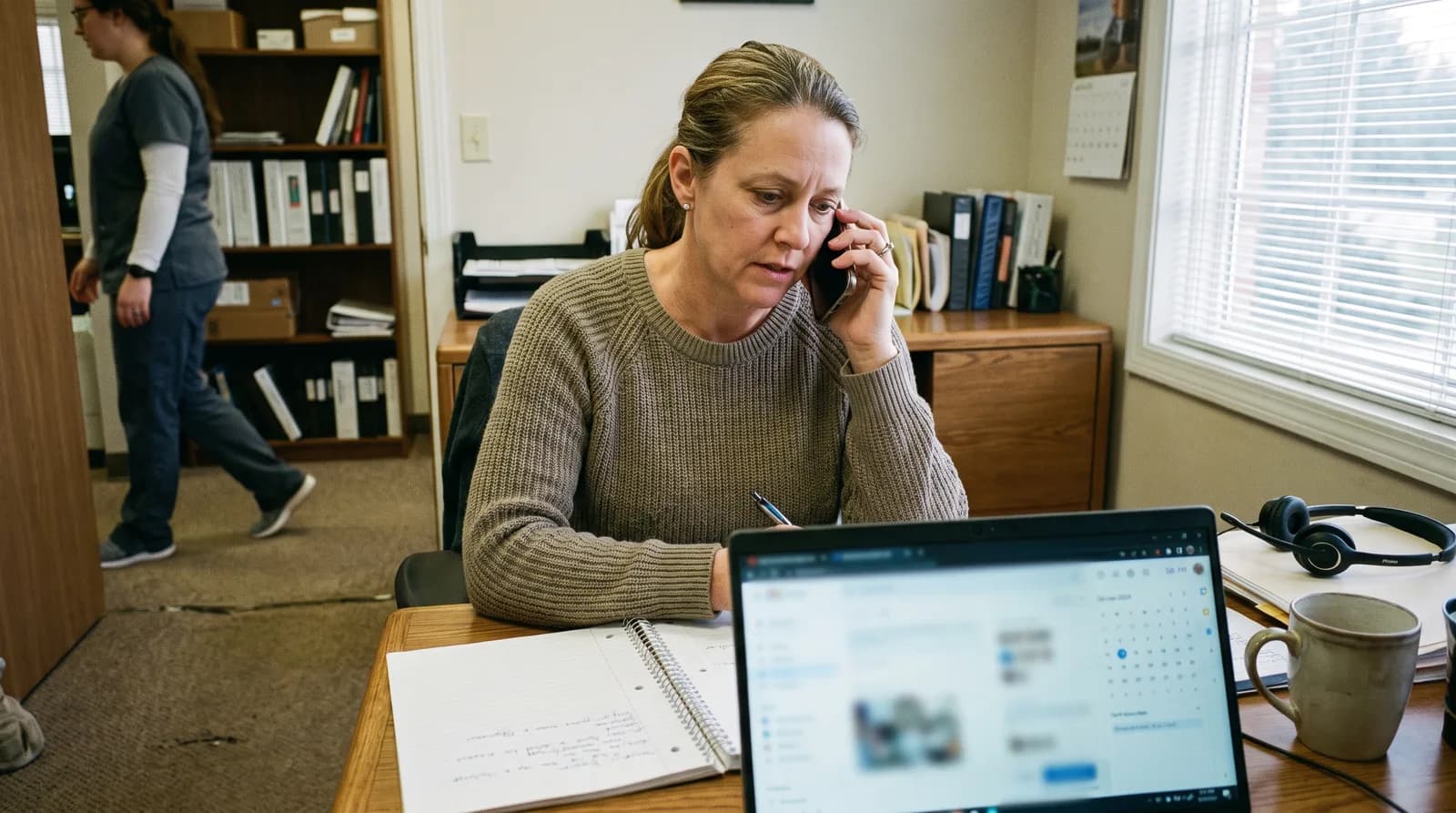
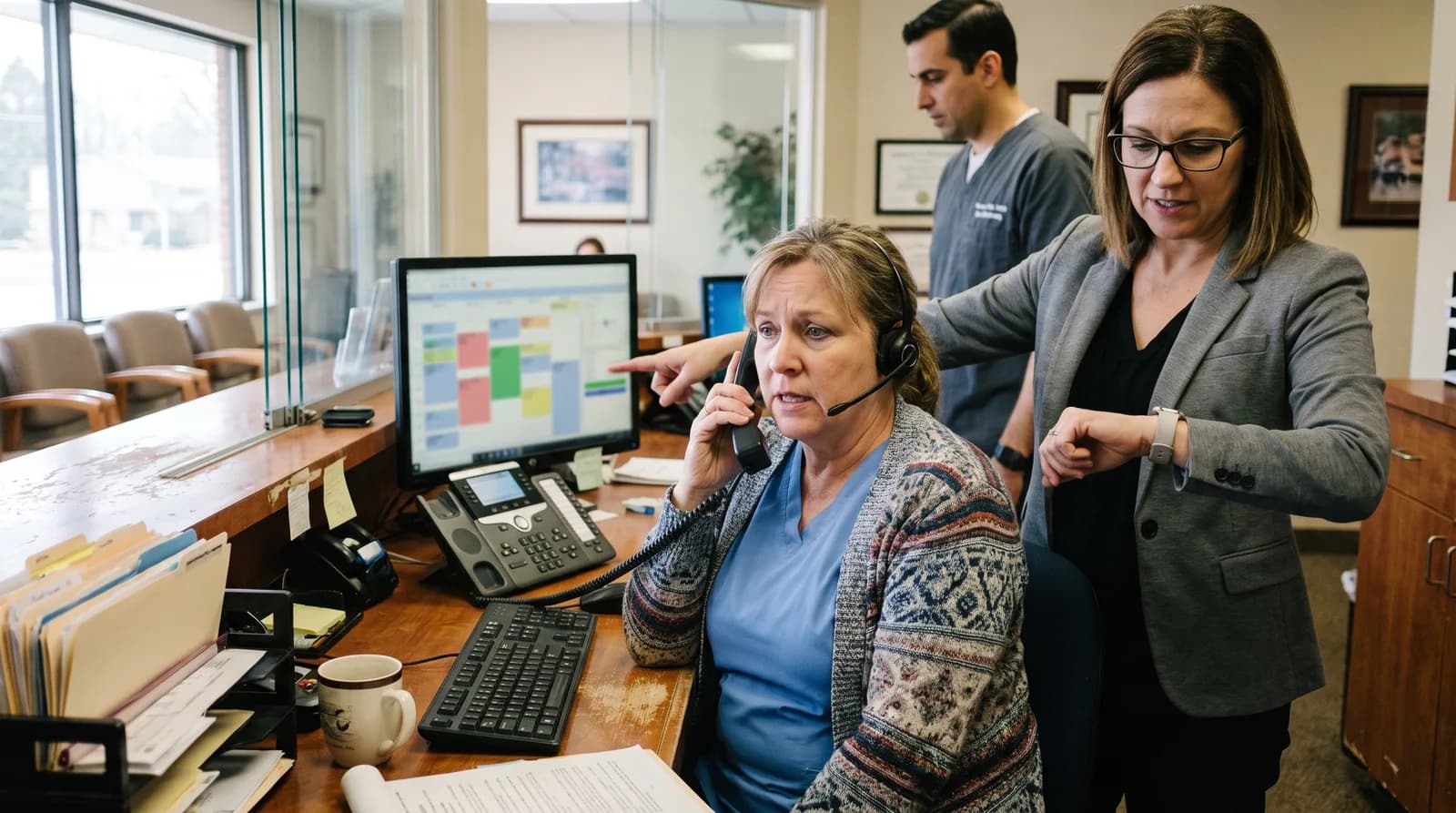
The right AI receptionist orthodontic practices use today looks nothing like a basic answering service. If you run an ortho office, you already know your front desk workload is in a category of its own. Parents call to coordinate appointments for minors. Treatment plans span years, not visits. And twice a year, summer break and back-to-school season flood your phone lines with consult requests and rescheduling calls all at once.
According to the ADA, 38% of new patient calls go unanswered during business hours across dental practices, per ADA Practice Transitions research. For orthodontic offices dealing with seasonal surges, that gap widens during the months that matter most for new patient acquisition.
This article breaks down how an AI receptionist handles the call types that make ortho scheduling uniquely complex, from multi-phase treatment plans to Invisalign routing to parent communication.
Why Do AI Receptionist Orthodontic Practices Need Specialty-Specific Training?
Orthodontic front desks manage more appointment types per patient, longer treatment timelines, and a higher ratio of parent-driven calls than almost any other dental specialty. That's why an AI receptionist orthodontic practices depend on needs specialty-specific training, not a generic phone bot.
More Appointment Types, Longer Timelines
Think about what a single ortho patient requires over a full treatment cycle:
- Initial consultation
- Records and imaging
- Bonding day
- Adjustment visits every few weeks for the duration of active treatment
- Debonding
- Retainer checks
That's a long list of distinct appointment types per patient, each with a different duration, provider requirement, and operatory setup. Multiply that across a full active patient panel, and your scheduling grid is already dense before anyone picks up the phone.
Dental employment is projected to grow just 4% from 2022 to 2032 according to the Bureau of Labor Statistics. That pace rarely keeps up with a growing active patient panel spread across a dozen appointment types.
How Do Parent Calls and Seasonal Demand Complicate Ortho Scheduling?
Parent calls and seasonal surges complicate ortho scheduling because the caller usually isn't the patient, and call volume spikes twice a year without any added staff. An AI receptionist has to identify the right decision-maker and absorb those volume swings without dropping a single call.
Parent-Driven Scheduling Adds Complexity
Most of your patients are minors. The person calling isn't the patient. It's a parent juggling school schedules, work hours, and possibly appointments for multiple children in treatment. The front desk has to track who's authorized to make scheduling decisions, confirm which child the call is about, and match the right appointment type to each patient's current phase.
Seasonal Demand Creates Predictable Bottlenecks
Ortho practices see two annual surges that general offices don't. Summer break brings a wave of new consult requests from parents who've been waiting for a convenient time to start treatment. Back-to-school season triggers a rush of rescheduling as families adjust around new class schedules. During these windows, your team size doesn't scale with the call volume. That's the gap an AI receptionist fills, making sure the phone never goes unanswered when your team is occupied with patients already in the building.
The average dental practice misses 15-20 calls per week even outside peak season, according to Dental Economics. That number climbs sharply during the two seasonal surges ortho practices see every year.
See How DentiVoice Handles Orthodontic Calls
DentiVoice answers, qualifies, and books ortho patients directly into your PMS, even during your busiest months.
Learn About DentiVoice →How Does an AI Receptionist Route New Patient and Invisalign Calls?
An AI receptionist routes new patient and Invisalign calls by asking a short set of screening questions, then booking each caller into the correct consultation type. New consults, clear-aligner inquiries, and traditional braces requests each follow a distinct path into your PMS.
New Patient Consult Requests
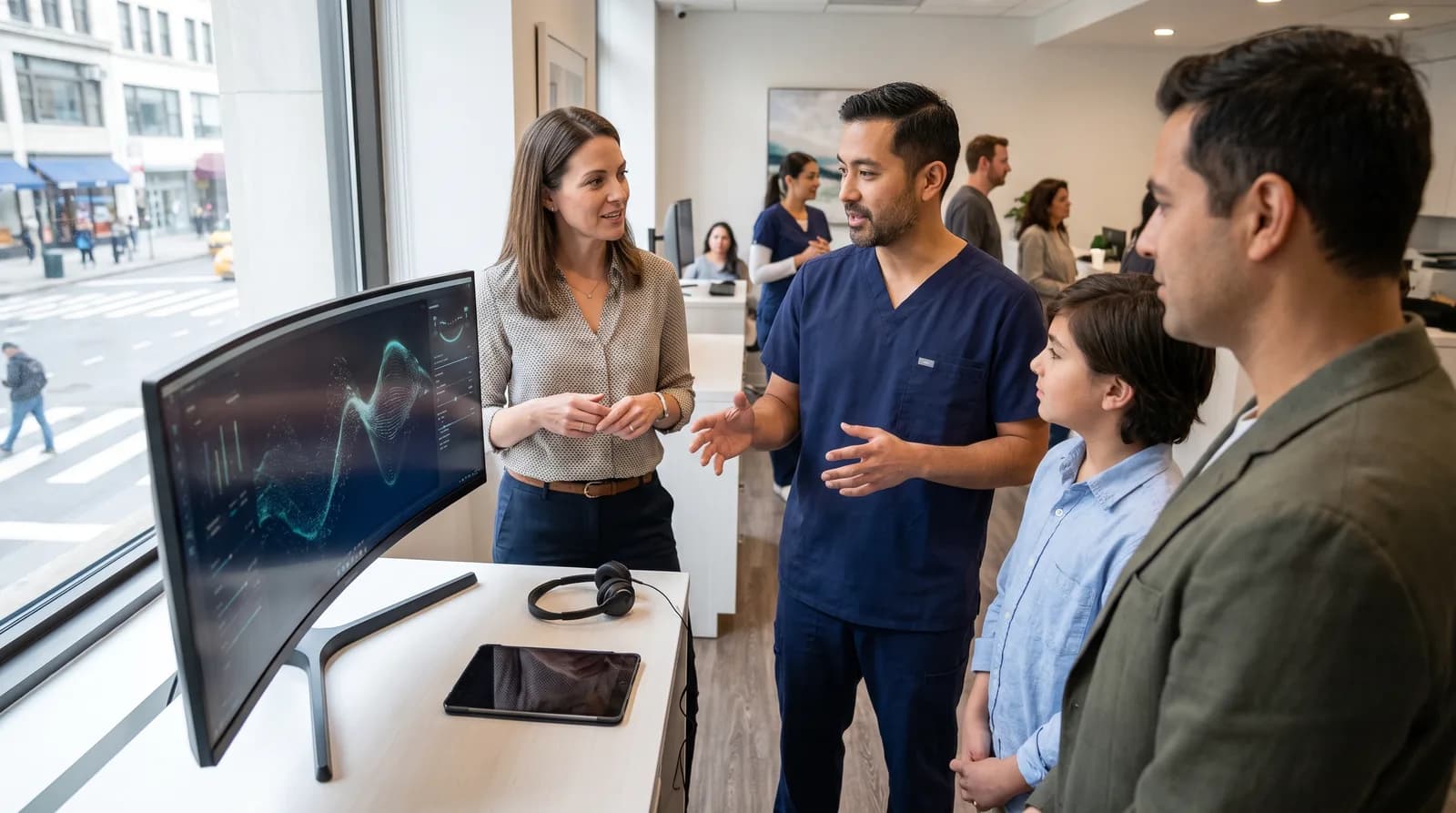
This is the highest-value call your practice receives. A parent phones to ask about braces for their 12-year-old. The AI captures the parent's name, the patient's name and age, their referral source, and whether they have orthodontic insurance coverage. It books the consult directly into your scheduling system.
The AI treats the parent as the decision-maker. It confirms callback numbers for the parent, not the minor. It asks about preferred times and scheduling constraints. And it flags the record so your treatment coordinator has context before the family walks in.
Invisalign vs. Braces Consultation Routing
Not all consults are the same. A caller asking about clear aligners needs a different consultation setup than someone asking about traditional brackets. Your treatment coordinator may allocate more time for Invisalign consults to run scans and show simulations.
The AI asks a short set of screening questions before routing the call:
- Has the patient had braces before?
- Are they interested in clear aligners specifically?
- Is this for an adult or a teen?
Based on those answers, it routes the booking to the correct consult type. Simple, but it keeps your schedule clean.
How Does an AI Receptionist Handle Adjustment and Emergency Calls?
An AI receptionist handles adjustment and emergency calls by reading the patient's treatment phase before booking, then triaging urgency for anything unplanned. A routine wire adjustment gets a standard slot, while a broken bracket call gets flagged for same-day attention.
Adjustment and Progress Appointments
Existing patients in active treatment call frequently. Wire adjustments, elastic changes, progress checks. When connected to your PMS, the AI identifies the patient's current treatment phase and books the right appointment type at the right interval. A patient six months into braces gets a standard adjustment slot. A patient approaching debond gets flagged for a longer appointment.
This prevents the common problem of booking a 15-minute adjustment for a patient who actually needs a 45-minute debond visit. Wrong appointment types waste chair time.
Emergency Calls: Broken Brackets and Wire Pokes
A parent calls at 4:30 PM because their child's bracket came off during soccer practice. The AI determines urgency: Is the patient in pain? Is a wire poking? Based on responses, it books a same-day or next-day repair slot, or reassures the caller and schedules the next available opening.
No hold time matters here. The average caller hangs up after just 90 seconds on hold, according to Marchex data. 80% of callers who reach voicemail never leave a message and won't call back, per Forbes reporting. HubSpot research found that 90% of customers rate an immediate response as important when they have a service question. A parent with a child in discomfort is even less patient than that. One missed call means they're dialing the next orthodontist on their list.
Related: Attracting ortho patients starts before the phone rings. Learn how to build local search visibility for your practice. → SEO for Orthodontists: How to Rank Locally (2026)
How Does an AI Receptionist Map Appointment Types to Your Schedule?
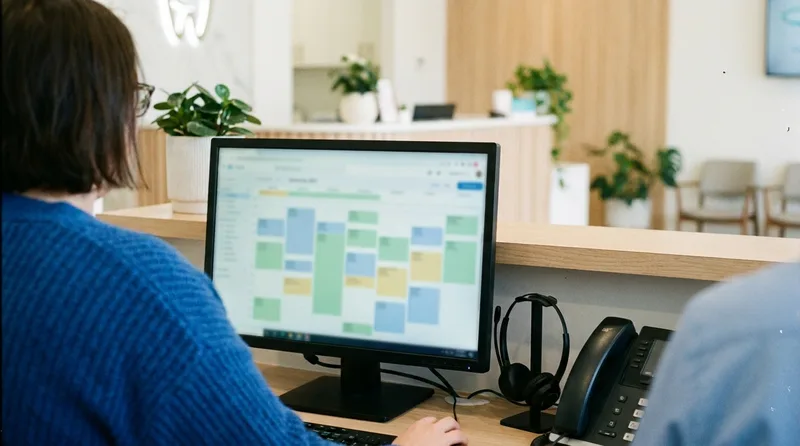
An AI receptionist maps appointment types by matching each call to the correct duration, provider, and equipment requirement before it ever reaches your calendar. Ortho practices can have a dozen distinct appointment types, far more than a general dental office manages.
Appointment Type Mapping
A general dental office might have five or six appointment types. An ortho practice can easily have a dozen. Each one carries a specific duration, may require a specific provider, and might need particular equipment.
| Appointment Type | Typical Duration | AI Scheduling Notes |
|---|---|---|
| Initial Consultation | 45-60 min | New patient only; requires doctor and imaging room |
| Records & Imaging | 30-45 min | Follows consult; can be same-day or separate visit |
| Bonding / Placement | 60-90 min | Doctor + assistant; block operatory for full session |
| Adjustment / Progress | 15-20 min | Most frequent; AI books based on last visit interval |
| Debonding / Removal | 45-60 min | End of active treatment; AI flags when patient is near this phase |
| Retainer Check | 10-15 min | Post-treatment recall at 1, 3, 6, and 12 months |
| Emergency / Repair | 15-30 min | AI triages urgency; books same-day or next available |
When the AI knows which appointment type to book, it also knows how long to block and which provider to assign. That's the difference between a generic scheduling tool and one built for ortho.
How Does PMS Integration and Insurance Handling Work for Ortho Practices?
PMS integration lets the AI read a patient's treatment phase directly from your practice management system, so it books the correct visit type automatically. It also flags orthodontic insurance nuances, like lifetime maximums, before the patient's first appointment.
PMS Integration and Treatment Phase Awareness
DentiVoice connects to the PMS platforms most orthodontic practices already use: Dentrix, Open Dental, Eaglesoft, and Curve Dental. The connection reads the patient's treatment status so it can place the right visit type.
If a patient in month 14 of an 18-month braces plan calls, the AI recognizes the late adjustment phase and books accordingly. If a patient who finished treatment six months ago calls, it books a retainer check. That context matters for clinical flow.
Orthodontic Insurance Nuances
Ortho coverage works differently than general dental insurance. Many plans have a separate orthodontic lifetime maximum that applies to the entire course of treatment rather than an annual limit. When a parent calls about starting treatment, the AI can ask whether they've checked their orthodontic benefit and remind them to bring insurance details to the consult. It won't verify benefits on the spot, but it sets up your billing coordinator to do so before the first appointment.
See How This Works With Your PMS
Book a demo to see DentiVoice route ortho appointment types, read treatment phases, and book directly into Dentrix, Open Dental, or Eaglesoft.
Book a Free Demo →How Does Marketing Work Together With an AI Receptionist to Grow Your Ortho Practice?
An AI receptionist makes sure every call generated by your marketing turns into a booked appointment. Without it, you're paying for clicks and impressions that ring through to voicemail during your busiest hours.

Seasonal Campaign Alignment
Run a "Start Treatment Before School" Google Ads campaign in July? Your DentalBase marketing team drives the clicks. DentiVoice answers the calls. Your PMS books the consults. No one sits on hold. That full-funnel connection separates practices that grow during peak season from practices that just get busier without booking more patients.
The same applies to SEO-driven traffic. If your practice ranks for "orthodontist near me" or "Invisalign consultation" on Google Search, those searchers expect to reach someone when they call. Local intent is high: 84% of consumers searched for a local business in the past three months, according to BrightLocal. An AI receptionist makes sure they do reach someone, whether it's 10 AM on a Tuesday or 8 PM on a Saturday.
Long Patient Lifecycles Demand Consistent Follow-Up
Orthodontic treatment runs two to three years on average. That's a long time for a patient to stay engaged. Without consistent follow-up, 20-30% of patients become inactive within 18 months, per ADA data. For an ortho practice, losing a patient mid-treatment or failing to bring them back for retainer checks erodes years of invested chair time. Reactivating an existing patient typically costs 5 to 7 times less than acquiring a new one, according to Harvard Business Review research.
An AI receptionist with outbound capability handles recall reminders, missed appointment follow-ups, and reactivation outreach for patients who've fallen off schedule. Your team doesn't have to work through a call list. The AI runs it and books responses directly into your PMS. For a deeper look at how DentiVoice's full feature set fits into practice operations, the complete guide covers inbound, outbound, and PMS integration in detail.
Explore More Practice Growth Resources
Guides on AI receptionist setup, front desk automation, and dental marketing strategy.
Browse Resources →Why Do Ortho-Specific AI Receptionists Matter More Than Generic Automation?
Ortho-specific AI receptionists matter more than generic automation because every missed call carries outsized weight. A single missed new patient call costs the practice $1,200 or more in lifetime value, per Dental Economics research, since a new ortho patient represents a treatment plan spanning two to three years.
Generic phone bots can take a message, but they can't tell a debond visit from a routine adjustment, or recognize that the caller is a parent making decisions for a minor patient.
An AI receptionist built for ortho workflows speaks the language of your scheduling system, understands the difference between a bonding appointment and a retainer check, and talks to parents the way your front desk coordinator would. If you want to see what that looks like, review the data on unanswered calls, then book a walkthrough.
Frequently Asked Questions About AI Receptionists for Orthodontic Practices
These are the questions orthodontic practice owners ask most often when evaluating an AI receptionist orthodontic practices can actually rely on day to day, covering parent calls, PMS-connected scheduling, and how call routing holds up during your busiest weeks.
Can an AI receptionist handle calls from parents scheduling for their child?
Yes. An ortho-trained AI receptionist identifies that the caller is a parent or guardian, collects the minor patient's information separately, and confirms the parent's contact details for follow-up. It treats the parent as the primary decision-maker throughout the call.
Does an AI receptionist know the difference between an adjustment visit and a new consult?
It does when connected to your PMS. The AI checks the patient's treatment phase and books the matching appointment type. A patient in active braces treatment gets an adjustment slot, while a first-time caller gets routed to a consultation opening.
How does an AI receptionist handle back-to-school scheduling rushes?
The AI answers every call without hold times or voicemail, even during volume spikes. It books appointments in real time based on PMS availability, so your front desk team can focus on in-office patients instead of triaging a ringing phone.
Can an AI receptionist route Invisalign calls differently from traditional braces calls?
Yes. The AI asks screening questions to determine whether the caller is interested in clear aligners or traditional braces, then routes them to the appropriate consultation type. This keeps your schedule organized and gives your treatment coordinator the right context before the visit. You can also see how AI reception reduces missed calls and voicemails and explore the 2026 dental practice automation roadmap for a broader view of where front desk AI fits.
Can multiple children in the same family be scheduled in one call?
Yes. The AI recognizes when a parent is calling about more than one child in treatment, pulls up each patient's treatment phase separately, and books back-to-back or same-day appointments where the schedule allows it.
See DentiVoice in Action for Your Ortho Practice
Book a demo to see how DentiVoice handles orthodontic scheduling, parent calls, Invisalign routing, and seasonal demand.
Book a Free Demo →Want more guides on AI, marketing, and practice growth?
Browse Resources →Sources & References
Frequently Asked Questions
Yes. An ortho-trained AI receptionist identifies that the caller is a parent or guardian, collects the minor patient's information separately, and confirms the parent's contact details for follow-up. It treats the parent as the primary decision-maker throughout the call.
It does when connected to your PMS. The AI checks the patient's treatment phase and books the matching appointment type. A patient in active braces treatment gets an adjustment slot, while a first-time caller gets routed to a consultation opening.
The AI answers every call without hold times or voicemail, even during volume spikes. It books appointments in real time based on your PMS availability, so your front desk team can focus on in-office patients instead of triaging a ringing phone.
Yes. The AI asks screening questions to determine whether the caller is interested in clear aligners or traditional braces, then routes them to the appropriate consultation type. This keeps your schedule organized and gives your treatment coordinator the right context before the visit.
Yes. The AI recognizes when a parent is calling about more than one child in treatment, pulls up each patient's treatment phase separately, and books back-to-back or same-day appointments where the schedule allows it.
Was this article helpful?
Written by
Dentalbase Team
The Dentalbase Team is a collective of dental marketing experts, AI developers, and practice management consultants dedicated to helping dental practices thrive in the digital age.