Orthodontic Marketing: A 2026 Growth Guide for Practices
How orthodontic marketing works in 2026: local SEO, paid ads, orthodontic advertising, social media, and the metrics that tie spend to started cases.
Share:
Table of contents
Orthodontic marketing is harder to get right than most practice owners expect, and the reason is simple: a patient deciding on braces or clear aligners behaves nothing like a patient booking a cleaning. The decision takes weeks. The price is high. And the bill-payer is often a parent comparing three offices at once.
Why orthodontic marketing takes a different playbook
Most of the channels below - SEO, paid ads, social, and reactivation - are things DentalBase runs for practices directly, so if you would rather hand the execution off, start with the full DentalBase services lineup.
That changes how you should spend. A campaign built for a general dentist will quietly waste money for an orthodontist, because it optimizes for the wrong moment in a much longer decision.
What this guide covers
This guide to orthodontic marketing walks through how patients actually find an orthodontist, which channels produce real case starts, how to use social media and reviews without guessing, the numbers worth tracking, and how to build a budget that holds up.
Call it orthodontist marketing, marketing for orthodontics, or simply marketing for orthodontists - the fundamentals below hold however your team searches for them, whether you are building an orthodontic practice marketing plan from scratch or refining one that already exists.
What is orthodontic marketing, and how is it different from dental marketing?
Orthodontic marketing, sometimes called orthodontist digital marketing, is how a practice turns local demand into booked consults and started cases across search, social media, reviews, and referrals. It differs from general dental marketing in three ways that change every decision you make.
- A longer buying cycle. A cleaning is an impulse booking. A treatment plan worth several thousand dollars is not. Around 48% of patients spend more than two weeks researching before they schedule, according to PatientPop, and a case this size stretches that window further. Steady visibility and follow-up beat any single well-timed ad.
- A far higher case value. Because one started case is worth several thousand dollars, you can afford a higher cost to acquire a patient than a general dentist can, as long as you track it against started cases. High value also widens your map: 67% of patients say they would travel further for the care they prefer, reports the ADA Health Policy Institute.
- A split audience. Half your prospects are parents shopping for a teen. The other half are adults buying for themselves. They search in different words, weigh price and timing differently, and trust different proof.
One more shift sits underneath all three. A general practice fills a schedule with recurring visits, where a single missed booking barely registers. You are chasing fewer, higher-stakes conversions, and the moment of truth is the consult, not the click. That is why orthodontic marketing is measured in started cases and cost per consult, not raw leads or traffic.
The split audience problem
Parents and adults are two different buyers. Market to both, not one:
- Parents shopping for a teen want scheduling that works around school, clear cost and financing, and a comfortable experience for a nervous kid.
- Adults buying for themselves want discretion, a natural-looking result, and treatment that fits a working life, which is why clear-aligner messaging tends to convert them.
Speak to only one group and you quietly lose the other.
Which channels reach parents vs. which reach adults?
Parents respond to proof of comfort and convenience: before-and-after photos of teens, financing options, and scheduling that works around school. Adults respond to discretion: clear-aligner messaging, imagery that doesn't scream "braces," and content that fits a working life. Split your paid social and content calendar by audience instead of running one creative for both, since a message built for a parent rarely converts an adult prospect.
Turn more consults into started cases
The consult is where your marketing spend pays off or breaks down. See how to convert more of them.
Read the case acceptance guide →How do patients actually find an orthodontist these days?
Most patients find an orthodontist by searching online, reading reviews, then judging your website on their phone, in that order. Each step filters the list, so a weak local listing or stale reviews can cost you the visit before your offer is ever seen.
The path is predictable, and every stage is a place to win or lose them:
- They search first. Around 71% of people looking for a provider run a search before scheduling, per Pew Research, usually a local term like "orthodontist near me." If you are not in the map pack and on the first page, the rest never happens.
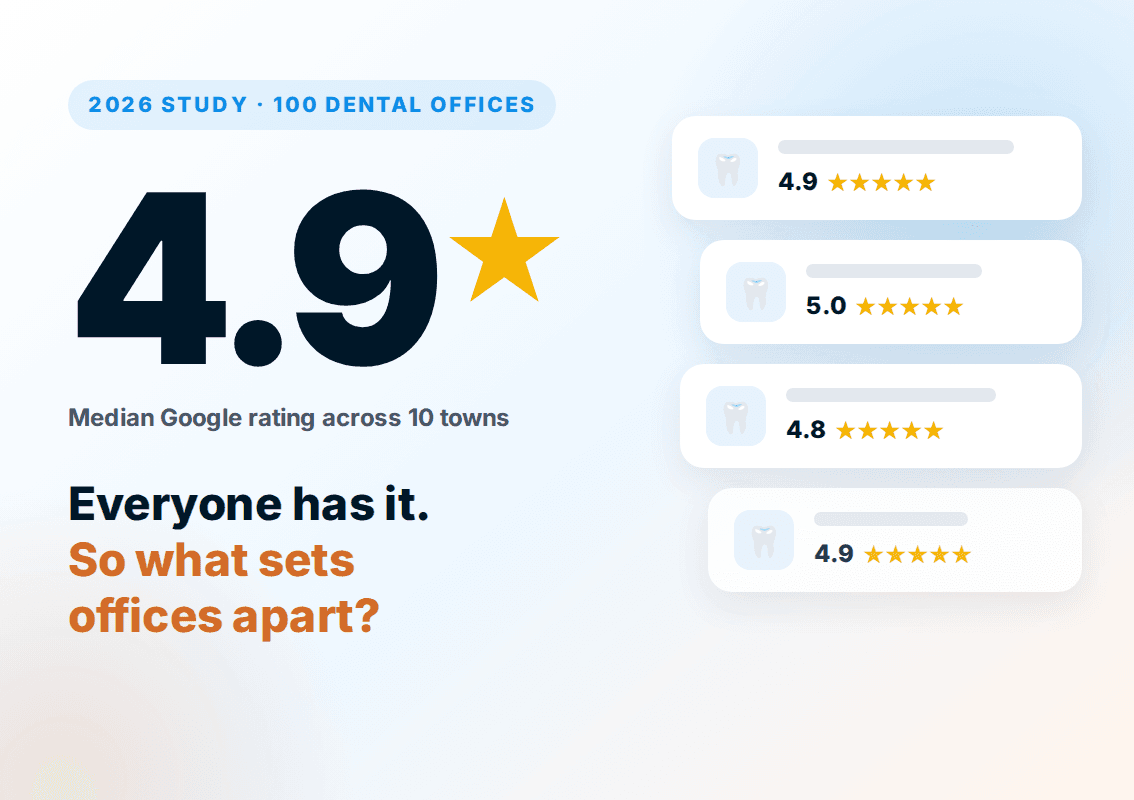
- Reviews build the shortlist. 98% of people read local reviews before choosing a business, reports BrightLocal, and they weigh recency and your replies as much as the star rating. Roughly 88% are more likely to choose a business whose owner responds to reviews, so an unanswered review page quietly costs you cases.
- Your website closes or kills it. Most of this happens on a phone. Mobile drives the majority of dental searches, and patients expect a site to load in about three seconds, per Google, so a slow or cluttered mobile site loses the visit before your treatment options even load.
One newer wrinkle: a growing share of patients get a first answer from AI before they ever click. AI Overviews now appear on more than 60% of searches, according to Search Engine Land, and tools like ChatGPT summarize practices without sending a visit. Showing up there means clear, directly quotable answers on your site, not just keywords.
The Orthodontic Patient Decision Journey
Search
71% run a search before scheduling, often "orthodontist near me."
Reviews
98% read local reviews and weigh how you respond to them.
Website
Mostly on mobile, expecting a load time under three seconds.
Consult
The moment your marketing spend either pays off or doesn't.
Why the order matters
Each step filters the list, and the early ones decide everything:
- Lose at search and you are invisible, no matter how good your site is.
- Lose at reviews and you never get the click, no matter how strong your offer.
- Lose on mobile and you waste demand you already paid to attract.
Win the early steps and the later ones get easier.
Related: Site structure decides how much of that search demand you actually capture → how site structure affects rankings
What role do AI Overviews play in finding an orthodontist?
AI Overviews now surface on more than 60% of searches, per Search Engine Land, often answering a patient's question before they click through to any website at all. Ranking in a traditional search result no longer guarantees visibility; the content also needs a clear, directly quotable answer near the top of the page so an AI summary can pull it accurately and still point back to your practice.
How do I turn website visitors into booked consults?
You turn website visitors into booked consults by removing friction at every step: a fast mobile site, an obvious request-a-free-consult button, online booking, and live chat or text so a patient can act the moment they are ready. By the time someone reaches your site they have done their homework, so the page's only job is conversion, not decoration.
The gap here is your easiest edge. About 77% of patients want to book online, per Zocdoc, yet only around 26% of practices offer online scheduling, reports Dental Economics. Close that gap and you beat most local competitors on convenience alone. Here is what actually moves a visitor to a booked consult:
- Lead with the offer. A free consultation or a virtual smile assessment lowers the barrier on a high-cost decision and gives the visitor one clear next step instead of a wall of service pages.
- Make booking effortless. Online scheduling is tied to roughly 24% more booked appointments (Healthgrades) and about 17% fewer no-shows (Becker's), and 44% of people who find care on mobile go on to book when it is easy (Google). A tool that syncs to your real schedule does this around the clock.
- Answer the moment they ask. Live chat and two-way texting catch the questions people will not call to ask, and a virtual consult option wins busy families who cannot get in easily.
- Be upfront about money. A simple starting-price range and visible financing or payment-plan options remove one of the biggest hesitations, without committing you to quote an exact figure.
Speak to the audience you want, too. If adult cases matter to you, your messaging and proof should reflect that, as we cover in marketing Invisalign to adult patients. Every extra click, form field, or unanswered question between interest and a booked consult is a case you paid to attract and then lost.
 ▶
▶What conversion rate should an orthodontic website aim for?
A dental landing page converts visitors to leads at around 10% on average, according to Unbounce, so an orthodontic site sitting well below that is leaking case starts it already paid to attract.
Because this is elective, high-cost care, a slow form, a missing phone number above the fold, or a booking flow that requires a phone call instead of a click will quietly cap the return on your orthodontic marketing spend no matter how much traffic you send to the page.
Getting orthodontist website SEO right matters just as much as the design, since a beautifully built site that does not rank never earns the traffic it needs to convert in the first place.
Going Deeper on Orthodontic Local SEO
For the deeper mechanics of what actually moves the needle on that front, this local SEO playbook built specifically for orthodontic practices walks through keyword strategy, ranking factors, and what to expect from an SEO engagement.
What's the fastest fix for a low-converting orthodontic website?
Add online scheduling first. Only about 26% of practices offer it despite 77% of patients wanting to book online, per Zocdoc and Dental Economics, which makes it the single biggest, fastest-to-fix gap on most orthodontic websites. A booking widget synced to your real calendar closes that gap in days, not months, and it works around the clock without adding staff time.
Which marketing channels actually bring in case starts?
Local SEO and Google Ads drive the most measurable case starts, because both capture patients at the moment of intent. Social media and Google Business Profile play a supporting role: they build trust and keep you visible during the long comparison window before a consult is booked.
Ranked by how directly they produce case starts:
- Local SEO. Slower to build, three to six months, but it compounds into a durable, lower-cost pipeline, and organic search converts at around 3.5%.
- Google Ads (paid search). Instant but rented. Cost per click for dental keywords runs about $6 to $8, per Google Ads benchmarks, and paid search converts just under 2% for dentists, per WordStream. Best for capturing ready-to-book intent today.
- Google Business Profile. Free, fast, and underused. It drives map visibility and website clicks, and profile signals rank among the strongest local factors.
- Social media. A supporting player that builds trust across the long comparison window rather than driving direct starts.
Here's the practical read: run paid search to capture demand now, while local SEO and reviews build the durable pipeline. Treating them as either-or is the most common budgeting mistake orthodontic practices make. For the full paid side, see our orthodontic advertising playbook.
| Channel | Time to Results | Cost Profile | Best For |
|---|---|---|---|
| Local SEO | 3-6 months | Front-loaded, compounds | Durable, lower-cost pipeline |
| Google Ads (PPC) | Days | $6-$8 per click | Capturing ready-to-book intent |
| Social Media | Ongoing | Time or content spend | Trust during comparison |
| Google Business Profile | Weeks | Free | Local map visibility |
Google Business Profile deserves its own line. A well-maintained profile drives more website clicks and map visibility, and Moz's local ranking research consistently ranks profile signals among the strongest local SEO factors. It costs nothing but consistency.
 ▶
▶Running paid search for your practice?
Wasted ad spend is the fastest way to lose faith in marketing. Get paid search managed by people who track it to case starts.
See Google Ads management →For a deeper read on paid search specifically, see our guides on PPC for dentists and how to choose a dental PPC company. Local search is covered in our dedicated guide to SEO for orthodontists.
How does orthodontic SEO marketing fit with paid search?
Orthodontic SEO marketing and paid search do different jobs and work best run together, not swapped in and out. SEO earns the "orthodontist near me" traffic that keeps arriving long after you stop paying for it, while paid search fills the gap while those rankings build. Practices that treat orthodontic digital marketing as one or the other, instead of both, either overpay for visibility today or wait months with none.
Whatever you call it, orthodontist SEO, SEO for orthodontics, or orthodontic search engine optimization, the mechanics stay the same: technical health, location-specific pages, and content built for the way patients actually search, all working together instead of running as separate projects.
Which channel should I prioritize first with a limited budget?
Start with Google Business Profile and reviews, both free, before spending on paid search or SEO content. A complete, active profile drives map visibility and website clicks at no cost, and it compounds the same trust signals that make every other channel convert better. Add paid search once GBP is solid, then layer in content-driven SEO for the durable, lower-cost pipeline.
How do I get more referrals from patients and dentists?
Referrals grow an orthodontic practice by turning happy patients and local general dentists into a steady, low-cost source of started cases. A tracked referral system usually converts to started treatment at a higher rate than cold paid traffic.
Orthodontics runs on two referral engines, and most practices only work one. The first is patient word of mouth. The second, and often the larger one, is professional referrals from general dentists who spot alignment, crowding, or bite issues and send those cases out.
Treat referring offices as a channel you manage, not a favor you wait for: send fast, clear case reports back, make the referral process simple, and stay in regular contact so you remain the first name they think of.
On the patient side, ask at the right moment. A patient who just finished treatment or saw their teen's results is your best advocate. Keep the ask simple and reward it within your state's rules, since many states regulate incentives for patient referrals.
Then track a referral source for every new consult, whether it came from a patient, a dentist, search, or social, so you can see which relationships actually produce started cases. If you are not measuring that, you are guessing. See why most practices track the wrong marketing metric and our wider take on referral-driven marketing for clinicians.
How do I market to general dentists for referrals?
You market to general dentists the same way you would court a top referral source: consistently, not occasionally. Send fast, clear case reports after every referred patient, make the referral process (a simple form, a direct line, a shared portal) as easy as possible, and check in on a regular schedule instead of only when you need cases.
This is marketing to dentists in the truest sense, and it is the referral engine most orthodontic practices under-invest in relative to how many started cases it produces.
Patient Referrals
Driven by finished cases and happy parents. Ask right after a debond or a strong progress check, keep the ask simple, and reward it within your state's rules.
Professional (Dentist) Referrals
Often the larger engine. General dentists spot crowding, alignment, and bite issues daily. Send fast case reports back and stay in regular contact to remain their first call.
How do I track which referrals actually convert?
Ask a referral source on every new-patient form, whether it's a patient, a dentist, search, or social, and tie that source through to a started case, not just a booked consult. Most practices stop tracking at the phone call, which hides which relationships are actually worth nurturing. A simple spreadsheet or your practice management software's referral field is enough to start.
What should my orthodontic practice actually post on social media?
An orthodontic practice should use social media to show results and build trust, not to chase followers. Before-and-after transformations, short video, and real patient stories do the work, because they answer the question every prospect is silently asking: will this actually work for me?
Done well, social media marketing for orthodontists carries more of the trust-building work than any other single channel, because it lets prospects see real results before they ever book a consult. If you are short on orthodontic marketing ideas, before-and-after content, quick staff clips, and short FAQ answers are some of the simplest marketing ideas for orthodontic offices to execute consistently without a production budget.
A few rules make social media pull its weight:
- Favor video. Video posts get about 48% more engagement than static posts on dental accounts, per Hootsuite, and the gap is wider for visual progress like aligners.
- Meet parents where they already are. Around 97% of dentists use Facebook as their main platform, per Dental Economics, and roughly 41% of people say social content influences their treatment choice, per PwC Health.
- Make it a health story, not just a cosmetic one. Straighter teeth are easier to keep clean, the long-term oral health the CDC oral health program emphasizes, which gives you content beyond before-and-afters.
This is not a hunch: a study in The Angle Orthodontist found that most orthodontists and their patients and parents use social media, and that it works as a real marketing channel. For an elective, high-cost case, that steady visibility is what shortens a weeks-long decision.
What to actually post
- Before-and-after results. The single highest-performing content type for an orthodontic practice. Get signed photo consent, lead with it, and post results regularly rather than in occasional bursts.
- Short staff and office clips that make a first visit feel familiar to a nervous teen or a busy parent.
- Quick answers to the questions parents ask most: cost, timeline, and comfort during treatment.
One caution: consistency beats polish. A practice that posts twice a week with a phone camera will outperform one waiting on a quarterly video shoot. The goal is steady proof, not production value.
Too busy to post consistently?
Managed social keeps results-driven content flowing without pulling your team off the chair.
See social media management →How often should an orthodontic practice post on social media?
Two to three times a week on your strongest platform is enough to stay visible without becoming a production burden. Video posts earn about 48% more engagement than static posts on dental accounts, per Hootsuite, so prioritize a quick phone video of a result over a polished photo you post less often. Consistency beats frequency past that point.
Do online reviews really bring in new patients?
Yes. Reviews directly affect new case starts because patients trust them almost as much as a personal referral, and for a high-cost decision like orthodontics, a thin or neglected review profile pushes prospects to a competitor before they reach your website.
The weight is hard to overstate. BrightLocal's consumer review research found 98% of people read local reviews before choosing a business, and 88% are more likely to use one whose owner responds to reviews. About 77% specifically lean on reviews when choosing a dentist, per Software Advice. So treat reviews as a system, not luck:
- Ask every satisfied patient, right after a positive moment like a debond or a strong progress check.
- Respond to all of them, good and bad. The reply is public, and prospects read it as a preview of how you will treat them.
- Keep them fresh. Recent reviews carry far more weight than a pile of old five-stars.
Related: How you reply to reviews is its own skill → review response etiquette for orthodontists
How many reviews does an orthodontic practice actually need?
There is no fixed number, but recency matters more than volume. A profile with 40 reviews earned over the last year reads as more trustworthy than one with 200 reviews that stopped three years ago, since BrightLocal's research found recency and owner responses carry real weight in the decision. Aim for a steady drip, a handful of new reviews every week, rather than a one-time push to hit a target count.
What should I do about a negative review?
Respond publicly, briefly, and without getting defensive. Roughly 88% of people are more likely to use a business whose owner responds to reviews, per BrightLocal, and prospects read your reply as a preview of how you'll treat them if something goes wrong. Take specifics offline, but always leave a calm public response so the page doesn't read as ignored.
How do I know if my orthodontic marketing is actually working?
The KPIs that matter for orthodontic marketing tie spend to started cases, not clicks. Track cost per consult, consult-to-start conversion rate, cost to acquire a patient, and the lifetime-value-to-acquisition ratio. Everything else is a vanity number.
Start with the economics. Acquiring a new dental patient runs about $150 to $300 through digital channels, per WordStream, while average patient lifetime value sits near $12,000 to $15,000, per Dental Economics. A single orthodontic case often clears that in one treatment plan, which is why a higher acquisition cost can still be profitable, as long as you watch the ratio.
When the lifetime-value-to-acquisition ratio slips, the problem is almost always conversion, not traffic. These are the four numbers worth tracking:
| KPI | What It Tells You | Why It Matters |
|---|---|---|
| Cost per consult | Spend to book one consult | Compares channels fairly |
| Consult-to-start rate | How well consults convert | Exposes front-office gaps |
| Patient acquisition cost | Full cost of one started case | Sets the spend ceiling |
| LTV-to-CAC ratio | Return on each marketing dollar | The real profitability signal |
One more reason conversion deserves attention: a single missed new patient call costs a practice $1,200 or more in lifetime value, per Dental Economics. Marketing that fills the phone only pays off if someone answers it.
Stop losing consults to missed calls
An AI receptionist answers every new-patient call, books the consult, and never sends a parent to voicemail.
See how it works for orthodontics →What is a good cost per consult for an orthodontic practice?
There's no universal number since it depends on your local market and case value, but the number itself matters less than tracking it consistently by channel. Compare cost per consult across SEO, paid search, and social every month, and treat the channel with the lowest number relative to consult-to-start rate as the one worth funding further.
How often should I check my orthodontic marketing numbers?
Pull cost per consult and consult-to-start rate monthly, but make budget decisions quarterly. Monthly checks catch a channel that's suddenly broken; quarterly reviews smooth out normal seasonal swings so you don't overreact to one slow month. Reviewing too often invites knee-jerk cuts to channels that just need more time to compound.
How much should I spend on orthodontic marketing?
A workable orthodontic marketing budget spreads spend across channels instead of betting on one. A practical split puts the largest shares behind local SEO and paid search, with smaller, steady investment in social media, your website, and reputation management.
The logic is risk management. SEO compounds but takes months; paid search delivers now but stops the moment you pause it. Fund both and you cover the long game and the immediate pipeline at once.
Here is a starting allocation for a single-location practice, based on what we see work. Treat it as a baseline, then shift dollars toward whatever shows the best cost per started case after 90 days.
Whatever the split, the measure against the case starts. HubSpot research on marketing accountability makes the same point across industries: budgets that aren't tied to a revenue metric drift toward whatever feels busy. For more on setting the number, see our dental marketing budget guide.
Two mistakes break most budgets:
- Pausing SEO after a good paid month, which kills the compounding pipeline right as it starts to pay.
- Judging channels on clicks instead of started cases, which flatters social and punishes the slower work that actually fills the schedule.
Review the split quarterly, not monthly, so seasonal swings do not trigger knee-jerk cuts.
What is a realistic orthodontic marketing budget for a growing practice?
Most single-location practices building a real marketing plan for orthodontics land somewhere in the low thousands per month once SEO, paid search, and social are all running, then scale up as case starts justify it. Treat the percentage split above as the shape of the budget, not the size of it: a growing practice keeps the same ratios but increases the total as cost per started case proves the spend is working.
Should I cut my orthodontic marketing budget during a slow season?
Generally no, especially not local SEO. Pausing SEO content or link-building during a slow month kills the compounding pipeline right as it's starting to pay off, and restarting it later costs more than maintaining it would have. If cash is tight, trim paid search spend first since it's the easiest to restart at full strength.
Can AI really help my orthodontic marketing?
Yes. AI and automation help most by plugging the leak between a click and a booked consult: capturing leads after hours, following up instantly, and keeping reviews and reminders running without staff effort. They convert the demand you already pay for instead of buying more.
The leak is bigger than most owners think. About 38% of new-patient calls go unanswered during business hours (ADA Practice Transitions), the average practice misses 15 to 20 calls a week (Dental Economics), and after-hours calls make up roughly 27% of total volume (Dental Economics). Around 80% of callers who reach voicemail hang up without leaving a message (RingCentral). Here is where AI earns its place:
- Answer every call. An AI receptionist picks up at lunch, after hours, and during the rush, books the consult, and never sends a parent to voicemail.
- Follow up instantly. Automated texts and emails keep warm leads from going cold and bring back the ones who did not book the first time.
- Run reviews and reminders on autopilot. Automatic review requests build your reputation, and reminders cut no-shows. One Imperial College London study put the no-show reduction from reminders at around 38%.
- Speed up production. AI drafts posts and builds ad variations far faster than doing it by hand, which we cover in our guide to automating content, emails, and ads.
None of this replaces clinical judgment or a warm front desk. With about 73% of practices planning to adopt AI tools by 2027, per Dental Economics, the edge goes to whoever uses it to answer faster, not to whoever automates the human out of the experience.
Automated review requests, two-way texting, and AI receptionists are increasingly common orthodontic marketing products worth evaluating, since each targets one specific leak in the patient journey rather than promising to fix everything at once.
Does AI replace the front desk in orthodontic marketing?
No. AI and automation catch what a busy or short-staffed front desk misses; about 38% of new-patient calls go unanswered during business hours, per ADA Practice Transitions, and AI tools close that gap. They don't replace the warmth of a real conversation once a patient is on the phone or in the chair, which is still where cases are won.
What tasks should stay human in orthodontic marketing?
Anything involving clinical judgment, sensitive conversations, or building trust face-to-face should stay human: the consult itself, discussing treatment options, and handling an upset patient. AI earns its place answering calls after hours, sending follow-up texts, and drafting the first version of a social post, then a person reviews and finishes it.
How do I market my orthodontic practice locally?
You market an orthodontic practice locally by building trust where families already gather, both online and off. Around 46% of all searches seek local information, per Google, so pair a strong local presence with real community visibility that keeps your name in front of parents before they ever search.
The offline tactics that compound your online presence:
- Partner with schools. Short oral-health talks or screening days position you as the local expert parents remember when a child needs treatment.
- Sponsor youth sports. Your practice on the jerseys or in the team name puts you in front of the same families all season for a modest spend.
- Host a "smile day" or screening booth at a local festival, hand out branded kits, and book consults on the spot.
- Build referral relationships with nearby gyms, pediatricians, and family dentists who see your ideal patients first.
- Run a contest or raffle to drive engagement, but check your state's rules first, since many states regulate incentives and giveaways tied to dental services.
Treat outreach like any other channel: tag where each new consult came from so you know which events actually produce started cases. For the wider playbook, see our complete guide to dental marketing for US practices.
What's the difference between internal and external orthodontic marketing?
Internal marketing is everything aimed at people who already know you: patient referral requests, recall campaigns, and review asks. External orthodontic marketing is everything aimed at people who don't yet: SEO, paid ads, social media, and community outreach like schools and youth sports. Most practices default to whichever feels easier, usually external spend, and under-invest in the internal side, even though internal marketing usually costs less per started case. Balancing both is the backbone of a complete orthodontic marketing plan.
Which local partnerships bring in the most orthodontic case starts?
School partnerships and general-dentist referral relationships tend to outperform one-off sponsorships, because both put you in front of the same audience repeatedly rather than once. A youth sports sponsorship builds brand familiarity, but a standing referral relationship with three or four general dentists nearby usually produces more started cases per hour invested.
How do I compete with direct-to-consumer aligners?
You compete with direct-to-consumer aligners by marketing the value of supervised, in-person care. Lead with the diagnosis, monitoring, and accountability a mail-order kit cannot match, and make that contrast clear before a prospect ever asks why they should not just order online.
The American Dental Association has cautioned consumers about do-it-yourself and remote orthodontics performed without hands-on clinical supervision, and that concern is your strongest positioning angle. Compete on what happens in your chair, not on price:
- Lead with diagnosis. Imaging, a real exam, and a treatment plan built for one mouth are things no shipped kit provides.
- Show the supervision. In-person progress checks and a clinician accountable for the result are the safety story patients are quietly worried about.
- Answer the comparison directly. Build content that addresses mail-order aligners head-on, so a searching patient finds your answer instead of a competitor's ad.
- Move them to a free consult, where the difference between supervised care and a mailed tray is obvious in person.
Our guide to content that attracts patients covers how to frame these comparisons without naming competitors.
How do I talk about DIY aligners without naming competitors?
Focus on what a mail-order kit cannot provide instead of naming any specific brand: real imaging, a licensed clinician's diagnosis, and in-person progress checks. The American Dental Association has cautioned against remote orthodontics performed without hands-on supervision, and that concern gives you a factual, non-disparaging way to make the contrast without ever mentioning a competitor by name.
Is it worth marketing directly against mail-order aligner brands?
It's more effective to market the value of supervised care than to attack a specific brand. Prospects comparing options are already weighing price against safety; content that plainly explains what's missing from remote treatment, diagnosis, monitoring, and accountability, converts better than anything that reads as a takedown, and it holds up better if a prospect fact-checks your claims.
What makes orthodontic advertising different from general dental ads?
Orthodontic advertising works differently from general dental ads because you are selling a high-consideration, elective treatment to two distinct buyers, parents and adults, who take weeks to decide. That longer window means your ad spend needs to sustain visibility across the whole decision, not just capture a single moment of intent.
The core mechanics that separate orthodontic advertising from a general dental campaign:
- Higher case value demands higher allowable cost per lead. A single started orthodontic case is worth far more than a cleaning appointment, which means you can justify a higher cost per click and a longer nurture sequence than a general dentist can.
- Platform split matters. Google Search and Local Services Ads (LSAs) capture patients actively looking. Facebook and Instagram ads work for creating awareness among parents who are not yet searching, particularly useful for promoting free consultation offers and limited-time specials to a local radius.
- Ad creative has to speak to the correct half of your audience. Aligner-focused creative converts adult prospects. Imagery with teens or before-and-after smiles pulls the parent decision-maker. Running both simultaneously, targeted separately, almost always outperforms a single unified campaign.
- Retargeting closes the window. Because prospects research for weeks, display and social retargeting keeps your practice visible after a first website visit and dramatically reduces cases that went cold between a search and a booking call.
A common error in orthodontic advertising is evaluating ads on click-through rate rather than cost per booked consult. Clicks from parents pricing out "braces cost" are cheap. Clicks from adults actively comparing aligner providers convert at a higher rate and are worth more. Separate your campaigns and track each back to started cases, not form fills.
| Ad Format | Best Audience | Primary Goal |
|---|---|---|
| Google Search Ads | Active searchers ("orthodontist near me") | Book a consult today |
| Local Services Ads (LSA) | High-intent local queries | Phone call or message leads |
| Facebook / Instagram Ads | Local parents and adults, not yet searching | Awareness and free-consult offers |
| Display Retargeting | Previous site visitors | Re-engage during research window |
For the full paid-media setup, including bidding strategy, landing page requirements, and how to track ad spend to started cases, see the orthodontic advertising playbook, or explore DentalBase PPC management for dental practices.
Are Google Ads worth it for orthodontic practices?
Yes, for capturing patients who are actively searching right now, though the math depends on tracking cost per booked consult, not cost per click. At $6 to $8 per click for dental keywords, per Google Ads benchmarks, and with 52% of PPC clicks coming from mobile devices, per Google, orthodontic Google Ads only pay off when the landing page they send traffic to is built for a phone screen and a fast next step.
Should I run separate ad campaigns for parents and adults?
Yes. Aligner-focused creative converts adult prospects while imagery with teens or before-and-afters pulls the parent decision-maker, and running both audiences under one campaign usually waters down whichever message matters more to each group. Separate campaigns, separate creative, and separate tracking make it obvious which audience is actually producing started cases at what cost.
How do I build a complete orthodontist digital marketing strategy?
A complete orthodontist digital marketing strategy connects every online touchpoint, search, paid ads, social media, reviews, and your website, into a single system measured against one number: cost per started case. The pieces exist in most practices, but they usually run as separate efforts with no shared metric tying them together.
Digital marketing in orthodontics, or orthodontics digital marketing however you phrase it, works best as one connected system rather than four separate vendors reporting four different numbers. The best marketing strategies for orthodontics tend to share this same structure, and building a full set of orthodontic marketing strategies from scratch usually starts with getting these four layers in place before adding anything more advanced.
Marketing your orthodontic practice online breaks down into four layers that build on each other:
- Visibility (SEO + GBP + paid search). Patients cannot choose you if they cannot find you. Local SEO and a complete Google Business Profile put you in the map pack for "orthodontist near me" searches. Paid search fills the gaps while organic rankings build, and dental SEO fundamentals apply directly to an orthodontic site.
- Credibility (reviews + social proof). A patient who finds you runs a review check before they call. A steady stream of recent five-star reviews and an active social media presence that shows real results keeps you on the shortlist.
- Conversion (website + booking). Your website's only job is to turn a curious visitor into a booked consult. Online scheduling, a clear free-consultation offer, fast mobile load speed, and live chat or two-way texting each remove a barrier between interest and the appointment.
- Retention and referral (follow-up + AI automation). The cheapest consult is one your own patient sends you. Automated recall, review requests, and follow-up sequences keep your name in front of finished patients and their networks without daily manual effort.
Already have the pieces, but they aren't connected?
DentalBase ties SEO, paid search, social media, and an AI receptionist into one system tracked against case starts, not clicks.
Book a Free DemoWhat does marketing your orthodontic practice look like month to month?
When marketing your orthodontic practice, the day-to-day workload divides into a few recurring categories most practices either handle in-house, delegate to a team member, or outsource entirely:
- Weekly. Post two to three times on your strongest social platform, respond to any new Google or Yelp reviews within 24 hours, and check that your ad campaigns are not overspending relative to booked consults.
- Monthly. Pull cost per consult by channel, review your Google Business Profile for accuracy, and make sure automated follow-up sequences are firing correctly after every new-patient form submission.
- Quarterly. Audit your website for page speed and mobile usability, review keyword rankings versus competitors, and reallocate budget based on which channels produced the best consult-to-start rate over the prior 90 days.
Practices that treat this as a quarterly review rather than a monthly scramble almost always have better data and clearer decisions. Frequency of optimization matters less than consistency of measurement. See how to market a dental practice for more new patients for the full tactical breakdown that applies across both general and orthodontic settings.
What should I outsource first in my orthodontic marketing strategy?
Paid search and content-driven SEO are the two most commonly outsourced pieces, since both reward specialized, ongoing attention that's hard to sustain in-house alongside clinical work. Social media posting and review responses are easier to keep in-house if someone owns them consistently. Outsource whatever your team is not actually keeping up with today, not everything at once.
Whether you are evaluating an orthodontic SEO company, an orthodontist SEO company, an orthodontic marketing agency, or an orthodontist marketing company, look past the pitch deck: ask for reference practices, transparent reporting tied to started cases, and proof they understand orthodontic case value specifically rather than general dental accounts. The same due diligence applies whether you are comparing orthodontist SEO services, orthodontist digital marketing services, or orthodontics marketing services more broadly - ask exactly which channels are included and how success gets measured. A seo agency for orthodontists and the wider pool of orthodontic marketing companies both compete for the same budget, so compare them on cost per started case rather than on service lists alone.
Conclusion
The practices that win at orthodontic marketing aren't the ones spending the most. They're the ones who know their cost per started case and move budget toward whatever lowers it.
Pick one number to track this quarter: cost per consult. Wire your phones, your forms, and your ad platforms to report it honestly. Once you can see which channel produces started cases at the lowest cost, every other decision gets easier.
Build an orthodontic marketing engine that pays for itself
See how DentalBase ties SEO, ads, and patient communication into one system measured against started cases.
Book a Free Demo →Want more guides like this?
Browse practice growth resources →Sources & References
Frequently Asked Questions
Orthodontic marketing is the system a practice uses to attract and convert case starts through search, paid ads, social media, and reviews. It focuses on a longer decision cycle and higher case value than general dental marketing.
Most single-location practices spend a percentage of revenue split across SEO, paid search, social, and reputation. The right number is whatever keeps your cost per started case below a healthy share of case value.
Local SEO and Google Ads drive the most measurable case starts because they capture intent. Social media and reviews support them by building trust during the weeks-long comparison window before a consult is booked.
Paid search can produce consult requests within days. Local SEO usually takes three to six months to build momentum but compounds over time, which is why most practices run both at once.
Yes. BrightLocal found 98% of people read local reviews before choosing a business, and 88% favor owners who respond to reviews. For high-cost orthodontic cases, reputation often decides the shortlist.
Track cost per consult, consult-to-start conversion rate, patient acquisition cost, and the lifetime-value-to-acquisition ratio. These tie spend to started cases, unlike clicks or follower counts, which rarely predict revenue.
Yes. Referral programs work well because orthodontic patients trust recommendations from friends, family, and their general dentist. A simple, tracked program that rewards patient referrals within state rules and nurtures dentist relationships often lowers cost per started case.
AI helps orthodontic marketing by answering every call, booking consults after hours, and automating reviews, reminders, and follow-up. It converts more of the traffic you already pay for into started cases instead of requiring more ad spend.
Orthodontist digital marketing includes everything you use online to win patients: local SEO and your Google Business Profile, paid search and social ads, social media content, online reviews, a conversion-focused website, and automation like an AI receptionist. It is the digital core of a wider orthodontic marketing plan that also spans referrals and community outreach.
Orthodontic advertising refers to paid promotion, Google Search Ads, Local Services Ads, Facebook and Instagram ads, and display retargeting, that puts your practice in front of parents and adults before or while they are actively comparing options. SEO builds organic visibility over months and compounds over time. Orthodontic advertising delivers immediate exposure but stops when you stop paying. Most practices run both: advertising captures intent now, while SEO builds the durable, lower-cost pipeline.
Start with three things: claim and fully complete your Google Business Profile, ask every satisfied patient for a Google review, and make sure your website loads fast on mobile and has an obvious free-consultation offer. These three steps are free or near-free and they directly affect whether a patient finds you and books. Once those are running, add Google Ads to capture immediate intent and then invest in local SEO for compounding long-term growth.
Start with the cheapest, highest-trust tactics: ask every finished case for a review, track referral sources so you know what is working, and post before-and-after results consistently. These marketing ideas cost time more than money and often outperform paid ads for a smaller orthodontic practice.
It depends on bandwidth, not budget size. A consultant or agency makes sense once you are running SEO, paid ads, and social at the same time and can no longer track cost per started case across all of them yourself. Below that scale, in-house often works fine.
Retention and referrals compound growth more than any single campaign. Reactivating an existing patient costs 5 to 7 times less than acquiring a new one, per Harvard Business Review, so practices that grow fastest protect their referral and recall systems as carefully as their ad budget.
Yes. Braces marketing usually speaks to parents weighing cost, timeline, and a teen's comfort, while clear-aligner marketing speaks to adults who want discretion and a result that fits a working life. Running one message for both audiences quietly underperforms for whichever group you did not write for.
Was this article helpful?
Written by
DentalBase Team
Expert dental industry content from the DentalBase team. We provide insights on practice management, marketing, compliance, and growth strategies for dental professionals.