
6 Dental Marketing Trends Actually Worth Budget in 2027
Dental marketing trends worth budget in 2027 solve real operational gaps, not just get attention. See six trends and how to evaluate each one.
Share:
Table of contents
Dental marketing trends worth budget in 2027 tend to be the ones that solve a real operational gap, not the ones simply getting attention on social media. The trends below have staying power because they address problems practices actually have.
Each trend below comes with a note on how to evaluate it for a specific practice, not just why it matters broadly. If your practice works with DentalBase's practice growth services, several of these are already part of a standard approach.
This guide covers six trends worth real budget in 2027, and how to tell if each one fits a specific practice.
Before layering on any of these trends, it helps to have the base sequence in place. Our foundational guide to dental marketing sequencing covers that order in full.
Is AI phone answering actually worth budget in 2027?
Yes, AI phone answering has moved from a novelty to a practical solution for the specific problem of missed calls. That problem costs practices real revenue every single month it goes unaddressed.
- Missed calls during peak hours, when the front desk is handling patients in the office.
- After-hours calls from patients who cannot reach anyone outside business hours.
- Overflow during lunch breaks, when no one is available to pick up.
ADA Health Policy Institute data shows 72% of patients rank convenience as a top factor in their care decisions. Answering every call promptly is one of the clearest ways to deliver that convenience consistently.
Who This Fits
This trend fits practices with a front desk that is frequently overwhelmed. Peak hours or lunch breaks are exactly when calls tend to go unanswered most often.

Who Should Wait
It fits less well for a very small practice already answering every call reliably. The investment may not yet outweigh the cost relative to the actual gap it would close.
How To Decide
Start by measuring how many calls actually go unanswered in a typical week before deciding whether this trend is worth the investment right now. A missed-call log for even a single week often reveals a clearer picture than intuition alone.
Does short-form video content still deserve budget going into 2027?
Yes, short-form video continues to outperform static posts for reach and engagement. That gap has held steady across platforms for several years rather than fading as a passing trend.
HubSpot's marketing benchmark data consistently shows video content outperforming other formats across nearly every industry measured. Dental practices see the same pattern in their own channel performance.
Who This Fits
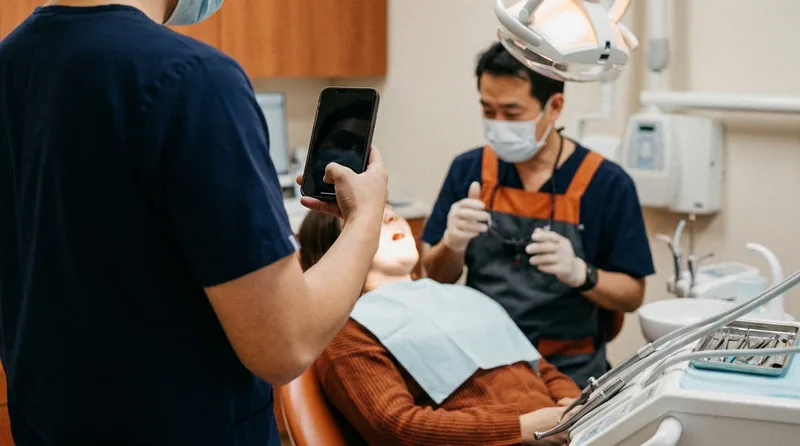
This trend fits a practice willing to appear on camera consistently, even briefly. Authenticity matters more here than production quality or expensive equipment.
A smartphone and natural lighting are usually enough to get started, since patients respond better to an authentic clip than to an overproduced one.
Who Should Wait
It fits less well for a practice unwilling to commit to any regular filming schedule. Sporadic, inconsistent video rarely builds the momentum that makes this format work.
How To Decide
A consistent weekly cadence, even one short video, tends to outperform an occasional highly polished one posted irregularly. Momentum builds from repetition far more than from any single standout piece of content.
Want help identifying which trends fit your practice?
DentalBase can review your current performance and recommend where to invest first.
See DentalBase Services →Is consolidating review management worth budget in 2027?
Yes, consolidating review monitoring and response across platforms into one workflow saves real time. It also catches problems faster than checking each platform separately on an ad hoc basis.
BrightLocal's consumer research found that 98% of people read local reviews before choosing a business. A fast, consistent response process is valuable across every platform, not just the primary one.
Who This Fits
This trend fits a practice active on multiple platforms, like Google, Healthgrades, and Facebook. Checking each one separately has become genuinely time-consuming for most teams.
A single consolidated view also makes it easier to spot a pattern, like a slow response time, that would otherwise be hidden across separate logins.
Who Should Wait
It fits less well for a very small practice with reviews concentrated almost entirely on one platform. A simpler manual process may still work fine there.
How To Decide
Reassess this periodically, since a growing practice often expands onto more platforms over time without anyone noticing the added complexity right away. What worked with one platform rarely scales cleanly to five without some kind of consolidated process. A quick quarterly check on how many platforms actually need monitoring is usually enough.
Does personalized recall and follow-up deserve real budget in 2027?
Yes, personalized recall, tailored to a patient's specific treatment history rather than a generic quarterly blast, continues to outperform mass messaging. The margin shows up directly in actual return rates.
Automated, personalized recall and reminder systems increase patient return rates by 25 to 40%, according to Dental Economics research. That figure reflects real, measurable behavior change, not a marginal or speculative improvement.
Who This Fits
This trend fits a practice with a meaningful base of existing patients who have gone quiet. Personalized recall specifically targets reactivating that exact group.
Segmenting this group by treatment history, rather than treating them as one uniform list, tends to produce noticeably better response rates.
Who Should Wait
It fits less well for a very new practice still building its initial patient base. Acquisition matters more urgently than recall in the short term there.
How To Decide
Revisit this trend once the initial patient base grows large enough that recall becomes a meaningful lever rather than a marginal one. A base of even a few hundred patients is usually enough to make personalized recall worth the setup. Growth here happens faster than most new practices expect.
Is investing in core website speed and technical health still worth it in 2027?
Yes, site speed and technical health remain foundational rather than trendy. Neglecting them undermines the return on every other marketing investment built on top of a slow, poorly performing website.
Google's own guidance on page experience confirms that site speed and technical health directly factor into how a website is evaluated. This applies both to visitors and to search engines ranking it.
Who This Fits
This trend fits essentially every practice. A slow or outdated site quietly undermines every other marketing effort layered on top of it, no matter how well designed.
Even a well-executed ad campaign or content strategy loses much of its value if the destination page loads too slowly to hold a visitor's attention.
There is no practice type where this investment fails to matter. The size of the fix needed simply varies depending on how outdated the current site actually is.
How To Decide
A quick speed test is usually enough to determine whether a practice needs a minor fix or a more substantial rebuild. A handful of free online tools can measure current performance in under a minute.
Need missed calls handled without adding headcount?
See how DentiVoice answers every call, day or night, without a busy front desk missing one.
See AI Receptionist →Does topical, in-depth blog content still earn its budget in 2027?
Yes, topical, genuinely useful content continues to earn organic visibility and answer real patient questions. That holds true even as search behavior shifts toward AI-generated summaries and answer boxes.
Moz's guide to on-page SEO covers how specific, well-researched content continues to outrank thin or generic content. That pattern has held steady even as search technology itself has evolved.
Who This Fits
This trend fits a practice willing to commit to a consistent publishing schedule over months. Content compounds gradually rather than producing an immediate spike in traffic.
A single well-researched article per month, sustained over a year, tends to outperform an inconsistent burst of many articles followed by a long gap.
Who Should Wait
It fits less well for a practice looking for a fast, short-term result. Content marketing rewards patience more than any other channel on this list.
How To Decide
A practice with more immediate budget pressure may want to prioritize a faster-payoff trend first, then layer content in once other gaps are addressed. Content works best as a longer-term addition rather than a first move when budget is tight. A practice with breathing room can start it earlier and let it compound sooner.
Content budget in 2027 also has to account for where the answer gets read. We cover structuring dental content for AI search visibility, including the answer-block format AI engines pull from most often.
How should a practice actually decide where to put its 2027 budget?
The best approach is to match each trend against a specific, existing gap rather than adopting it simply because it is popular. The trends that produce real results are the ones addressing a problem the practice already has. The same discipline applies to paid ad budget for a specific elective service: see how to match paid spend against real case economics using Invisalign as the example before assuming more budget automatically helps.
Review current performance data first. Then choose the one or two trends from this list that most directly address the biggest gap identified in that review.
Trend-to-Gap Matching Table
| Trend | Best fit for |
|---|---|
| AI phone answering | Practices with frequent missed calls or an overwhelmed front desk |
| Short-form video | Practices willing to appear on camera consistently |
| Personalized recall | Practices with a meaningful base of inactive patients |
Related: Personalized recall connects directly to a broader patient retention strategy. See our second-visit retention guide →
How Do You Actually Budget for Dental Marketing Trends in 2027?
The right approach is to budget for trends that solve a specific, identified gap first. Layer in additional trends gradually rather than adopting all six at once without a clear priority order.
DentalBase can help identify which of these trends actually fits a specific practice's current gaps. The same list rarely applies to every practice regardless of its situation.
These are strong candidates for most practices to consider in 2027, though the right order still depends on each practice's specific starting point.
Dental marketing trends worth budget in 2027 are the ones solving a real, specific problem, not the ones simply getting the most attention. Match the trend to the gap, and the budget decision becomes far easier to make.
Quick Recap: The Six Trends
- AI phone answering for practices with frequent missed calls.
- Short-form video for practices willing to appear on camera consistently.
- Consolidated review management for practices active on multiple platforms.
- Personalized recall for practices with a meaningful inactive patient base.
- Core website speed and technical health, which fits nearly every practice.
- Topical, in-depth content for practices with patience for a longer payoff.
Your Next Step
Start by identifying the single biggest gap in current performance, then choose the trend from this list that most directly addresses it.
See How DentalBase Prioritizes Marketing Investment
Book a free demo to see how DentalBase matches marketing trends to a practice's actual gaps.
Book a Free Demo →Want more marketing guides like this one?
Browse Resources →Sources & References
Frequently Asked Questions
AI phone answering, short-form video, consolidated review management, personalized recall, website speed, and topical content are worth budget. Match each to a specific gap rather than adopting all at once.
Yes, for practices with frequent missed calls, since that problem costs real revenue every month it goes unaddressed. It fits less well for a practice already answering every call reliably.
Yes, short-form video continues to outperform static posts for reach and engagement. It fits a practice willing to appear on camera consistently, since sporadic video rarely builds the needed momentum.
Automated, personalized recall and reminder systems increase patient return rates by 25 to 40%, according to Dental Economics research. This reflects real, measurable behavior change, not a marginal improvement.
Site speed and technical health remain foundational, since neglecting them undermines the return on every other marketing investment. This trend fits essentially every practice regardless of size.
Match each trend against a specific, existing gap rather than adopting it because it is popular. Review current performance data first, then choose the trend that most directly addresses the biggest gap.
Was this article helpful?
Written by
DentalBase Team
Expert dental industry content from the DentalBase team. We provide insights on practice management, marketing, compliance, and growth strategies for dental professionals.