Missed Patient Calls: Stop Losing Dental Practice Revenue
Missed patient calls quietly drain dental practice revenue. Learn how to measure the loss, close the gaps, and recover calls you already paid for.
Share:
Table of contents
Missed patient calls are the quietest revenue leak in a dental practice. Nothing breaks. No alarm sounds. The schedule still looks reasonably full and the front desk is genuinely busy, so the problem never reaches the owner's desk.
That silence is the issue. Somewhere between the third ring and voicemail, a caller who was ready to book decides to try the practice two miles down the road. She doesn't complain. She doesn't call back. She just becomes someone else's patient, and your production report never explains why.
That quiet leak is exactly what disappears once AI reception starts reducing missed calls and voicemail drop-offs, since every ring gets answered instead of routed to silence.
That same silence shows up on the other side of the phone too, when a patient who already came in for a consult simply stops answering. See closing the follow-up gap after a consult goes quiet for how to close that gap.
Below is the actual cost of missed patient calls, how to measure yours before spending a dollar, which recovery options hold up under real call volume, and a phased plan you can run in 90 days. DentalBase builds this work into its practice growth services, but every step here works whether you handle it in-house or hire it out.
How much revenue do missed patient calls actually cost?
A practice missing 15 to 20 calls a week loses roughly $18,000 to $24,000 a year, assuming just one in ten callers is a new patient. Dental Economics puts the average practice in that 15 to 20 range and values a single missed new patient call at $1,200 or more.
Run the arithmetic on your own numbers and it stops feeling abstract. The figure that surprises most owners isn't the lost production. It's the acquisition spend already burned before the phone even rang.
| Input | Typical figure | What it means for you |
|---|---|---|
| Missed calls per week | 15 to 20 | Dental Economics benchmark for a general practice |
| Share who are new patients | 10% to 20% | Two to four new patient calls lost weekly |
| Value of one missed new patient call | $1,200+ | Dental Economics estimate of lifetime value at risk |
| Patient lifetime value | $12,000 to $15,000 | The ceiling if that caller had stayed for years |
| Cost to acquire that caller | $150 to $300 | Already spent on ads and SEO before the ring |
Notice the last row. You paid for that call. The Google Ads click, the Google Business Profile listing, the review that convinced her, the site that loaded fast enough to keep her: all of it worked. The phone is where the investment either converts or evaporates.
The compounding effect makes it worse. A patient who never books also never refers, never accepts a treatment plan, and never fills a hygiene slot two years from now. Losing four new patient calls a month isn't a $4,800 problem. Across a decade of practice value, it's closer to a six figure one.
Related: That same compounding pattern shows up with patients who simply go quiet over time, not just callers who never got through. Read how overdue patients get turned back into booked visits →
Not sure how many calls you are missing?
A DentiVoice call audit shows your answer rate, hold times, and after-hours volume before you change anything about how the front desk runs.
See the AI Receptionist →Why do dental practices miss so many calls in the first place?
Practices miss calls because phone coverage assumes a steady arrival rate, and patient calls don't arrive that way. According to ADA Practice Transitions, 38% of new patient calls go unanswered during business hours. That's not a staffing shortage. It's a mismatch between when calls land and when someone is free.
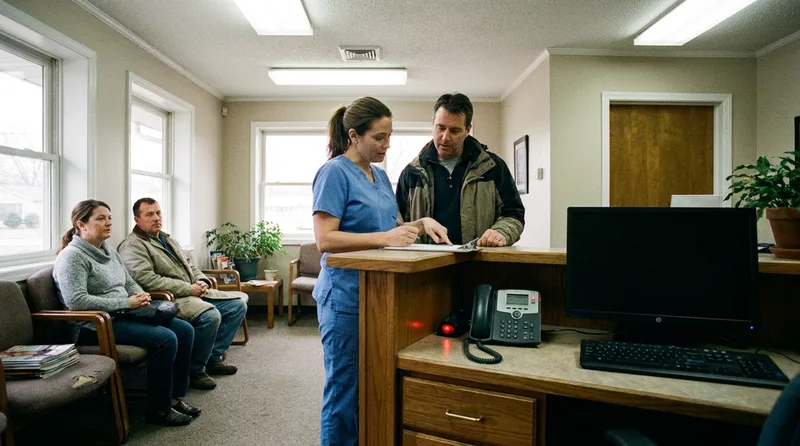
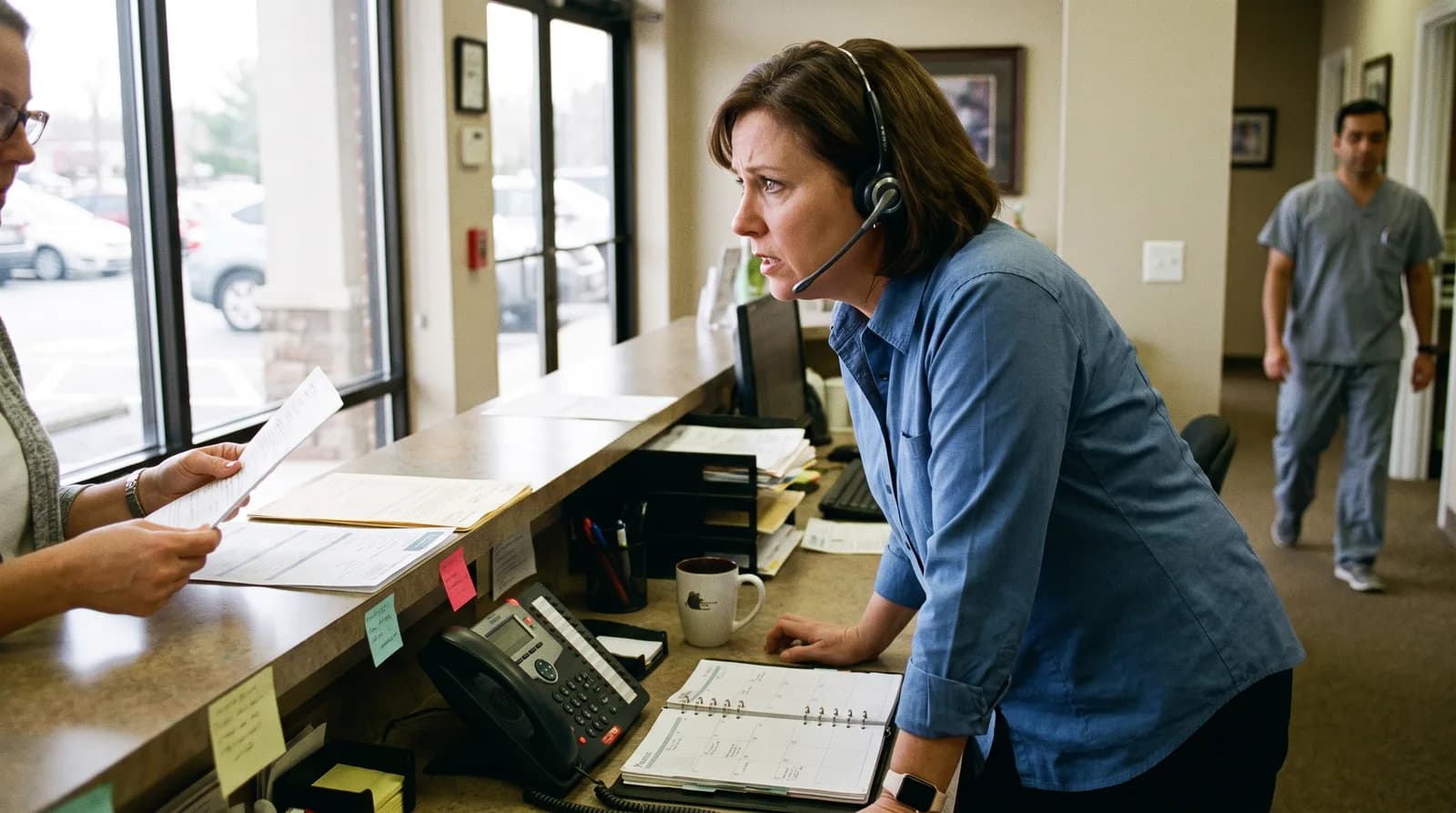
Think about what the front desk is doing at 8:15 on a Monday. Checking in three patients, verifying insurance for a fourth, taking a payment, and answering the phone. One of those tasks has a person standing in front of it. The phone doesn't.
The usual causes stack in a predictable order:
- Call clustering. Volume spikes at open, at lunch, and in the hour after 5 p.m. Coverage stays flat all day, so the same headcount handles four times the load during peaks and sits idle mid-afternoon.
- Hold time. Marchex data puts the average hold before a hangup at about 90 seconds. Most front desks think they have longer.
- Voicemail as a fallback. Roughly 80% of callers who reach voicemail hang up without leaving a message, according to RingCentral. A full mailbox is not evidence that voicemail is working. An empty one is not evidence that nobody called.
- No after-hours plan. Dental Economics reports that after-hours calls make up 27% of total patient call volume. If the phone rolls to a recording at 5 p.m., a quarter of your demand is being handled by a message.
Here's the thing about the voicemail number. It means your missed call log is almost always longer than your voicemail box suggests. Owners who judge the problem by unreturned messages are looking at the smallest possible sample of it.
Related: This exact pattern of causes gets a deeper breakdown elsewhere. See why your front desk still misses calls, and the fix →
When are you missing the most calls?
Most missed patient calls cluster into three windows: the first hour of the day, the lunch block when coverage thins, and evenings after the office closes. Those windows behave differently, and each one needs a different fix, so measuring them separately matters more than knowing your total.
The morning spike is a capacity problem. Patients call before work, and they call while your team is opening the office. Adding a person for 90 minutes often solves more than adding one for the full day, which is the argument laid out in our guide to matching front desk staffing to the demand curve.
Lunch is a coverage problem. Somebody is always technically there, but the person who knows how to quote a crown fee is eating in the break room.
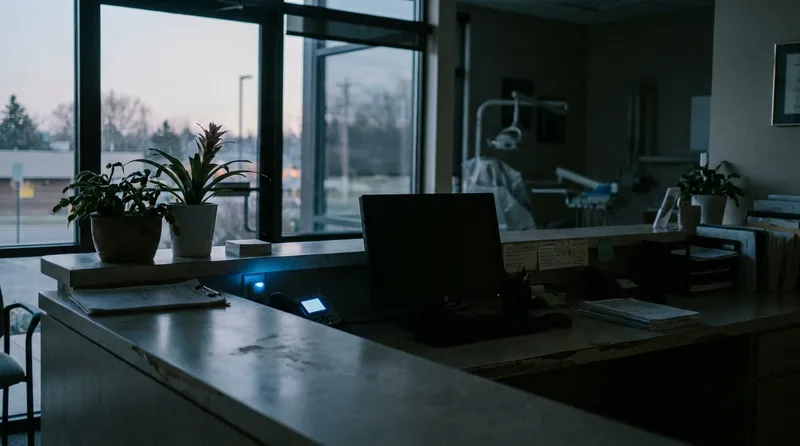
Evenings are a structural problem. No amount of scheduling fixes a phone that nobody is paid to answer at 7 p.m. That's a different decision entirely, and we walk through the tradeoffs in our breakdown of after-hours answering services.
How do you measure missed patient calls before you fix anything?
Pull four weeks of call detail records from your phone system, then classify every unanswered call by time of day and caller type. Four weeks is enough to smooth out a bad Monday and long enough to expose a pattern. Do this before buying anything, because the measurement usually changes which fix you choose.

Work through it in this order:
- Export the raw call log. Every VoIP system will produce one. You want inbound calls, timestamp, duration, and disposition (answered, abandoned, voicemail, after-hours).
- Strip out the noise. Remove supply reps, labs, insurance carriers, and internal transfers. What remains is patient demand.
- Split new versus existing. Cross reference numbers against your practice management system. Anything not in Dentrix, Open Dental, Eaglesoft, or Curve Dental is a probable new patient.
- Bucket by time. Tag each missed call as business hours, lunch, after hours, or weekend. This is where the pattern shows up.
- Reconcile against bookings. Count how many missed callers ever appeared on the schedule afterward. The gap between calls missed and patients recovered is your real number.
That final step is the one teams skip, and it's the one that settles arguments. A practice missing 60 calls a month that recovers 45 of them has a nuisance. A practice missing 25 and recovering 3 has a revenue problem worth solving this quarter.
Which fixes actually recover missed call revenue?
Four options exist in practice: voicemail, a live answering service, adding front desk hours, or an AI receptionist. They differ less on price than on one question, which is whether the caller leaves the interaction with a booked appointment or with a promise that somebody will call back.
| Option | Coverage | Can it book? | Practical limit |
|---|---|---|---|
| Voicemail | 24/7 | No | Most callers hang up without leaving a message |
| Live answering service | Configurable | Message only, usually | Operators lack fee, insurance, and clinical context |
| More front desk hours | Business hours | Yes | Costs scale with coverage; no nights or weekends |
| AI receptionist | 24/7 | Yes, into the PMS | Needs clear escalation rules for urgent calls |
Callback promises are where recovery quietly fails. By the time your team returns the call at 2 p.m., the patient has already booked elsewhere. Weave Communications has reported that unanswered callers typically contact another practice rather than wait, and that behavior is consistent with what BrightLocal's consumer research shows about local service selection: people work down a list until someone picks up.
Response speed is not a dental quirk either. HubSpot's marketing benchmarks have long shown that lead conversion collapses when first contact stretches from minutes into hours. Same mechanic, different industry.
Recover the calls you already paid for
DentiVoice answers every call, books directly into your practice management system, and escalates urgent cases to your team by name.
Explore DentiVoice →Should you hire more front desk staff or automate the phones?
Hire when your problem is business hours capacity and your schedule has room to grow. Automate when the losses sit outside coverage hours or your margins can't absorb another salary. Most practices need a blend, not a winner, because the two failure modes have different shapes and different costs.
A second front desk person is the right call if morning volume is drowning one coordinator and you have open chair time to fill. Human judgment on a complicated insurance question still outperforms any script. But payroll is fixed and patient demand isn't, which is exactly the pressure described in our look at the fiscal squeeze facing practice owners.
Automation makes more sense when the pattern is 7 p.m. calls, Saturday calls, and simple booking requests. Those don't need clinical judgment. They need someone to pick up.
A quick way to decide
- More than half your missed patient calls happen outside business hours: automate first.
- Missed calls cluster into two known peaks and your team is at capacity: staff first.
- Answered calls are long because the team is looking up the same answers repeatedly: fix the reference material before either, using something like our front desk prompt library.
If staffing turns out to be the right call, look at how to cross-train the team you already have before you add headcount. It is usually the faster and cheaper fix for coverage during known peak windows.
Specialty practices skew this math further. An orthodontic office loses higher-value consults to the same missed-call problem, and our guide to orthodontic answering service options and costs walks through how that specialty's call mix changes the calculation.
How does an AI receptionist handle a missed call differently?
An AI receptionist answers on the first ring, every time, and finishes the job instead of taking a message. It confirms the reason for the call, checks live availability, writes the appointment into the practice management system, and routes anything clinical or urgent to a human. The caller never enters a queue.
The distinction that matters is write access. A phone tree routes. An answering service records. A system connected to Dentrix, Open Dental, Eaglesoft, or Curve Dental can hold a real slot, which is what turns a recovered call into recovered production.
Typical handling on an after-hours new patient call looks like this:
- Answers immediately and identifies itself as an automated assistant.
- Captures name, callback number, insurance, and reason for the visit.
- Offers open slots pulled live from the schedule and books the chosen one.
- Flags pain, swelling, or trauma as urgent and follows the practice's escalation rule.
- Leaves a structured summary for the morning team instead of a raw recording.
Disclosure is not optional here, and practices that handle it plainly see better reception than those that don't. We cover the wording in our piece on telling patients they're speaking with AI.
Related: A feature list is more useful than a demo script when you are comparing vendors. See which AI receptionist features practices actually use →
What should you track after you fix the phones?
Track four numbers monthly, not one. Answer rate alone will look excellent the moment anything picks up automatically, which makes it a poor measure of whether you're recovering money. Pair it with metrics that follow the caller all the way to a kept appointment. For a look at how this kind of tracking works in practice, see what your call data reveals once DentiVoice is running.
- Answer rate by time block. Segment business hours, after hours, and weekends. A blended number hides the gap you just paid to close.
- Call to appointment rate. Of new patient calls answered, what share ends with a booking? This is the honest conversion metric.
- Show rate on booked calls. An appointment booked at 9 p.m. by an automated system should show up at roughly the same rate as one booked by your coordinator. If it doesn't, the confirmation flow needs work.
- Escalation accuracy. How often did an urgent call reach a human quickly? One mishandled emergency outweighs a month of efficiency gains.
Related: Missed calls and same-day cancellations both burn a booked slot, just from opposite directions. See why dental patients cancel same day and how to recover the slot →
The ADA's practice management resources make a related point worth borrowing: operational metrics only change behavior when someone owns them. Assign these four to a named person and review them on the same day each month.
Want the underlying call data instead of a vendor summary?
See how DentiVoice reports call outcomes →What does a 90-day call recovery plan look like?
Split it into three phases: measure for 30 days, deploy coverage for 30 days, then optimize for 30 days. Practices that try to compress this into one month usually skip the measurement and end up buying coverage for a window where they were already fine.
Days 1 to 30: measure
Pull the call records, classify them, and reconcile against bookings using the five steps above. Set a baseline you'll be able to compare against, and write down the raw totals somewhere your team can see them. Don't change anything yet. Teams that skip this step lose the ability to prove the fix worked.
Days 31 to 60: deploy
Close the largest gap first, whether that means added morning hours or automated coverage. Write your escalation rules before go-live, not after. Brief the team on what the system will and won't handle so nobody is surprised by a summary in the morning queue.
Days 61 to 90: optimize
Review the four metrics, listen to a sample of recovered calls, and tighten anything that felt awkward. Dental Economics coverage of practice operations consistently lands on the same theme: the practices that improve are the ones that keep reviewing after the purchase, not the ones that buy and move on.
What is the first step to stop losing revenue to missed patient calls?
The uncomfortable part of missed patient calls is that they never look like an emergency. Production stays flat, not negative. The team stays busy. Nothing visibly breaks, so nothing gets fixed, and the practice slowly runs at 85% of what its marketing already bought.
Start with the measurement. Four weeks of call records will tell you more than any vendor pitch, and it costs nothing but an afternoon. Once you can see which window is leaking, the right fix is usually obvious, and you'll stop guessing about whether the phone is a problem worth solving.
See what your phone is really doing
Book a short demo and we will walk through your call patterns, show where new patients are dropping off, and map the coverage that closes the gap.
Book a Free Demo →Explore more guides and tools for dental practice growth.
Browse Resources →Sources & References
Frequently Asked Questions
Export four weeks of inbound call detail records from your VoIP system, then filter for unanswered, abandoned, and voicemail dispositions. Remove supply reps and labs so only patient demand remains. Nearly every cloud phone system produces this report without an add-on.
The per-call figure varies with your case mix, but the direction holds. Dental Economics values a missed new patient call at $1,200 or more, and general dentistry patient lifetime value typically runs $12,000 to $15,000. Run the math on your own numbers.
It helps with coverage but rarely with conversion. Most answering services take a message rather than book an appointment, because operators lack access to your schedule, fee structure, and insurance details. The callback delay is where recovery usually breaks down.
Reception depends heavily on disclosure and escalation. Practices that identify the system as automated up front and route urgent calls to a human quickly report far fewer complaints than those that let patients discover it mid-call.
Fix whichever window holds the larger share of your missed new patient calls, which is why measurement comes first. If more than half of your losses fall outside business hours, automated coverage will return more than another payroll hour.
Marchex data puts the average hold time before a hangup at roughly 90 seconds. Most front desk teams assume they have several minutes, which is why a call that feels briefly parked has often already been abandoned.
Aim above 90% during business hours and measure after hours separately rather than blending them. A blended figure hides the exact gap you are trying to close, and it improves on paper the moment anything picks up automatically.
Was this article helpful?

Written by
Dr. Muhammad Abdel-rahim DMD
Muhammad Abdel-rahim, DMD, is a dentist and implantologist at Peterborough Family Dental & Implant Center with a passion for blending clinical excellence, leadership, and innovation. He believes dentistry extends beyond restoring smiles to building trust, confidence, and sustainable systems that help patients and teams thrive. With experience leading and scaling dental practices, Dr. Abdel-rahim brings a strategic mindset to patient care and practice growth. He is particularly interested in communication, critical thinking, and the thoughtful application of artificial intelligence to improve clinical outcomes, workflows, and the overall patient experience.