Teledentistry in 2026: What It Can and Can't Replace
Teledentistry 2026: real ADA data on adoption, who actually uses it, and an honest look at what virtual dental care can and can't replace.
Share:
Table of contents
Every year since the pandemic, someone predicts teledentistry is about to replace the in-person visit. It has not happened, and the real data explains why. Teledentistry 2026 looks nothing like the disruption narrative, and nothing like the "it never took off" dismissal either. It sits somewhere quieter and more useful in between.
I use it sparingly in my own practice, mostly for triage and follow-ups. That is not hesitation. It is an accurate read of what the technology is actually good at. Before assuming it either replaces staff or does nothing, it helps to look at what practices are honestly doing with it. We walk clients through the same kind of technology decisions across our services every week.
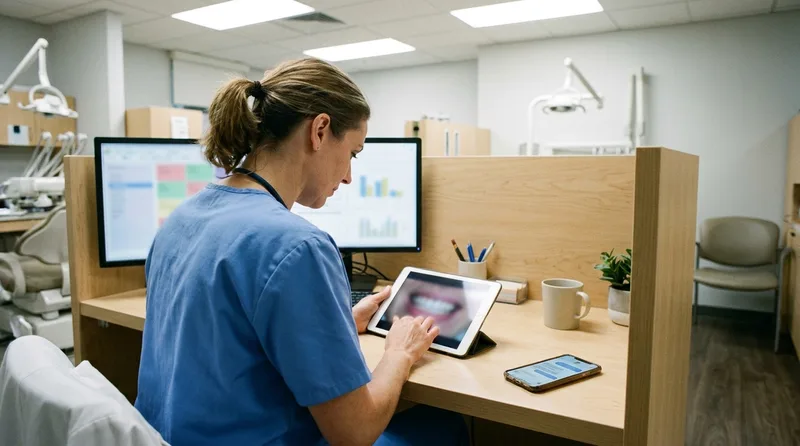
The confusion around teledentistry usually comes from treating it as one thing. It is really two very different tools wearing the same name: a live video call and a simple photo review sent for later feedback. Conflating the two is part of why the adoption numbers get misread so often.
Teledentistry 2026: What Is It Actually Being Used For?
Adoption sits far below the hype cycle that followed the pandemic. An ADA Clinical Evaluators Panel survey published in JADA found that 30% of dental practices use teledentistry in some form. That figure has held roughly steady rather than climbing toward mainstream status.
Dental Economics has tracked similar plateau patterns across other pandemic-era technology adoptions that never fully broke into daily workflow, which suggests this is not unique to virtual dental care specifically.
Synchronous use
Live video consultations account for the smaller share of use. About 53% of teledentistry users rely on synchronous visits, typically for triage calls or quick clinical questions that do not require a chairside exam. This mode requires both parties to be available at the same time, which is exactly the scheduling friction most practices are trying to avoid in the first place.
Asynchronous use
Store-and-forward technology, sending photos, radiographs, or notes for a dentist to review later, is actually more common, used by 63% of teledentistry adopters. This fits the workflow of a busy practice better than scheduling a live video slot, since a dentist can review submissions between patients rather than blocking dedicated time.
The practical difference matters more than it sounds. A practice building a teledentistry workflow around live video is solving a different scheduling problem than one building around photo review. Conflating the two leads to picking the wrong tool for the actual bottleneck.
| Mode | Share of teledentistry users | Typical use case |
|---|---|---|
| Asynchronous (store-and-forward) | 63% | Photo or radiograph review, triage without a live call |
| Synchronous (live video) | 53% | Quick consults, follow-up questions, urgent triage |
Related: Practices still running on outdated systems often can't support even simple virtual workflows. See why legacy technology holds practices back →
Who Is Using Teledentistry in 2026, and Why?
Why Practices Adopt It
The reasons practices adopt teledentistry are practical, not aspirational. The same ADA survey data found the top reasons were increased convenience for patients (53%), the COVID-19 pandemic (50%), and improved accessibility to providers (39%). None of those reasons describe a practice chasing a trend.
Not Primarily a Rural-Access Tool
Here is the detail that undercuts the popular narrative. Sixty-three percent of teledentistry patients live within 20 miles of the practice. Teledentistry is often pitched as a rural-access solution, closing distance gaps for patients who cannot easily reach a dentist. In practice, most of its actual use comes from local patients choosing convenience over a trip to the office, not remote patients who have no other option.
That reframes what the technology is really solving. It is less a geographic-access tool and more a scheduling-friction reducer. That lines up closely with why dental AI adoption broadly tends to spread: practices adopt tools that remove friction from an existing workflow, not ones that promise a wholesale transformation.
Who It Reaches, and How Satisfied They Are
Age distribution also tells a story. Even the lowest-represented age group in the survey, patients ages zero to five, still showed a meaningful share of dentists treating them through teledentistry. That suggests the tool has found a foothold across most patient demographics, not one narrow niche.
Satisfaction data reinforces the picture. Most dentists who use teledentistry report being satisfied with it, citing better access and quality of care for the specific situations where they deploy it. That satisfaction is narrow and situational, not a blanket endorsement of virtual care replacing anything broader.
Would Teledentistry Actually Help Your Practice?
Check what is true today.
Two or more checked means a narrow, low-cost pilot is worth testing.
What Can Teledentistry 2026 Genuinely Replace?
Teledentistry earns its place in a handful of specific, lower-stakes moments where a full appointment is overkill for what the visit actually requires. CDC oral health access research points to the same pattern: virtual tools work best filling administrative and pre-clinical gaps, not replacing the exam itself.
Where Teledentistry Adds the Most Value
- Initial triage to determine whether a symptom needs an urgent appointment or can wait
- Post-treatment follow-ups checking on healing, discomfort, or minor concerns
- Reviewing a photo or radiograph a patient sends in rather than scheduling a full visit
- Patient education and treatment plan discussions that do not require hands-on examination
A structured follow-up system already covers much of this ground, and teledentistry works best layered on top of that process rather than replacing it outright. The practices getting this right treat it as one more channel in an existing follow-up workflow, not a standalone program requiring its own separate strategy.
What Teledentistry 2026 Can Never Replace
I want to be direct about this, because the hype cycle rarely is. Cleanings, restorative work, extractions, and anything requiring hands, instruments, or imaging equipment in a patient's mouth cannot happen through a screen, and no version of this technology changes that fundamental limit.
The Diagnostic Limit
Diagnosis has real limits too. A photo or a video call can flag a concern. It cannot replace a clinical exam, a proper radiograph, or the tactile information a dentist gets from actually examining a tooth with a probe and mirror. Treating teledentistry as a diagnostic substitute rather than a triage tool is where practices get into real trouble, both clinically and from a liability standpoint.
Where the Honest Ceiling Sits
The technology's honest ceiling is administrative and pre-clinical. Once a patient needs anything done to their mouth, teledentistry's job in that visit is already finished. Pretending otherwise sets up both the patient and the practice for a bad outcome down the line.
| Category | Teledentistry can help | Teledentistry cannot replace |
|---|---|---|
| Triage | Determining urgency before scheduling | A clinical exam once urgency is confirmed |
| Follow-up | Checking healing or minor concerns | In-person assessment of complications |
| Treatment | Discussing options and next steps | Any hands-on procedure or restorative work |
Free Up Time for the Visits That Need a Chair
DentiVoice handles scheduling and follow-up outreach, so your team's time goes toward the care only a person can deliver.
Explore AI Receptionist →Why Has Teledentistry Adoption Plateaued at Such Low Usage?
Even among practices that have adopted teledentistry, usage stays modest. Most users report fewer than five hours of teledentistry activity per month, which tells you this is a supplemental tool, not a core workflow. It fills specific gaps rather than replacing meaningful chair time.
30%
of practices use teledentistry today
<5 hrs
typical monthly usage among adopters
63%
of use is asynchronous, store-and-forward review
Why Non-Adopters Are Opting Out
The non-adopter side tells a similar story. A large share of practices that have not adopted teledentistry say there simply was not a need, not that the technology failed them or that cost or complexity blocked it. That is a demand signal, not a failure signal.
Practices under real staffing pressure, however, are more likely to find a genuine use case. Triage and follow-up automation free up scarce clinical time rather than sitting idle as a nice-to-have. With hygienist and staffing shortages projected to keep tightening, that use case is likely to grow even if overall adoption stays modest for practices without the same pressure.
How Does Teledentistry 2026 Fit the Broader AI Adoption Pattern?
Teledentistry follows the same rule that governs every other corner of dental technology adoption: practices adopt tools that solve a specific, measurable problem, not tools that promise a wholesale transformation. Low, steady, purpose-specific adoption is not a disappointment. It is what rational adoption of a narrow-use tool actually looks like.

The Same Rule Across Dental Tech
This is consistent with the pattern across the industry. The same honest, narrow framing applies to AI receptionist adoption. The tools that stick are the ones solving one clear problem well, not the ones promising to replace an entire role.
Low Switching Cost, Steady Adoption
It also mirrors the switching-cost math behind why practices delay adopting almost any new system. Teledentistry has a genuinely low switching cost compared to a full practice management overhaul. No contract lock-in, minimal training, and a narrow enough scope mean a bad fit costs very little to walk away from. That low-risk profile is exactly why adoption, while modest, has been steady rather than volatile.
What Should Practices Expect Through 2027?
Expect teledentistry 2026 adoption to stay a supplemental pattern, not become a dominant channel. The 30% figure will likely climb slowly as more practice management systems build in virtual-visit support natively, lowering the setup friction that currently keeps some practices out.
Three Factors That Will Shape the Pace
Three factors will shape how fast that climb happens:
- Insurance and reimbursement policy for virtual visits, which varies significantly by state and by plan
- How natively practice management systems integrate virtual-visit scheduling, rather than requiring a separate tool
- Whether staffing pressure pushes more practices toward triage automation as a genuine necessity, not a nice-to-have
The practices getting real value from teledentistry are not the ones treating it as a headline feature. They are the ones quietly using it for triage and follow-ups while keeping clinical work exactly where it belongs, in the chair. If you are weighing where a virtual-visit workflow could realistically fit your practice, a short conversation usually clarifies it faster than another product demo.
Teledentistry 2026 is neither the disruption it was once predicted to be nor a dead trend. It is a narrow, useful tool for triage, follow-ups, and education, used sparingly by practices that have found a specific fit for it. Judging teledentistry against replacing the dentist's chair misses what it was actually built to do. The practices getting the most value are the ones that stopped asking whether it would transform their business and started asking which single workflow gap it could quietly close.
Related: Any virtual visit tool still has to meet the same privacy and security bar as in-office systems. Read the encryption and BAA requirements in this dental HIPAA compliance checklist.
Talk Through Where Virtual Visits Could Fit
Book a free demo and we will help you see whether a narrow teledentistry pilot makes sense for your practice.
Book a Free Demo →See More Honest Technology Breakdowns
Browse straightforward analysis on what dental technology actually delivers, without the hype.
Browse Resources →Sources & References
Frequently Asked Questions
About 30% of dental practices use teledentistry in some form, according to an ADA Clinical Evaluators Panel survey published in JADA. Adoption has held roughly steady rather than climbing toward mainstream status since the pandemic.
Not primarily. Sixty-three percent of teledentistry patients live within 20 miles of the practice. It functions more as a scheduling-friction reducer for local patients than a rural-access solution, despite common assumptions about its purpose.
No. It can handle triage, follow-ups, and patient education, but cannot replace any hands-on exam, cleaning, restorative work, or procedure. Once a patient needs something done to their mouth, teledentistry's role in that visit is finished.
Most adopters use it fewer than 5 hours a month, and a large share of non-adopters say there simply wasn't a need. That reflects rational, narrow-use adoption rather than a failure of the technology itself.
Synchronous teledentistry uses live video for real-time consultations, used by 53% of adopters. Asynchronous, or store-and-forward, involves sending photos or records for later review, used by 63% of adopters, and fits busier workflows better.
Was this article helpful?
Written by
DentalBase Team
Expert dental industry content from the DentalBase team. We provide insights on practice management, marketing, compliance, and growth strategies for dental professionals.