
Dental Answering Service 2027: AI vs Live Agent Costs
Dental answering service 2027 costs compared: per-minute live agents vs AI receptionists, hidden costs, and how to price cost per booked appointment.
Share:
Table of contents
Planning your dental answering service 2027 budget is harder than it looks, because vendors price the same job four different ways. Some bill by the minute. Others charge per call or per message. A dental AI receptionist often runs on a flat monthly plan instead, so the invoice looks nothing like a live agent's.
That makes quotes tough to compare. A low per-minute rate can cost more than a flat plan once call volume spikes. And a flat plan can still cost too much if it can't book a single appointment.
This guide shows how each model charges, which costs hide outside the invoice, and how to compare vendors by cost per booked appointment. You'll also get a 30-day test to run before you sign. If you want a feature-level view first, start with our AI receptionist vs answering service comparison.
What Does a Dental Answering Service 2027 Price Quote Include?
A quote should spell out the billing model, the call or minute allowance, the overage rate, and any setup fees. Vendors define each differently, and the same practice can pay very different amounts for identical call volume.
One 200-call week under two billing models
Take a practice that gets roughly 200 calls a week. Under per-minute billing, a ten-minute insurance call costs ten times what a one-minute scheduling call does. Under a flat plan, both cost the same, right up until you cross the cap.
The five common billing models
| Billing model | What you pay for | Where costs can creep in |
|---|---|---|
| Per minute (live agents) | Talk time, including spelling names and holds | Long calls and busy mornings |
| Per call or message | Each call answered or message sent | Ask whether spam and wrong numbers count |
| Flat monthly plan | A set bundle of calls or minutes | Overage past the cap and setup fees |
| AI platform subscription | Access to the system and its integrations | Setup, integration, and training time |
| In-house hire | Wages, benefits, and training | Sick days, lunch breaks, and turnover |
According to Dental Economics, 73% of dental practices plan to adopt AI tools by 2027, so you'll likely see platform-style quotes next to traditional per-minute ones.
Ask each vendor to put the model, allowance, overage rate, and setup fees on a single page. Then you're comparing like with like.
What Does a Live Dental Answering Service Really Cost You?
A live service costs more than its rate card suggests, because most agents take messages instead of booking appointments. Your staff then spends time on callbacks, and every callback is another chance to lose the patient. Count the invoice plus the follow-up labor before you compare.
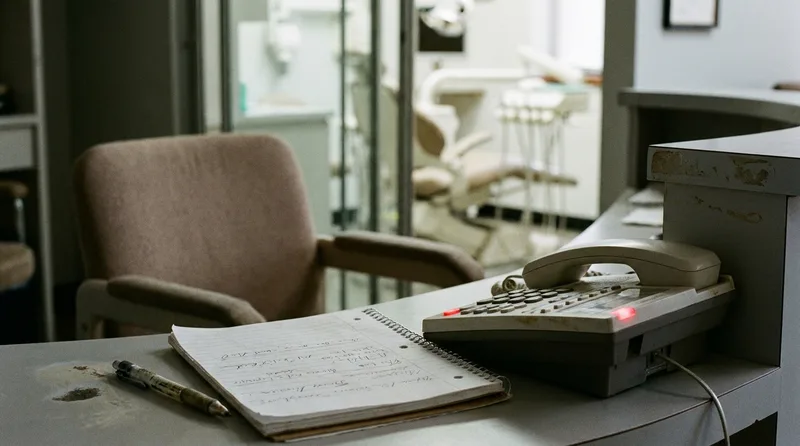
Here's the thing about message-taking. The agent's job ends when the message is sent. Yours begins. Marchex puts the average hold time before a patient hangs up at 90 seconds, and a callback that lands in voicemail adds a second missed chance.
Where the message goes after the agent hangs up
A typical message-taking path looks like this:
- The agent collects the caller's name, number, and reason for calling.
- The message waits until your front desk opens or checks the inbox.
- A staff member calls back, often reaching voicemail.
- The patient books with you, or has already booked somewhere else.
Each handoff adds time. You pay for it in wages, and you pay for it in patients who booked elsewhere. Our dental call center vs AI receptionist breakdown shows how that plays out across a full month.
How to measure the callback cost
Track how many minutes your front desk spends on callbacks for one week. Multiply by their hourly wage. That's a cost your answering service invoice never shows.
Compare your phone options in one place
See how DentalBase pairs patient call handling with marketing that drives new patient calls.
Explore DentalBase Services →How Is an AI Receptionist Priced Compared With a Live Agent?
An AI receptionist is typically priced as a platform subscription instead of by the minute, so cost stays steadier as call volume rises. Setup and practice management integration are the main upfront items, and they decide whether the tool can actually book appointments.
DentiVoice, the AI receptionist from DentalBase, covers 24/7 call answering, appointment booking, rescheduling, and urgent call triage. It connects to Dentrix, Eaglesoft, Open Dental, and Denticon, among others. Whether a given plan includes those integrations is a pricing question, so ask.
What to confirm on an AI receptionist quote
Confirm these points on any AI receptionist quote:
- Setup and integration fees, and who does the work
- Whether outbound follow-up calls are included or priced separately
- Call or minute caps, and what overage costs
- How long it takes to train the system on your services and insurance rules
- Contract length and cancellation terms
That said, flat pricing isn't automatically cheaper. A plan with a low cap and steep overage can cost more than a per-minute service in a busy month. Run the math with your own call count.
Related: Our after-hours guide compares AI, live agents, and voicemail side by side for nights and weekends. Dental Answering Service: AI vs Live vs Voicemail Compared →
Which Hidden Costs Belong in Your Dental Answering Service 2027 Budget?
The biggest hidden cost is the call that never becomes an appointment. According to ADA Practice Transitions, 38% of new patient calls go unanswered during business hours, and Forbes reports that 80% of callers who reach voicemail don't leave a message or call back.
38%
of new patient calls go unanswered during business hours
ADA Practice Transitions
80%
of callers who reach voicemail don't leave a message or call back
Forbes
27%
of total patient call volume arrives after hours
Dental Economics
Those misses rarely show up on an invoice, so they rarely show up in a budget. And a caller who hangs up usually keeps searching. The BrightLocal Local Consumer Review Survey found that 98% of people read local reviews before choosing a business, so a competitor's profile may be the next thing that caller sees. Put these on your list:
- Unanswered business-hours calls, which the figures above suggest are common
- After-hours demand, which Dental Economics puts at 27% of total call volume
- Overage charges in busy months
- Staff time spent returning messages
- Integration and setup time on your own team's side
The lost-call math with your own numbers
Try this with your own numbers. Dental Economics says the average practice misses 15-20 calls a week. Suppose 2 of those are new patients who would have booked. At the $1,200+ lifetime value Dental Economics attaches to a single missed new patient call, that's $2,400 a week in lost lifetime value.
It's an illustration, not a forecast. Swap in your own counts.
The illustration in numbers
2 missed new patients x $1,200+ lifetime value = $2,400 a week in lost lifetime value
Related: Our cost benefit guide walks through the revenue math for answered calls step by step. AI Dental Receptionist Cost Benefit Analysis: ROI vs Hype →
How Do You Compare Cost Per Booked Appointment Instead of Cost Per Call?
Divide your total monthly phone cost by the number of appointments those calls actually produced. That figure, cost per booked appointment, exposes what per-call and per-minute rates hide. A vendor that answers every call but books none can still be the most expensive option.

The five-step formula
Use the same steps for every option you're considering:
- Add the monthly invoice, average overage, and setup fees spread across 12 months.
- Add staff callback time multiplied by an hourly wage.
- Pull the number of phone-sourced appointments from your practice management software.
- Divide the total cost by that appointment count.
- Repeat for each vendor over the same 30-day period.
The formula
Cost per booked appointment = (invoice + overage + setup share + callback labor) ÷ phone-sourced appointments
For wage inputs, use local figures from the Bureau of Labor Statistics receptionist profile rather than a national guess. To sanity-check call volume against practice size, the ADA Health Policy Institute publishes dental research you can benchmark against.
If your call and booking data sit in separate tools, DentiMetrics reports which calls, answered by your team or by DentiVoice, became appointments. That makes the count in step three less of a guess.
Why does this matter? Cost per call rewards vendors for picking up. Cost per booked appointment rewards them for filling your schedule.
When Does a Live Dental Answering Service Still Make Sense?
Yes, a live service still makes sense when after-hours volume is low, when you want a human voice for sensitive emergency calls, or when your office has no practice management integration to book into. In those cases, a message-taking model may cost less overall.
A solo practice that gets a handful of after-hours calls a week may not need a platform at all. A person who takes a clear message and flags true emergencies can be enough. The math changes once calls pile up during business hours or your staff can't keep pace with callbacks.
A live service tends to fit when:
- After-hours volume is low
- You want a human voice for sensitive emergency calls
- You have no practice management integration to book into
Two questions that settle it
Two questions help you decide. First, how many of your after-hours calls are true emergencies, and how many are routine scheduling requests? Second, does your office already return messages within an hour of opening? If both answers favor a human voice, a live service is a reasonable fit. If not, the callback gap is where the cost builds up.
If you're weighing a human virtual receptionist rather than a message service, our virtual receptionist vs answering service comparison shows where each one fits.
Can a Hybrid Setup Lower Your Dental Answering Service 2027 Costs?
Yes, a hybrid setup can lower costs when AI handles routine calls and a human takes only the escalations. You pay human rates for fewer calls, and sensitive situations still reach a person. The savings depend on how many of your calls are routine.
Sort a week of calls into two piles. Routine calls include scheduling, office hours, directions, and basic insurance questions. Sensitive calls include emergencies, complaints, and complex treatment questions. The larger the routine pile, the more a hybrid model has to work with.
Routine calls vs sensitive calls
A practical split might look like this. AI answers first and books routine requests directly into your schedule. Anything flagged as an emergency or a complaint transfers to a live person or your on-call team. You pay the human rate only for the calls that need one. Ask vendors how they define an escalation, because that definition drives your bill.
The handoff is easier when both sit on one phone system. DentiVoIP runs desk phones, texting, and DentiVoice together, so a call DentiVoice passes to your team arrives as a warm transfer with a note explaining why.
Our AI vs human dental receptionist pros and cons piece goes through which calls belong where.
How Do You Run a 30-Day Cost Test Before Committing?
Run a 30-day test by logging every call, every booking, and every callback before and during the trial. Compare the same metrics across both periods, so the numbers reflect your practice instead of a vendor's demo.

- Week 1: log calls received, calls missed, and appointments booked by phone.
- Week 2: start the trial and keep logging the same three numbers.
- Week 3: record callback minutes your staff spends and any overage charges.
- Week 4: calculate cost per booked appointment for both periods.
Keep the log simple. A shared spreadsheet beats a polished dashboard nobody updates. If the vendor can't give you call-level reports, note that too.
Set your pass mark in advance
Set a pass mark before the trial starts. For example, decide in advance that the new option must lower your cost per booked appointment, or at least match it while cutting missed calls. Writing the target down keeps you honest when a polished demo tempts you to move the goalposts.
What Questions Should You Ask a Vendor About Pricing?
Ask every vendor six pricing questions before you sign: what counts as a billable call, what happens past the cap, what setup costs, how long the contract runs, whether they sign a HIPAA business associate agreement, and which integrations are included. For the privacy side of that BAA question, see the privacy safeguards to demand from an answering vendor.
- Billable calls: Do spam, wrong numbers, and hang-ups count?
- Overage: What's the rate once you pass the allowance?
- Setup: What's charged upfront, and what's your team's time commitment?
- Contract: What's the minimum term, and how do you cancel?
- HIPAA: Will they sign a business associate agreement?
- Integrations: Does the quote cover your practice management software?
Get every answer in writing. Verbal quotes tend to shift once the contract is signed.
Compare the answers side by side
Compare the answers in a simple side-by-side sheet so nothing gets lost between calls. A vague answer on overage or setup is a reason to ask again, not a reason to assume it will work out. And if two vendors quote the same price, the one that includes your practice management integration is doing more for the money.
What's Your Next Step on Dental Answering Costs?
Your next step is to pull 30 days of call data and price each option against it. Rates only mean something when divided by booked appointments, and your own log will settle the dental answering service 2027 question faster than any vendor comparison chart.
Start with the missed calls. Every one you recover changes the math more than any discount a vendor offers.
See what your phone line is costing you
Book a free demo and we'll walk through your call volume, missed calls, and what each option would cost.
Book a Free Demo →Explore more guides and tools for dental practice growth.
Browse Resources →Sources & References
Frequently Asked Questions
There's no single price, because vendors bill per minute, per call, or on a flat monthly plan. Get quotes that list the allowance, overage rate, and setup fees, then divide your total monthly cost by booked appointments to compare them fairly.
It depends on call volume and whether the tool books appointments. Flat plans stay steadier as volume rises, while per-minute billing grows with every call. Compare cost per booked appointment over a 30-day test instead of trusting a rate card.
Many live services take messages and pass them to your office instead of scheduling directly. AI receptionists connected to your practice management software can book in real time. Confirm integration with your system, such as Dentrix or Open Dental, before you buy.
Start with your missed-call count and after-hours volume, then price each billing model against them. Add staff callback time and setup fees. Review the total quarterly, since call volume shifts with seasons, marketing campaigns, and insurance enrollment periods.
A small practice with low after-hours volume may do fine with a message-taking service. One that misses calls during busy hours may get more from AI. Your own call log, not a vendor's pitch, should make the decision.
Watch for overage rates past your call cap, setup and integration fees, minimum contract terms, charges for spam or wrong-number calls, and extra fees for after-hours or holiday coverage. Ask for every one of them in writing before signing.
Pull 30 days of data: calls handled, appointments booked, callbacks your staff made, and patients lost. If you can't tie the invoice to booked appointments, you can't judge its value. That gap is usually the first thing to fix.
Was this article helpful?
Written by
DentalBase Team
Expert dental industry content from the DentalBase team. We provide insights on practice management, marketing, compliance, and growth strategies for dental professionals.