
Instagram vs. Facebook for Dental Practice Social Media
Compare Instagram vs Facebook for dental practice social media in 2026, from patient demographics and reviews to ad budgets and content strategy.
Share:
Table of contents
Dental practice social media decisions usually come down to one question: Instagram or Facebook? According to Dental Economics, 97% of dentists surveyed still list Facebook as their main platform. Instagram is where a large share of prospective patients under 45 actually spend their time. That mismatch matters in 2026.
A patient scrolling through provider options judges your practice by whatever they see first. Maybe that's a Reel. Maybe it's a Facebook post. This guide compares both platforms on reach, content format, ad performance, and reputation management, so you can decide where to focus first.
Managing both can feel like more than your front desk has time for. DentalBase's marketing services can run the day-to-day posting and ad optimization while your team focuses on patients.
Which Platform Reaches More Dental Patients: Instagram or Facebook?
Facebook still reaches more dental patients overall, particularly those over 45. Instagram captures more of the patients actively researching cosmetic and elective procedures. Dental Economics found that 97% of dentists use Facebook as their primary platform, though that dominance reflects habit more than where younger patients actually search.

Why Facebook Still Wins on Raw Reach
Facebook's reach comes from sheer install base. Almost every adult over 35 already has an account and checks it daily. Most belong to at least one local community group where practice recommendations get shared. For a general family practice pulling patients from a 10 mile radius, that group activity often drives more referrals than any paid ad.
Where Instagram Pulls Ahead
Instagram works differently. Its audience skews younger and leans heavily on visual proof before booking. That's exactly why dental marketing platforms built for patient acquisition increasingly treat Instagram as a top-of-funnel channel rather than a community hub. A 41% share of people say social content directly shapes their treatment choice, according to a PwC Health study. Cosmetic dentistry, orthodontics, and implants are exactly the kind of visual, before-and-after decisions that stat describes. Moz's guide to local search fundamentals notes that consistent, active business profiles reinforce the same trust signals that support local rankings.
- Facebook: stronger with existing patients, local groups, and older demographics
- Instagram: stronger with new-patient discovery for cosmetic and elective work
- Both: weakest for emergency or urgent-care searches, which still favor Google
What Age Groups Use Instagram vs Facebook to Choose a Dentist?
Patients age 45 and older are more likely to research a dentist on Facebook. Patients between 18 and 44 are more likely to do that research on Instagram. That split roughly mirrors each platform's overall user base, but it becomes sharper for elective and cosmetic dental decisions specifically.
Why the Age Split Matters for Family and Pediatric Practices
This is not a small nuance. A pediatric or general family practice mostly serves parents in their 30s and 40s. Those parents need a presence where they actually scroll, and that increasingly means Instagram Reels and Stories, not a static Facebook feed. A pediatric dental marketing strategy built entirely on Facebook will miss a meaningful share of that audience. The ADA Health Policy Institute tracks patient demographic shifts that back this up. Practice owners weighing where to invest should treat that research as a starting benchmark, not a guess.
Cosmetic and Implant Patients Split Along the Same Lines
Cosmetic and implant-focused practices see the sharpest generational split. Younger adults researching veneers or clear aligners lean on Instagram's visual search and saved-post behavior. They browse dozens of before-and-after posts before ever contacting a practice. Older patients considering implants or dentures tend to trust something different: a Facebook post shared by a friend, or a recommendation from a local group.
Before posting one of those cases, it helps to know the consent and compliance rules behind before and after photos, since Instagram's organic and paid policies don't treat them the same way.
| Age Group | Primary Platform | Top Use Case |
|---|---|---|
| 18 to 34 | Cosmetic, aligners, first-time patients | |
| 35 to 54 | Split evenly | Family dentistry, pediatric referrals |
| 55 and up | Implants, dentures, community trust |
Related: A strong social presence still needs a website that converts the traffic it sends Check the signs your website is losing patients →
How Does Content Strategy Differ Between Instagram and Facebook for Dental Practices?
Instagram rewards short vertical video and polished visuals. Facebook still performs well with longer captions, community posts, and shared local content. Video posts get 48% more engagement than static posts on dental social accounts, according to Hootsuite, though that lift is far larger on Instagram Reels than on Facebook.
Instagram as Highlight Reel, Facebook as Bulletin Board
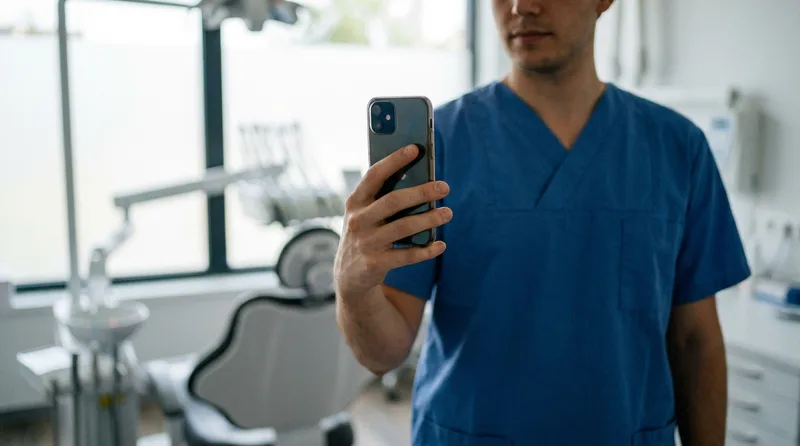
Think of Instagram as a highlight reel. Facebook works more like a bulletin board. A 30 second Reel showing a same-day crown procedure, or a team member's first day, performs well on Instagram because the format rewards motion and sound. Post that exact same clip natively to Facebook, unedited, and it usually underperforms. Facebook's algorithm still favors text-forward posts with community engagement, like a staff spotlight or a holiday closure notice. HubSpot's social media marketing research backs this up: format drives much of the engagement gap between platforms, not just message.
Why One-Size-Fits-All Captions Fail
Here's the thing: practices that repost identical content to both platforms without adapting it leave engagement on the table. A caption written for Instagram's fast-scroll audience reads as too short for Facebook. A caption built for Facebook's slower feed reads as bloated on Instagram.
Tagging is part of that adaptation. Instagram reads hashtags as a search and discovery signal, while Facebook treats them as nearly decorative, so one saved block does not travel well between the two. Our guide to which hashtags for dental practices to use, and how many per platform breaks the counts down network by network.
- Shoot vertical video first, then crop a square or landscape version for Facebook
- Write two captions, not one. Instagram: short and punchy. Facebook: conversational, with a question
- Save carousel posts (multiple photos) for Instagram; save longer updates for Facebook
Which Platform Converts Better for Dental Practice Social Media Leads?
Facebook still generates more direct inquiries for many general dental practices. That's largely thanks to Messenger integration and local group visibility. Instagram converts better for cosmetic-specific dental practice social media campaigns aimed at younger, self-pay patients. Neither platform reliably beats a well-optimized website for actual bookings.
Messenger and DMs Work Differently
Facebook Messenger sits one tap away from every business page. Patients already comfortable messaging friends on the platform will message a practice the same way. Instagram's DM function works similarly, but its audience is more likely to save a post and never follow up. A clear call to action changes that.
That's why practices tracking real results, not just likes, pair either platform with a dedicated patient acquisition workflow. It captures the lead the moment someone clicks through, instead of relying on the social app itself to close the booking.
Let DentalBase Manage Your Social Ad Spend
Our team builds and optimizes Meta ad campaigns across Instagram and Facebook so your practice gets patient inquiries without guessing at the budget split.
See Social Media Services →Matching the Platform to Practice Type
Small practices with limited staff time often see faster returns from Facebook lead ads tied to a phone call or booking link. That's because the platform's older, local audience responds well to a direct offer. Cosmetic-focused or younger-patient practices tend to see better cost-per-lead numbers running Instagram instead, especially when the offer includes a visual, like a free smile assessment.
Should a Dental Practice Run Instagram Ads or Facebook Ads?
Yes, most dental practices should run ads on both platforms through Meta Ads Manager, since a single campaign can target Facebook and Instagram at once. The real decision is budget allocation: general practices should weight spend toward Facebook, while cosmetic-heavy practices should weight spend toward Instagram.
Why Most Practices Run Both Through Meta Ads Manager
Meta's shared ad platform means practices rarely choose one network exclusively. The practical question is how to split a limited monthly budget across placements. A practice new to paid social should start with one campaign objective, like lead generation. Let Meta's delivery system test both platforms first, then adjust the split manually.
Benchmarking Cost Against Google Ads
Cost benchmarks matter too. Google Ads for dental keywords typically runs $6 to $8 per click, well above social CPCs. That's one reason many practices treat Google Ads as a bottom-funnel channel and social ads as the awareness layer feeding it. A higher cost per click is not automatically a bad sign for an elective service; measuring whether an elective-procedure campaign like Invisalign is actually profitable depends on case value, not click cost alone. Google's own search fundamentals documentation notes that consistent business information across every channel, social profiles included, supports how a practice shows up in local results.
- New practice or new service launch: start 60% Instagram, 40% Facebook
- Established general practice: start 60% Facebook, 40% Instagram
- Cosmetic or ortho-heavy practice: start 70% Instagram, 30% Facebook
How Do Reviews and Reputation Management Differ on Each Platform?
Facebook still carries more weight for dental reviews and reputation. It hosts a dedicated review tab that appears in local search, while Instagram has no native review feature at all. That makes Facebook the platform to prioritize for reputation management, even if Instagram wins on content reach.

Why Reviews Drive More Bookings Than Any Other Content
Reviews shape booking decisions more than almost any other content type. Software Advice found that 77% of patients use online reviews when choosing a dentist. BrightLocal's Local Consumer Review Survey puts that number even higher, with 98% of people reading local reviews before choosing a business. On top of that, 88% of people say they're more likely to use a business whose owner responds to every review, per the same BrightLocal research.
Facebook's Public Review Tab Raises the Stakes
Facebook reviews are public, searchable, and often show up alongside a Google Business Profile listing. That visibility means an unanswered negative review does more damage there than an unanswered comment on Instagram. A practice that wants stronger review responses should treat Facebook as the priority inbox, checked daily, while Instagram comments can wait for a lighter weekly pass.
Related: Review responses influence whether a hesitant patient books an appointment See real 5 star dental review examples →
What Type of Content Performs Well on Instagram vs Facebook for Dentists?
Before-and-after transformations, short educational clips, and team culture content perform particularly well on Instagram. Community updates, patient testimonials, and local event posts perform particularly well on Facebook. If testimonials are the gap in your calendar, the process for getting patients on camera and cutting the footage is more of a scheduling problem than a production one. The content itself often overlaps. What changes is the format and the caption length each platform's audience expects.
Instagram Rewards Fast, Visual Storytelling
On Instagram, a 15 second clip explaining "why your gums bleed when you floss" tends to outperform a long caption. The platform's audience scrolls fast. It decides whether to stop within the first two seconds of video. Carousel posts walking through a procedure step by step also perform well, since Instagram's algorithm rewards saves and shares.
Related: Short-form video like this remains one of the trends genuinely worth budget in 2027. See the full list of 2027 dental marketing trends →
Facebook Rewards Community-Style Updates
Facebook audiences respond differently. A longer post announcing a new hygienist, or sharing a patient's thank-you note, generates comments and shares because it reads like a community update, not an ad. Word-of-mouth still drives a large share of new patients, and systems built around word-of-mouth marketing often use Facebook as the digital extension of that referral behavior.
Content pillars that translate well to both platforms
- Patient transformations (with written consent)
- Quick educational tips answering common patient questions
- Team introductions and behind-the-scenes moments
- Seasonal or holiday-specific office updates
Can a Small Dental Practice Manage Both Platforms Without Extra Staff?
Yes, a small dental practice can manage both platforms without hiring extra staff, but only by batching content production and reusing assets across formats. Trying to create separate, platform-native content for Instagram and Facebook every single day is the most common reason practices abandon social media altogether.
The Monthly Content Batch
The fix is a monthly content batch. Set aside two to three hours once a month. Film five or six short videos, take a batch of photos, and write captions for both platforms at once. This turns social media into a scheduled task instead of a daily scramble, which matters most during slower months, when budget and staff time are both tighter than usual.
When Outsourcing Beats Batching
Scheduling tools that post to both platforms from a single dashboard remove most of the daily friction. If batching still isn't realistic given everything else a front desk handles, outsourcing the posting and ad management is usually cheaper than the patient inquiries an inactive account loses.
Practices that outsource social often review their search support in the same conversation. This look at what separates one dental SEO provider from another explains the pricing models and reporting standards worth comparing before you commit.
The Instagram versus Facebook debate isn't really about picking a winner. It's about matching each platform to the patients your dental practice social media strategy is actually trying to reach. Instagram wins for visual, younger, elective-procedure discovery. Facebook wins for community trust, reviews, and existing-patient engagement.
Start by auditing which platform your current patients actually use. Then commit a realistic amount of time to it before splitting attention across both. A focused presence on one platform beats a neglected version of two.
Ready to Simplify Your Dental Practice Social Media?
DentalBase manages Instagram and Facebook content, ads, and reviews so your team can stay focused on patients.
Book a Free Demo →Want more marketing guides like this one?
Browse Resources →Sources & References
Frequently Asked Questions
Most dental practices should use both, weighted by patient age. Facebook works better for practices with older, established patients, while Instagram works better for practices targeting cosmetic or elective procedures among younger patients.
Neither platform is universally better. Facebook still reaches more patients overall and hosts the reviews that shape booking decisions, while Instagram converts better for visual, elective treatments like veneers or clear aligners.
Three to five posts per week on each platform is a realistic starting point. Batching a month of content in one filming session keeps the schedule consistent without daily production work.
Yes, at minimum the captions should differ between platforms. Instagram favors short, punchy captions paired with vertical video, while Facebook performs better with longer, conversational posts that invite comments and shares from the local community.
Facebook is better for reviews. It has a dedicated review tab that surfaces in local search, while Instagram has no native review feature, making Facebook the priority for reputation management.
Budget split should follow patient demographics. General practices typically see better returns weighting 60% toward Facebook, while cosmetic-focused practices often see better cost-per-lead numbers weighting 60 to 70% toward Instagram.
Yes, without hiring extra staff, by batching content production monthly instead of creating daily posts. Scheduling tools that post to both platforms from one dashboard also cut down on daily management time.
Was this article helpful?
Written by
DentalBase Team
Expert dental industry content from the DentalBase team. We provide insights on practice management, marketing, compliance, and growth strategies for dental professionals.