
Zocdoc for Dentists: How It Works, Costs, and Trade-Offs
Zocdoc for dentists explained: how pay-per-booking fees work, what practices get, compliance questions, and how to measure cost per kept patient.
Share:
Table of contents
Zocdoc for dentists is a pay-per-booking marketplace where patients search by location, insurance, and open times, then book a first visit straight onto your calendar. Whether it pays off depends on your cost per new patient and on how much demand your own channels, like local SEO for your practice and your Google profile, already bring in.
Picture a two-doctor PPO practice with open hygiene slots on Tuesday and Thursday mornings. The phones ring steadily, but those chairs stay empty. Should it pay a marketplace to fill them? Maybe. The answer sits in numbers most practices never write down.
This guide covers how Zocdoc works for dental practices, what it charges, what you get in return, the compliance questions to ask first, and how to compare it with booking channels you own.
What Is Zocdoc for Dentists and How Does It Work?
Zocdoc for dentists is an online marketplace where patients find a dental provider, filter by insurance and location, and book an open time directly. Your practice shares real-time availability, usually through a practice management integration, so new patients land on your schedule without a phone call.
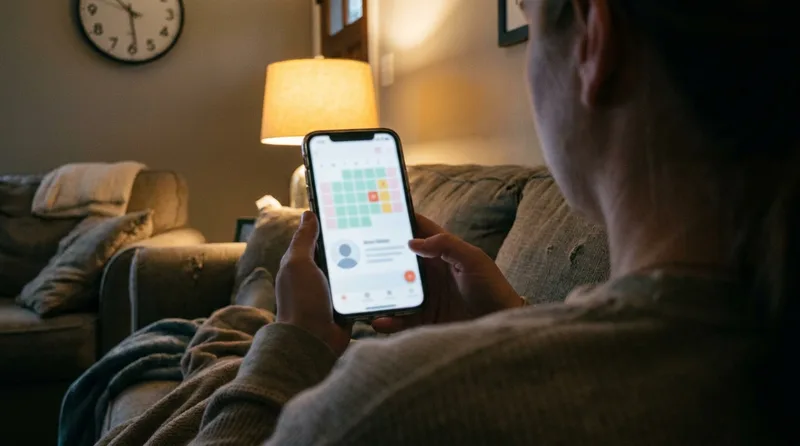
Zocdoc was founded in New York in 2007 and now lists many specialties, dentistry included. A patient types in "dentist," picks their plan, and sees a list of providers with open times. They tap a slot. Done.
Each provider profile usually shows a few things patients weigh before booking:
- Open appointment times pulled from your calendar, so patients only see slots you actually have.
- Accepted insurance plans, which is how most patients filter their search in the first place. Keep this list current, or you'll get bookings from patients whose plans you don't take.
- Verified reviews collected after visits.
- Provider bio and photos.
Timing is a big part of the pitch. According to Zocdoc's own provider materials, 43% of appointments on its platform are booked between 5 pm and 9 am, when most offices are closed. That matters because phone booking still dominates dentistry. Dental Economics reported that 85% of dental appointments were still scheduled by phone.
Before you sign up, confirm the integration with your practice management system. Without it, your front desk has to block times by hand in two places, and that's how double-bookings happen.
How Does Zocdoc Charge Dental Practices?
Zocdoc charges a one-time fee each time a new patient books through its Marketplace, with no subscription. According to Zocdoc's provider help pages, the fee varies by specialty and location. Existing patients book free, and so do patients who book through the Zocdoc button on your own website.
It wasn't always this way. Zocdoc used to charge providers a flat annual subscription. In 2019 it began switching to per-booking pricing state by state, starting in New York. News coverage at the time, including CNBC and Modern Healthcare, reported launch fees of $35 to $110 per booking, with dentists in the highest tier. Those were 2019 figures. Your current rate may differ, so get a written quote for your state and specialty.
The details that catch practices off guard:
- You pay at booking, not at the visit. Zocdoc describes the charge as a marketing fee, so a no-show can still be billed. That single rule changes the math more than anything else on this list, because your real cost depends on how many booked patients actually walk in.
- Quick cancellations may be waived. Zocdoc says it may waive the fee in good faith if a patient cancels within 24 hours of booking.
- Returning patients can be disputed. If someone books as "new" but already saw you through Zocdoc, you can file a claim within 7 days.
- Spend controls exist. You can set a monthly spend cap, pause spending, or switch individual providers off.
- Sponsored Results cost extra. Promoted placements are sold through an auction, billed separately, and don't count toward your monthly cap.
- You can't pass the fee to patients. Zocdoc's user agreement treats that as grounds for removal.
Comparing Zocdoc with paid search?
DentalBase manages Google Ads for dental practices and tracks spend through to booked appointments, so you can compare cost per new patient across channels.
See PPC Ads Management →What Do Dentists Get From a Zocdoc Listing?
You get access to patients who are already searching and ready to book, plus online scheduling that runs around the clock. Zocdoc reports that 83% of patients who book on its platform are commercially insured, which is relevant for practices built mostly around PPO plans.
The core value is demand you didn't have to create. A patient who just moved to town, has a plan, and wants a cleaning next week is a very different lead than someone scrolling past an ad. Zocdoc also says millennials, roughly ages 29 to 44, make up 46% of its bookings. That's a group that often prefers booking online to calling.
Reviews are the other piece. Zocdoc reports that providers with 10 or more reviews get about 3x as many monthly bookings as providers with none. For a new practice, borrowed trust can help. A BrightLocal survey found 47% of consumers won't use a business with fewer than 20 reviews, and building that many Google reviews takes time. If you're working on both, see how Google reviews affect local dental SEO.
Practices that tend to get the most from a listing include:
- New practices with open schedules and few reviews.
- Practices adding an associate who needs a full column fast.
- Offices in dense metro areas, where more patients already use the app.
- Practices with specific gaps, such as hygiene openings on slow weekday mornings.
What Are the Trade-Offs of Zocdoc for Dentists?
The main trade-offs of Zocdoc for dentists are cost per patient, less control over the patient relationship, and dependence on a platform you don't own. Each booking carries a fee whether or not the visit turns into treatment, and your Marketplace visibility stops the day you pause spending.
Here's how those trade-offs tend to show up in a dental office:
- No-shows still cost you. Because the fee is charged at booking, a weak show rate quietly raises your real cost per patient. A practice that sees one in four Zocdoc patients skip the visit is paying for every empty chair.
- Visibility is rented. Reviews you collect on Zocdoc stay on Zocdoc. They don't move to your Google Business Profile, which is still where most people read reviews. In the BrightLocal Local Consumer Review Survey, 71% of consumers used Google to read business reviews in 2026.
- You compete on the same screen. Patients see your profile next to other dentists, and some of them may be paying for Sponsored Results.
- Patient fit varies. Some marketplace patients book on convenience alone and may not return for recall.
None of these is a reason to skip Zocdoc by default. They're reasons to measure it properly. Tag every Zocdoc patient in your practice management system under a referral source, so you can see their show rate and treatment acceptance next to patients from other channels.
Answer every new patient call, day or night.
Most dental appointments still start with a phone call. DentiVoice, the DentalBase AI receptionist, answers calls 24/7 and books appointments directly into your practice management system.
See the AI Receptionist →How Do You Calculate Whether Zocdoc Pays Off?
Divide your total Zocdoc spend by the number of new patients who actually showed up, then compare that figure with what a patient is worth to your practice. That cost per kept patient, not cost per booking, is the number to compare with Google Ads, SEO, or a referral program.

Use this five-step process with your own data:
- Pull 90 days of bookings from your Zocdoc dashboard, filtered to Marketplace bookings, since those are the ones you pay for.
- Match each booking to your practice management system. Did the patient show? Did they accept treatment? What did they produce in the first year?
- Add up total spend, including any Sponsored Results charges.
- Calculate cost per kept patient: total spend divided by patients who showed up.
- Compare that number with first-year production per patient and with your cost per patient from other channels.
A quick hypothetical shows why show rate matters so much. Say a practice spends $2,000 in a quarter and gets 20 Marketplace bookings. If 15 patients show up, the cost per kept patient is about $133. If only 10 show up, it jumps to $200. Same spend, very different result.
Zocdoc says practices see an 8x average return on its bookings. Treat that as a vendor-reported average, not a forecast for your office. Your own numbers are what count. For outside benchmarks on dental practice economics, the ADA Health Policy Institute publishes research you can use to sanity-check your patient value estimates.
What Compliance Questions Should Dentists Ask Before Joining?
Ask whether paying a per-booking fee fits your state's rules on fee-splitting and paying for patient referrals, and how patient data is handled. When Zocdoc moved to per-booking pricing, some providers raised exactly these concerns, so get a clear answer for your state before you sign anything.
State dental practice acts differ, and many limit paying a third party for patient referrals. Zocdoc describes its charge as a marketing fee for a booking service. Whether that framing satisfies your state board is a question for the board or a healthcare attorney, not for a sales rep.
Questions worth getting answered in writing:
- Does my state dental board allow per-booking or per-patient marketing fees?
- Will Zocdoc sign a business associate agreement covering the patient data it handles for my practice?
- What exactly counts as a "new patient" for billing, and how are disputes resolved?
- Can I cancel at any time, and what happens to my reviews and profile if I do?
This section is general education, not legal advice. Rules change, and they vary a lot from one state to the next. A short call with a healthcare attorney costs far less than unwinding a contract that conflicts with your board's rules.
What Booking Channels Can Dentists Own Instead of Renting?
The main owned channels are your website with real-time online scheduling, your Google Business Profile, and a phone line that gets answered every time. None of them charges per booking, and the reviews, rankings, and patient relationships you build there stay with your practice.
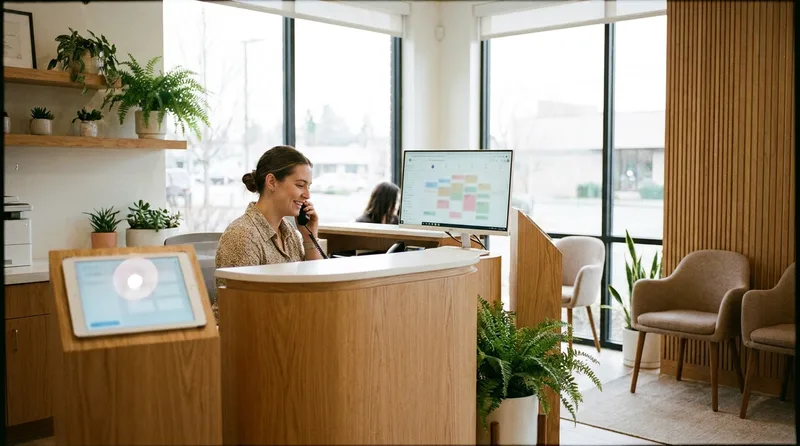
Google lets patients book appointments directly from Search and Maps through scheduling partners. Its Google Actions Center program lets those partners add a business's services to Google for free. If your scheduling software supports it, a "Book online" button can sit right on your listing. Our guide to Google Business Profile for dentists covers the setup.
Phones still matter just as much. In a Healthgrades study cited by Dental Economics, practices offering both online scheduling and phone booking scheduled 24% more appointments than phone-only practices. Online booking adds to the phone. It doesn't replace it.
| Channel | Who owns the visibility | How you pay | Books after hours? |
|---|---|---|---|
| Zocdoc Marketplace | Zocdoc | One-time fee per new patient booking | Yes |
| Website online scheduler | Your practice | Software subscription, no per-booking fee | Yes |
| Google Business Profile booking | Your practice | Free listing; booking runs through a scheduling partner | Yes |
| Front desk phones | Your practice | Staff time | Only during office hours |
| AI receptionist | Your practice | Monthly service fee | Yes, 24/7 |
| Local SEO and content | Your practice | Ongoing content and optimization work | Yes, through the website |
Search habits are shifting too. BrightLocal found 45% of consumers now use ChatGPT or other AI tools for local recommendations, up from 6% a year earlier. Owned content is what those tools pull from, which is why AI search for dentists is worth planning for alongside any marketplace.
Related: For a wider look at which channels bring in new patients, see our channel guide. Online Marketing for Dentists: What Actually Works →
Is Zocdoc for Dentists Worth It for Your Practice?
Zocdoc for dentists can be worth it when you have open capacity, a fee that fits your patient value, and a way to track kept appointments. It's harder to justify when your schedule is already full, your Google profile drives steady calls, or few marketplace bookings turn into treatment.
A quick way to sort it out:
- Leans toward yes: you're a new practice, you're building an associate's schedule, you're in a metro area with heavy app use, or you have predictable gaps you can't fill any other way.
- Leans toward no: you're booked out for weeks, your cost per patient from SEO or Google Ads is already lower, or your team can't keep insurance lists and availability current in two systems.
- Either way: answer the phone. A marketplace can't help with the patient who calls at 7 pm and hits voicemail.
Many practices end up using Zocdoc as one channel among several, not a replacement for the others. That works well when the owned channels are in shape first. HubSpot's local SEO guide covers the basics, and if missed calls are your biggest leak, our guide to the AI dental receptionist for solo dentists explains how practices cover the phone after hours.
How Should You Test Zocdoc Before Committing?
Run a time-boxed test of about 90 days with a spend cap, limited to the providers and appointment types you actually want to fill. Tag every Zocdoc patient in your practice management system so you can measure show rates and treatment acceptance before you decide to scale up or stop.
A simple test plan looks like this:
- Pick the gap. Choose one provider or one block, such as new patient hygiene on Tuesday mornings.
- Set a monthly spend cap before you go live, so a busy month can't surprise you.
- Create a referral source called "Zocdoc" in your practice management system and have the front desk apply it every time.
- Hold off on Sponsored Results for the first month, so you can see organic Marketplace performance on its own.
- Review at 30, 60, and 90 days: bookings, show rate, treatment acceptance, and cost per kept patient.
- Decide to expand, hold steady, or pause, based on your numbers rather than the platform's averages.
Put one person in charge of the dashboard. Shared ownership usually means nobody checks the invoices.
The real choice isn't Zocdoc or nothing. It's how much of your new patient flow you rent and how much you own. Zocdoc for dentists can fill specific gaps quickly, but every booking is a fee, and every review lives on someone else's platform.
Start with your cost per kept patient. If you can't calculate it today for Zocdoc, Google Ads, and your website, that's the first thing to fix, before you add another channel.
See where your new patients really come from
Book a free demo and we'll walk through your booking channels, missed calls, and cost per new patient.
Book a Free Demo →Explore more guides and tools for dental practice growth.
Browse Resources →Sources & References
Frequently Asked Questions
There's no setup or subscription fee for the Zocdoc Marketplace, according to Zocdoc. You pay a one-time fee only when a new patient books through the Marketplace. Bookings from existing patients, and from the Zocdoc booking button on your own website, aren't charged.
The fee varies by specialty and location, and Zocdoc quotes it per practice. When per-booking pricing launched in 2019, news reports put fees between $35 and $110, with dentists in the highest tier. Ask Zocdoc for a current written quote for your state.
No. Zocdoc's user agreement and community standards don't allow providers to charge patients more because they booked through Zocdoc. Doing so can get a practice removed from the platform, so treat the fee as a marketing cost.
Usually, yes. Zocdoc bills at the moment of booking, not at the visit. It says it may waive the fee if a patient cancels within 24 hours of booking, and you can dispute a booking within 7 days if the patient isn't actually new.
Not directly. Reviews collected on Zocdoc appear on Zocdoc, while Google Maps shows reviews left on your Google Business Profile. Google lists review count and rating as part of how prominent a business is in local results, so keep asking for Google reviews too.
Yes. They cover different channels. Zocdoc handles patients who book through its app and partner sites, while an AI receptionist answers the phone calls your practice still gets, including after hours. Many offices need both, since most dental appointments still start with a call.
Was this article helpful?
Written by
DentalBase Team
Expert dental industry content from the DentalBase team. We provide insights on practice management, marketing, compliance, and growth strategies for dental professionals.