Six Months With An AI Receptionist For Dental Practice
A co-founder's honest take on using an AI receptionist for dental practice phones: the fears, the bumps, and the surprising results.
Share:
Table of contents
I spent a decade answering my own practice's phones. Not literally every call. But as the owner, the weight of the front desk was always mine. This year I stopped, and an AI receptionist for dental practice calls took over the first touch. It works, but only once the handoffs are fixed.
The first time I tested an AI receptionist on live calls, I didn't tell my team. I'd been building one for the last two years as a co-founder at DentalBase, and I was nervous about using it in my own chair. I picked a Thursday afternoon, forwarded three lines, and sat in my office with a notepad.
By 4pm I had seven pages of notes. Some of it was good. A lot of it wasn't.
This is the honest story of how my practice moved off a traditional front desk setup and onto AI-assisted reception. What I worried about. What broke early on. What surprised me six months in. And what I'd tell another owner thinking about this.
The Day I Realized We Were Losing Patients Before They Walked In
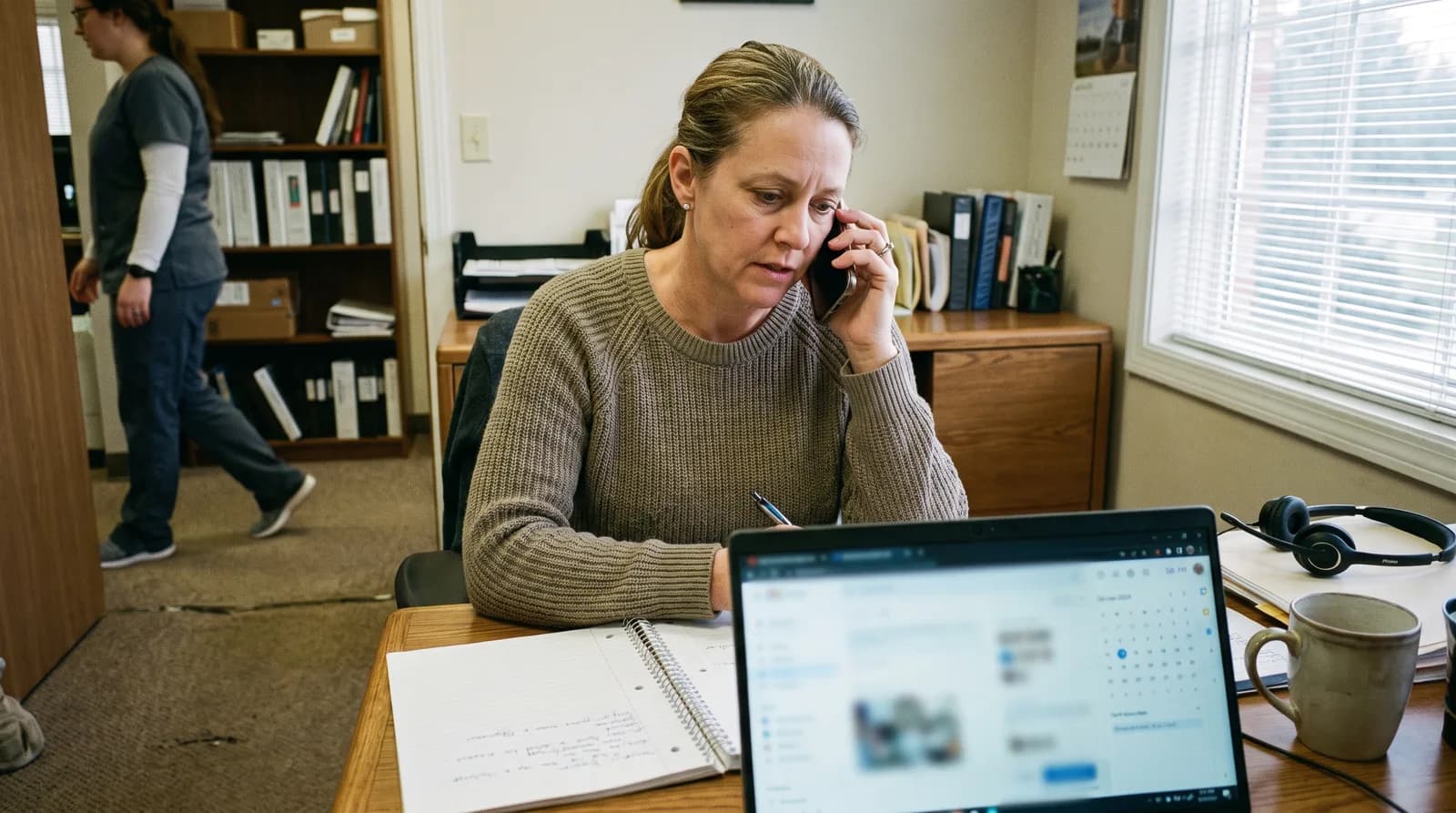
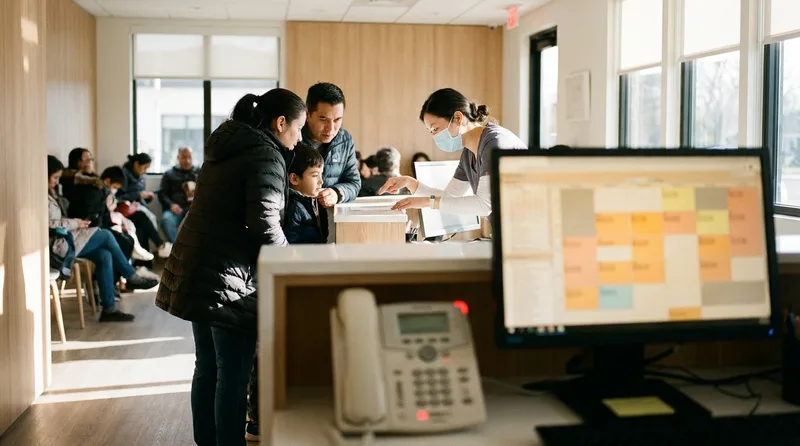
The tipping point came on a Tuesday morning, when I watched my front desk miss three incoming calls in 11 minutes while walking a family through their benefits. I knew every one of those callers was probably calling another practice by lunch.
For years I'd told myself our missed calls were fine. I'd check the voicemails at night. The team would call back the next morning. We'd catch most of them.
But I'd never actually measured it. And ADA practice guidance still describes a phone call as the likely first contact with your practice, which makes every unanswered ring a first impression you never got to make.
When I pulled six months of call logs and cross-referenced them against new patient entries in Open Dental, the numbers were ugly. We were losing roughly one new patient a week to unanswered calls alone. That's not a rounding error. Dental Economics walks through the same math for a midsized practice: at a 35% miss rate, that's 105 to 175 unanswered calls a month, and its model assumes 60 to 65% of those calls come from new patients. A patient a week adds up quietly in the background.
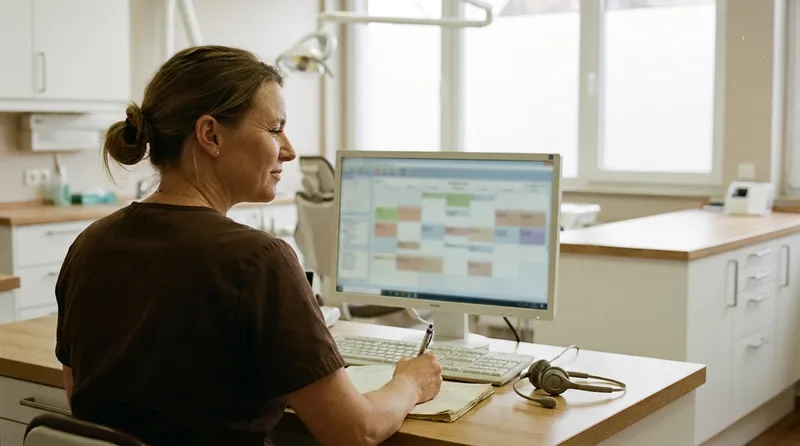
Here's the hard part. My team wasn't slacking. They were doing three jobs at once. Front desk, insurance verification, and phone coverage on a single headset. The math just didn't work.
That's when I realized something uncomfortable. Our real problem wasn't our phones. It was that we'd built our entire patient acquisition funnel on top of a human bottleneck that was already overwhelmed on a normal day.
Related: If you want to see how after-hours call leakage actually plays out over a year, this deep dive on after-hours revenue most practices leave on the table put real numbers on what I was seeing in my own logs.
What Worried Me Before Adopting An AI Receptionist For Dental Practice?
Three things. That patients would hate talking to a machine. That scheduling would break and we'd end up with double-bookings. And honestly, that my team would feel like I didn't trust them. None of those fears played out the way I expected.
The patient fear was easy to test. Before we went live, I listened to about 40 hours of our own call recordings over two weekends. I listened to what my front desk was doing well. I listened to what they were doing under pressure. I listened to what patients actually wanted on the first call.
What patients wanted was almost never a deep conversation. They wanted three things: can you see me, when, and how much. That's it. Everything else could wait for a second touchpoint.
The scheduling fear was harder. What I did was simple: for the first two weeks, every booking the AI made got double-checked by my office manager the morning after. We caught a few edge cases early. They were fixable.
The team fear was the one I got completely wrong. I assumed my front desk would resent the change. Two of them told me, independently, that they'd been drowning for months and had been afraid to say so.
The people closest to the problem had been waiting for help.
There's a broader context here that I underweighted before we started. Dentists are already using AI at the front desk. The ADA Health Policy Institute's July 2026 survey found that 43.3% of dentists use AI for at least one practice task, and about 10% use it for reception or front-desk check-in. The same report notes ongoing staffing shortages and more of the workweek going to non-clinical tasks. I wasn't as far out ahead as it felt, and my team wasn't the only one stretched thin.
Running the ROI numbers before you switch
I spent two weeks modeling the economics before I flipped a single line. This guide walks through the same framework I used, with realistic inputs for a solo or small-group practice.
Read the ROI guide →How Did The First Two Weeks Actually Go?
Bumpy. The AI didn't fail in the ways I expected. It failed in ways I hadn't thought to plan for. An elderly patient calling to ask if we took a specific niche insurance plan. A dad calling mid-lunch to book his daughter's braces consult "whenever." Real calls are messier than demo calls.
On day three, a new patient tried to reschedule a hygiene visit that wasn't in the system yet because the record hadn't synced. The AI couldn't find them and said so. The patient hung up and called a competitor.
That one hurt.
I'd underestimated how much edge-case handling my front desk had been doing quietly, for years. The fix wasn't more AI. It was better scripts for what the AI does when it doesn't know the answer. A warm transfer instead of an apology. An offer to take a message for a human callback within 30 minutes instead of asking the patient to call back themselves.
By week three, those handoffs had been rebuilt. Call abandonment dropped. Same-day bookings started climbing. The deeper lesson was simple: the system doesn't have to answer every question. It has to know what it doesn't know, and route gracefully.
There's a model for this that took me a while to see. An AI receptionist isn't trying to replace a great front desk. It's trying to be a reliable first layer that protects the parts of the practice only humans can do. A hybrid AI-plus-human approach to phones is, in my experience, the only version of this that actually works for dentistry.
Adoption Timeline
What Changed Week By Week
Rough patches, as expected
Edge cases exposed the gaps in the handoff. The day-three lost patient was the first clear signal we needed better fallback scripts.
Rebuilding the handoffs
Replaced "call us back" with 30-minute human callbacks. Added a warm transfer for anything the AI couldn't confidently handle.
Call abandonment dropped, same-day bookings climbed
The team stopped double-checking every call overnight. The office manager moved that time into recall outreach and treatment coordination.
What An AI Receptionist For Dental Practice Does Differently
A good AI receptionist does three things a traditional setup struggles with: it answers every call 24/7, it captures structured data at the point of the conversation, and it follows up outbound without a human remembering to. None of those are nice-to-haves at scale.
Think about a normal Tuesday. Your front desk checks in a patient. The phone rings. They let it go. They take a message after. They book an insurance follow-up. The phone rings again. They check voicemail before closing up. That's a normal day in a general practice.
Now add the after-hours gap. Evenings. Weekends. Lunch breaks. The quiet hours when patients are actually free to call. That's a big slice of your inbound opportunity, and almost none of it reaches a human at a traditional practice. The system my team built at DentiVoice is designed specifically to pick up those hours without the cost structure of a 24-hour call center.
Where AI Plus A Human Team Actually Works Together
The mistake is thinking AI replaces the front desk. It doesn't. The sequence I've landed on is this: AI handles first contact, triage, and routine scheduling. Humans handle treatment coordination, insurance disputes, and anything emotionally loaded. The boundary is cleaner than I expected.
| Task | AI receptionist | Your team |
|---|---|---|
| First contact | Answers every call, day or night | Picks up on a warm transfer |
| Routine scheduling | Books and reschedules | Reviews edge cases |
| Insurance disputes | Routes the caller to a person | Resolves the issue |
| Emotionally loaded calls | Hands off within 60 seconds | Takes the conversation |
Here's a useful way to think about it. Consider what your trained team does best. The highest-value work requires human judgment: reading a nervous patient, handling a complaint, coordinating a complex case. None of that should be on a headset competing with ringing phones. The AI isn't smarter than your team. It's just cheaper to have available at 9pm on a Sunday than a trained office manager.
Want to see how this handoff actually works on a live call?
A 20-minute demo with our team walks through the AI handling a real new patient call, the escalation logic, and what shows up in your PMS afterward.
Book a Free Demo →What Surprised Me Most About The Data?
The biggest surprise was the after-hours bookings. The saved staff time came second. In the first three months, 31% of new patient appointments booked through the AI came in outside business hours. People were ready to commit at 8pm on a Sunday. We'd never been able to capture that before.
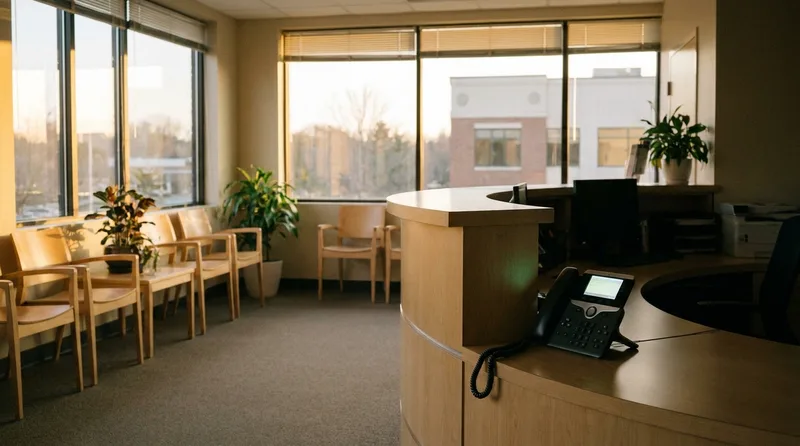
I expected reduced missed calls. I got that. What I didn't expect was the pattern in who was calling after hours. Nervous patients. Parents coordinating kid schedules. Shift workers. A retiree who told me she hated making calls during the day because she didn't want her husband to hear her worrying about a tooth. These were real people who'd been bouncing off voicemail for years.
The second surprise was how patient search behavior connected to the call pattern. BrightLocal's 2026 consumer survey found that people are reading reviews more than ever before choosing a local business. A patient who has done that homework is ready to call the moment they decide, and that moment doesn't follow office hours. The traditional dental practice was built for 9-to-5 call coverage. The patients aren't.
There was also a data point I didn't like. About 1 in 6 callers in our early data specifically asked to speak to a human at some point during the call. That number dropped as the AI's responses got more natural. But it never went to zero. Some patients just want a person, and the right system honors that instantly without an argument.
A sizeable share of callers in any week will always need a human. The goal isn't eliminating that. It's making sure every one of them actually gets to one.
What The Data Showed
Three Numbers That Changed My Mind
31%
of AI-booked new patient appointments
came in outside business hours across the first three months. Evenings, weekends, and late nights.
1 in 6
callers asked for a human
at some point in the call. That number shrank over time but never reached zero.
~1/week
new patients previously lost
to unanswered calls alone, before the switch. The quiet leak I'd never actually measured.
Figures reflect the author's own practice during the first three months of AI receptionist adoption.
What Would I Tell Another Owner Thinking About This?
Record your current phone experience for two weeks before you switch anything. Then test the AI on those same call types. If it handles around 80% cleanly, you're ready to pilot. If it fumbles half of them, the vendor isn't built for dentistry. In between, ask hard questions about dental-specific training data.
Here is the short version of my checklist, in order:
- Record your current phone experience for two weeks.
- Test the AI on those same call types before it takes a live call.
- Pilot on one line, ideally the new patient line.
- Brief your team two days before you flip the switch.
- Set a human handoff that takes under 60 seconds.
A few specific things I'd do differently.
Start With One Line, Not Three
I piloted on three lines at once. I should have started with the new patient line only and expanded from there. The cost of a bad experience on a returning patient is worse than on a cold caller. Your regulars forgive less than people who've never met you.
Brief The Team Before You Flip The Switch, Not After
My team found out the day of. That made them suspicious at first, even though two of them later admitted how overwhelmed they'd been. Two days of explanation would have saved two weeks of skepticism. The script I'd use now is short and honest: "We're testing this because you've been covering three jobs at once, and we want you doing the human parts of your work, not the ringing."
Have A Human Handoff That Takes Under 60 Seconds
If the AI can't help, the patient should be talking to a person within a minute, or leaving a message that triggers an immediate callback. "Hold on while I transfer you" is a practice's worst phrase. Design the handoff like you're designing a clinical workflow: who, what, when, and with what information.
Measure The Right Things Early
Not just "calls answered." Measure three things:
- The percentage of new patient calls that ended in a booked appointment.
- How many after-hours calls got captured.
- Patient-reported experience after their first AI interaction.
The after-hours callers in my own data were nervous patients, parents and shift workers, the people most likely to bounce off voicemail. Measure whether you're catching them. A deeper breakdown of what to score on every patient call is worth the 20 minutes it takes to read.
Keep one thing clear. The AI doesn't make your practice better on its own. It removes a bottleneck so your team can actually do the parts of their job that require a human.
I'll tell you the single thing I underestimated: how much of my front desk's week the phone had eaten, at the expense of patient care.
An AI receptionist for dental practice operations is a tool, not a miracle. It'll expose problems you didn't know you had. It'll miss things in the first month. It'll give you data that makes you uncomfortable about how many patients you were quietly losing before.
If you're thinking about this, don't start by chasing the savings. Start by looking at what your front desk is actually spending time on today. Then decide what should stay human and what shouldn't. The story writes itself from there.
And no, I don't answer my own phones anymore. The practice runs better for it, and so does the team.
See what an AI receptionist sounds like on a real dental call
A short demo walks through a live new patient call, the escalation logic, and how bookings land in your PMS. No slide decks, no pressure.
Book a Free Demo →Want more practice-owner perspective like this?
Browse more resources →Sources & References
- The economics of missed calls: Quantifying revenue loss in dental practices (Dental Economics)
- Phone Calls from Prospective Patients (ADA Practice Management)
- The two most overlooked pieces of technology in your office (ADA New Dentist Blog)
- Dentists' AI Usage and Attitudes (ADA Health Policy Institute, July 2026)
- BrightLocal Local Consumer Review Survey 2026
Frequently Asked Questions
An AI receptionist for a dental practice answers inbound calls, books and reschedules appointments directly into your PMS, captures new patient information, answers common questions, and triages anything urgent to a human. The better systems also handle outbound follow-up calls for recalls and missed appointments.
In my practice, I spent two weeks modeling the economics and listening to call recordings before going live. After launch, rebuilding the handoff scripts took about three weeks, and by week three the team had stopped double-checking every AI-handled call overnight. Your timeline will vary with your PMS and call mix.
Fewer than most practice owners expect. About 1 in 6 callers in my early data asked for a human at some point, which is manageable. The key is a fast handoff, never an argument. Patients get frustrated when the system won't route them, not because the AI exists.
Not telling their team in advance. When the front desk finds out the day of the switch, they assume the owner is trying to replace them. Two days of upfront explanation prevents two weeks of skepticism and quietly passive-aggressive behavior around the new system.
No. A good AI receptionist handles first contact, triage, and routine scheduling so the team can focus on treatment coordination, insurance disputes, and in-person patient experience. In my practice, the freed-up staff time went into recall outreach and treatment coordination, not layoffs.
Measure what percentage of new patient calls resulted in a booked appointment, how many after-hours calls you captured, and patient-reported experience after their first AI interaction. Total calls answered is a vanity metric. The booking conversion rate is the one that actually matters.
It can be. A solo office has one person covering the phone, the front desk and insurance at once, so every missed call costs more. In my own logs, unanswered calls cost us roughly one new patient a week, so recovering even a few of those matters.
Was this article helpful?
Written by
DentalBase Team
Expert dental industry content from the DentalBase team. We provide insights on practice management, marketing, compliance, and growth strategies for dental professionals.