Dental Voice AI: Capture Missed Revenue and Simplify
Dental voice AI answers every patient call, books appointments 24/7, and recovers missed revenue. Learn how AI dental receptionists simplify the patient.
Share:
Table of contents
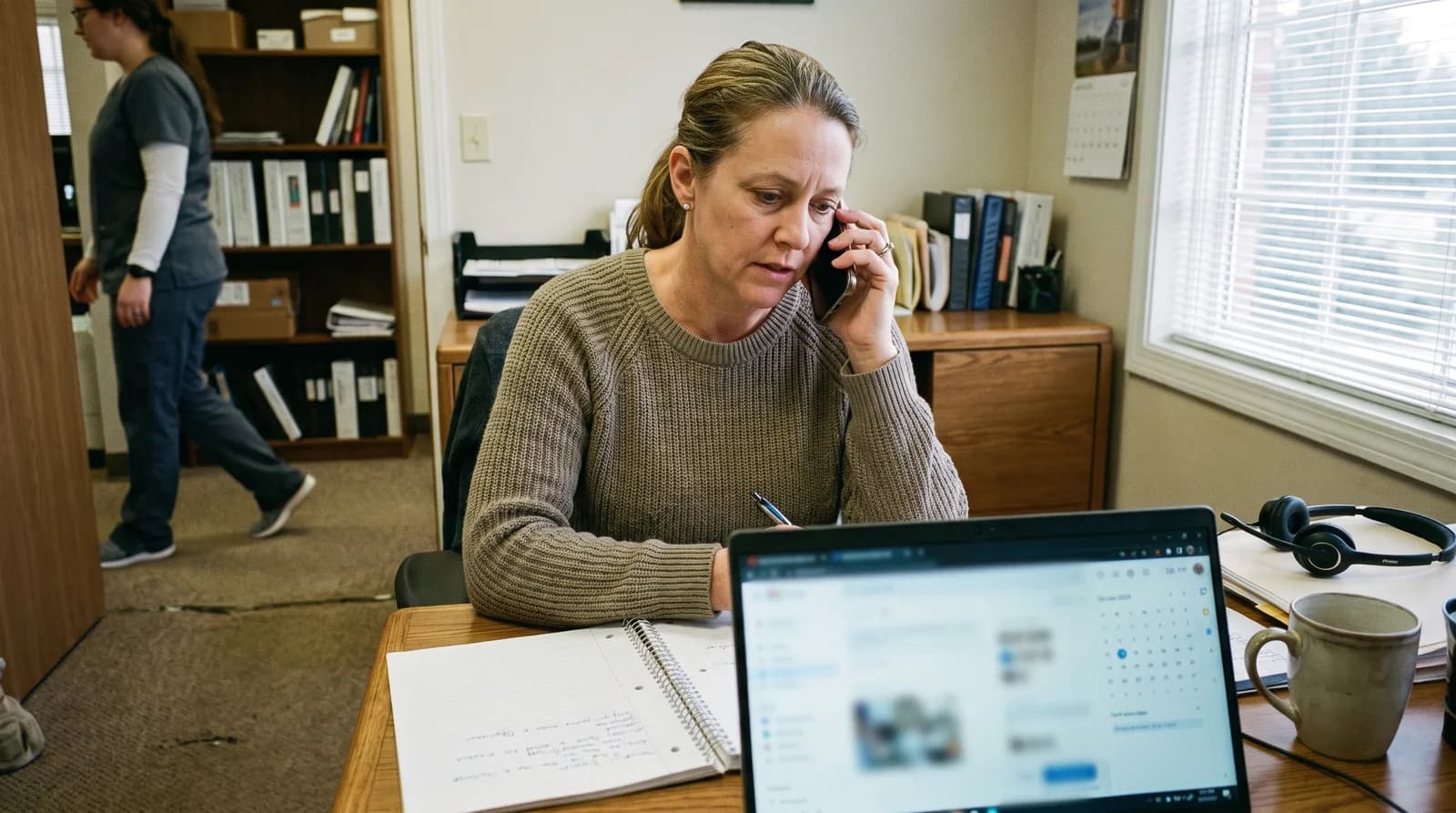
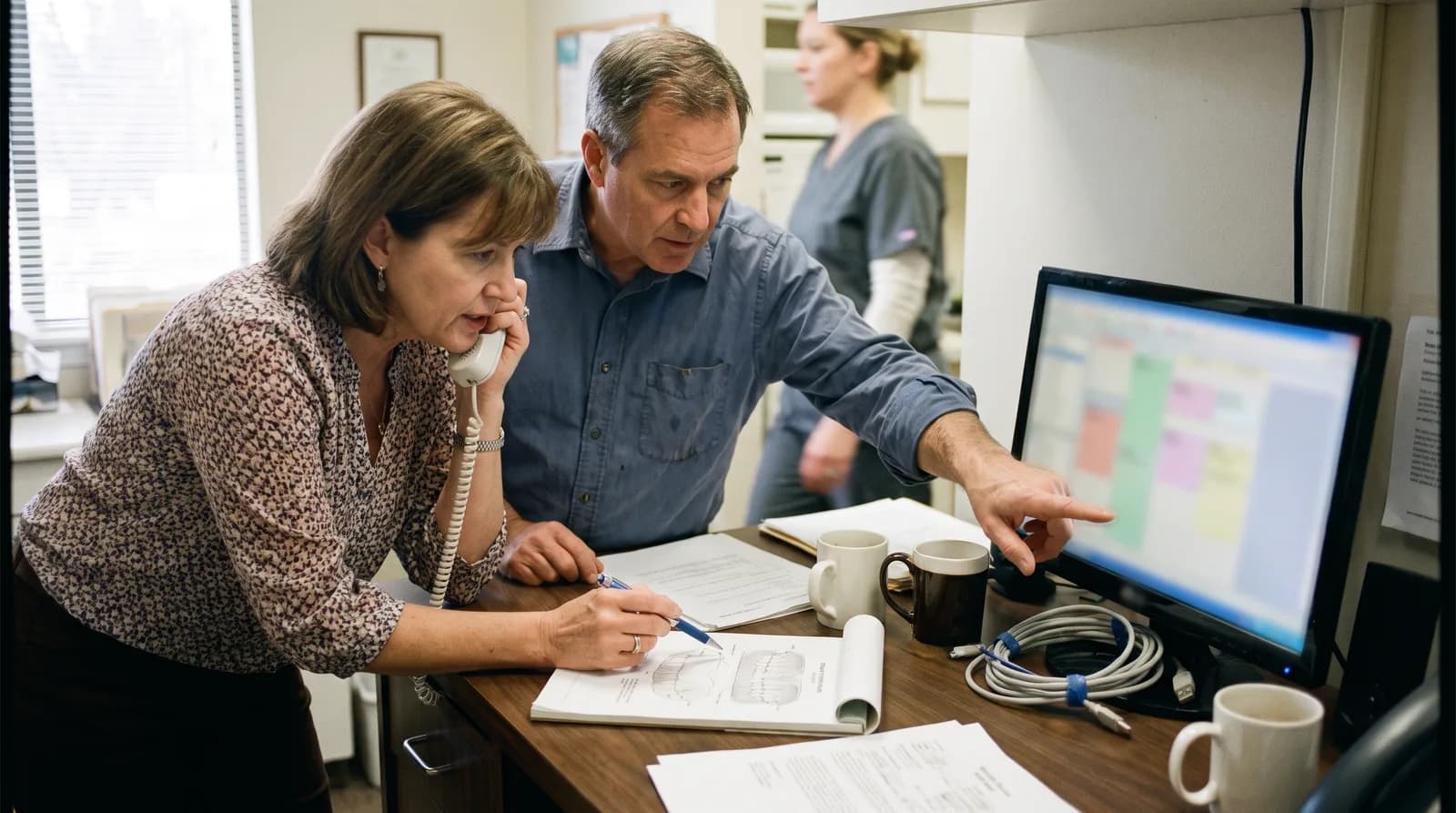
Your front desk team just missed three calls in the last hour. One was a new patient ready to book a cleaning. Another was an existing patient confirming tomorrow's crown prep. The third? Someone comparing your practice to two others down the street. All three heard your voicemail. None left a message. DentalBase data and industry research confirm this pattern repeats daily in practices across the country, and dental voice AI is how forward-thinking offices are solving it. This is one piece of a larger picture, see our complete AI receptionist guide for dental practices for the full rundown.
According to ADA Practice Transitions research, 38% of new patient calls go unanswered during business hours. That's not a staffing failure. It's a structural one, and it's getting harder to hire out of: dental employment is projected to grow just 4% through 2032, according to the Bureau of Labor Statistics. Your team is checking in patients, verifying insurance, answering questions at the counter, and triaging walk-ins, all while the phone rings. Something gives. Usually it's the phone.
This article breaks down how dental voice AI works in real practice environments, what it actually does when a patient calls, how it connects to your existing systems, and where the revenue recovery happens. No hype. Just the mechanics.
What Is Dental Voice AI and How Does It Work in a Practice?
Dental voice AI is conversational artificial intelligence trained on dental-specific workflows that answers patient phone calls, books appointments, and handles routine inquiries without human intervention. It connects directly to your practice management system and operates around the clock.

A Second Front Desk That Never Clocks Out
Think of it as a second front desk that never takes a lunch break. When a patient calls, the AI picks up, identifies the reason for the call, and takes action. Scheduling a hygiene visit? It checks your PMS for open slots and books it. Patient asking about your hours or whether you accept their insurance? It answers from your practice's configured information. Urgent dental pain after 6 PM? It triages the call and routes it appropriately.
Built for Dental-Specific Conversations
The technology works through natural language processing tuned for dental terminology. A patient saying "I think I cracked my tooth" triggers a different workflow than "I need to reschedule my Thursday appointment." That distinction matters. DentiVoice AI Receptionist integrates with systems like Dentrix, Open Dental, Eaglesoft, and Curve Dental, so appointments land directly in your schedule. No sticky notes. No callback lists.
More Than Basic Call Routing
Here's what separates this from a basic auto-attendant or phone tree: the AI doesn't just route calls. It resolves them. A Dental Economics report found that the average dental practice misses 15-20 calls per week. Each of those is a patient interaction that either converts or disappears. Voice AI converts.
See How DentiVoice Handles Patient Calls
DentiVoice AI answers, books, and triages calls using your real-time PMS data, so no patient interaction falls through the cracks.
Learn About DentiVoice →Why Do Dental Practices Lose Revenue From Missed Calls?
Practices lose revenue from missed calls because most patients who reach voicemail don't call back, and the lifetime value of even a single new patient ranges from $12,000 to $15,000. One unanswered call can cost more than a month of marketing spend.
The Cost of a Single Missed Call
The math is straightforward but painful. Forbes reports that 80% of callers who reach voicemail don't leave a message and won't try again. They call the next practice on their list. If your office misses 15 calls per week and even 30% are new patients, that's roughly 4-5 new patient opportunities lost weekly. At an average lifetime value of $12,000-$15,000 per patient (according to Dental Economics), you're looking at $48,000 to $75,000 in potential revenue walking out the door every single week.
Inactive Patients Add Up Too
But it's not just new patients. Existing patients calling to reschedule who can't get through may simply not reschedule at all. That's how your inactive patient list grows. Research from the ADA shows that 20-30% of patients become inactive within 18 months without consistent follow-up. Missed calls accelerate that timeline.
After-Hours Calls Compound the Problem
After-hours calls compound the problem. Dental Economics data shows after-hours calls represent 27% of total patient call volume. That's more than a quarter of your patient interactions happening when nobody is at the desk. An automated dental answering service captures every one of those calls, converts the straightforward ones immediately, and queues complex cases for morning follow-up.
How Does 24/7 Dental Scheduling Change the Patient Experience?
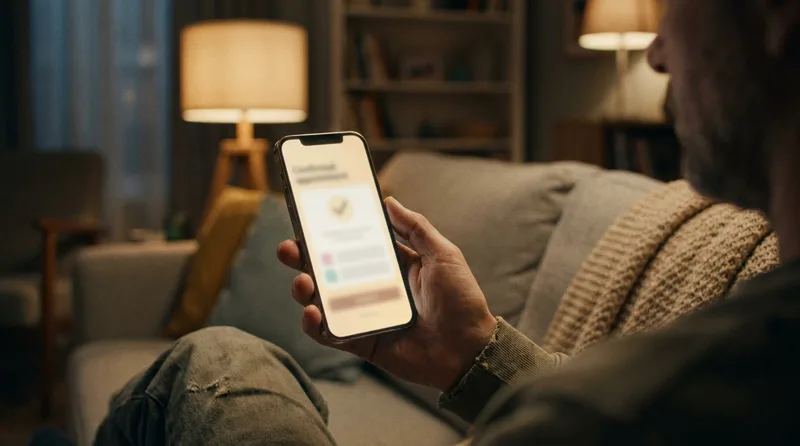
24/7 dental scheduling removes the biggest friction point in patient access: office hours. When patients can book at 9 PM on a Tuesday or 7 AM on a Saturday, appointment volume increases and no-shows decrease because patients choose times that actually work for their lives.
Patient Expectations Have Already Shifted
Consider how people interact with every other service in their life. They book flights at midnight. They order groceries at 6 AM. They schedule car service through an app while sitting in a waiting room. Then they try to call their dentist and get a voicemail that says "Our office hours are Monday through Thursday, 8 to 5." The gap between patient expectations and practice availability is enormous.
The Gap Between Demand and Availability
The ADA reports that 72% of patients say convenience is a top factor when choosing a dental provider, yet only 26% of practices currently offer online scheduling, according to Dental Economics. Voice AI bridges that gap without requiring patients to download an app or create an account. They just call, like they were going to anyway, and the AI handles the rest. Search behavior backs up why this matters: 86% of people who search for a dentist go on to contact one directly, according to Google-reported research, which makes the phone call the final, decisive step in most patient acquisition.
Fewer No-Shows When Patients Choose Their Own Time
The impact on no-shows is measurable too. Practices with online and phone-based 24/7 dental scheduling see 24% fewer no-shows, according to Dental Economics. Why? Because patients who book on their own terms, at a time and slot that genuinely fits their schedule, are more likely to show up. Forced into a limited window by a callback during business hours, they take whatever's available, then cancel when it doesn't work.
Related: Learn how smart scheduling fills your calendar and reduces empty chairs. → How Smart Scheduling Reduces No-Shows
What Should You Look for in a Dental Communication Platform?
A dental communication platform should integrate directly with your PMS, handle both inbound and outbound calls, support appointment booking without human handoff, and comply with HIPAA requirements. Anything less creates more work than it eliminates.
Generic Call Systems Fall Short
Not all AI phone systems are built for dental. Generic call-answering services don't understand the difference between a hygiene recall and an emergency extraction. They can't check your schedule in Dentrix or Open Dental. They route calls to voicemail when things get complicated, which defeats the purpose.
What to Evaluate
Here's what to evaluate:
- PMS integration depth. Can it read and write to your appointment book in real time? If it only reads, patients still need a callback to confirm. That's a half-measure.
- Dental workflow training. The AI should distinguish between new patient inquiries, existing patient scheduling, urgent triage, billing questions, and insurance verification calls. Each needs a different response path.
- Outbound capability. The most capable platforms don't just answer calls. They make them. Missed appointment follow-ups, patient reactivation, recall reminders, and post-treatment check-ins should all run through the same system.
- HIPAA compliance. Any system handling patient data over the phone must meet HIPAA standards. This includes call recording storage, data encryption, and access controls. A HIPAA-compliant AI dental receptionist isn't optional.
Match the Platform to Your Workflows
The right AI dental receptionist reduces your team's phone burden by 40-60% while improving call resolution rates. But only if it's built for your specific workflows.
Ready to Stop Losing Patients to Voicemail?
See how DentiVoice AI answers, books, and follows up on every patient call, integrated directly with your PMS.
Book a Free Demo →How Does an AI Dental Receptionist Recover Revenue You're Already Losing?
An AI dental receptionist recovers revenue by answering 100% of inbound calls, converting after-hours inquiries into booked appointments, and running outbound reactivation campaigns to fill hygiene chairs with patients who've gone inactive. The revenue was always there. It just wasn't being captured.
A Weekly Call Math Example
Here's an illustrative model, not a guarantee, using assumptions you should check against your own numbers. A three-operatory general practice receiving about 180 calls per week might answer roughly 75% during business hours. That leaves an estimated 45 calls unanswered, plus another 49 after-hours calls (27% of volume, per Dental Economics). Total estimated missed interactions: roughly 94 per week.
| Call Type | Weekly Volume |
|---|---|
| Total inbound calls | 180 |
| Answered during business hours (~75%) | 135 |
| Missed during business hours | 45 |
| After-hours calls (27% of volume) | 49 |
| Total missed interactions | ~94 |
Turning Missed Calls Into Booked Revenue
If dental voice AI handles overflow and after-hours calls, that number could fall close to zero. Converting even 20% of those weekly missed calls into appointments would mean 18-19 additional appointments per week. Assuming an average production of $250-$400 per visit, a figure practices should verify against their own fee schedule, not treat as universal, that works out to roughly $4,500-$7,600 in potential weekly revenue, or somewhere in the range of $234,000-$395,000 a year. Your actual recovery depends on your call volume, case mix, and conversion rate, not this example alone.
The Reactivation Opportunity
Then there's the reactivation side. Automated recall systems increase patient return rates by 25-40%, according to Dental Economics. And reactivating an existing patient costs 5-7x less than acquiring a new one, per Harvard Business Review research. A dental communication platform that makes outbound reactivation calls, not just texts or emails but actual phone calls, recovers patients that other channels miss.
Measuring What's Working
Tracking this matters. Dental call tracking lets you see exactly which calls converted, which times produce the most bookings, and where your revenue recovery is strongest. Without measurement, you're guessing.
Measure Every Patient Interaction
DentalBase combines AI call handling with full marketing attribution, so you know exactly where your patients and revenue come from.
Explore DentalBase Services →Can Dental Voice AI Work Alongside Your Existing Front Desk Team?
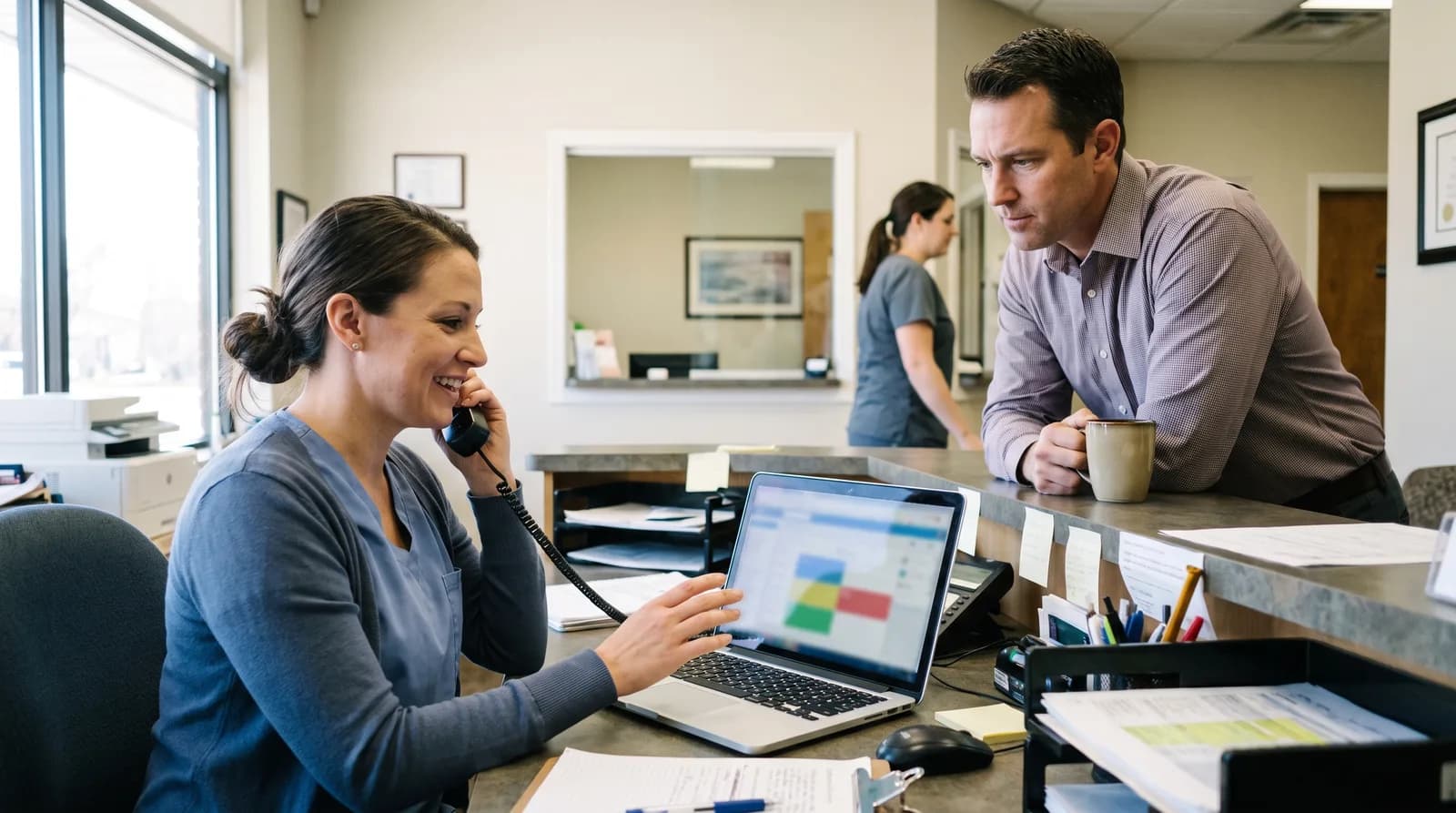
Dental voice AI is most effective as a partner to your front desk, not a replacement. It handles overflow calls during peak hours, covers after-hours and lunch breaks, and manages routine scheduling so your team can focus on in-office patient care and complex cases that need a human touch.

Why Your Front Desk Isn't Going Anywhere
This is the concern that comes up most. "Will AI replace my receptionist?" Short answer: no. Responsiveness builds trust in general, not just on the phone: BrightLocal research found that 88% of people are more likely to use a business whose owner responds to reviews. The same principle applies to how quickly a practice answers the phone. Your front desk staff does a dozen things that AI can't. They greet patients walking in, manage the waiting room, handle insurance paperwork face-to-face, coordinate with clinical staff, and resolve billing issues that require empathy and judgment.
Where the Handoff Happens
What they shouldn't be doing is answering the same six scheduling calls while a patient stands at the counter waiting to check in. That's where voice AI absorbs the load. During a typical morning rush between 9 and 11 AM, a practice might receive 30-40 calls. Your receptionist can handle maybe 15-20 between in-person tasks. The AI catches the rest.
How Escalations Get Handled
The handoff works both ways. If a caller has a question the AI can't resolve, a complex insurance dispute or a clinical question about a treatment plan, it flags the call for human follow-up with full context. Your team gets a summary of the conversation, the patient's information, and the reason for escalation. No one starts from scratch.
Adoption Is Accelerating, Not Replacing Staff
According to a Dental Economics survey, 73% of dental practices plan to adopt AI tools by 2027. The practices adopting now aren't eliminating staff. They're automating the repetitive work so their team can do more valuable work. Big difference.
How Do You Get Started With an AI Dental Receptionist?
Getting started with an AI dental receptionist requires three steps: connecting your practice management system, configuring your scheduling rules and call workflows, and running a parallel period where AI handles overflow before going fully live. Most practices complete setup within one to two weeks.
Three Steps to Launch
- Connect your practice management system. Your AI needs access to your appointment book to check availability and create bookings. DentiVoice works with Dentrix, Open Dental, Eaglesoft, and Curve Dental through secure API connections. No manual data entry. No dual-system management.
- Configure your call-handling rules. Decide which appointment types the AI can book directly, how it should triage urgent calls after hours, and what information it collects from new patients. These rules map to your practice's actual workflows, not a generic template.
- Run a parallel testing period. Most practices start by routing overflow and after-hours calls to the AI while staff handles primary lines during business hours. This builds confidence. Your team listens to call recordings, reviews booked appointments, and fine-tunes responses. Within a week or two, most practices expand AI coverage to handle a larger share of inbound volume.
The ROI Math
The ROI calculation is simple. According to Dental Economics, a single missed new patient call costs the practice $1,200 or more in lifetime value. If voice AI captures just 5 additional new patients per month, that's $60,000-$75,000 in annual lifetime value against a monthly subscription that costs a fraction of one additional hire. You don't need a spreadsheet to see the math.
The Bottom Line
The voicemail era is ending for dental practices that want to grow. Every call your practice misses is revenue you've already spent marketing dollars to generate. Dental voice AI doesn't just answer phones. It completes the patient journey from first call to booked appointment, around the clock, without adding headcount. The practices that capture those calls will outpace the ones still asking patients to "leave a message after the beep."
Related: Answering every call is only half the job once that call includes protected health information. Read confirm your voice AI vendor meets your dental HIPAA compliance checklist.
Stop Losing Patients to Voicemail
See how DentiVoice AI answers every call, books appointments in your PMS, and recovers thousands in missed revenue each month.
Book a Free Demo →Explore more guides and tools for dental practice growth.
Browse Resources →Sources & References
- ADA Practice Transitions - New Patient Call Answer Rates and Patient Convenience Research
- Dental Economics - Missed Call Volume, After-Hours Data, and AI Adoption
- Dental Economics - Patient Lifetime Value and Practice Economics
- Bureau of Labor Statistics - Dental Employment Projections 2022-2032
- Google-Reported Research - Search-to-Contact Patient Behavior
- BrightLocal - Local Consumer Review and Responsiveness Survey
Frequently Asked Questions
Dental voice AI is conversational artificial intelligence trained on dental workflows that answers patient phone calls, books appointments through your practice management system, and handles routine inquiries. It operates 24/7 and integrates with platforms like Dentrix, Open Dental, and Eaglesoft.
A typical practice missing 15-20 calls per week loses an estimated $48,000 to $75,000 weekly in potential lifetime patient value. A single missed new patient call costs $1,200 or more in lifetime revenue, according to Dental Economics research.
No. AI dental receptionists handle overflow calls during peak hours, after-hours inquiries, and routine scheduling. Your front desk team continues managing in-person patient interactions, insurance paperwork, and complex cases requiring human judgment and empathy.
Yes. Advanced dental voice AI systems connect to practice management software through secure API integrations. They read your real-time availability and create appointment bookings directly in your schedule without requiring staff callbacks or manual entry.
Most practices complete setup within one to two weeks. The process involves connecting your PMS, configuring scheduling rules and call workflows, and running a parallel period where AI handles overflow before expanding to full coverage.
Reputable dental voice AI platforms are built with HIPAA compliance including encrypted call recording storage, secure data transmission, and access controls. Always verify HIPAA compliance documentation before selecting a dental communication platform for your practice.
When patients book at times that genuinely fit their schedule rather than accepting the first available slot during a rushed callback, they're more likely to attend. Practices with 24/7 scheduling options see 24% fewer no-shows according to Dental Economics data.
Was this article helpful?
Written by
Dentalbase Team
The Dentalbase Team is a collective of dental marketing experts, AI developers, and practice management consultants dedicated to helping dental practices thrive in the digital age.