7 Times a Dental Office Misses Calls Throughout the Day
See the 7 times a dental office misses calls most, from lunch hour to after-hours, plus practical fixes for each coverage gap.
Share:
Table of contents
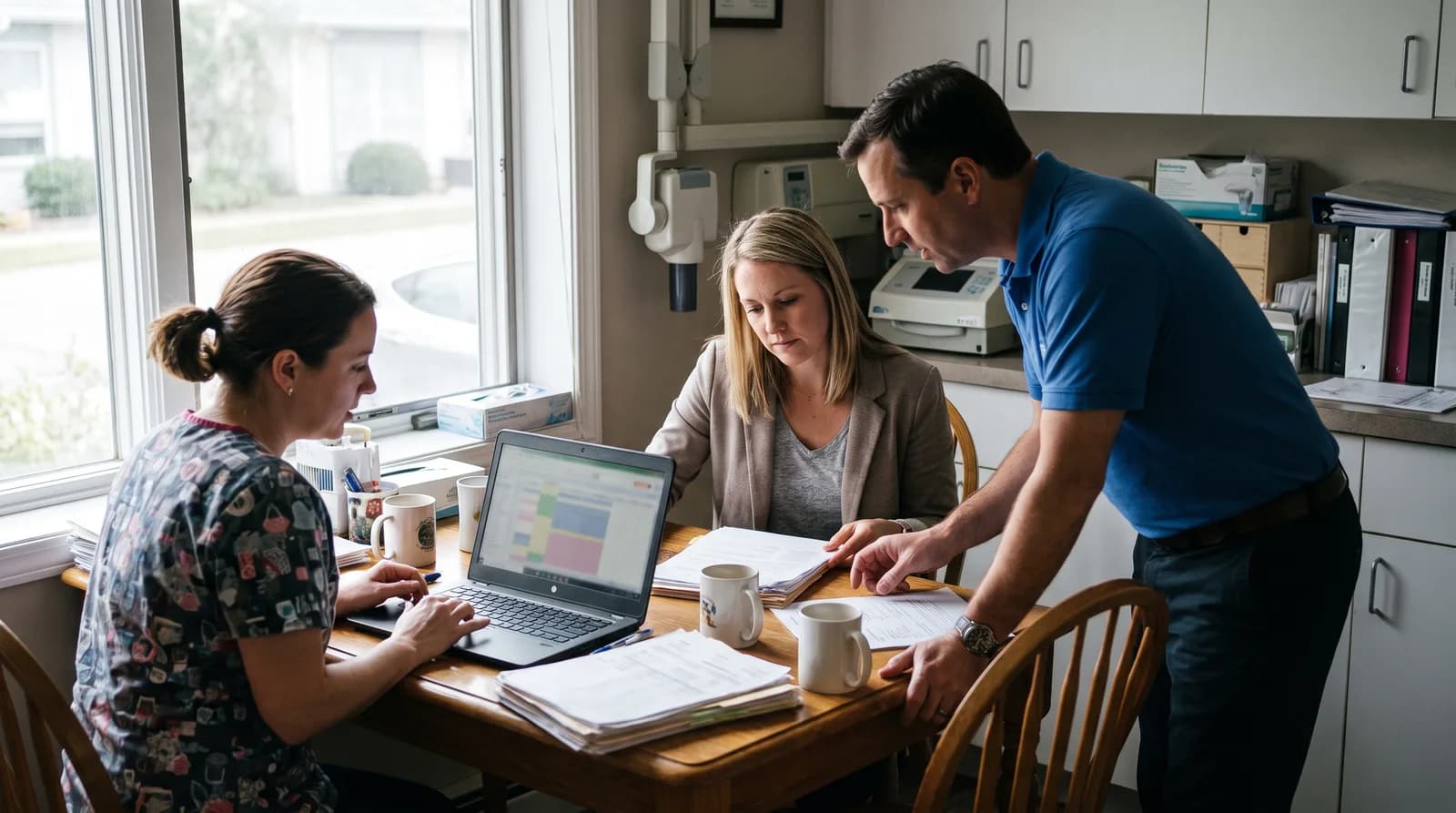
A dental office misses calls in predictable clusters, not randomly throughout the day. The average practice misses 15 to 20 calls per week, according to Dental Economics. Most of those gaps line up with the same few windows: lunch, emergencies, active appointments, and the hours after the office locks up. Once you can name the pattern, you can start closing it. The right mix of front desk process and a practice management platform built for phone coverage, including tools like a DentiVoice AI receptionist, closes most of these gaps without adding headcount.
This breakdown walks through the seven windows where calls go unanswered most often, why each one happens, and a specific fix for each. Some fixes cost nothing beyond a schedule change. Others require rethinking how the front desk is staffed.
Dental Office Misses Calls Most Often: When Does It Happen?
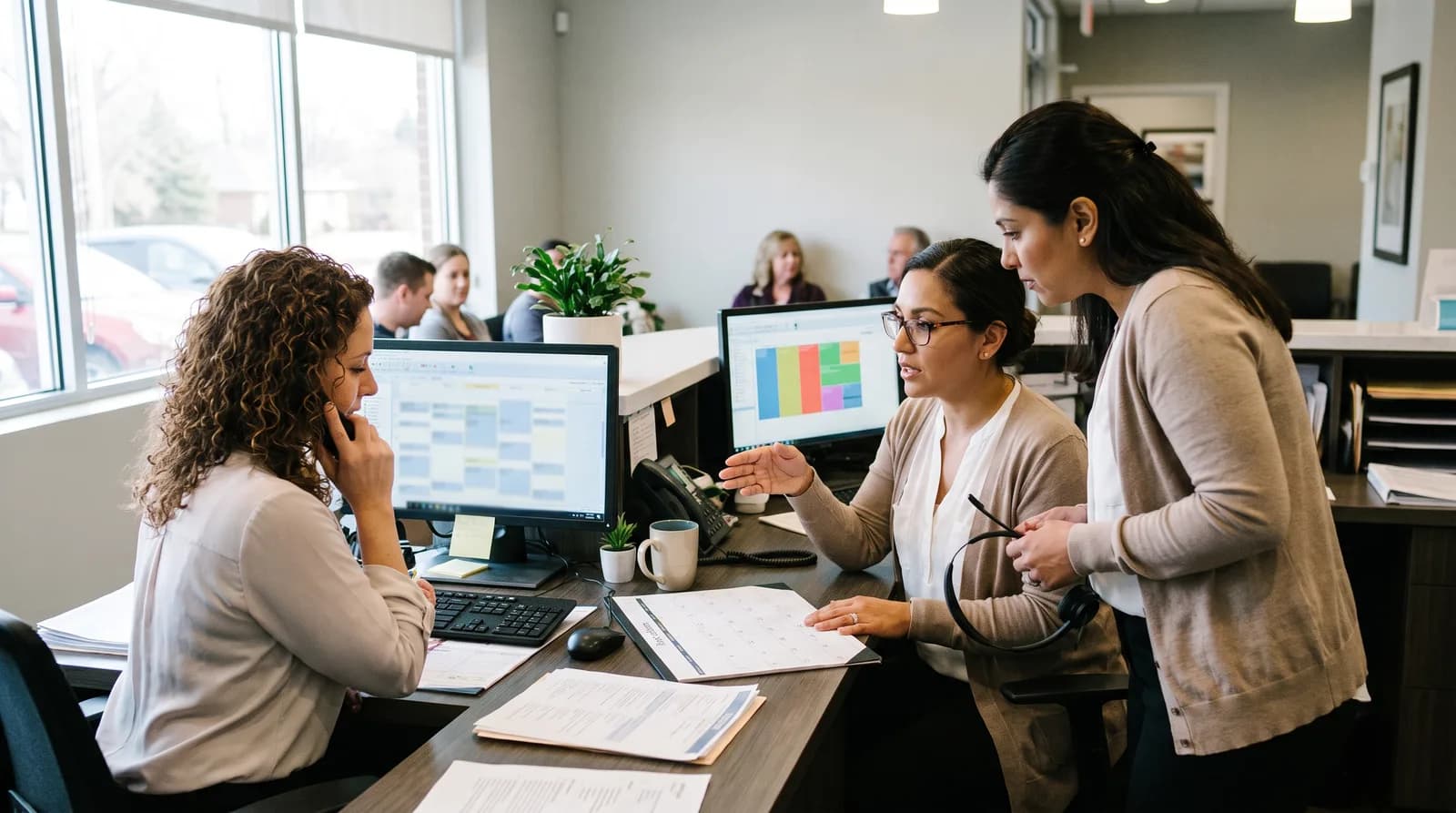
A dental office misses calls most during lunch, back-to-back appointment blocks, and the first hour after opening. These three windows cause the bulk of unanswered calls. Why? Most dental offices staff the front desk with just one or two receptionists per shift, according to the Bureau of Labor Statistics, leaving zero slack at those times.
Everything else follows the same root cause: one phone line, one set of hands, and patients who don't wait. That structural gap, not a lack of receptionist training, is what this article breaks down window by window. Even with the right coverage, the team has to report gaps instead of hiding them, and that depends on a culture that treats mistakes as data.
Front desk staff aren't ignoring the phone. They're checking in a patient, verifying insurance, or scheduling a follow-up when it rings. A single unplanned task pushes a call to voicemail. Even a quick walk-in does it. 38% of new patient calls go unanswered during business hours, according to ADA Practice Transitions. That's more than one in three first-time callers hitting silence. And 80% of callers who reach voicemail don't leave a message and won't call back, according to Forbes research on missed-call behavior. That's not a training gap. It's math. One line, one person, one moment where two things need to happen at once. Patients also expect responsiveness. 72% say convenience is a top factor when choosing a dental provider, according to the ADA Health Policy Institute. An unanswered phone is the opposite of convenient, and a dental office that misses calls repeatedly starts losing that convenience edge fast.
Here's what that looks like in practice, by the numbers:
- 38% of new patient calls go unanswered during business hours (ADA Practice Transitions)
- 15 to 20 calls missed per week at the average practice (Dental Economics)
- 80% of voicemail callers never leave a message or call back (Forbes)
- 90 seconds is the average hold time before a patient hangs up (Marchex)
Not sure which windows are costing you the most?
A quick call log review usually shows the pattern within a week.
Browse Resources →7 Times a Dental Office Misses Calls Most
First 30 minutes after opening
Check-ins, voicemails, and schedule confirmation collide
Lunch hour
Front desk headcount often drops to one person or zero
Same-day emergencies
The chair and the phone compete for attention at once
Active patient appointments
Check-in and checkout are busy micro-windows
After hours
27% of total call volume, mostly hitting voicemail
Monday morning
A weekend's worth of calls arrives in a two-hour window
Staff breaks and shift changes
Short 5 to 15 minute handoff gaps, several times a day
Case study
Dr. Esther Jeong tripled new patient numbers in Wylie, Texas
3X
New patients in 6 months
~100%
Retention on acquired patients
24/7
Call coverage with DentiVoice
Rather than staffing around the gaps, the practice put DentiVoice on the phones and the team started arriving to find patients already booked overnight who were not on the schedule the evening before.
"Nothing that I've done in my seven years as an owner has had this much of an impact."
Dr. Esther Jeong, practice owner
Why do the first 30 minutes after opening cause a call backlog?
The first 30 minutes after opening cause a call backlog because the front desk is juggling three things at once: checking in the morning's first patients, catching up on overnight voicemails, and confirming the day's schedule. A call that comes in during that window competes with all three.
Unlike lunch, this window isn't about reduced staffing. It's about task overload. A front desk team that's fully staffed can still miss calls here because every task in that opening rush takes priority over an unscheduled ring. Patients who call right when a practice opens are often the ones who couldn't get through the night before, so this window absorbs some of the after-hours backlog too.
Clearing that overnight voicemail pile is exactly where automation earns its keep. For a closer look at how AI reception cuts down missed calls and voicemail buildup, see the full breakdown of what changes once every ring gets answered.
A short buffer helps: delaying the first scheduled check-in by 10 minutes gives the front desk a clear runway to clear voicemails and answer live calls before the day's rush actually starts.
Does the lunch hour create the single biggest coverage gap?
Yes, lunch is usually the single biggest coverage gap in a dental office's day. Most practices staff the front desk down to one person, or none, for a 30 to 60 minute stretch, and call volume doesn't pause just because the team eats. New patient calls, in particular, tend to cluster around midday.
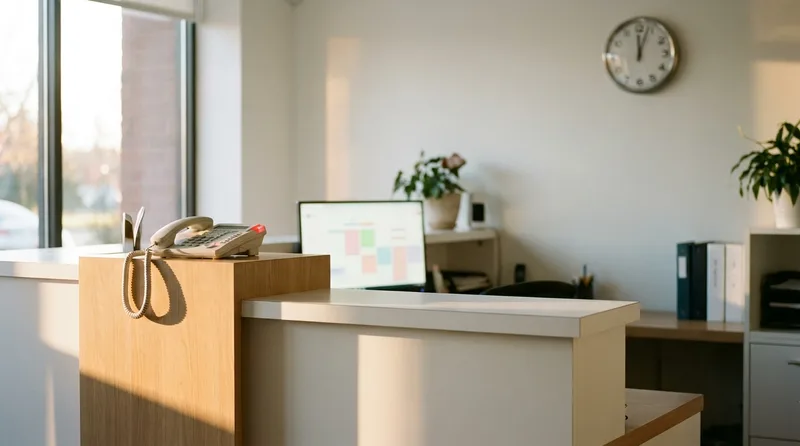
The fix here rarely requires a new hire. Staggering lunch breaks so one person always covers the desk closes most of the gap. If staggering isn't realistic with a small team, forwarding the line to a dedicated coverage service for that single hour catches what a five-minute break otherwise loses. A three-provider practice running 200 calls a week can lose a dozen calls just from an unstaggered lunch, and seeing how DentiVoice answers every call shows what full lunch-hour coverage actually looks like in practice. Coverage matters most when a gap opens unexpectedly, because the ten-minute window that decides whether a no-show slot gets filled depends on someone being free to work the waitlist. A broader set of fixes for a practice drowning in no-shows covers the reminder and confirmation side of that same problem.
Practical fix for lunch coverage
- Stagger lunch breaks across front desk staff so the phone is never fully unmanned
- Route the line to voicemail-to-text or an AI receptionist for the exact lunch window
- Flag any call received during lunch for a callback within 30 minutes of reopening
Why do calls go unanswered during same-day emergencies?
Calls go unanswered during same-day emergencies because handling the emergency in the chair pulls the entire team's attention away from the phone. A patient in pain, a walk-in needing X-rays, or an urgent referral call can occupy reception and clinical staff at once. Nobody is free to pick up.
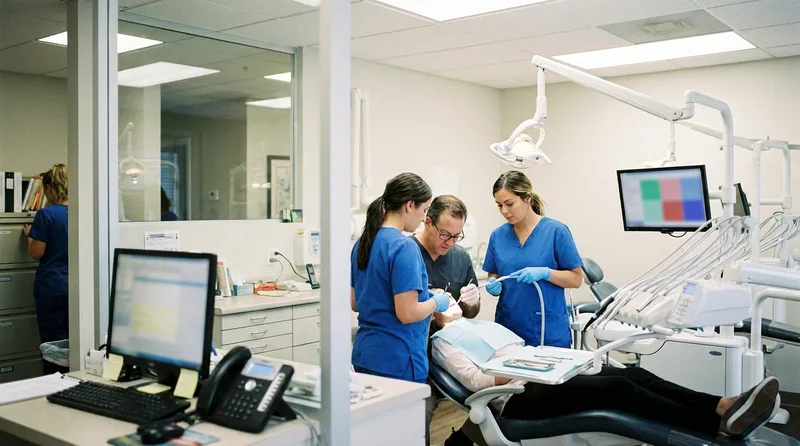
This is one of the costlier gaps. The calls arriving during an emergency are often other prospective patients trying to book, not the emergency itself. If the practice already has a full chair and a ringing phone, that second caller has no reason to wait. After-hours and emergency-adjacent calls represent 27% of total patient call volume, according to Dental Economics. This window isn't rare. It's routine.
For a full breakdown of what these gaps add up to in dollars, see how missed and after-hours calls translate into lost production.
A short designated "emergency protocol" helps. One team member stays assigned to the phone regardless of what's happening in the operatory, even if that means a brief hold message explaining a callback window.
Consider a two-provider practice on a Tuesday afternoon. A patient walks in with a cracked molar. The hygienist steps out to grab the doctor. The front desk is now coordinating X-rays, paperwork, and a same-day fit into an already full schedule. The phone rings twice in the next ten minutes. Neither call gets picked up, and neither caller leaves a voicemail. Multiply that across a typical week and the pattern becomes obvious: emergencies aren't rare interruptions. They're a regular part of the schedule that consistently displaces phone coverage.
What happens to calls that come in during active patient appointments?
Calls that come in during active appointments typically go to voicemail because the front desk is checking a patient in or out at that exact moment. Check-in and checkout are two of the busiest micro-windows in a dental day. They happen dozens of times daily. Each one is a small chance for a call to slip through.
This is where call routing rules matter more than staffing levels. A practice management system that automatically sends unanswered calls to a backup line, rather than a generic voicemail box, recovers a meaningful share of these. Open Dental and similar systems support call-forwarding integrations for exactly this reason. The setup still depends on someone configuring it correctly. Timing matters too: the average caller hangs up after 90 seconds on hold, according to Marchex, so even a callback queue needs to move fast. Slow response times cost more than patience, according to HubSpot research on customer response expectations; a caller who hangs up rarely tries the same number twice.
A few checks worth running against your own front desk workflow:
- Does the phone system route to a backup line, or straight to voicemail, when the desk is busy?
- How long does a caller sit on hold before anyone actually answers?
- Is there a second extension or device that can pick up during check-in and checkout?
| Front Desk Task | Typical Duration | Call Risk |
|---|---|---|
| Patient check-in | 2 to 4 minutes | High |
| Insurance verification | 5 to 10 minutes | High |
| Checkout and scheduling next visit | 3 to 6 minutes | Moderate |
| Between patients, no task | Varies | Low |
How many calls come in after hours, and where do they go?
After-hours calls make up roughly 27% of total patient call volume, and most go straight to a generic voicemail box, according to Dental Economics. Evenings, weekends, and early mornings before the office opens are when a large share of new patients decide to call, often right after searching online.
Local search results drive that decision more than most practices realize, according to Moz. That's exactly why a missed after-hours call can undo the work of ranking well in the first place.
These callers are disproportionately new patients, not existing ones checking on an appointment. A new patient who hits voicemail after hours has an easy alternative: search again. 98% of people read local reviews before choosing a business, according to BrightLocal, and the next practice on the list is one search away. An after-hours answering service or an AI receptionist protects this exact segment. It can book the appointment or capture full contact details instead of recording a message nobody returns in time. See what actually changes with DentiVoice after hours. If you're weighing which of the two options fits your practice, our AI receptionist vs answering service comparison walks through the cost and booking differences.
What to check before assuming after-hours coverage is fine
- Whether your current voicemail explains next steps or just asks callers to "leave a message"
- How long it typically takes staff to return an after-hours voicemail the next morning
- Whether after-hours callers can request or hold a specific appointment slot
Does Monday morning create a call volume spike the front desk can't absorb?
Yes, Monday morning is typically the highest call volume period of the week for a dental office. It absorbs everything that built up over the weekend. Patients who had a toothache Saturday night, missed their Friday appointment, or decided over the weekend to finally book all call within the same two-hour window.
Practices that don't adjust staffing for this spike see their heaviest missed-call rate on the day they can least afford it. That's also the day new patients are most likely calling for the first time. Adding a second person to the phones for the first two hours Monday helps. So does routing overflow to a backup line during that window. Either way, this is a spike that's predictable, not random.
The predictability is what makes this window different from the others on this list. Lunch and shift changes happen every day and blend together. The Monday spike is a single, recurring event a practice can plan around a week in advance. A short review of last month's Monday call volume against a regular Wednesday usually makes the gap obvious. No new software required.
Are calls during staff breaks and shift changes falling through?
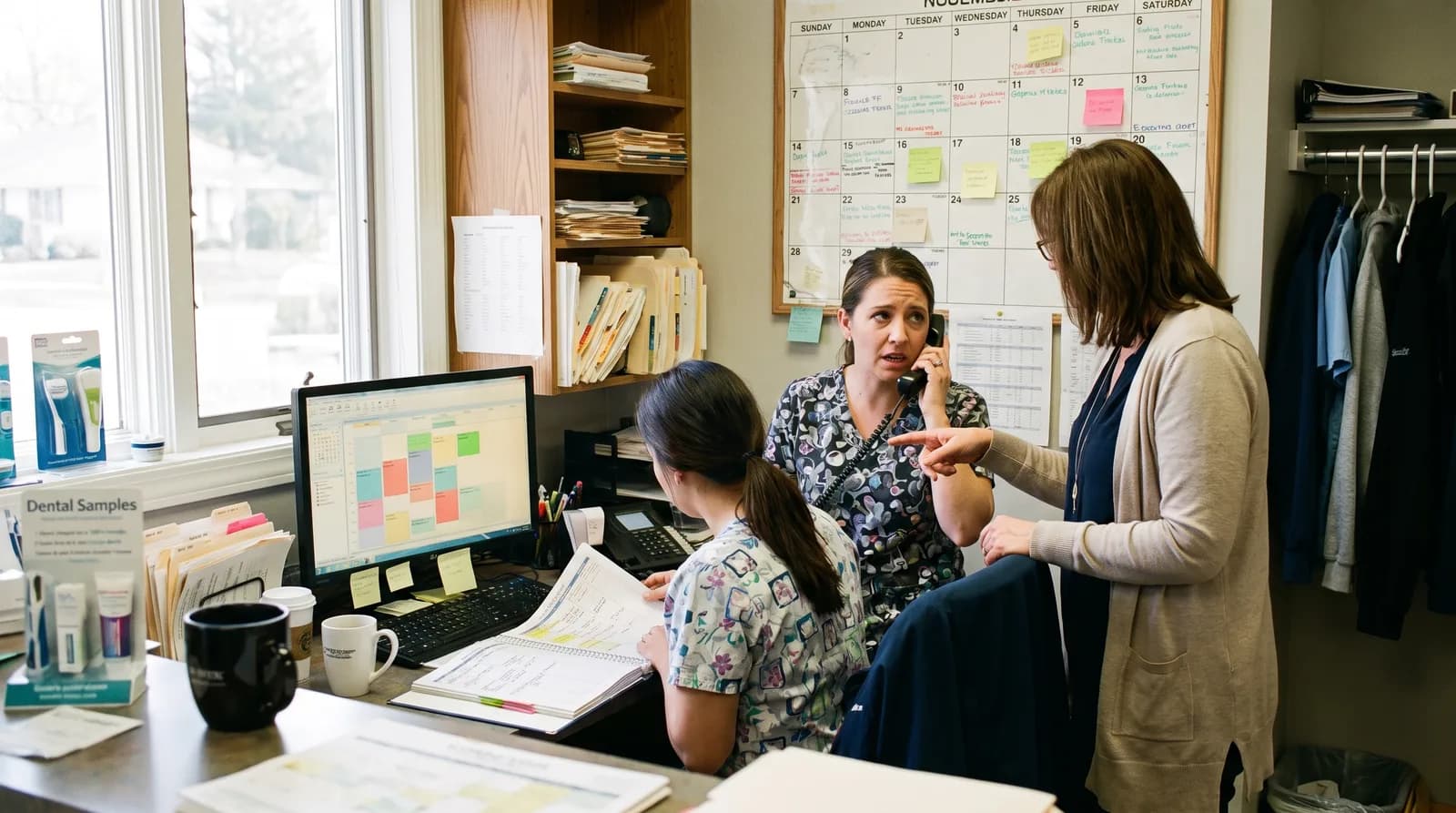
Calls during staff breaks and shift changes fall through more often than practices realize. The transition itself, not the break, creates the gap. A front desk employee finishing a task before leaving, or a new person still logging into the system, leaves a short window where nobody is actively watching the phone.
This window is usually 5 to 15 minutes, small individually but frequent across a week. Building a short handoff checklist closes most of this gap without adding headcount. It should explicitly include "confirm phone coverage" as the first step of any shift change. Cross-training the front desk team makes this handoff smoother, since any staff member can cover the phone regardless of whose shift it technically is. It's a process fix, not a staffing fix. That makes it one of the cheapest items on this list to implement.
A practice running two front desk shifts a day, morning and afternoon, creates two of these transition windows every single day. Over a five-day week, that's ten short gaps. Each one is a small chance for a call to land unanswered. None of them show up on a schedule. They only show up in a missed-call log, which is exactly why most practices don't notice the pattern until they go looking for it.
These seven gaps are national, but their size depends on your market. A practice in a commuter belt sees the early-morning and evening gaps widen while the lunch gap stays flat. Our breakdown of the call patterns Maryland dental practices see shows how the same coverage gaps shift in a metro built around a commute.
How Does DentiVoice Close These Specific Coverage Gaps?
DentiVoice closes these coverage gaps by answering every call regardless of the time of day or what the front desk is doing at that moment. It handles lunch hour, after-hours, shift changes, and Monday spikes with the same consistency. It doesn't need a lunch break or a handoff checklist.

Instead of routing a caller to a generic voicemail box, DentiVoice can answer during any of the seven windows above. It gathers the reason for the call. Then it books the appointment directly or hands off structured details to the front desk for a callback. For a practice that has already mapped where calls go missing, that's a direct fix rather than a workaround.
The coverage doesn't depend on which window is causing the problem that week. A practice with a chronic lunch-hour gap and one with a Monday morning spike see the same consistent answer rate. The underlying coverage doesn't change based on the clock. That consistency is the part a rotating front desk schedule structurally can't offer, no matter how well-trained the team is.
Related: One practice closed every one of these gaps in the same order described above. how fixing these call gaps helped double new patient bookings in ten months →
Related: A deeper look at why front desks miss calls even with a good team covers the structural side of this problem in more depth. Read the full breakdown →
What should a practice track to confirm these gaps are closing?
A practice should track missed calls by hour and day of week, not just as a weekly total, to confirm these gaps are actually closing. A single aggregate number hides whether lunch, Mondays, or after-hours are still the problem. It also hides whether a new gap has appeared somewhere else in the schedule.
Most practice management systems and phone platforms can export basic call logs. Reviewing them monthly, rather than guessing, turns this into something measurable. Dentrix and similar systems support this kind of export when paired with the practice's phone provider. Practices already running DentiVoice can skip the manual work and see what their call data actually reveals.
- Pull call logs broken out by hour of day, not just daily totals
- Flag the top three windows where missed calls cluster
- Recheck the same windows 30 days after making a change
Most dental offices don't have a general phone problem. They have seven specific windows where coverage predictably breaks down, and each one has a fix that doesn't necessarily mean adding staff. Start by pulling your own call logs and matching them against the patterns above. A dental office misses calls for identifiable reasons, and identifiable reasons can be fixed one window at a time.
See Which Windows Your Practice Is Losing Calls In
Book a free demo to see how DentiVoice covers lunch, after-hours, and shift-change gaps automatically.
Book a Free Demo →Related: Most of these gaps trace back to one root cause: not enough people at the desk. Read how AI receptionists cover the dental front desk staffing gap that creates missed calls.
Want more practice management guides like this one?
Browse Practice Management Guides →Sources & References
Frequently Asked Questions
Dental offices miss the most calls during the first 30 minutes after opening, lunch hour, and back-to-back appointment check-ins. These windows leave a one- or two-person front desk with no slack to answer an unplanned call.
The first 30 minutes after opening cause missed calls because the front desk is checking in patients, clearing overnight voicemails, and confirming the day's schedule all at once. A live call competes with all three tasks.
Lunch causes missed calls because most practices reduce front desk staffing to one person or none for 30 to 60 minutes. Call volume doesn't drop during that window, so calls go unanswered by default.
The average dental practice misses 15 to 20 calls per week, according to Dental Economics. Many of these cluster around lunch, same-day emergencies, and after-hours windows rather than spreading evenly across the day.
Yes, after-hours calls are disproportionately new patients, and most go to a generic voicemail box they won't call back. Since 98% of people read local reviews before choosing a business, a missed call often just sends that patient to a competitor.
Yes, most missed-call windows have a process fix rather than a staffing fix. Staggered lunch breaks, shift-change checklists, and routing overflow calls to an AI receptionist close most gaps without adding headcount.
DentiVoice answers calls consistently regardless of lunch, opening rush, after-hours, or shift-change timing, since it doesn't need breaks or handoffs. It can book the appointment directly or hand structured details to the front desk for a callback.
Was this article helpful?
Written by
DentalBase Team
Expert dental industry content from the DentalBase team. We provide insights on practice management, marketing, compliance, and growth strategies for dental professionals.